Mary Ann Spinelli
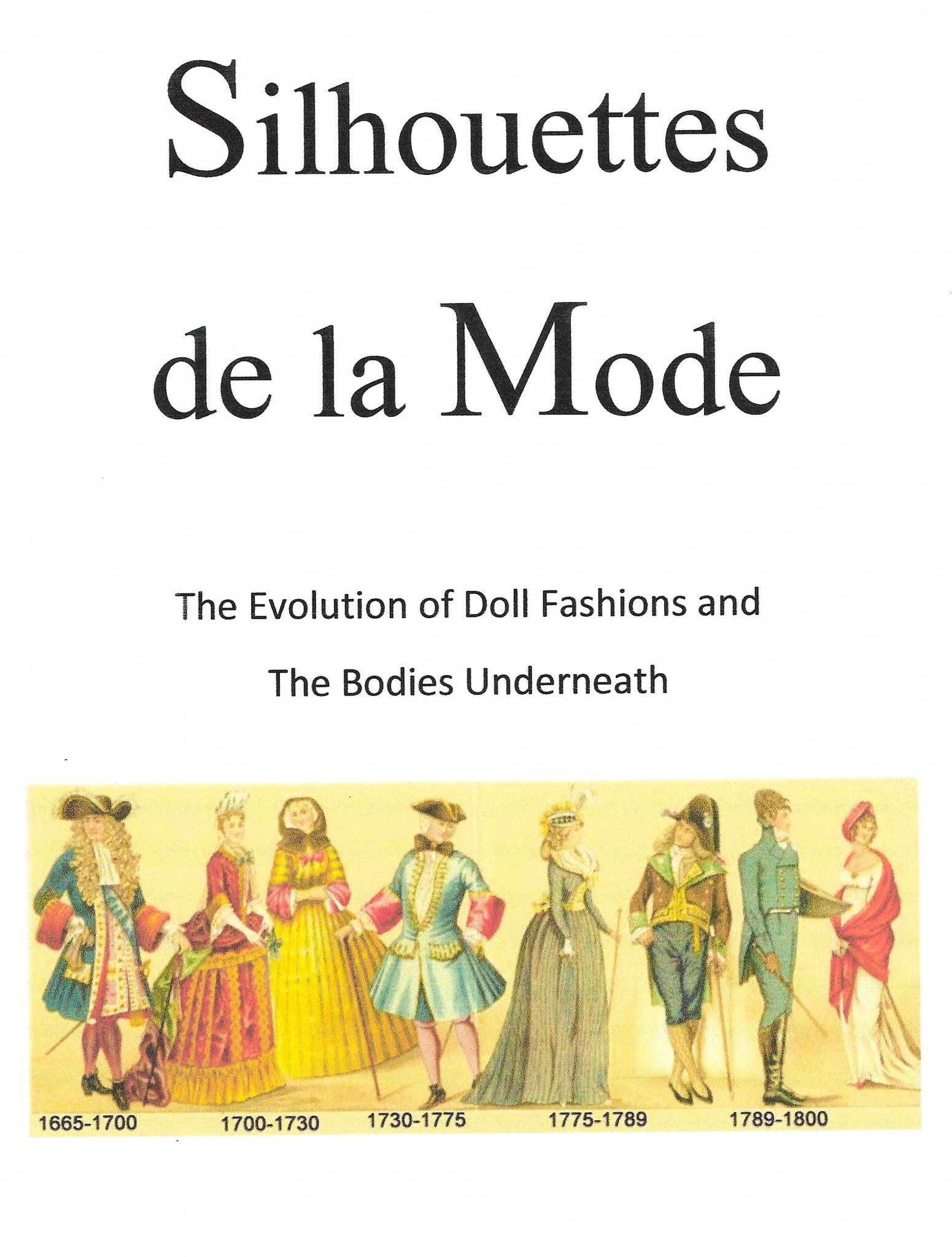
Silhouettes de a Mode, The Evolution of Doll Fashions and The Bodies Underneath
This will be a study by decades including the 1770’s through the 1920’s. We begin today with the 1770’s.
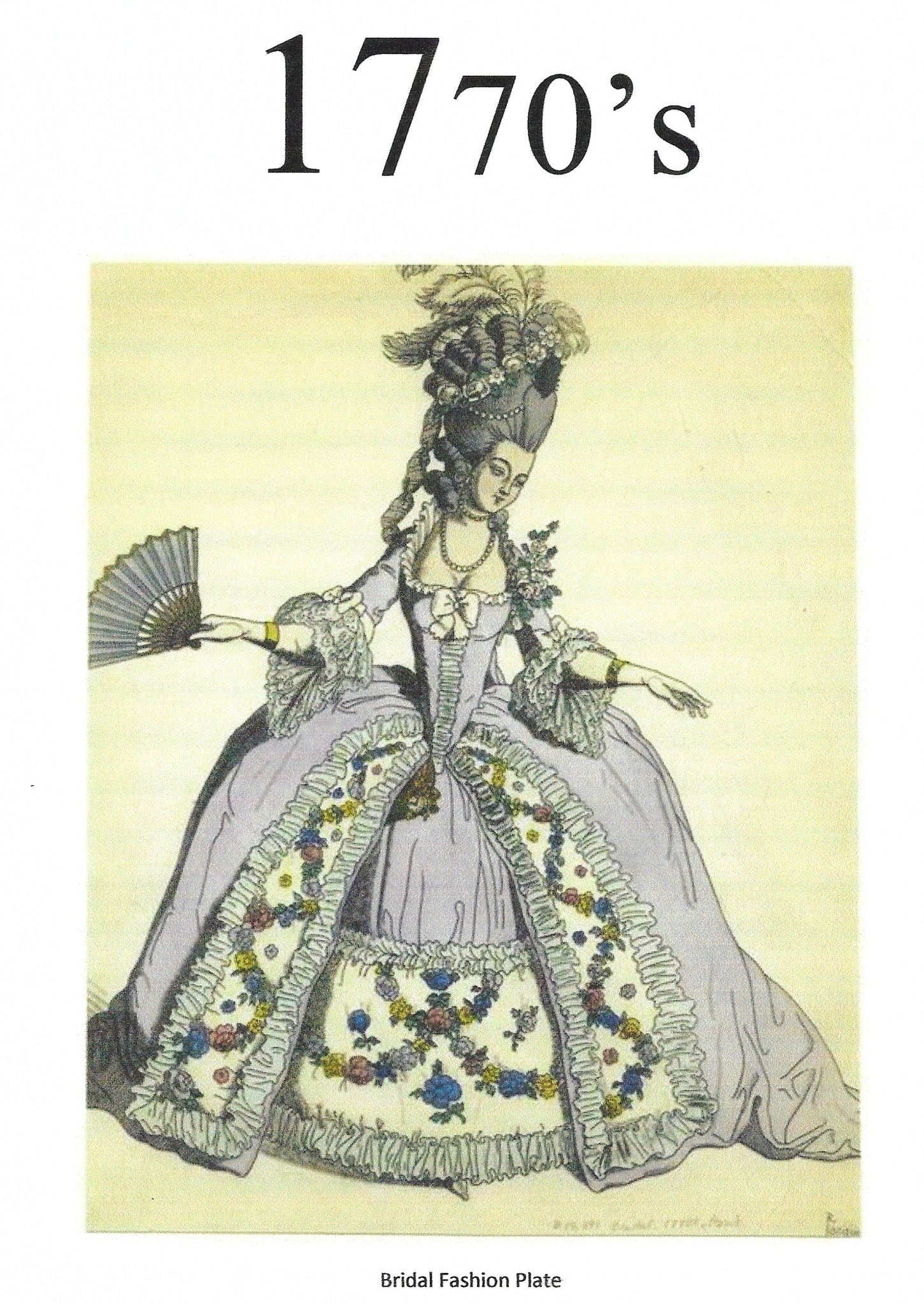
The style of Women’s garments in the 18th Century reflect the improving status of women in society. While the mantua of the early 18th Century was a rather simple limp garment composed of two lengths of fabric pinch pleated at the waist with wide soft sleeves sewn in, the mantua was gradually stiffened, decorated and expanded with hoops called panniers until, by mid/century it had been stylized into the Robe de Francaise, a doll-cake-like structure that insured that a woman took up three times as much space as a man and always presented an imposing and ultra feminine spectacle.
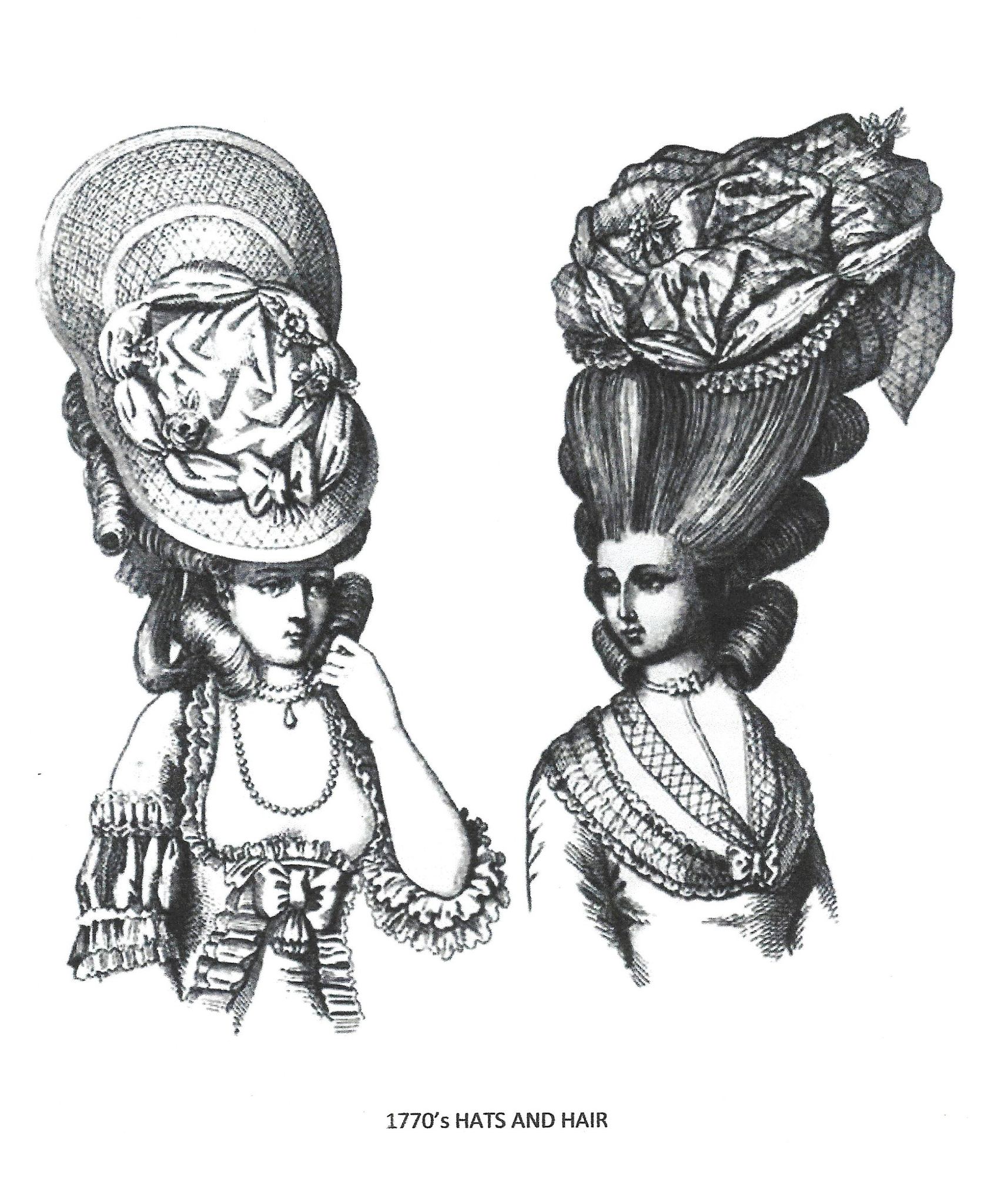
After 1760, women began to expand vertically as well, raising their hair with pads and pomade to a height that only a man on stilts could hope to emulate.
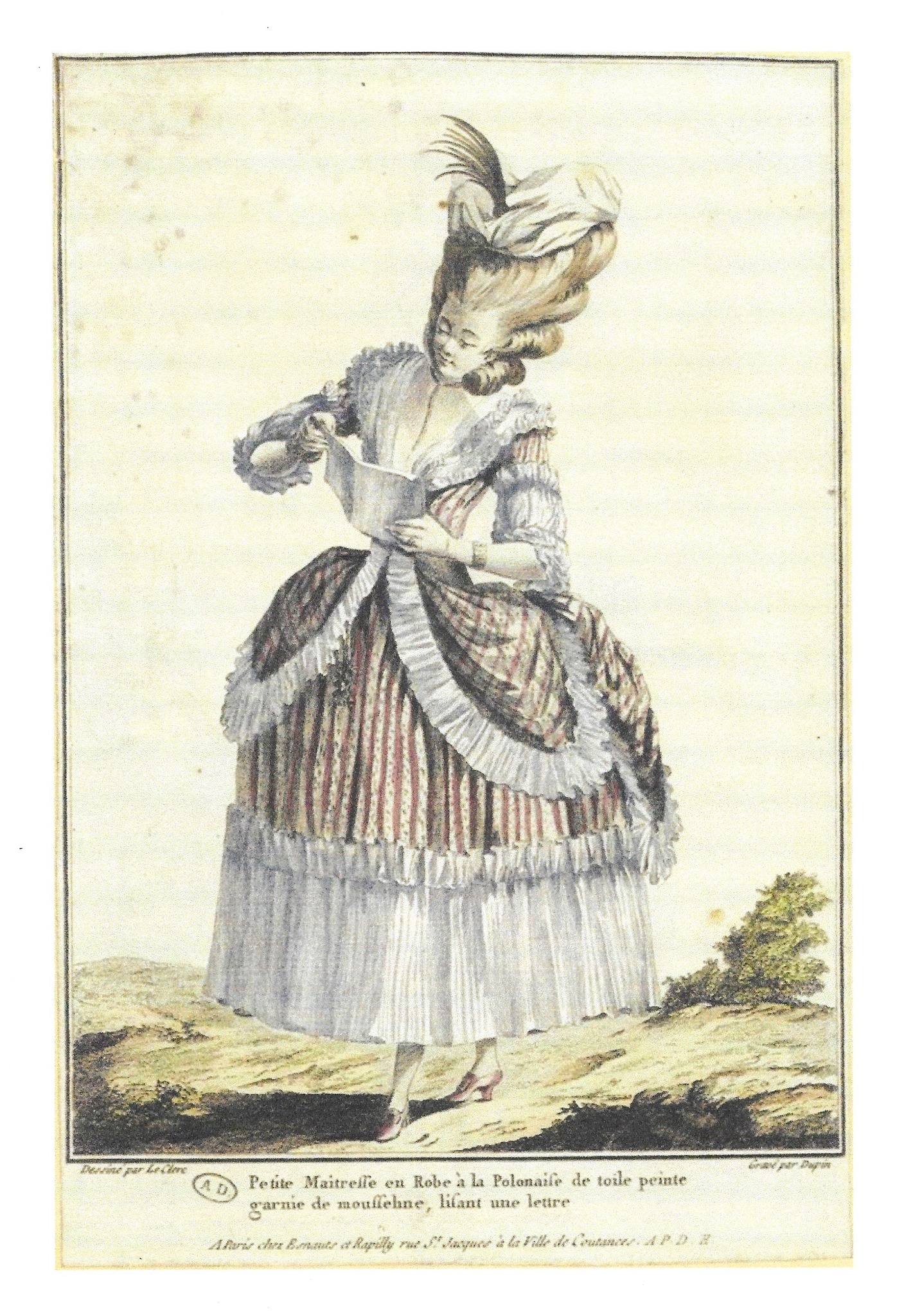
Below are some of the fashions of the 1770’s.
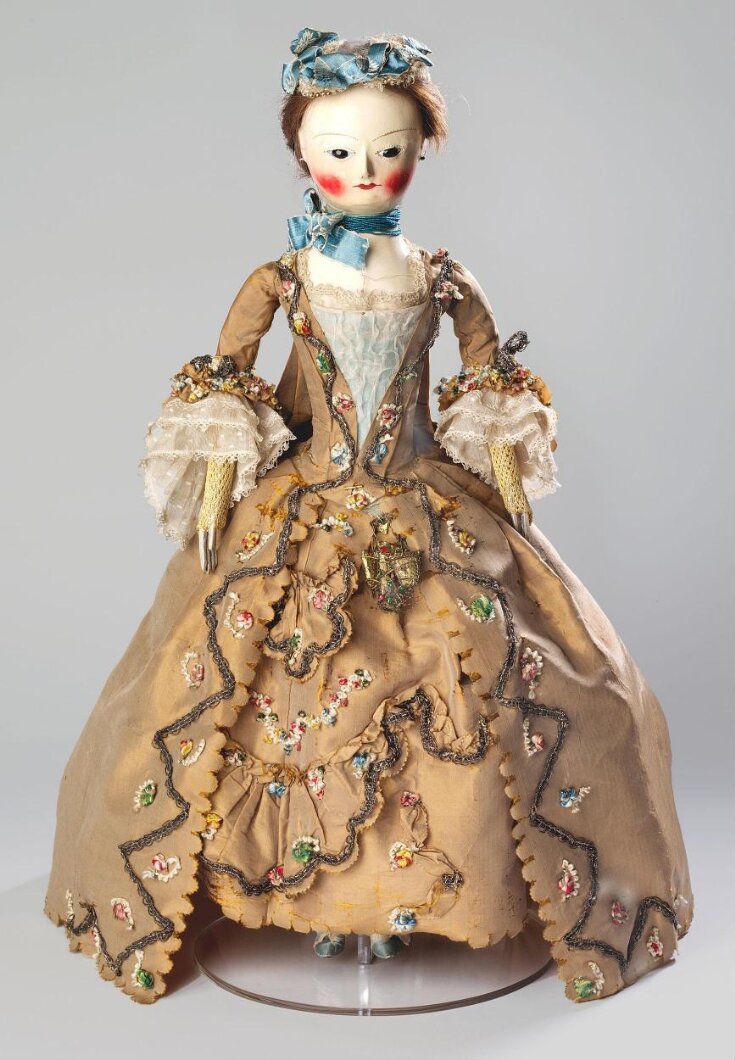
We thought that you would like to see some dolls in early 18th century clothing through the 1870’s era.
The first image is from the Victoria and Albert museum collections. 1860’s doll, wooden, approximately 24 inches tall. She is wearing the following 18th century items: Cap (Headgear), Necklace, Sack, Petticoat, Engagement, Engagement, Mitten, Mitten, Stomacher, Chemise, Stays, Stays, Petticoat, Petticoat, Pocket, Pin Cushion, Stocking, Stocking, Shoe, Shoe, Fob Watch, Etui. The original headed pins suggest that the garments have remained in position since the 18th century. – Photo credit and information: V&A Museum.
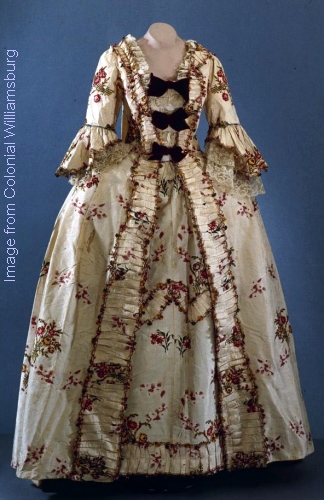
The second image is of an 18th century gown in the Williamsburg Museum Collections. Note the panniers width on the gown. Photo credit: Colonial Williamsburg.
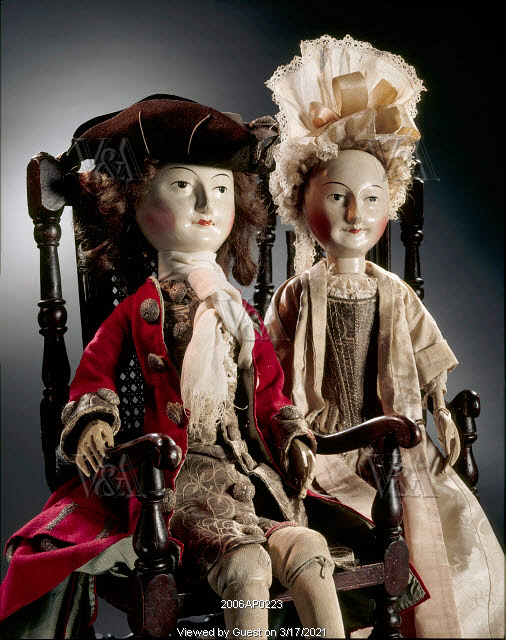
The third image shows Lord and Lady Chapham wooden dolls. They are early and their costumes are from the 1690’s to 1700. We are showing them so that the reader may see what the female costumes looked like prior to the later 18th century. Photo credit: V&A Museum collection.
A little more about 1770’s fashions..
“1770-1779”
OVERVIEW
1770s fashion simplified the earlier decades styles for both womenswear and menswear, leading to new fashions that exemplified the ‘casual’ aesthetic that had taken hold.
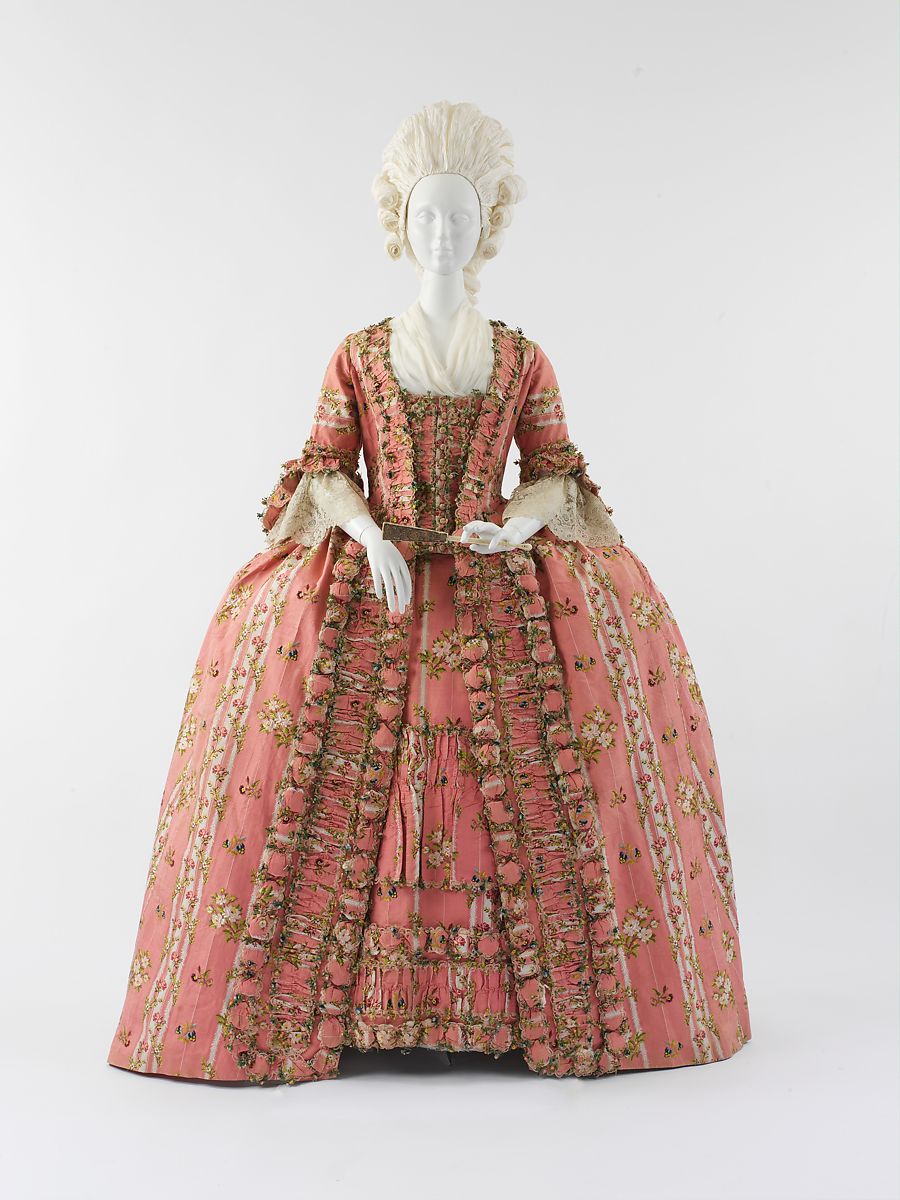
The 1770s marked a transition in men’s and women’s dress, particularly for daywear. The growing popularity of what had previously been considered informal styles along with the increasing use of wool, cotton, and plain, lightweight silks changed the look of masculine and feminine attire towards greater simplicity. For men, the overall line of the three-piece suit became slimmer with the coat skirts cut well away from the center front, tight-fitting sleeves, and narrow tails. For women, the robe à la française with its characteristic box pleats falling from the back shoulders to the hem gave way to the robe à l’anglaise with a fitted bodice, the robe à la polonaise, and the caraco, or jacket bodice, and petticoat combination.
WOMENSWEAR
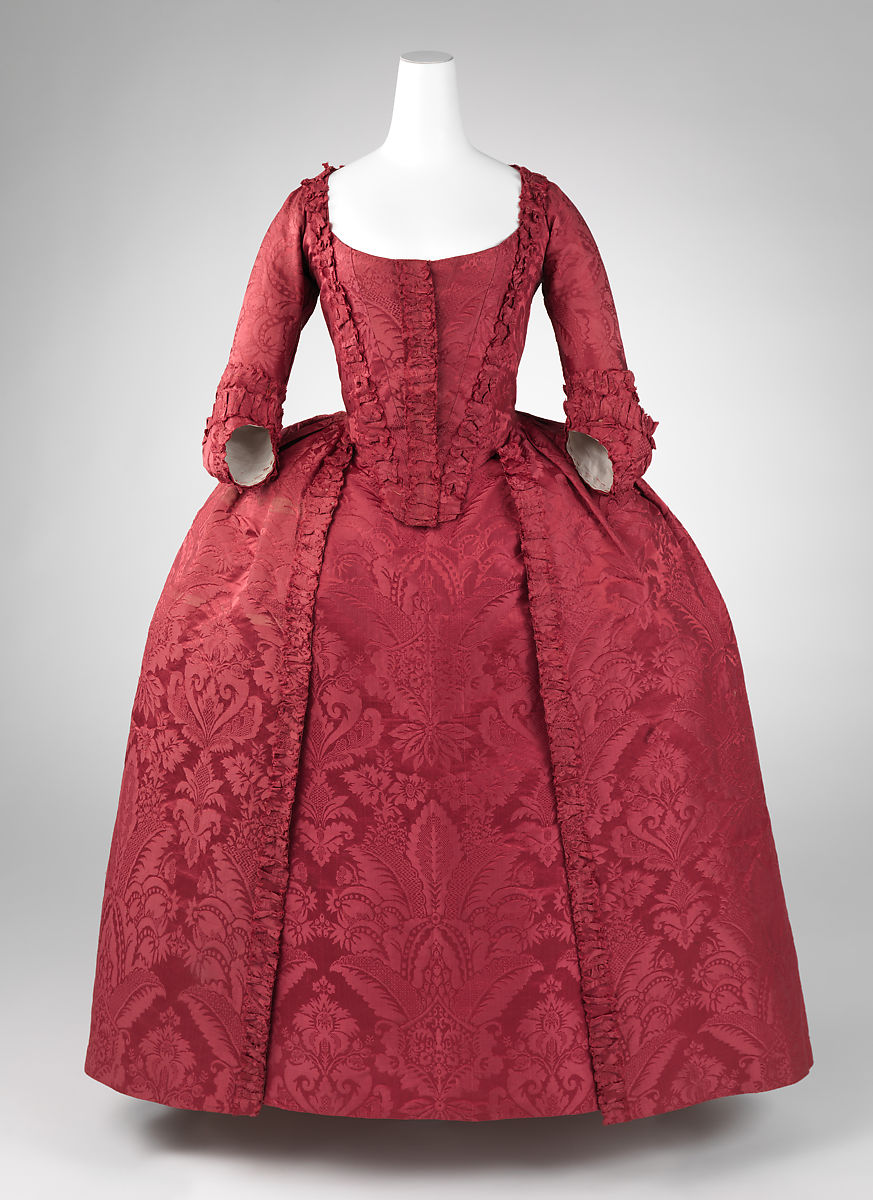
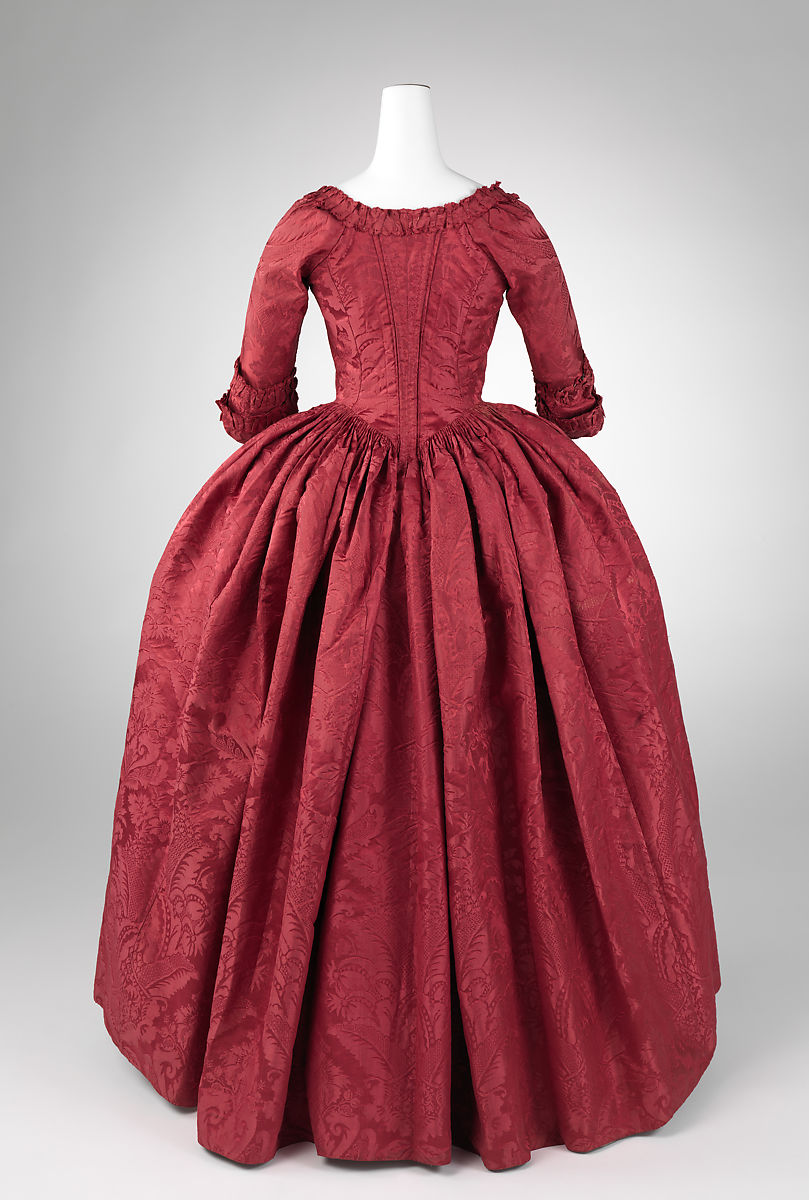
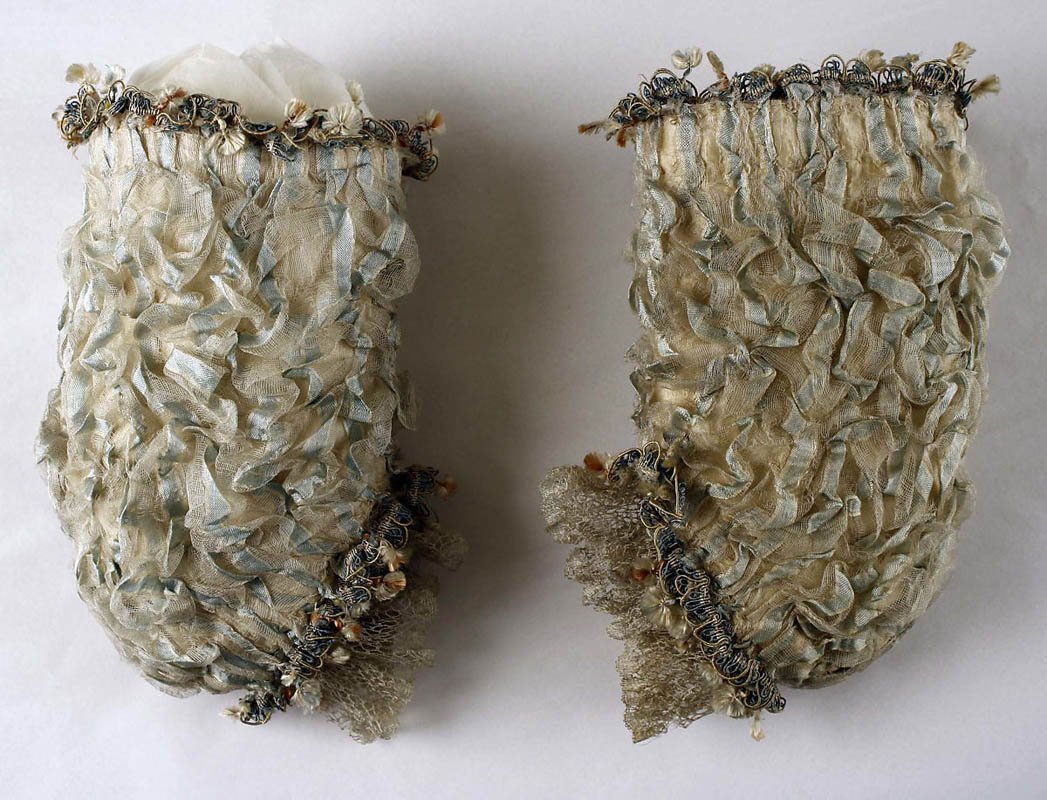
In this decade, the generously trimmed robe à la française, or sack, ceded its decades-long dominance to other styles and was primarily worn for formal wear (Figs. 1 & 2). At the same time, the hoop, which had given the robe à la française its distinctive shape, “disappeared except for court” and was replaced by “small paniers, or hip pads” (Ribeiro 222). The fitted gown, known in France as the robe à l’anglaise, had been worn in England throughout the century, alongside the sack as a more informal garment, and “in the 1770s, it had a new lease of life with a closed front opening” that obviated the need for a separate stomacher (Ribeiro 222) (Figs. 3 & 4). Initially, the back panels of this gown were stitched down as far as the waist and continued into the skirt; by the 1780s the bodice and skirt would be cut separately (Ribeiro 222). The oval-shaped sleeve ruffles accessorized with lace engageantes that had been standard since the 1740s were replaced by ruched cuffs, called “sabots” in French, of self-fabric, muslin, or gauze that fitted closely around the elbow (Figs. 3-6). Like the robe à la française, the robe à l’anglaise was worn over a matching or contrasting petticoat (Figs. 3 & 4).
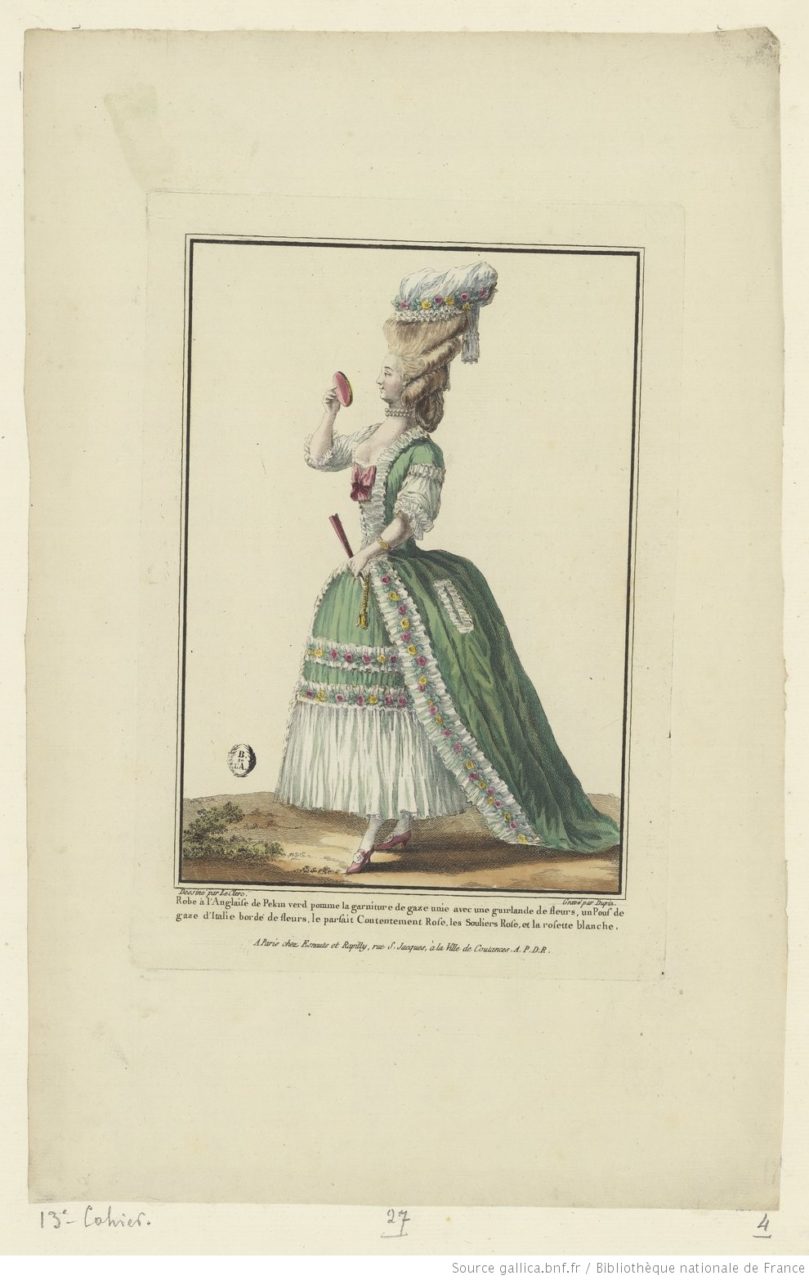
One of the most popular styles from the mid-1770s to the mid-1780s was the robe à la polonaise (Fig. 6). Dress historians Kendra Van Cleave and Brooke Welborn have charted the appearance of this two-piece gown in contemporary fashion periodicals and other publications, including fifty-nine plates in the Galerie des Modes that illustrate the robe (full-length), carcao (hip-length jacket), and camisole (short jacket) à la polonaise (Van Cleave and Welborn 2). As they note, in addition to the distinctive swags created by looping up the skirt with interior ribbons or cords that were “attached on the outside of the gown at or below the waist,” the polonaise “was in fact equally distinguished by the cut of the robe” with two front and two back pieces “cut without a waist seam” (Van Cleave and Welborn 4-5) (Figs. 6 & 7). While the petticoat of the robe à la française and the robe à l’anglaise was only decorated across the front opening where it was visible, the exposed hem of the polonaise petticoat was fully trimmed (Figs. 6 & 7).”
By Michele Majer for her blog “Fashion History Timeline” for the FIT Museum, NYC, NY https://fashionhistory.fitnyc.edu/1770-1779/ Photo credits: The Metropolitan Museum of Art.

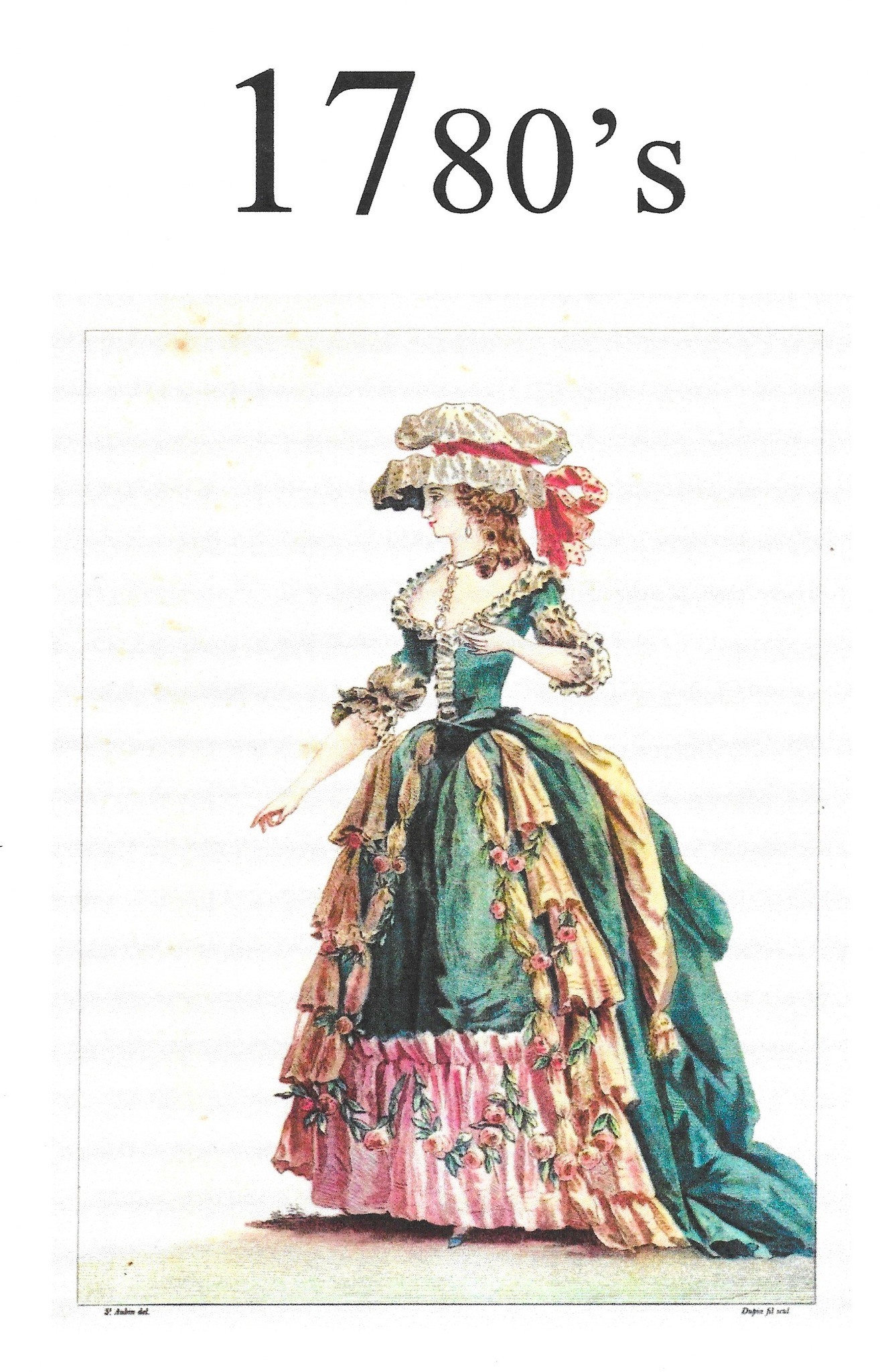
After 1780, a fashion for Rousseauesque naturalism took over and women adopted more “natural” looking fashions which still took up a considerable amount of space, but emphasized the natural sexual characteristics of the female figure with padded busts and bottoms and riots of cascading hair.
The images below show examples of the 1780’s gowns and hair.
All information and images credited to Mary Ann Spinelli.

18th Century Provencal Undergarments
For a complete understanding of the fashion of the era, we must begin with a bit of history.
In pre-revolution France, there was a detailed series of classes. In Paris, it was even more so with eight distinct classes. This is based on Le Tableau de Paris, which was written in 1783:
“There are in Paris eight distinct classes; the princes and great nobles (these are the least numerous); the Nobles of the Robe (aristocrats); the financiers; the traders and merchants; the artists; the craftsmen; the manual workers; the servants; and the bas peuple (lower class).”
In other areas outside of Paris, there were generally three classes. (Four if you count the clergy who were an entity unto their own.)
The peasant class
The merchants aka working class
The nobility
Just like today different levels of income resulted in different levels of fashion.
Open drawers, later known as bloomers, weren’t really introduced for women until around the 1830’s. So what did they wear as underpants? Nothing. Tis true.
The chemise would be the first layer to put on. Bathing and washing clothing was not practiced as it is today so it was important to have a layer that would be changed regularly to protect outer clothing from body oils and perspiration. The chemise was often made from linen which is beautifully absorbent and allows the fabric to dry quite quickly. Chemises could also be made from wool, silk, or cotton but truly linen was the first choice.
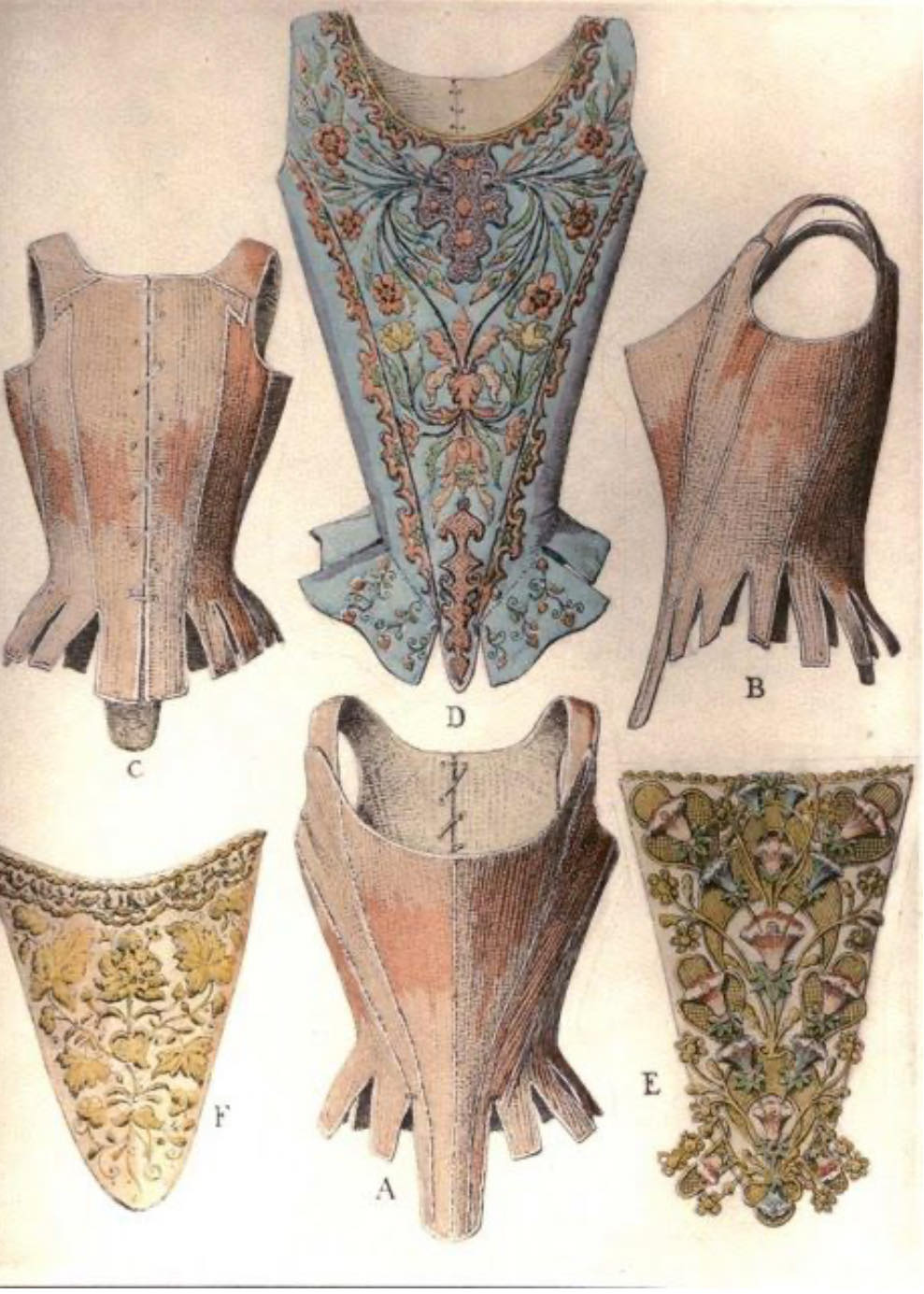
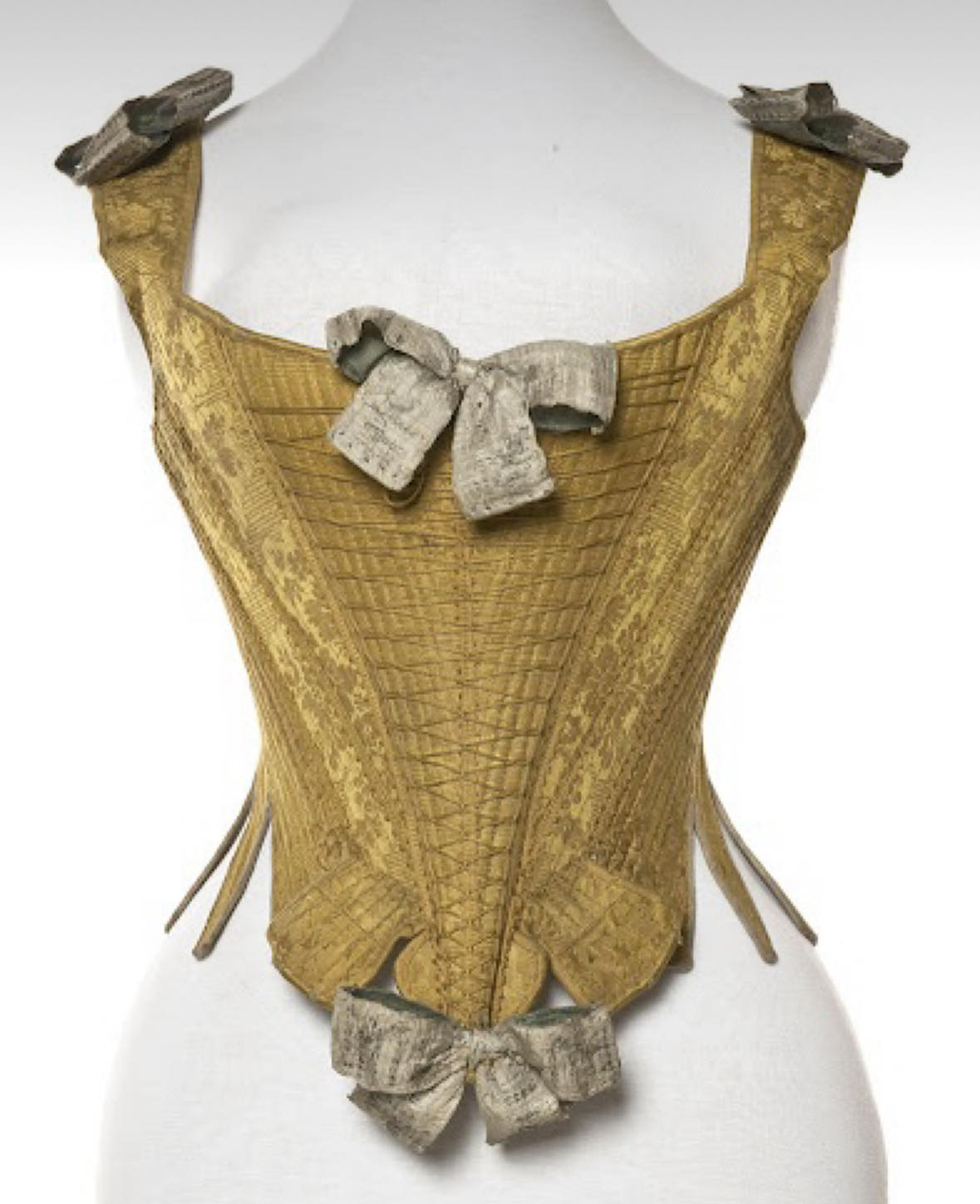
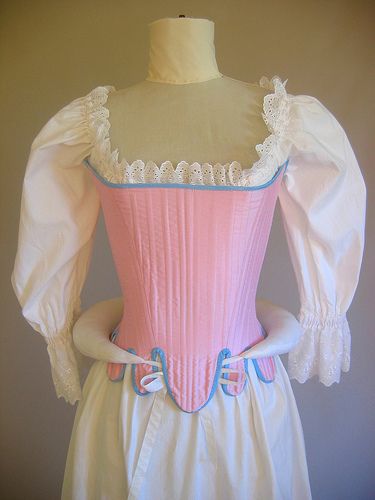
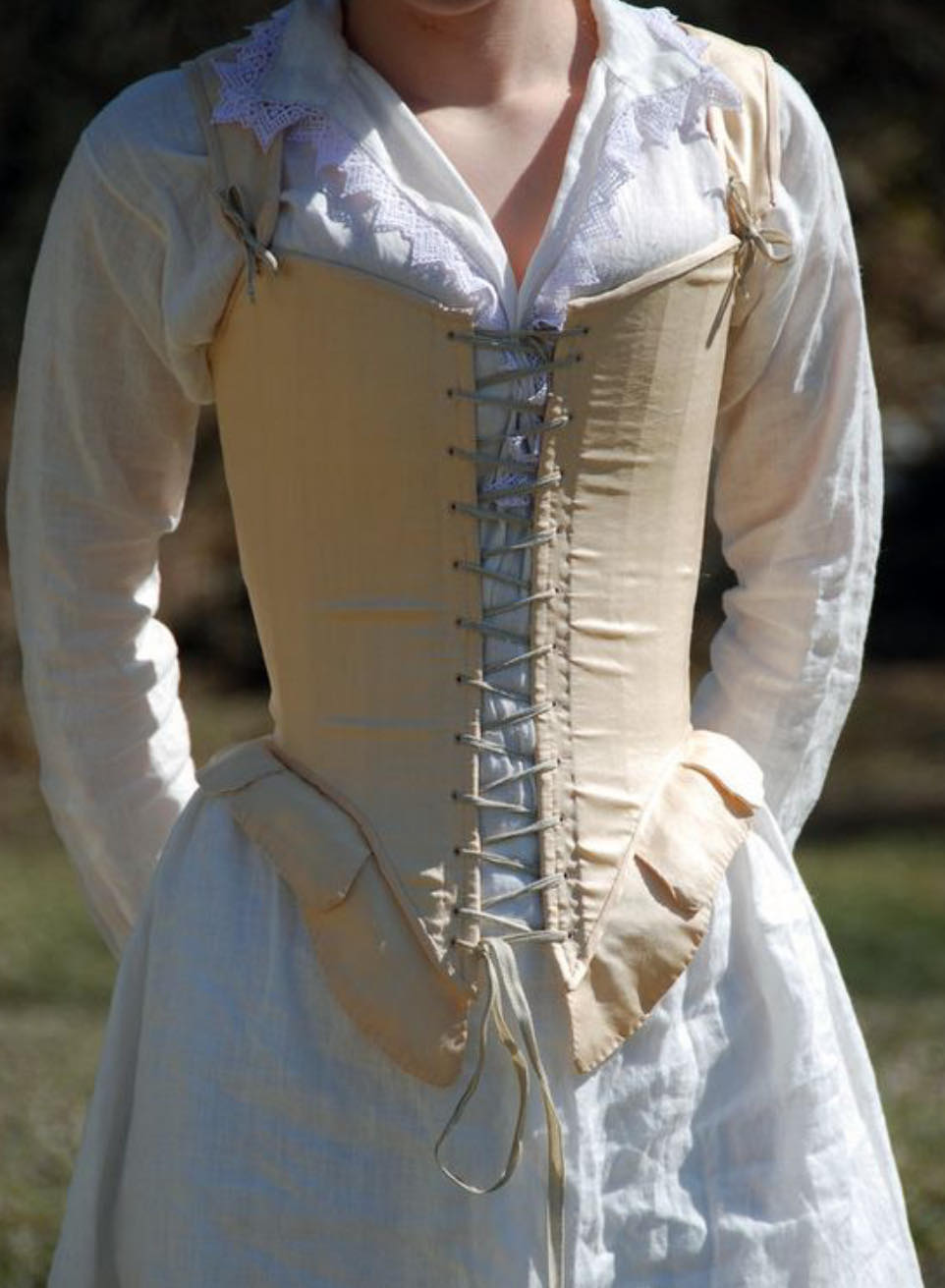
A woman’s bust support came in the form of stays. There were a variety of stay styles and this is where class definitely becomes evident. The upper classes would wear stays that laced up the back since they had servants to dress them.
The under or interior petticoat was often made from a lightweight linen or cotton for summer.
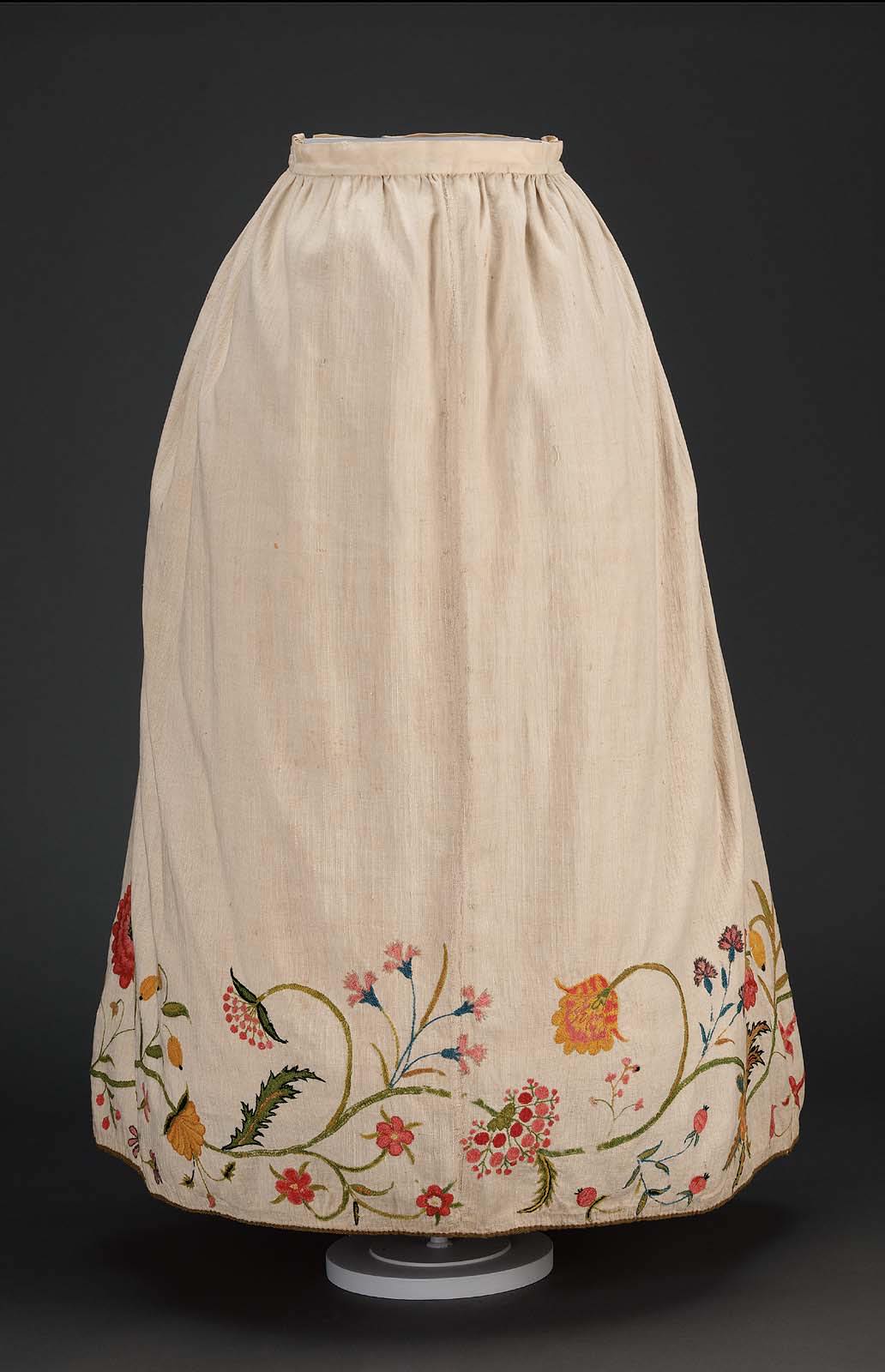
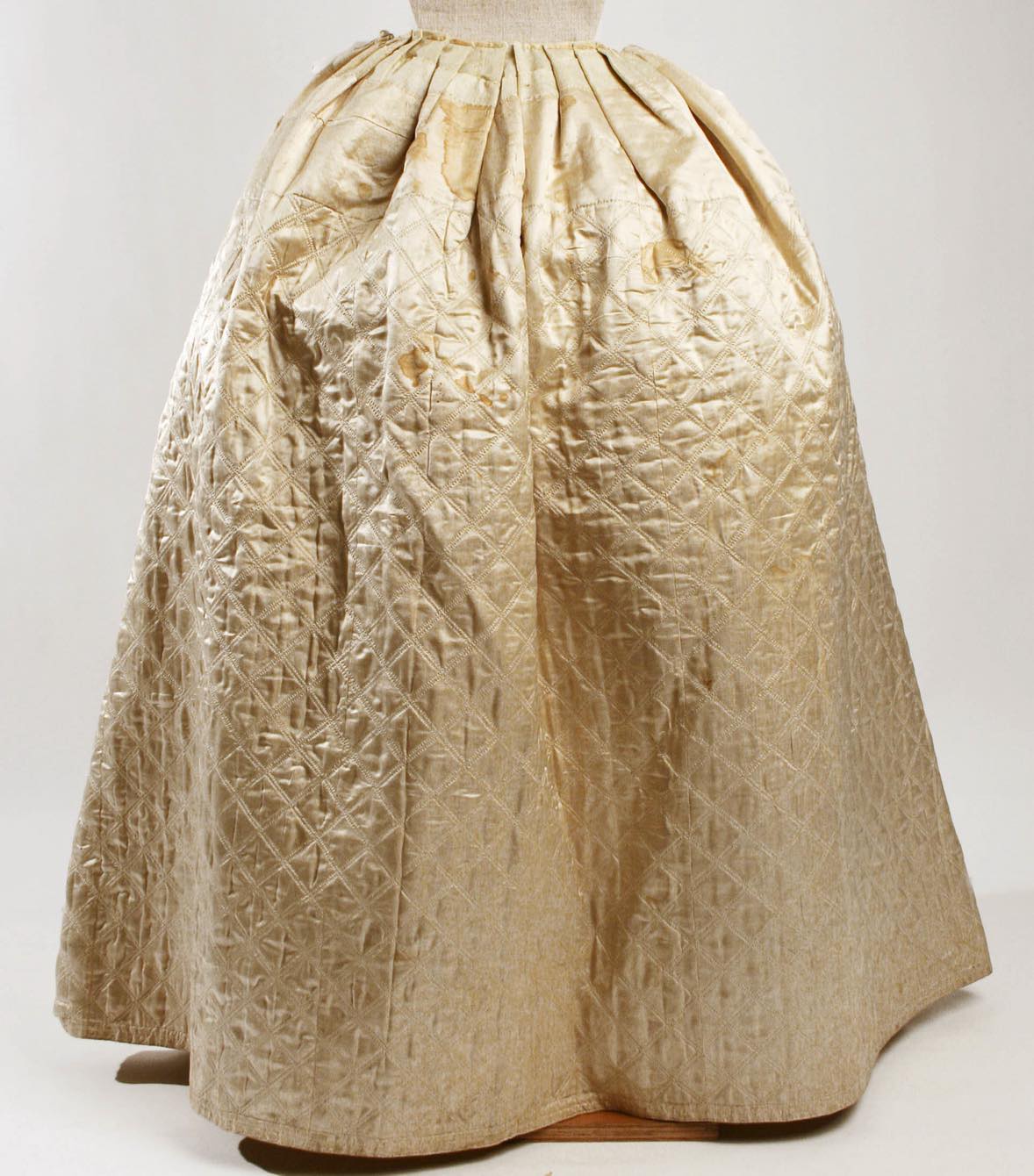
It was not usual that the under petticoat would feature lovely embroidery even though it was not seen publicly. Quilted under petticoats could be worn for warmth in the winter. They were made primarily from silk or wool. But again, the fabric used would have been determined by the wealth of the wearer. Those of the lower classes would not have been able to afford silk.
If a bum roll was worn it would be the last thing to be added before the exterior clothing was added. Its main purpose was to act as a support under the exterior petticoat to create the desired silhouette of the time. They came in a wide variety of styles.”
The images below shown include 1880’s stays in both the upper class version and the working class version, petticoats, bum roll and a chemise.
Images and references from https://decortoadore.net/…/18th-century-provencal… by Laura Ingalls Gunn, The Metropolitan Museum of Art, New York, NY.

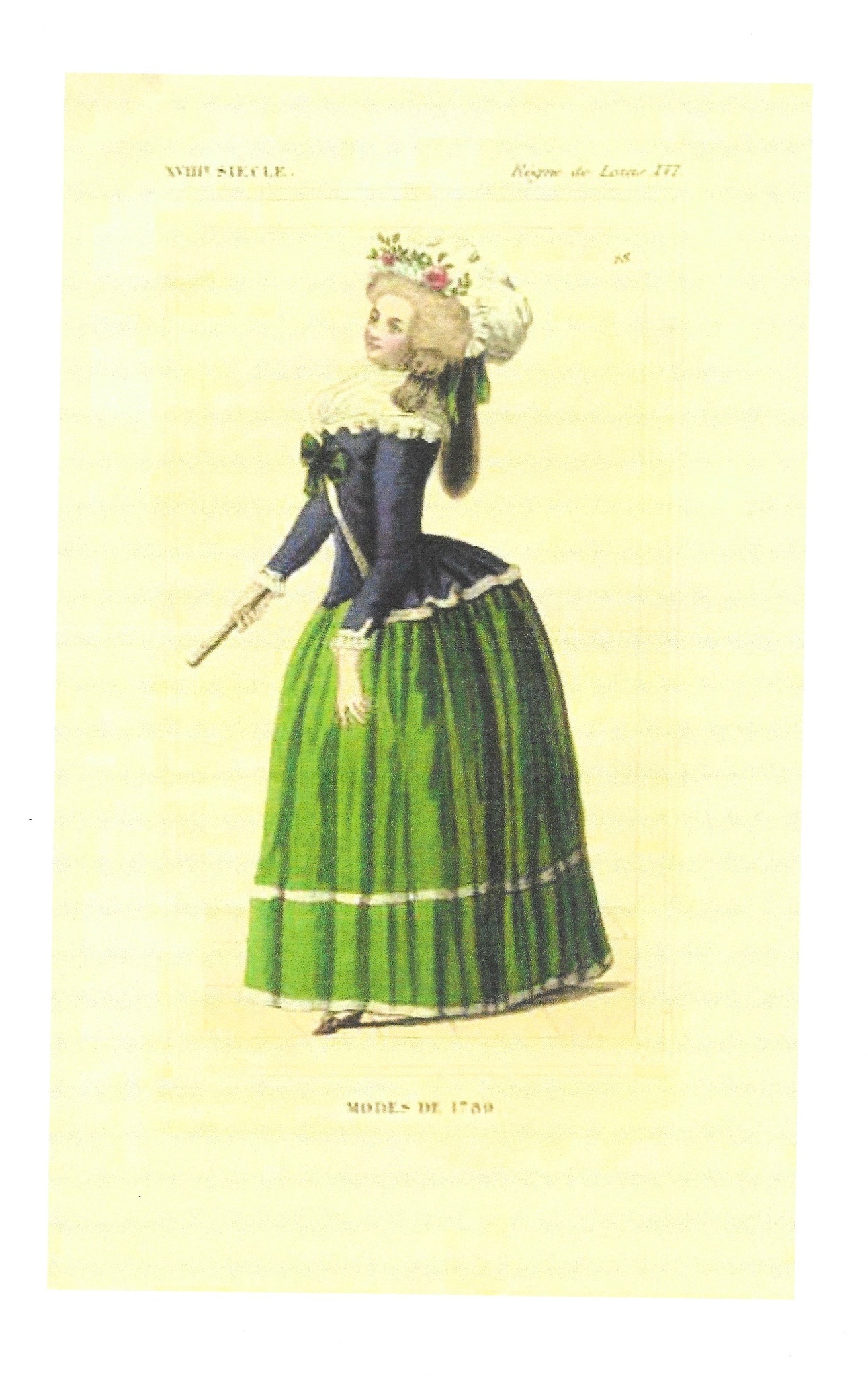
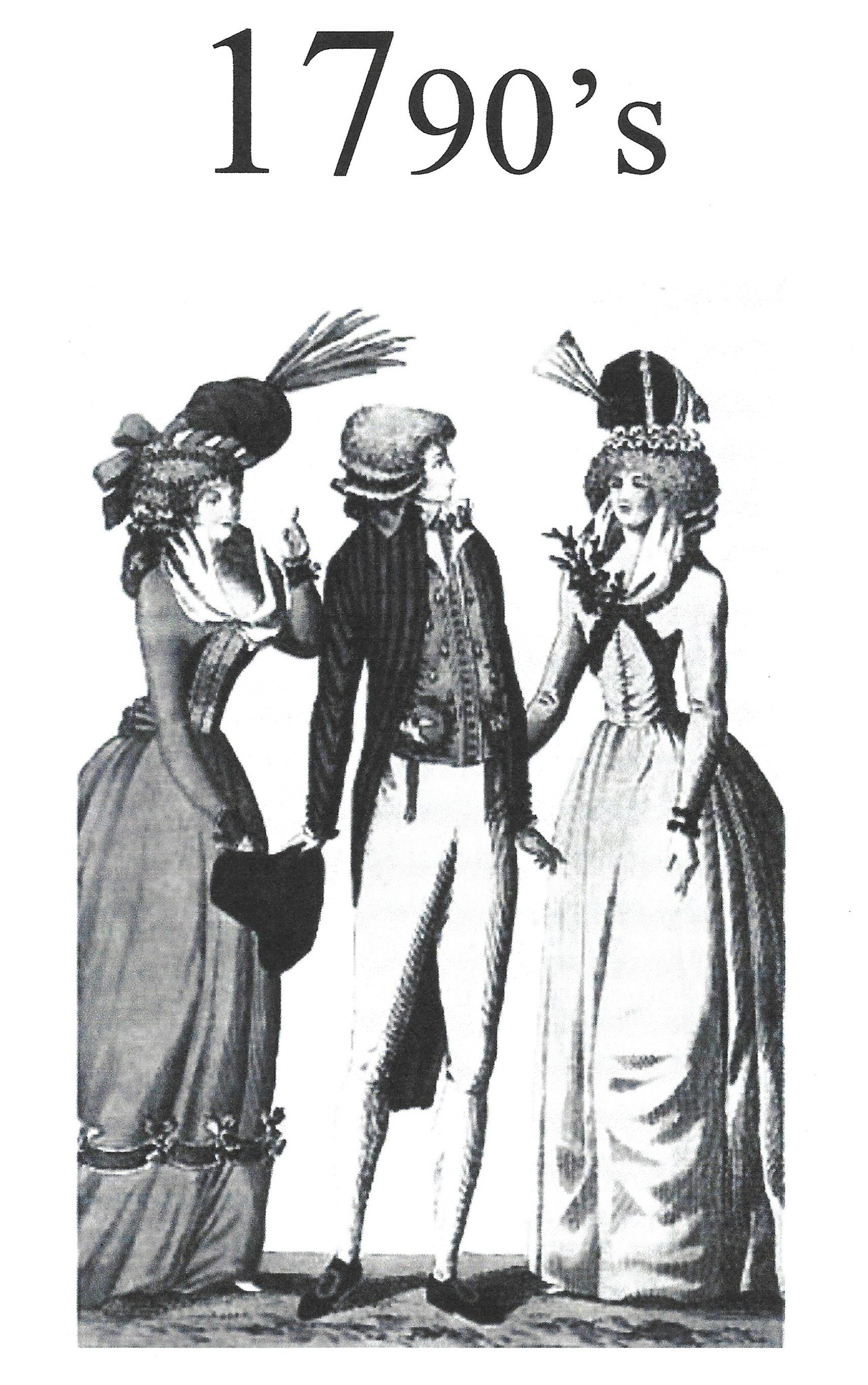
“The 1790’s saw women’s dress lose its artificially supported dignity in favor of comfort and naturalism. Not to be unnoticed however, late 18th Century women transferred their emphasis from splendor to sex and discarded not only their false rumps but their underwear as well. The woman of 1800 proudly displayed the strength of her femininity with as much force as her mid-century predecessor.”
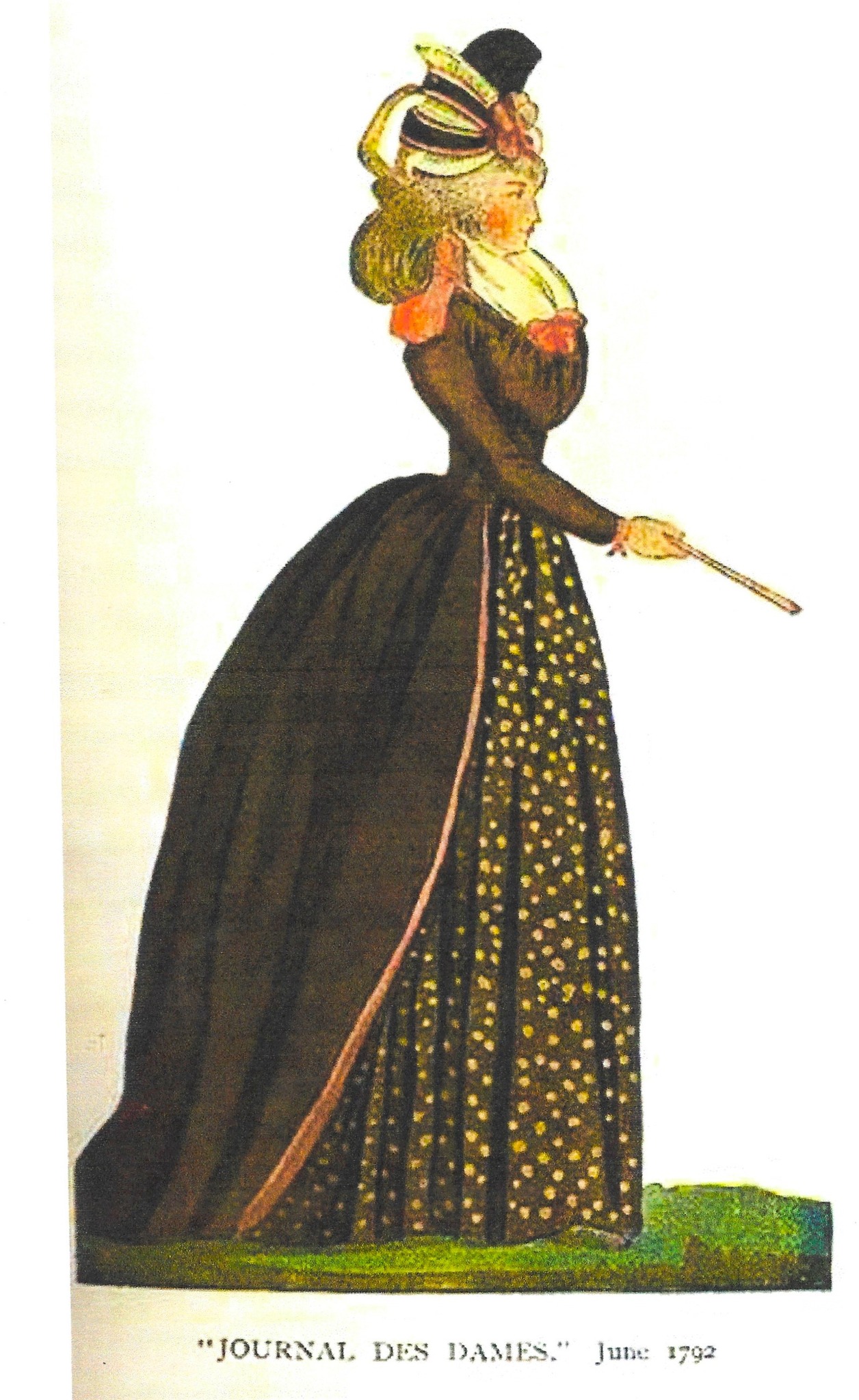
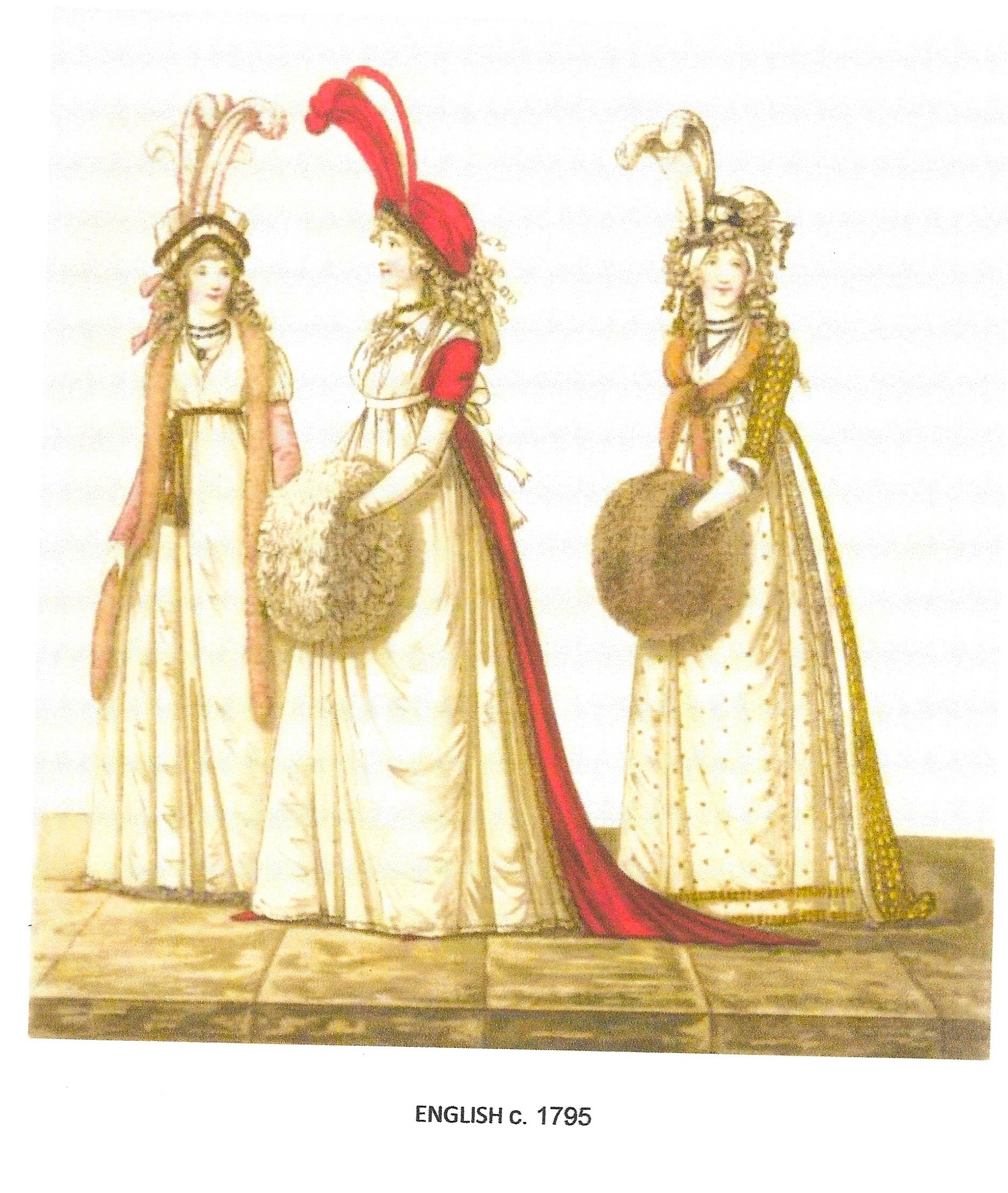
Please observe the images below and see some of the subtle changes in the gowns and hairdos of the 1790’s.
The 1800’s…..
“The woman of 1800 proudly displayed the strength of her femininity with as much force as her mid-century predecessor.”
‘Inspired by early Greek and Roman clothing, women incorporated draping techniques into their dresses and opted for fine white or light-colored fabrics.”
“The year 1800 heralded a new century and a new world. The fashion landscape had changed radically and rapidly; the way that women dressed in 1800 stood in stark contrast to the dress of a generation earlier. The wide panniers, conical stays, and figured silks of the eighteenth century had melted into a neoclassical dress that revealed the natural body, with a high waist and lightweight draping muslins. The origin of this garment was the chemise dress of the 1780’s, worn by influential women such as Marie Antoinette and Georgiana, Duchess of Devonshire. The chemise dress, in part, reflected a neoclassicism that was beginning to emerge in fashion. Interest in classical antiquity had been growing throughout the second half of the eighteenth century, following the excavations of Pompeii and Herculaneum….However, it was the violently shifting politics at the end of the eighteenth century that spurred this style to the forefront. The French Revolution brought the old world hierarchy crashing down, forever altering dress during the 1790s. The new classical style, imitating the clothing of ancient democracies, seemed to be evidence of a political philosophy on the rise.”
Sources: Google Search, https://fashionhistory.fitnyc.edu/1800-1809/, Wikipedia.com, The Louvre Museum
Photos show examples of the fashions of 1800.
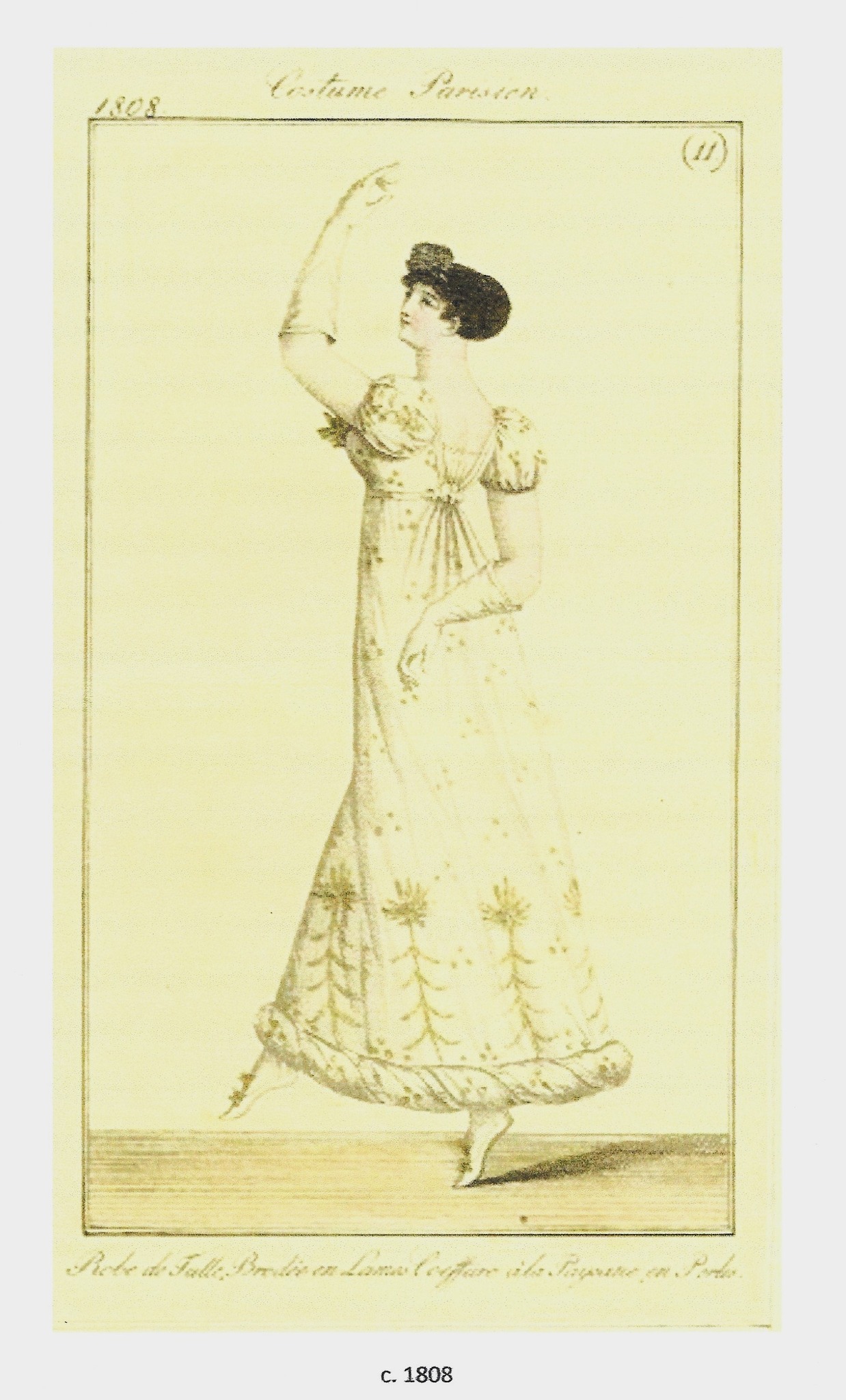
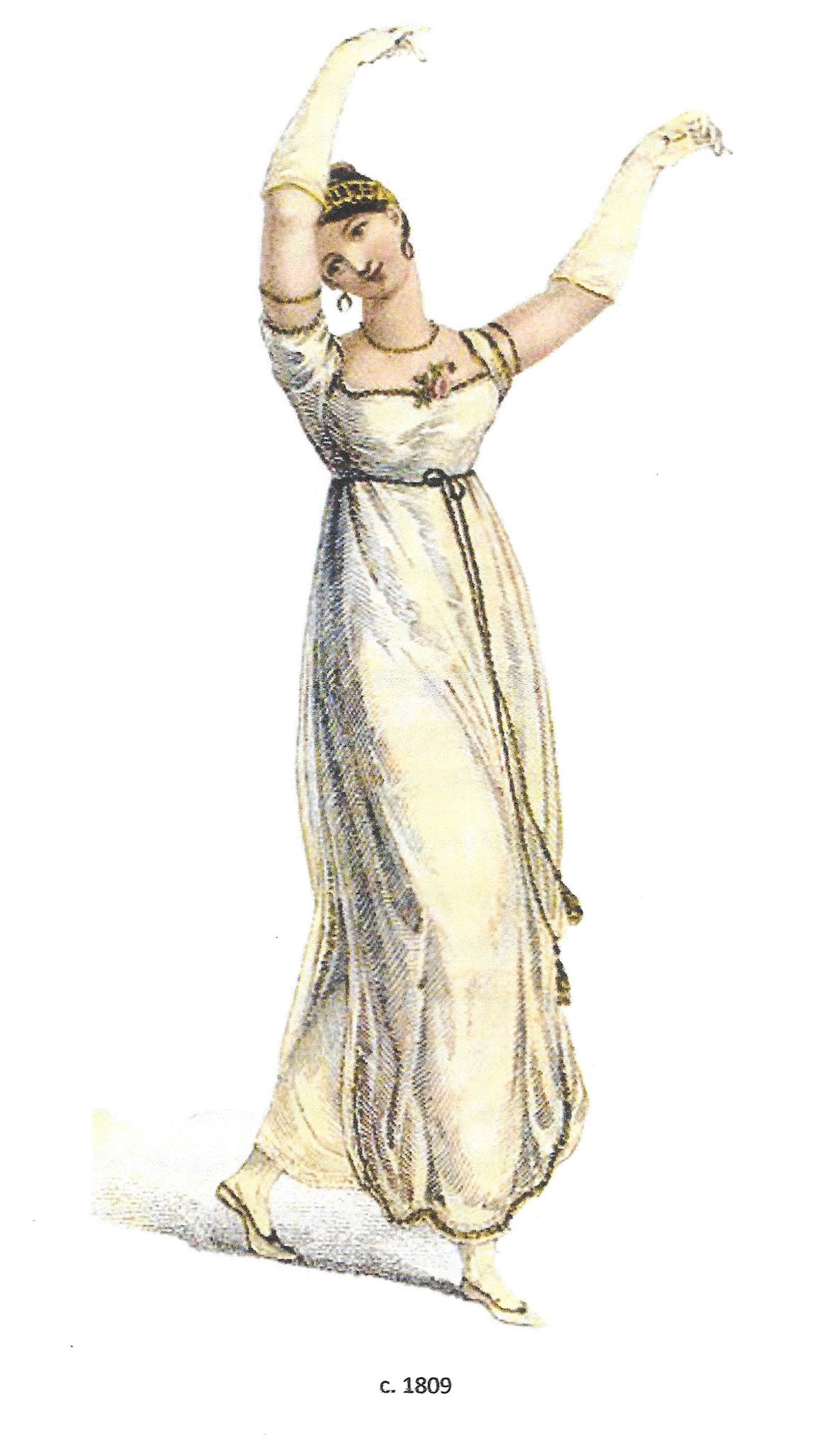

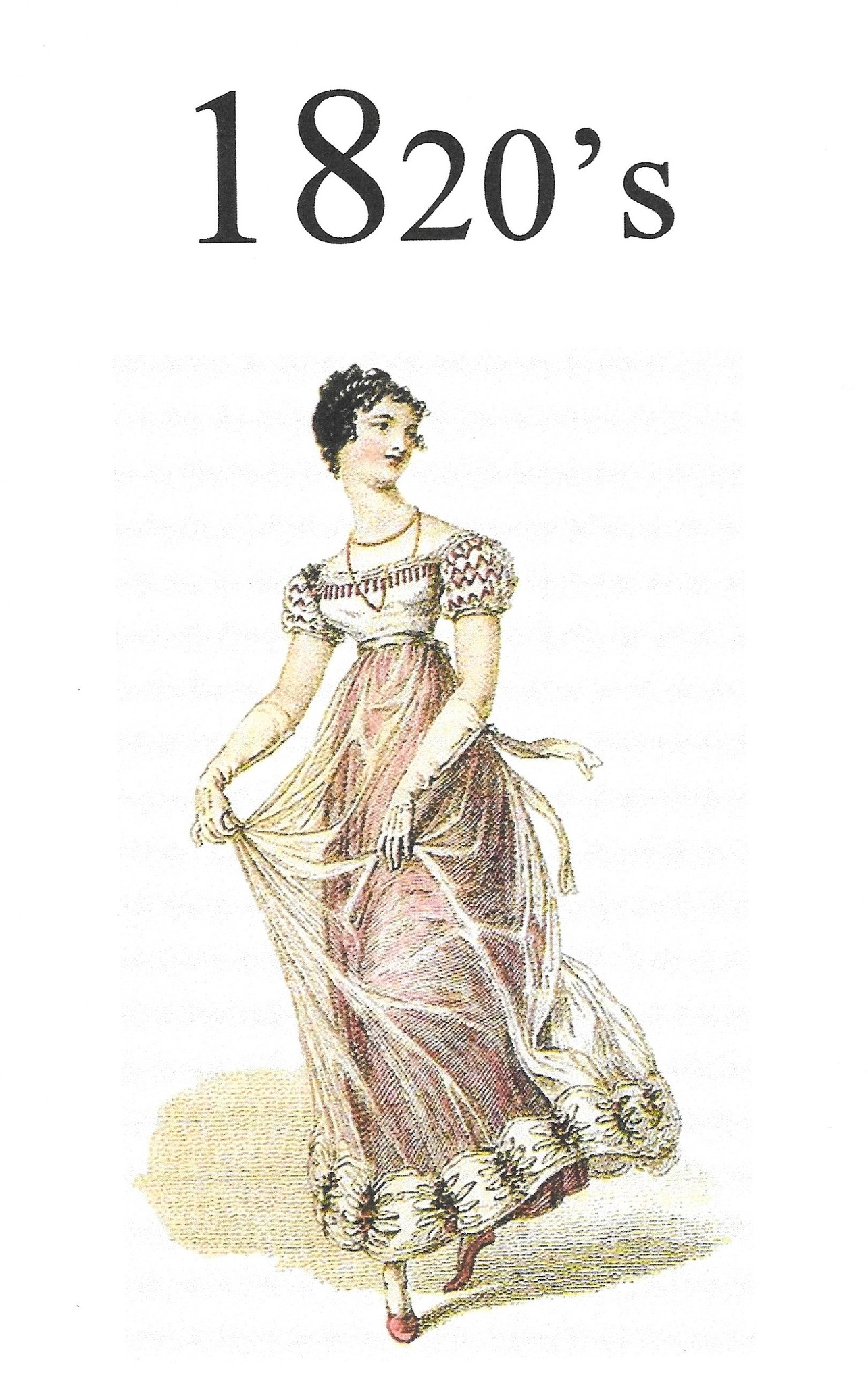
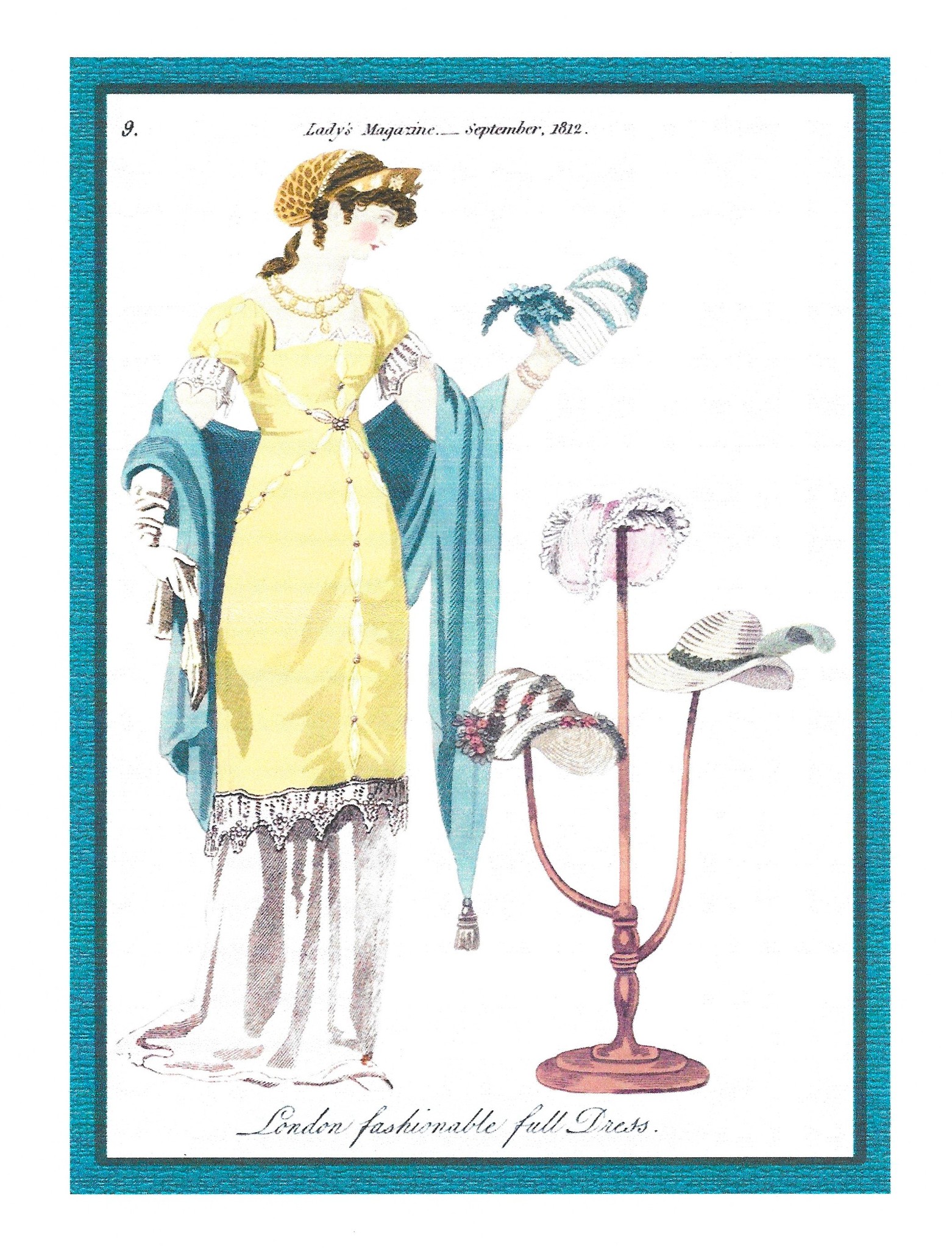
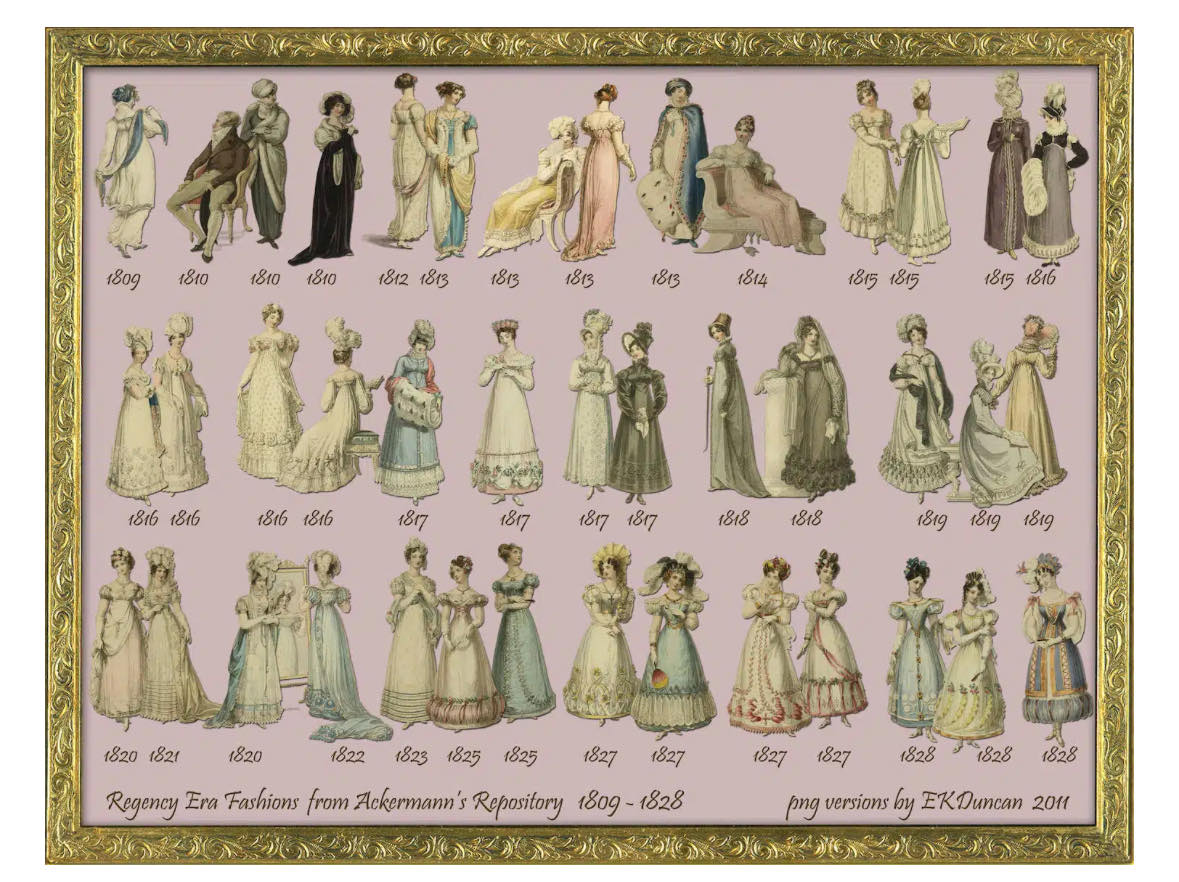
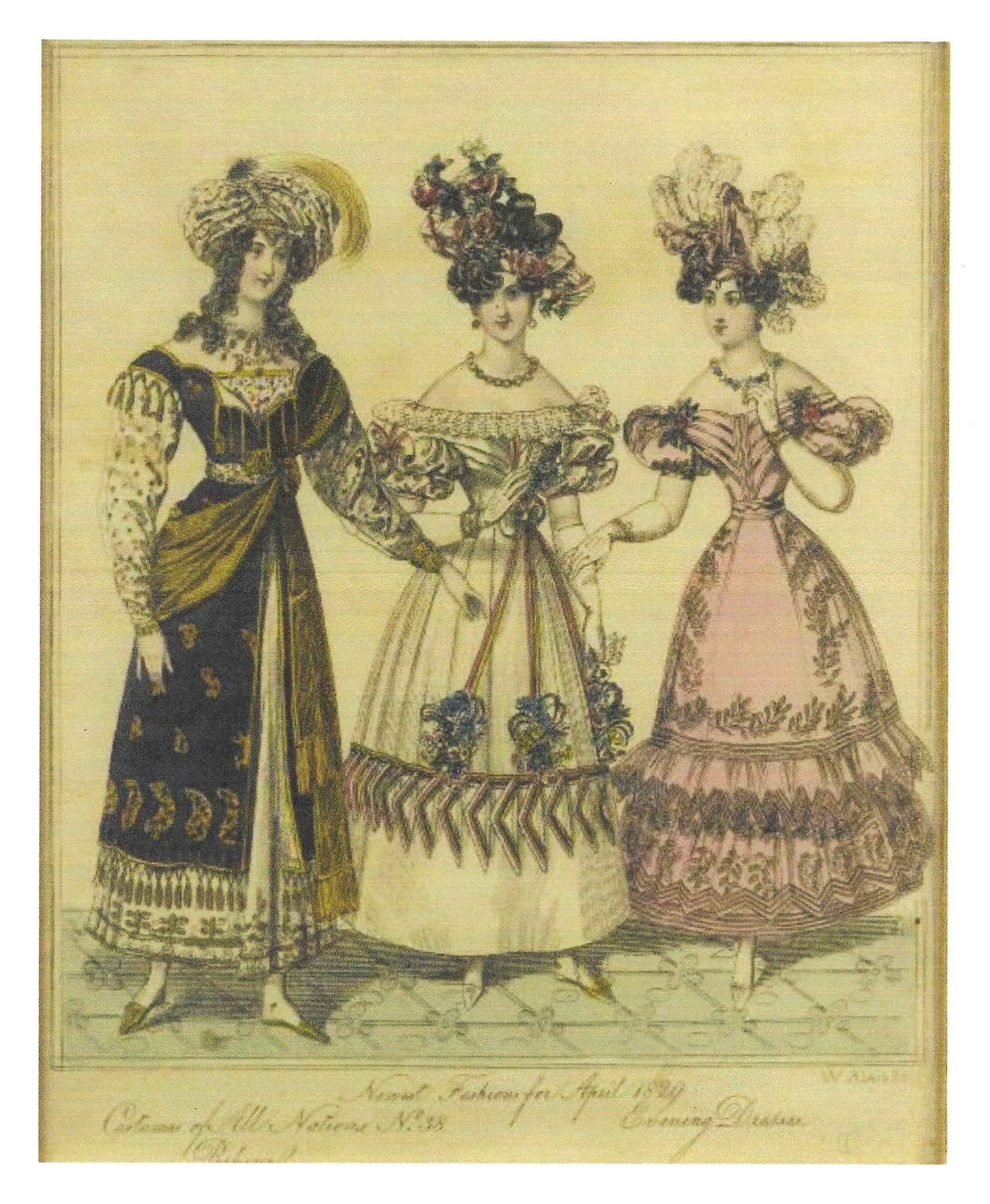
1810’s and 1820’s
“Necklines became squarer and adjusted by drawstrings, while the body became narrower. Sleeves remained above the elbow, with the length suited to the season or gown worn over the top. Though cotton had taken over for almost all other garments, white linen was still much preferred for underclothes.”
“The high-waisted neoclassical silhouette continued to define womenswear of the 1810s, as fashion remained inspired by classical antiquity. However, the purity of the line was increasingly broken by trim, colors, and a new angularity as tubular skirts were gradually replaced by triangular ones by the end of the decade.”
“The Pelisse can be a confusing term because there were several forms over a 50-year period. The first form of pelisse worn from 1800 to 1810 was an empire line coat-like garment to the hip or knee.
After 1810 it was worn full length and was a warmer longer-sleeved coat than the Spencer, but often made of the same materials. It was usually fur trimmed, straight in cut, belted at a high waist like the gown and sported a broad cape-like collar an influence of military styles. The colors for the pelisses were golden brown, dark green, and blue. The Pelisse was normally worn over pale gowns which were visible as it was worn open at the front.
From 1818 onwards women wore a coat dress variation called a pelisse-robe. It could be suitable for indoors or outdoors and was essentially a sturdy front fastening carriage, walking, or day dress.”
More to come!
References and Images”
Mary Ann Spinelli DOLL NEWS
Fashion History by FIT NYC edu.
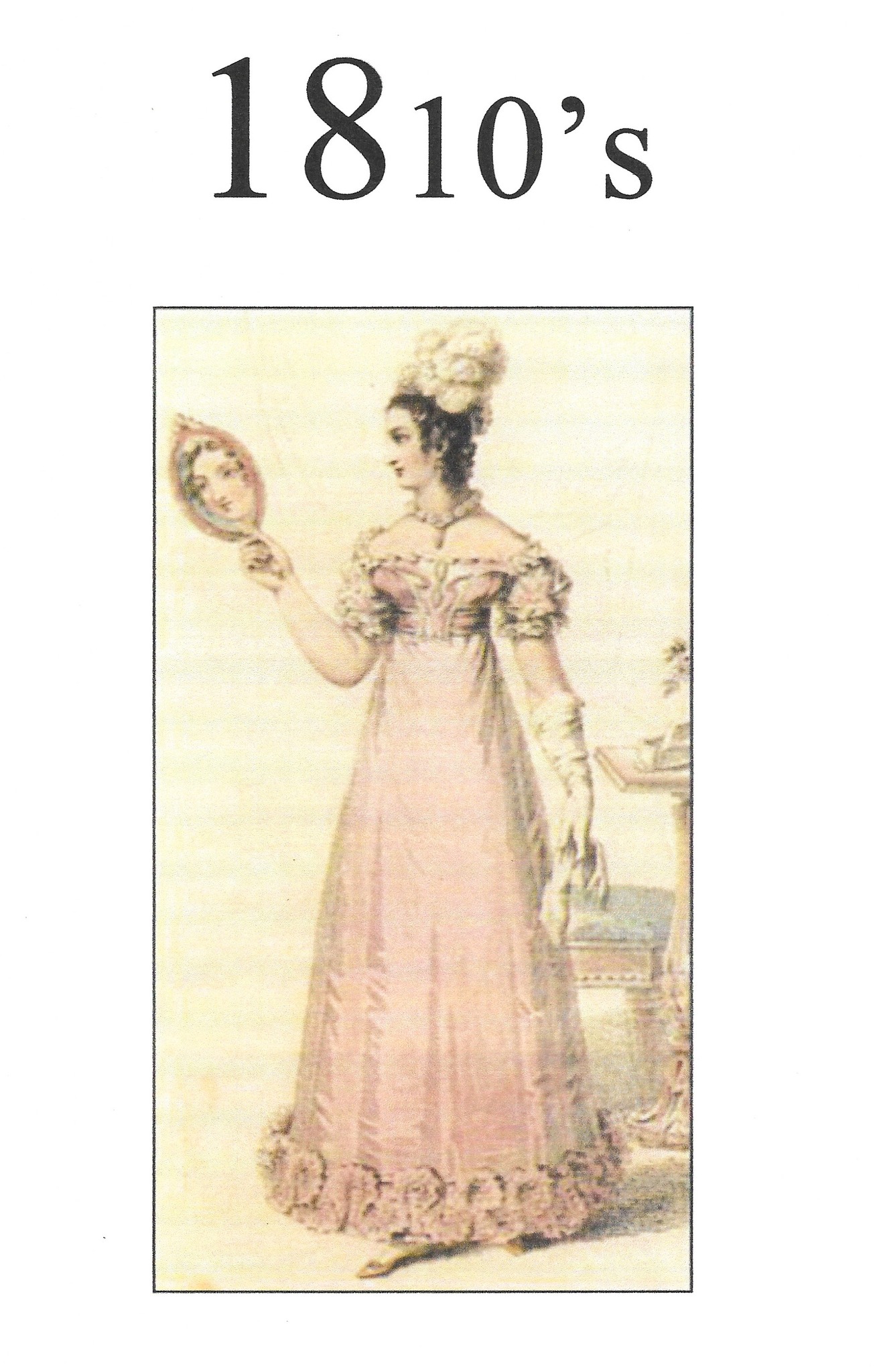
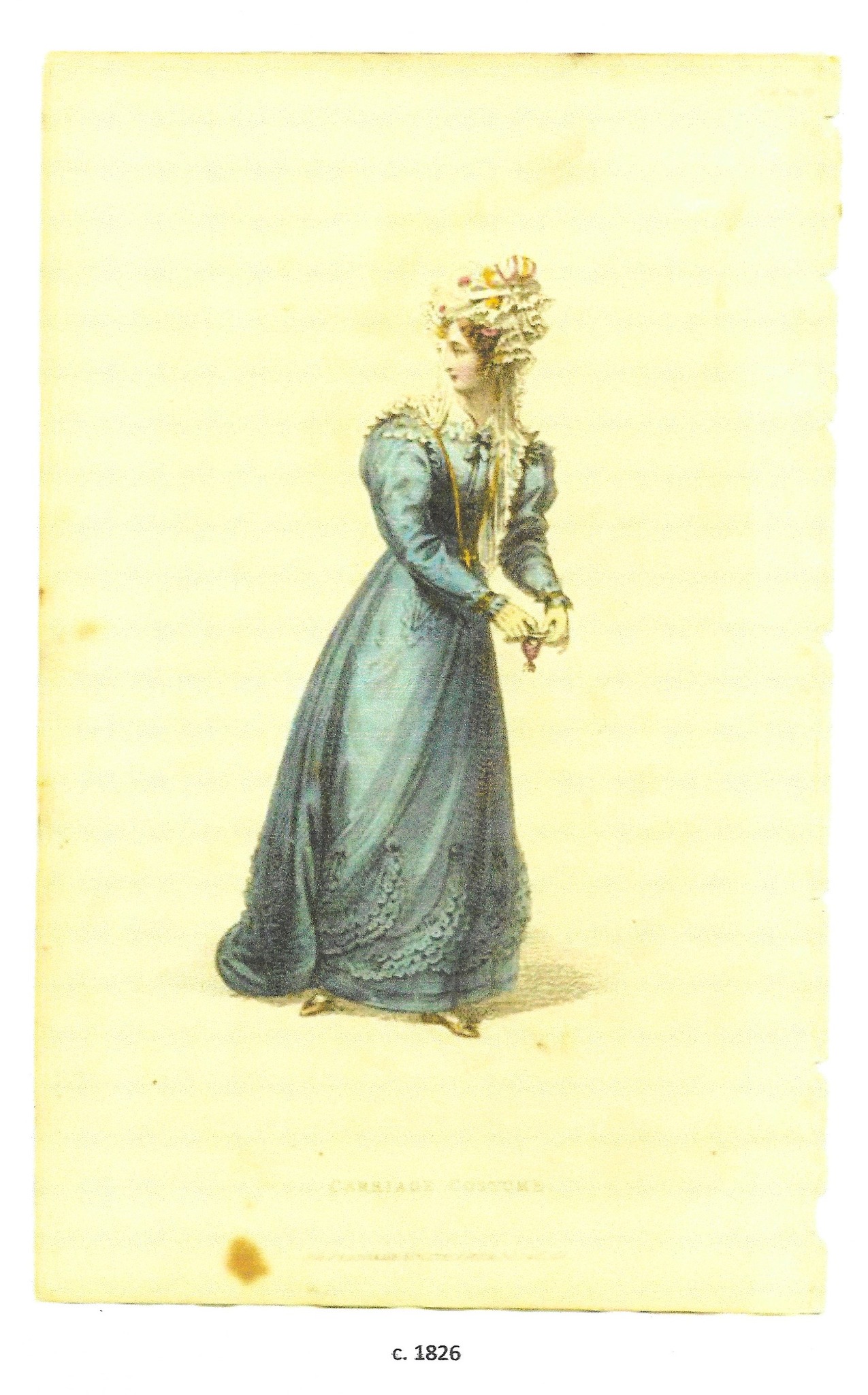
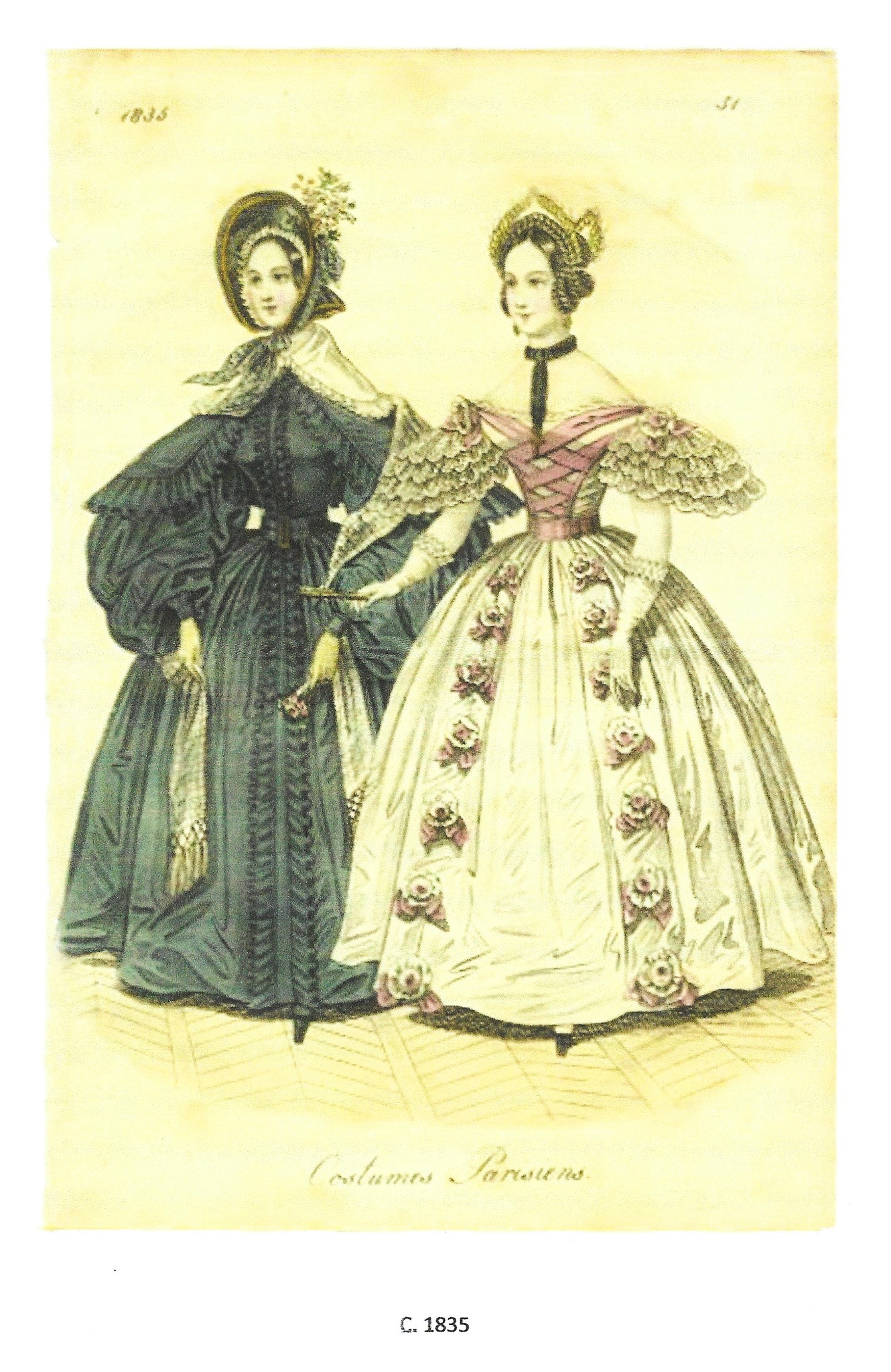
The 1830’s….
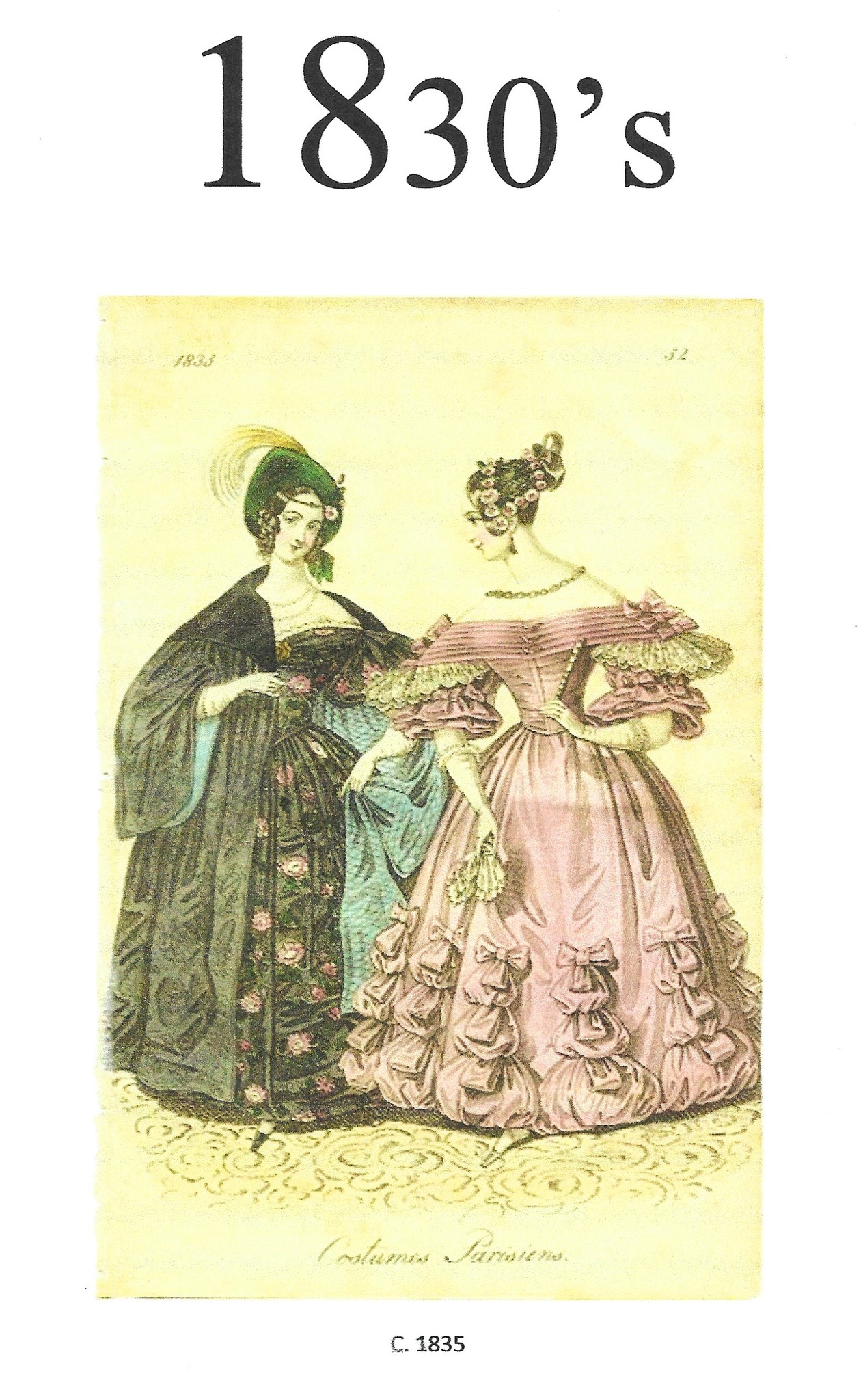
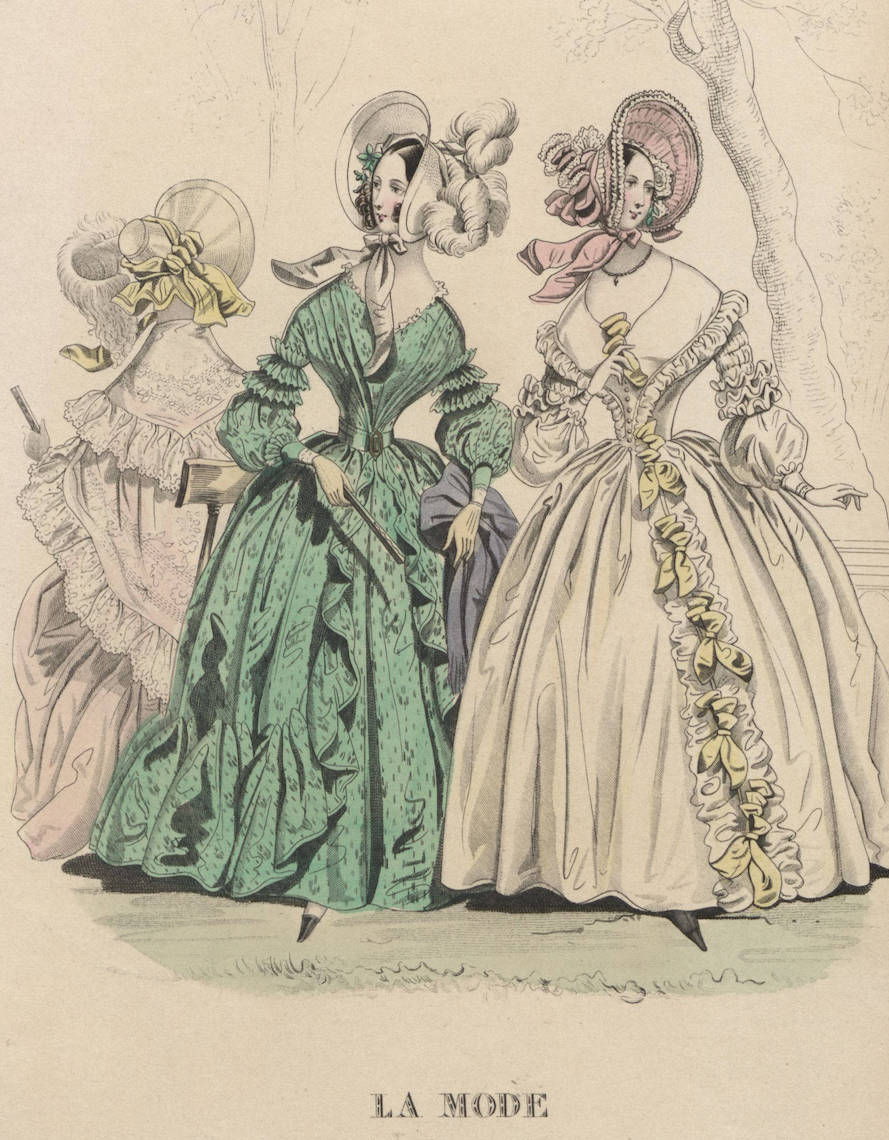
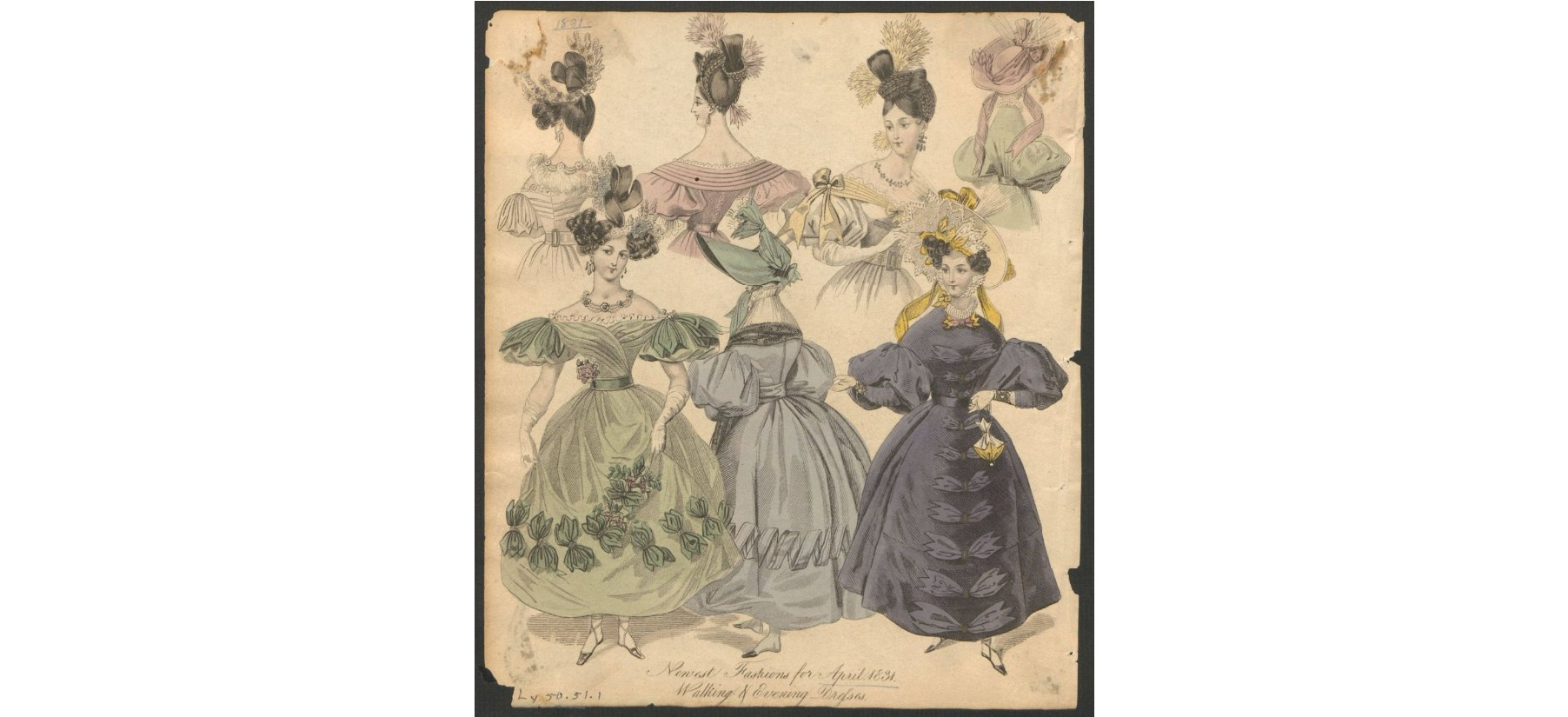
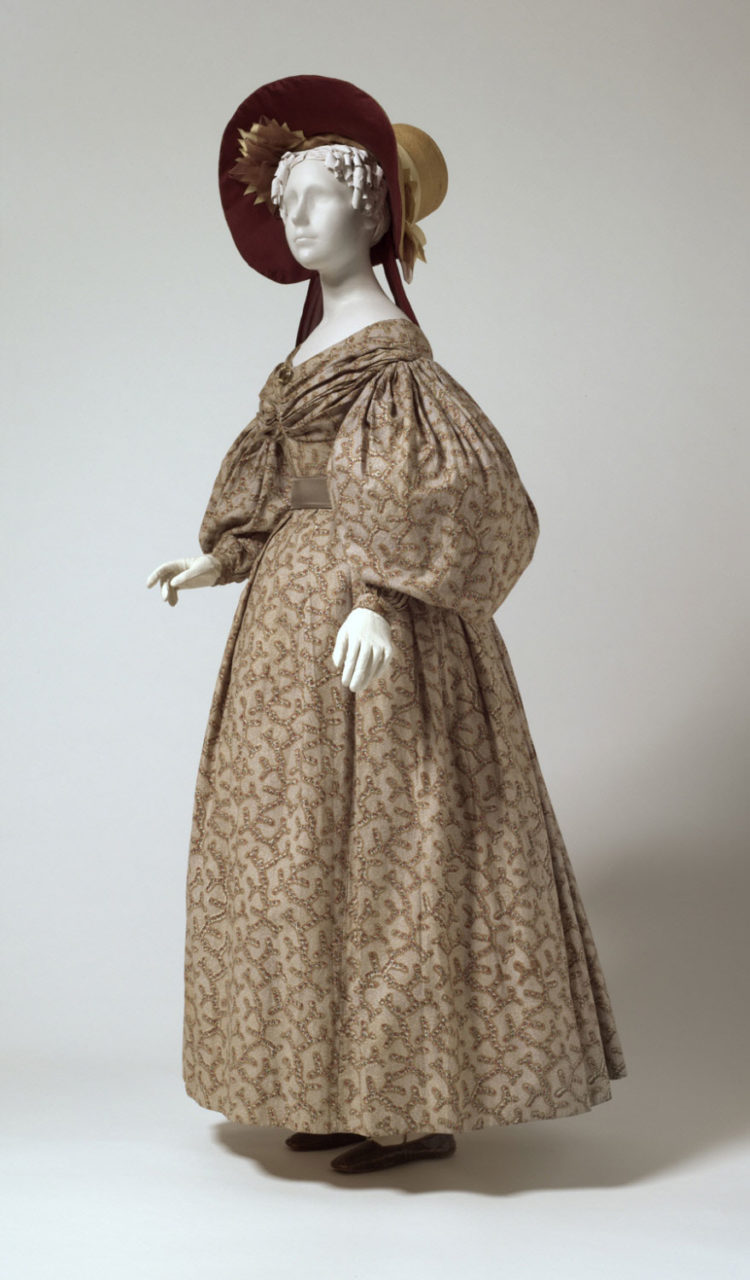
“1830s fashion was dramatic and overwhelming, marked by huge sleeves and hats, reflecting the Romantic movement. Extravagant dandies led the fashion world. After 1836, the exuberance that had defined fashion since the 1820s collapsed into a drooping sentimentality.”
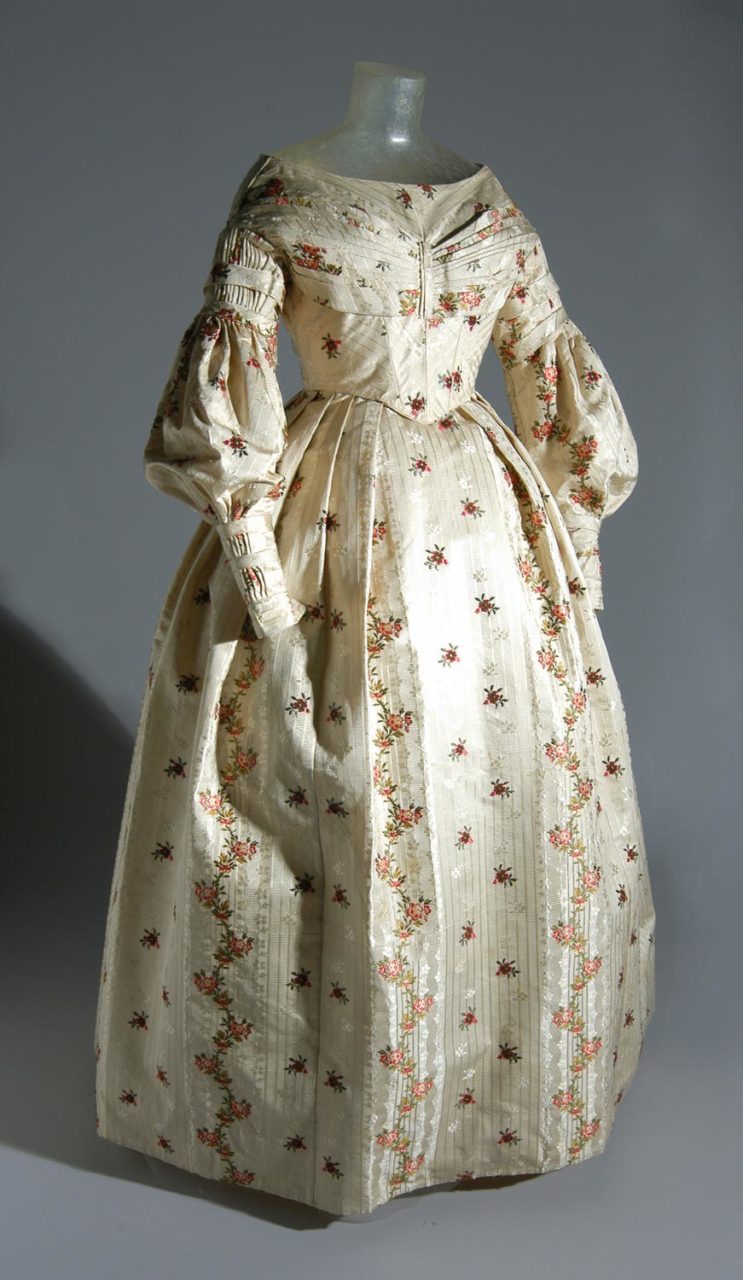
The silhouette of womenswear abruptly shifted in 1836, and the fashionable woman was no longer one of ebullient energy, but a mild, modest woman who eschewed brash forms (Cunnington 105). This shift towards modesty was personified by the ascension of Queen Victoria to the throne in 1837. Despite her young age, Victoria preferred an understated, simpler style, and was cautious regarding new fashions. Her quiet modesty, piety, and maternal devotion to her family represented the ideal Romantic woman in many ways (Bassett 30; Byrde 46).”
The images below show the differences between the earlier 1830’s versus the later 1830’s under Queen Victoria’s influence.
References and images credit: https://fashionhistory.fitnyc.edu/1830-1839/
The Philadelphia Museum of Art, Los Angeles Museum of Art, The Metropolitan Museum of Art, Mary Ann Spinelli for DOLL NEWS

The 1840’s…..
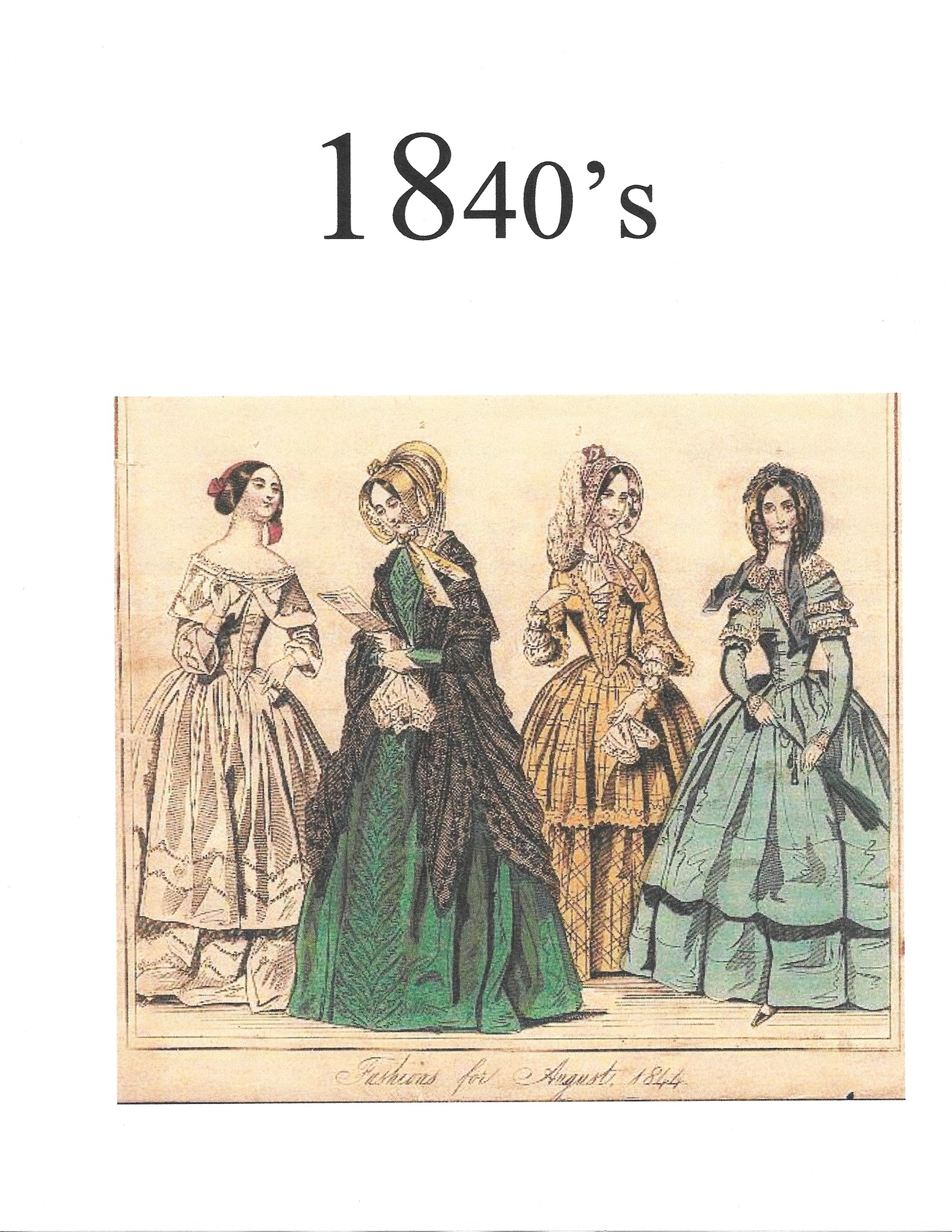
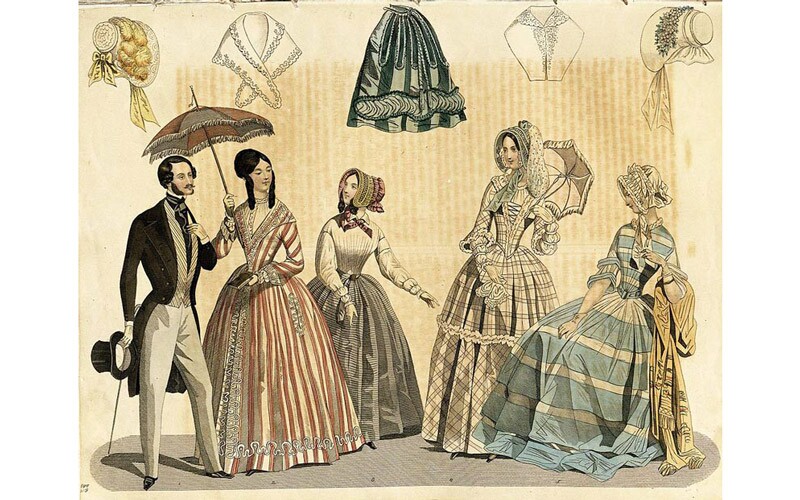
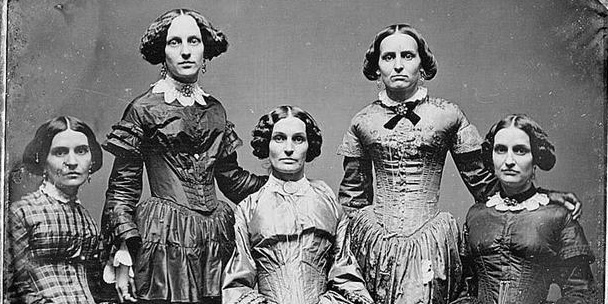
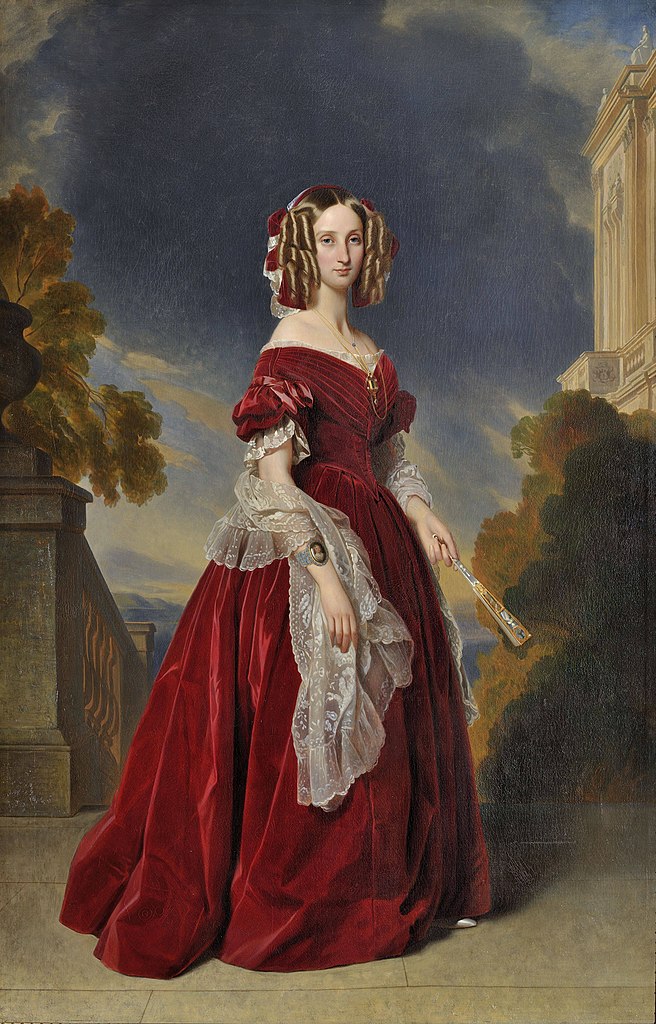
“Restraint and restriction characterized the demure style of women’s fashions in the 1840s (Fig. 1). Fashion historian Jane Ashelford notes: Fashion illustrators no longer depicted the fashionable lady as a spirited and animated being, but rather as a timid, reticent and self-effacing person sheltering behind the ever-encroaching brim of her bonnet.”
Even the average woman of limited means was aware of fashionable trends due to the booming ladies’ magazine industry. In America, Godey’s Lady’s Book and Peterson’s Magazine reigned supreme, but French and English magazines could be found as well. The fashion plates published in these periodicals allowed all women to consume proposed fashions (Tortora 330-331; Severa 2-3).
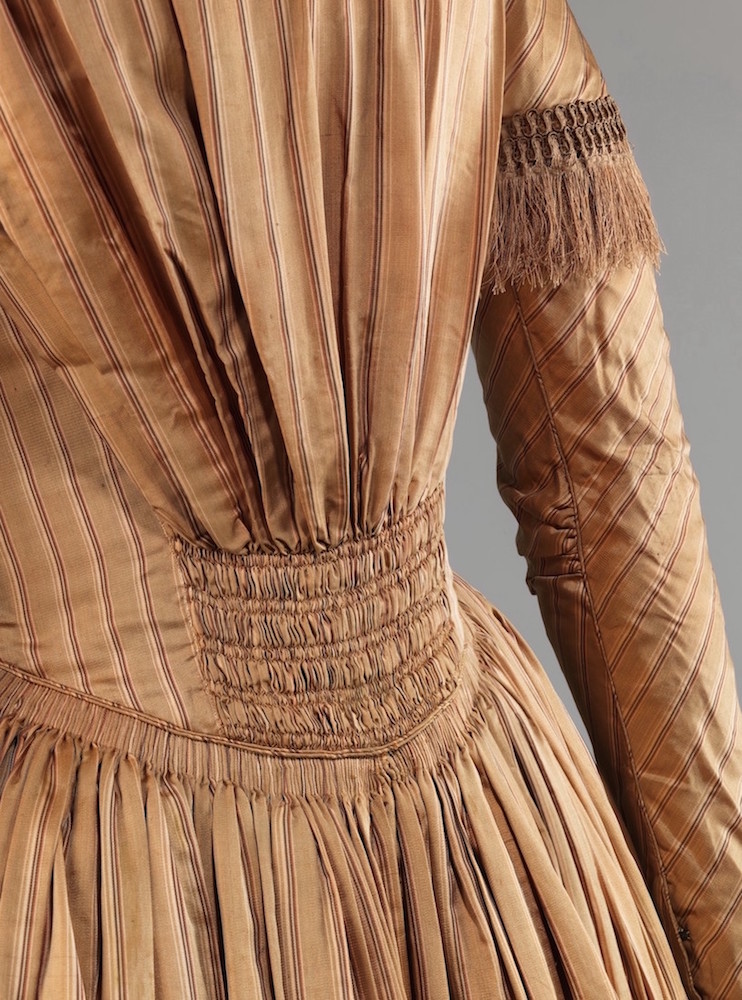
“During the 1840s, women’s clothing was all hand-sewn, and had to be custom-made either at home or by a hired seamstress. While Elias Howe invented the lock-stitch sewing machine in 1846, it would not come into widespread use until the following decade. In general, all women had a sound understanding of sewing, and many items were made at home. However, as paper patterns were not yet widely available, and the complexity of 1840s dresses were difficult to achieve for an amateur.”
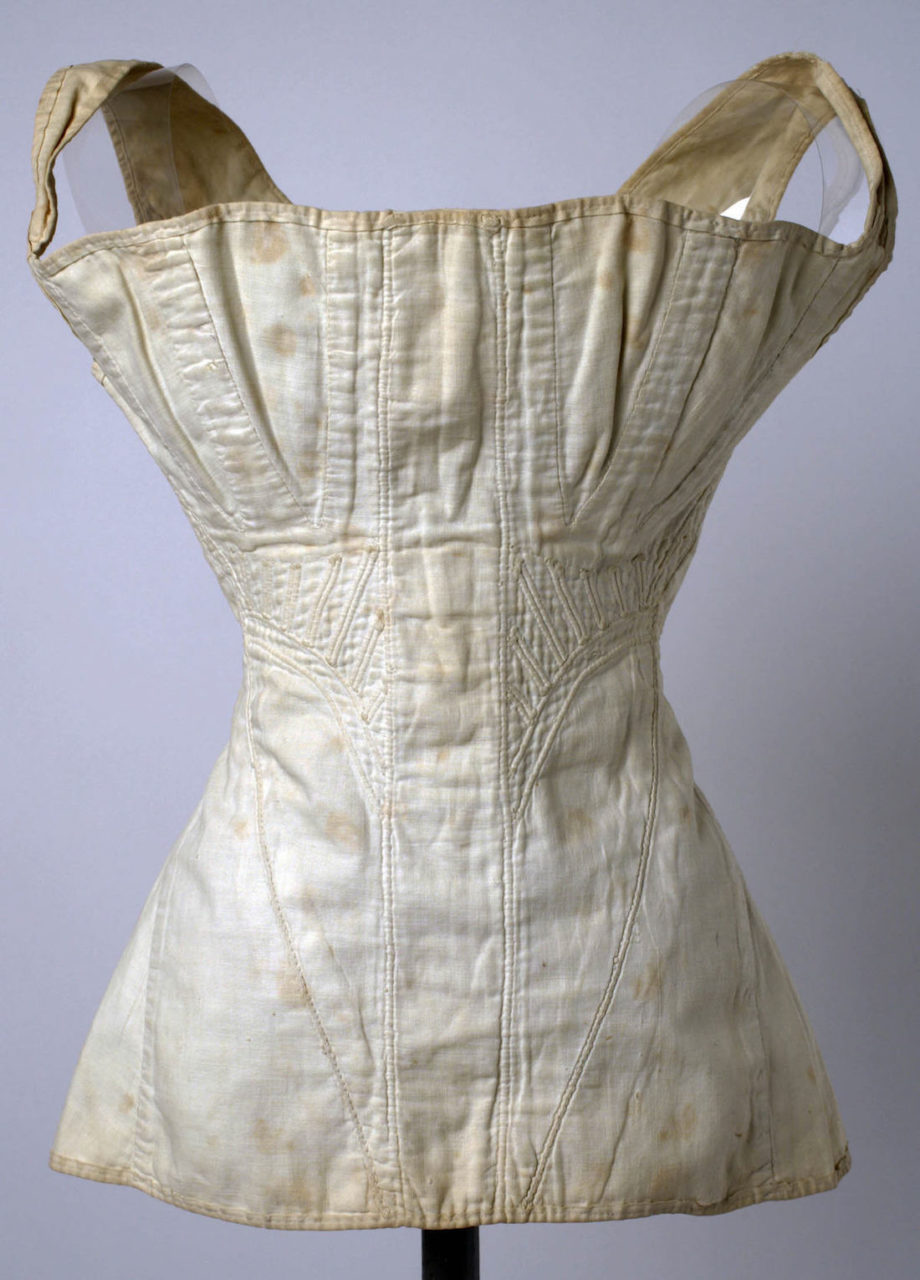
“The silhouette of the 1840s consisted of a long-waisted bodice, tight, narrow sleeves, and a full, dome-shaped skirt that now skimmed the floor. By the very beginning of the decade, the high waist of the 1830s had lengthened into a long, severely constricted torso marked by a bosom that was flattened and spread outward. This unnatural shape was achieved by a corset that ran from the breasts down over the hips, enforced with multiple channels of heavy cording and whalebone. Most importantly, all corsets featured a channel in the center front, into which would be placed a long, flat busk made of steel, wood, or whalebone. This rigid busk would run from between the breasts all the way down over the belly, preventing a woman from bending at the waist. Corsets laced up the back in this period.”
“Women wore their hair parted in the center, and looped smoothly over the ears, drawn back into a chignon or bun. An alternate style, worn especially by younger women for dressier occasions, consisted of long ringlet curls hanging on either side of the face, with the rest of the hair drawn back into a chignon.”
“During the 1840s and early 1850s, there was scarcely a more famous performer than Jenny Lind. A true celebrity, Lind was one of the first personalities whose name was used to sell clothing and accessories.Jenny Lind did not wear elaborate or flashy fashions as one might assume for such a sparkling celebrity; for her American tour, she performed in an understated white gown. In portraits, she is usually depicted in elegant, if simple and modest, fashions.”
More decades to come! We highly recommend that one reads more from the references listed. There is so much more information that we could not include here.
References. https://fashionhistory.fitnyc.edu/1840-1849/ – 1840-1849 Posted by Harper Franklin | Last updated Nov 2, 2020 | Published on Mar 26, 2020 | 1840-1849, 19th century, decade overview, Ashelford, Jane. The Art of Dress: Clothes and Society, 1500-1914. London: National Trust, 1996. http://www.worldcat.org/oclc/243850605 , Byrde, Penelope. Nineteenth Century Fashion. London: Batsford, 1992, Tortora, Phyllis G. and Keith Eubank. Survey of Historic Costume, 5th ed. New York: Fairchild Books, 2010. Severa, Joan L. Dressed for the Photographer: Ordinary Americans and Fashion 1840-1900. Kent, OH: Kent State UP, 1995. The Metropolitan Museum of Art, Wikimedia, Library of Congress, The Cincinnati Art Museum, National Portrait Gallery, https://www.familysearch.org/…/1840s-fashion-victorian-age, Mary Ann Spinelli DOLL NEWS.



The 1860’s
The late 1860’s and early 1870’s saw a wave of nostalgia for the supposedly simpler times of the Regency/Empire/Federal era. This is reflected in the brief return of the empire waist, which sometimes looks a little odd when paired with cage crinolines and bustles, but I do love the early bustle period. Nostalgia for the early 1800’s would continue in the form of books, art and postcards.
“The silhouette of the 1860s was defined by the cage crinoline or hoop skirt, a device that emerged in the late 1850s, consisting of a series of concentric steel hoops attached with vertical bands of tape or braid (Cumming 37). Eliminating the need for multiple heavy petticoats to achieve the fashionable wide skirts, cage crinolines allowed skirts to reach their largest circumference around 1860 (Laver 188). Hoops were relatively affordable, creating a fashion that was worn throughout society and frequently the subject of withering ridicule as women’s skirts took up ever more space on sidewalks, benches, and halls (Shrimpton 13). Throughout the decade, the shape of the cage crinoline subtly changed, altering the entire silhouette with it. In 1860, it was huge, often measuring twelve to fifteen feet in circumference.”
“In the 1860s, a trend for skirts paired with shirtwaists, or blouses, as opposed to a matching bodice became prevalent for casual daytime wear, especially among young women. The most important type of shirtwaist was the “garibaldi” inspired by the military uniforms of Italian freedom fighter Giuseppe Garibaldi (Severa 197). Traditionally made in a scarlet merino wool with black braid and buttons, it featured a high neckline and full sleeves gathered into a tight cuff. The garibaldi shirt was also seen in black wool or white cotton (Cumming 90). Another military-inspired women’s fashion was the “Zouave” jacket borrowed from the Algerian Zouave troops who fought in the Italian war of 1859. The short, collarless Zouave jacket featured rounded borders trimmed in soutache braid, and fastened at the neck. It was frequently paired with a garibaldi (Cunnington 211; Tortora 366).
Technology and invention was evident in the fashion of 1860s women. Firstly, the use of the sewing machine grew exponentially, especially after the Civil War broke out in the United States instantly causing an enormous demand for ready-to-wear military uniforms (Tortora 358). The Singer Company, founded by Issac Singer in the 1850s, was the largest manufacturer of sewing machines in the world by 1860 and specifically created and marketed versions for domestic use (Brittanica).”
References and direct quotes: Mary Ann Spinelli DOLL NEWS,
https://fashionhistory.fitnyc.edu/1860-1869/, Theriaults Auctions Florence Theriault,
Photos: Mary Ann Spinelli Fashion Institute of Technology, Florence Theriault, Kyoto Fashion Institute, Royal Collection Trust, Metropolitan Museum of Art, Singer Through the Ages – Sewalot.com


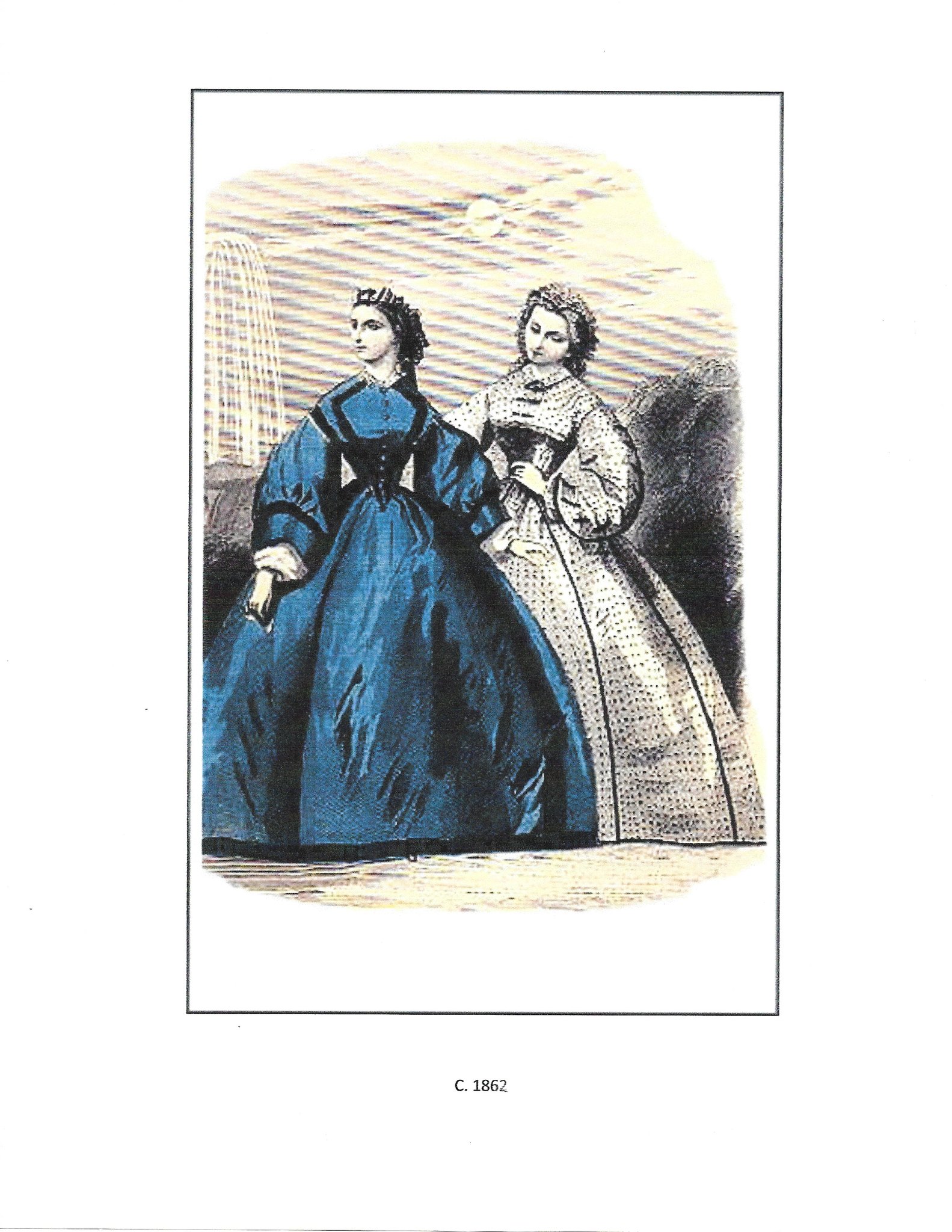

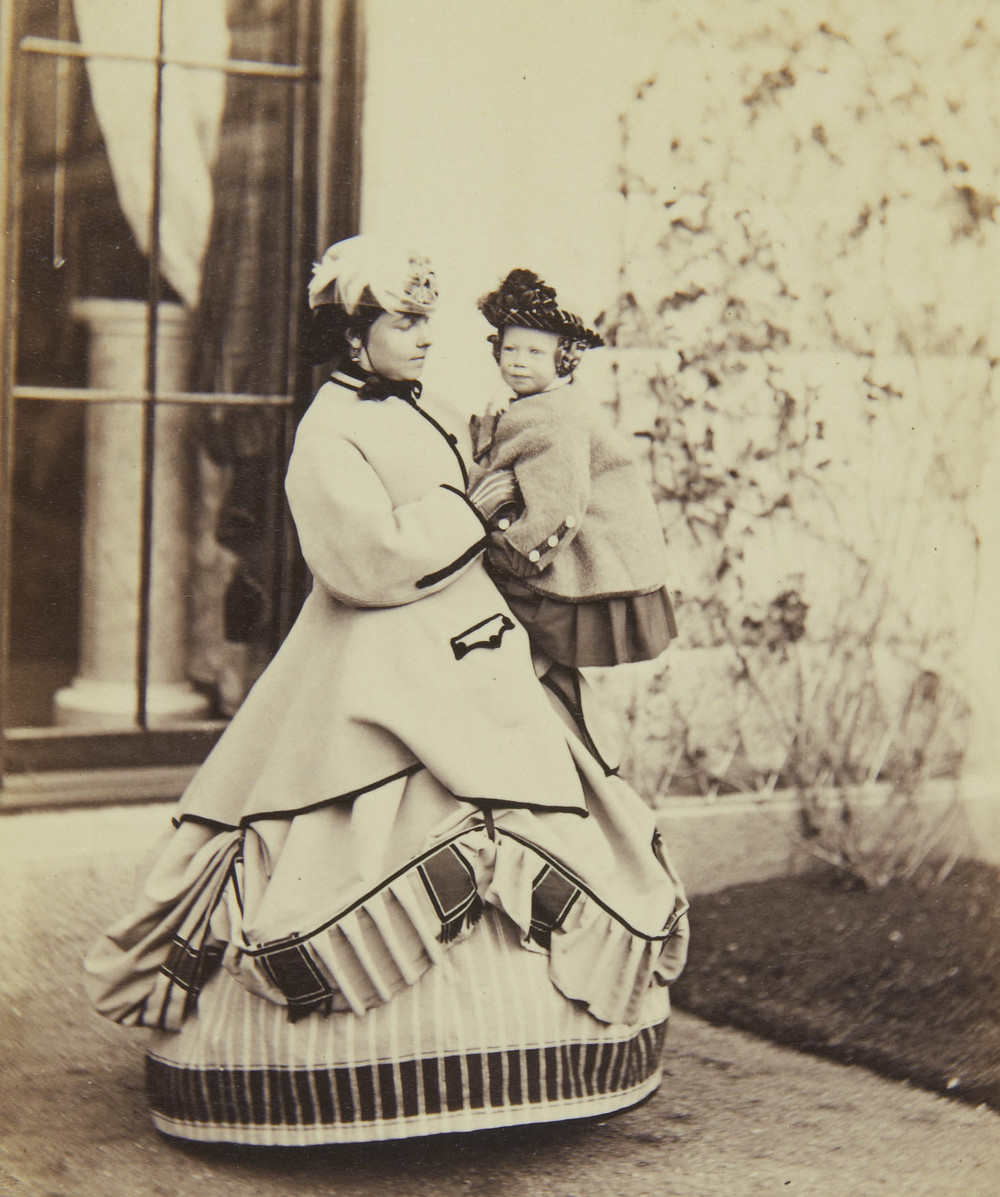
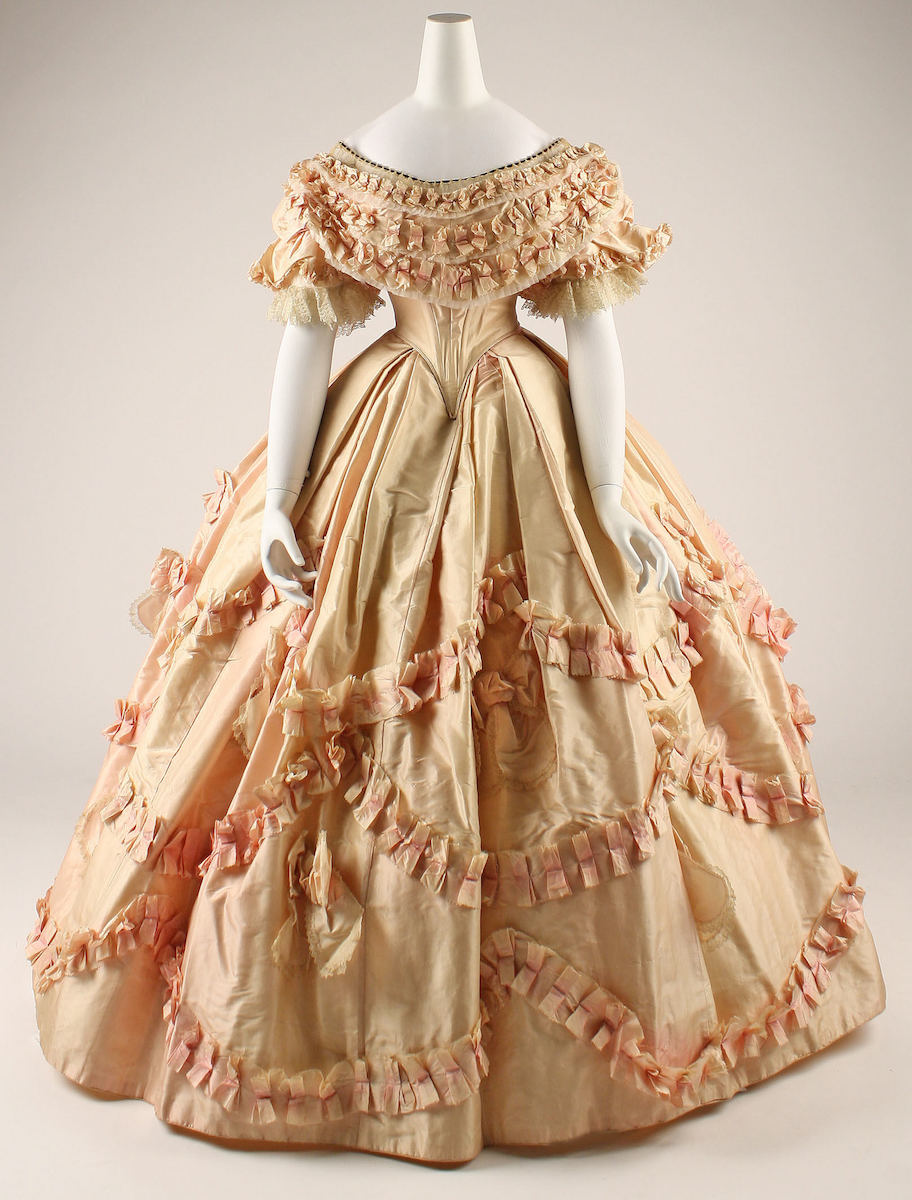

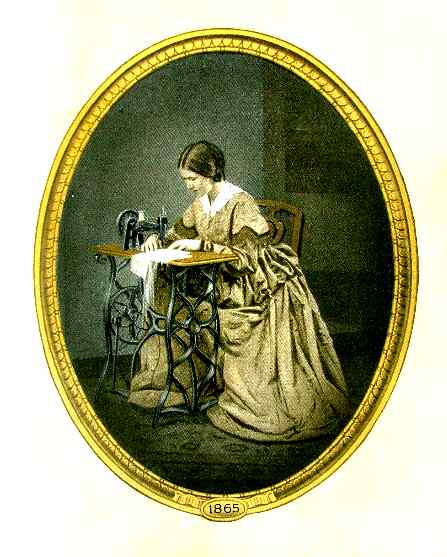
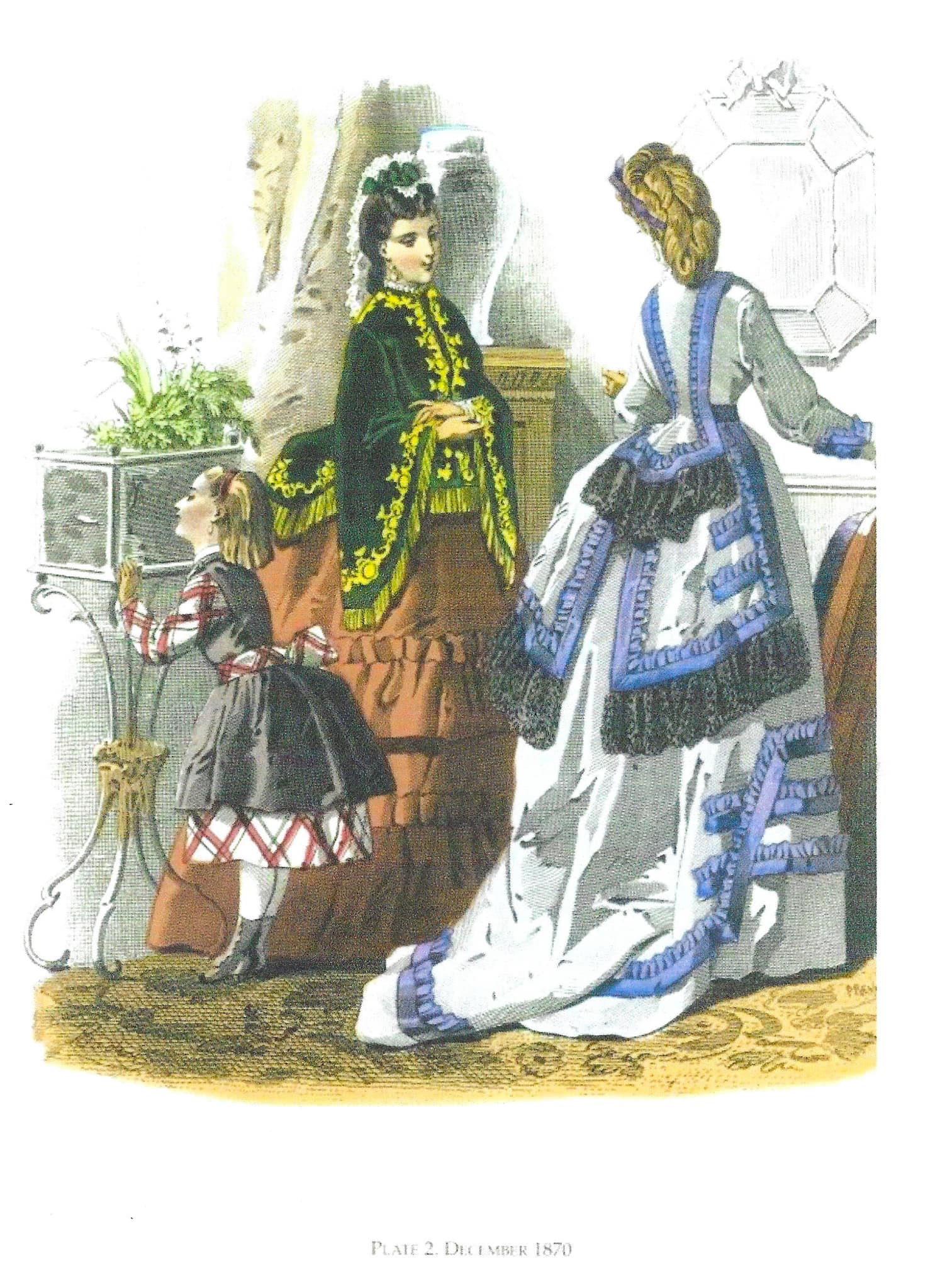
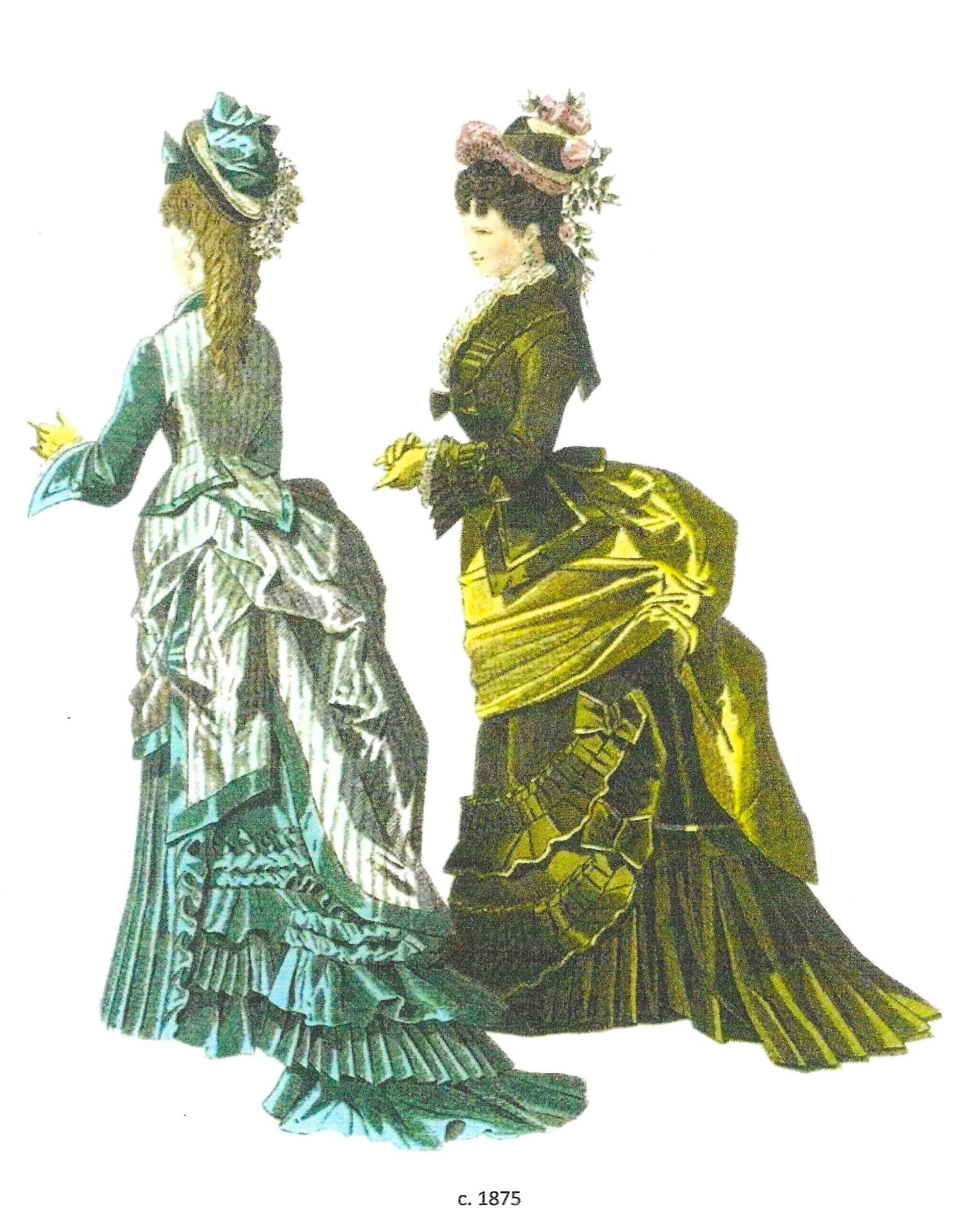
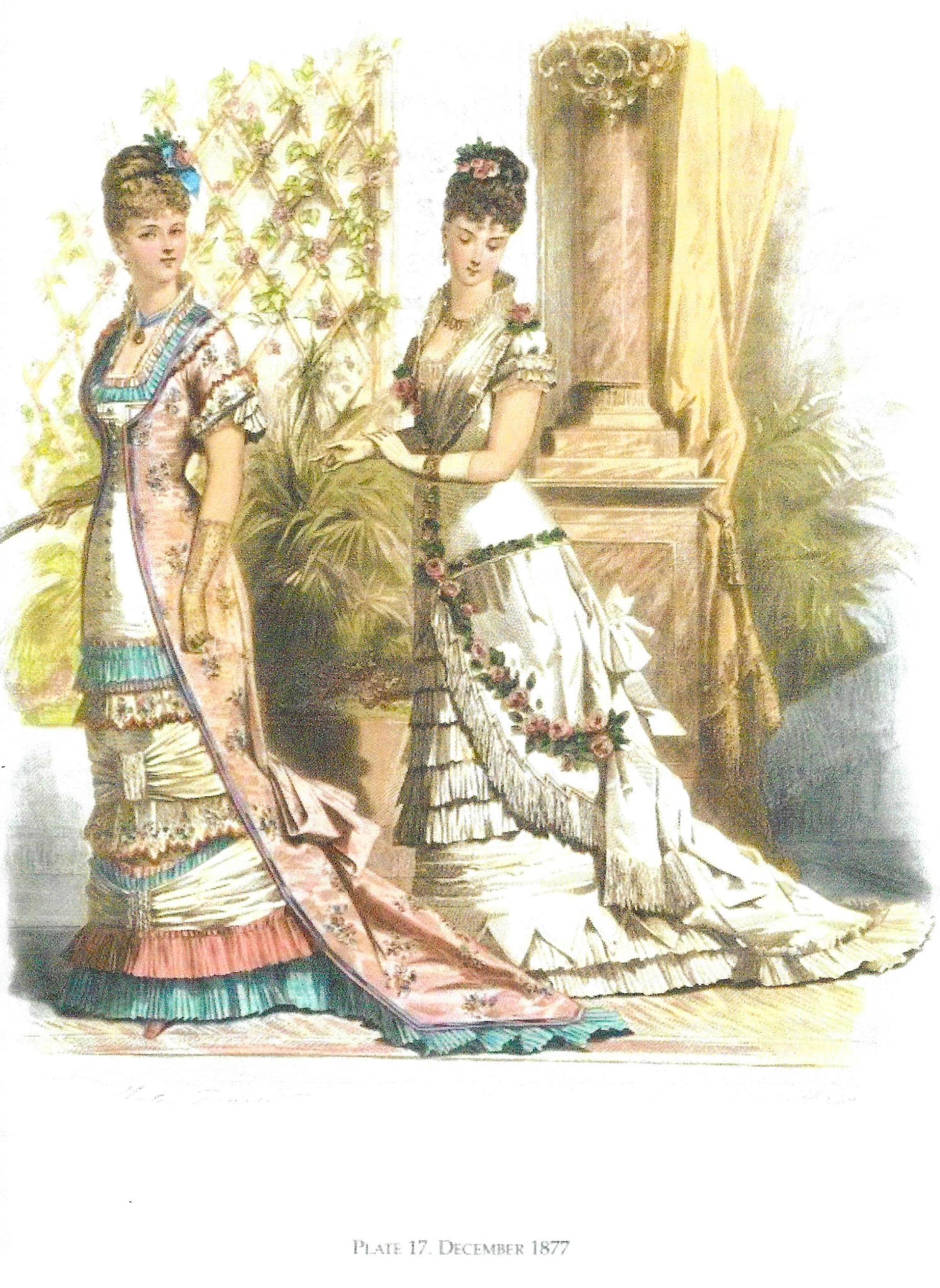
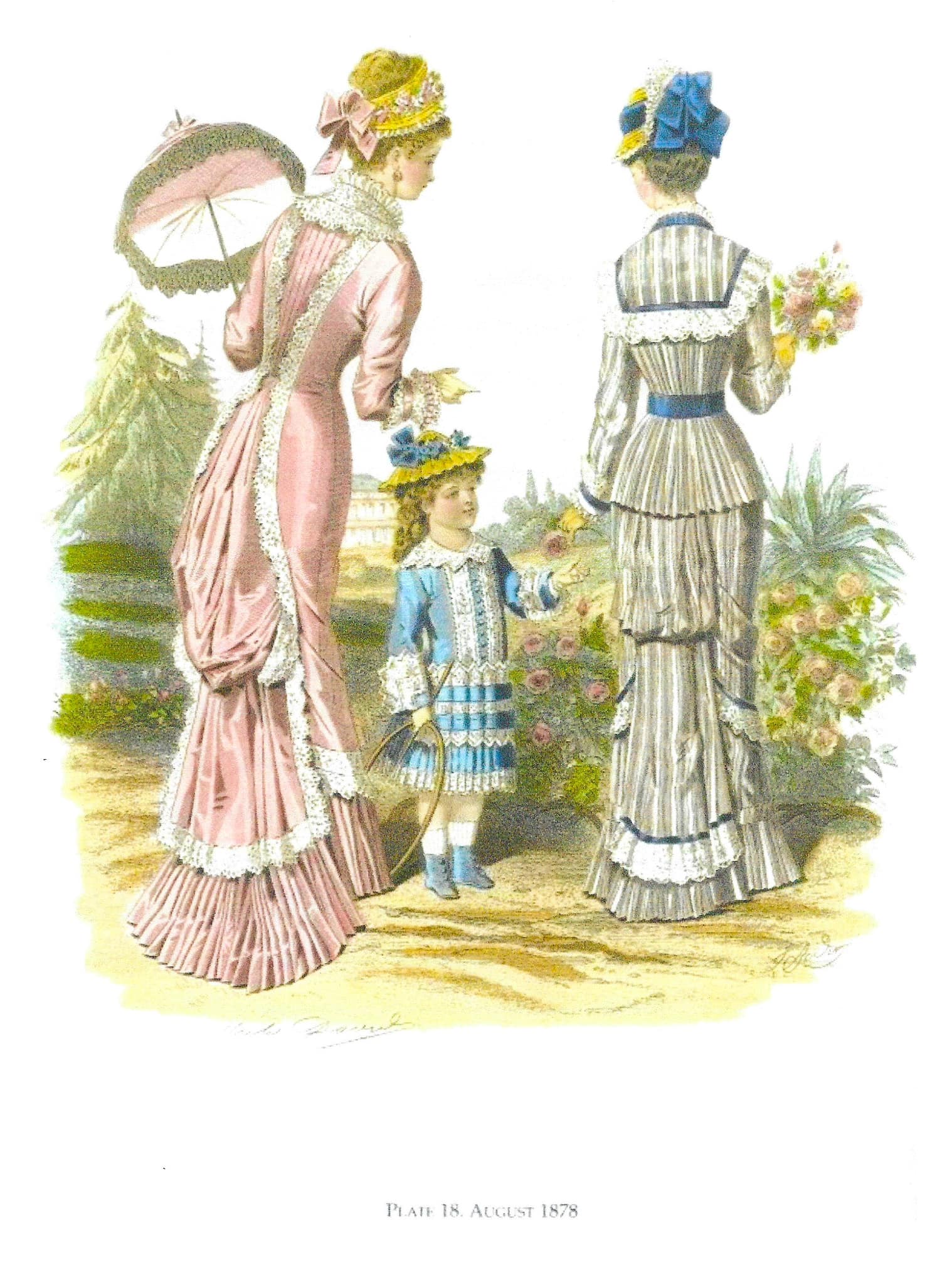
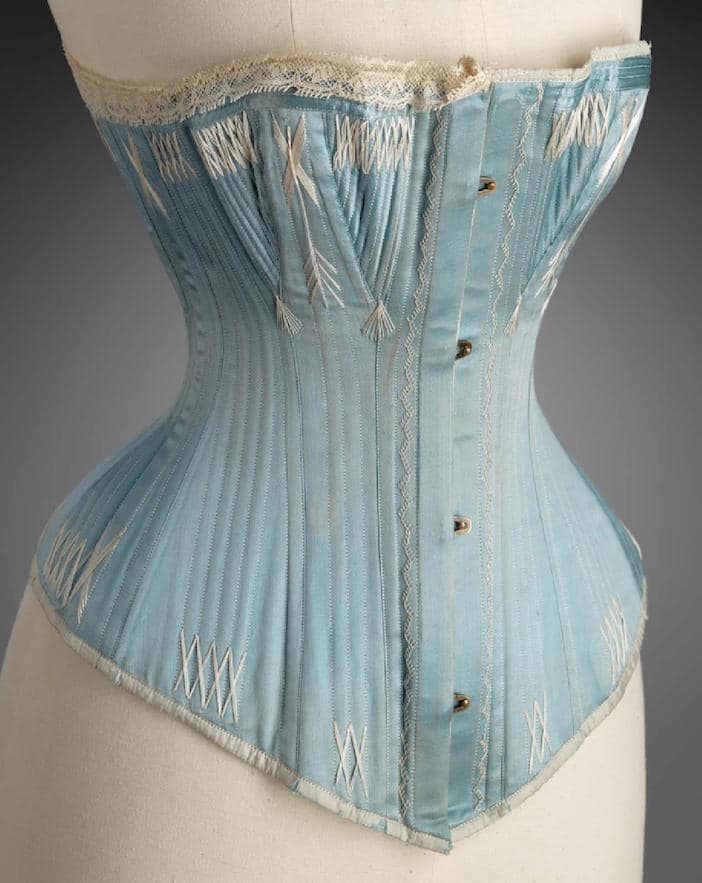
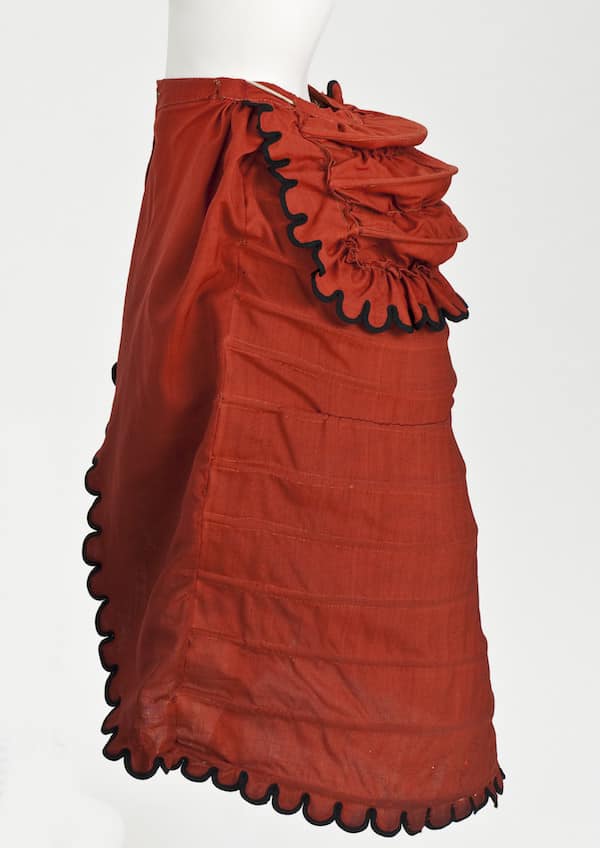
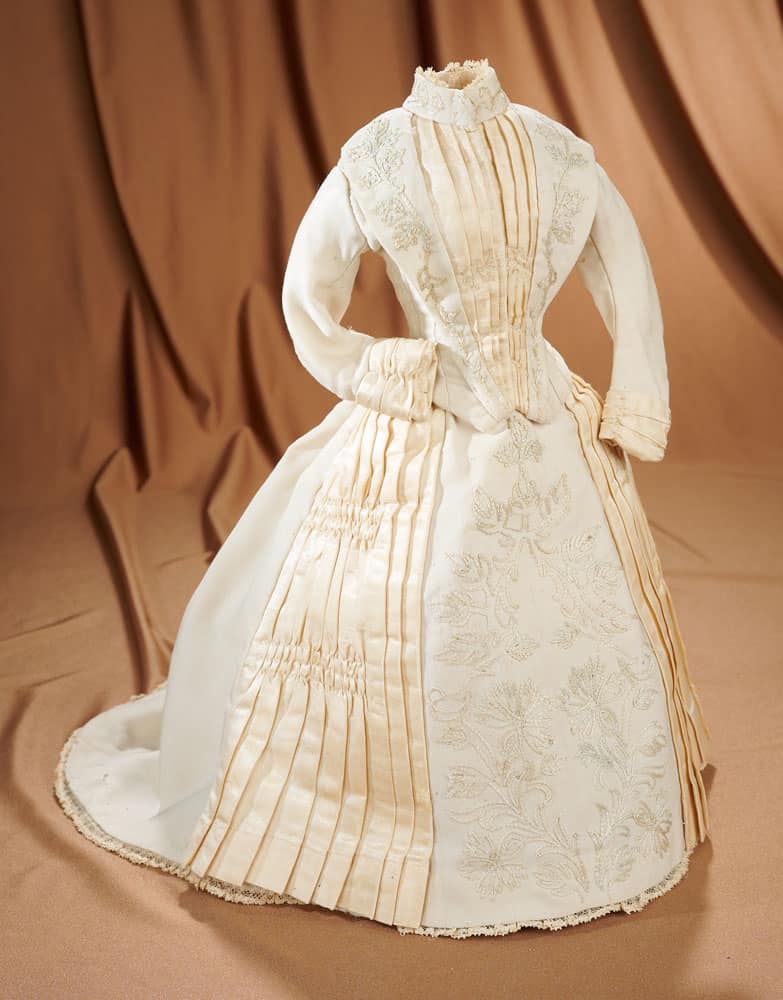
1870’s Women’s Fashions….
“The first silhouette of the decade began in 1870; the great, circular or oval crinolines of previous decades collapsed into the so-called first bustle style. The bustle was a softly draped protrusion at the back of the waist, created by a manipulation of fabric and drapery (Tortora 386). This sloped bustle style was supported by horsehair-ruffled petticoats or crinolettes, an adaption of the earlier steel crinolines. A crinolette consisted of rows of fabric-covered steel half-hoops (Cumming 35; Shrimpton 17-18). Bustled dresses of this period were frothy confections, with layers of ruffles, pleats, and gathers. Many featured looped overskirts or long bodices that were draped up over the hips; these were often referred to as “polonaise” style dresses (C.W. Cunnington 261). Fashion historian James Laver quoted a contemporary writer who declared in 1876:
“it is now impossible to describe dresses with exactitude: the skirts are draped so mysteriously, the arrangements of trimmings is usually so one-sided and the fastenings are so curiously contrived that if I study any particular toilette for even a quarter of an hour the task of writing down how it is all made remains hopeless.”
“The first synthetic dye was invented in 1856, and by the 1870s, vivid, sometimes garish, colors were quite common and fashionable (Fukai 212). Bright purples, pinks, blues, and yellows could now be achieved with a vibrancy and permanence that had been impossible with natural dyes of previous eras. Frequently, a dress featured multiple colors, alternating between the bodice and trim, and layered bustle skirts (Shrimpton 19). Indeed, fashion historian C. Willett Cunnington wrote, “It is perhaps in their colors that the dresses of the ‘70s are most striking to the eye; the monochrome has vanished” (254). Trims became increasingly heavy as well; dresses were weighed down with flounces, bows, laces, tassels, braid, etc. All of these elements combined to create some of the most complex fashions of the century (C.W. Cunnington 255)”
References and direct quotes: https://fashionhistory.fitnyc.edu/1870-1879/
Theriaults Auction, Boston Museum of Fine Arts, Los Angeles County Museum of Art, Musee D’Orsay Paris, Compilation of additional information by Billye Harris.


The 1980’s
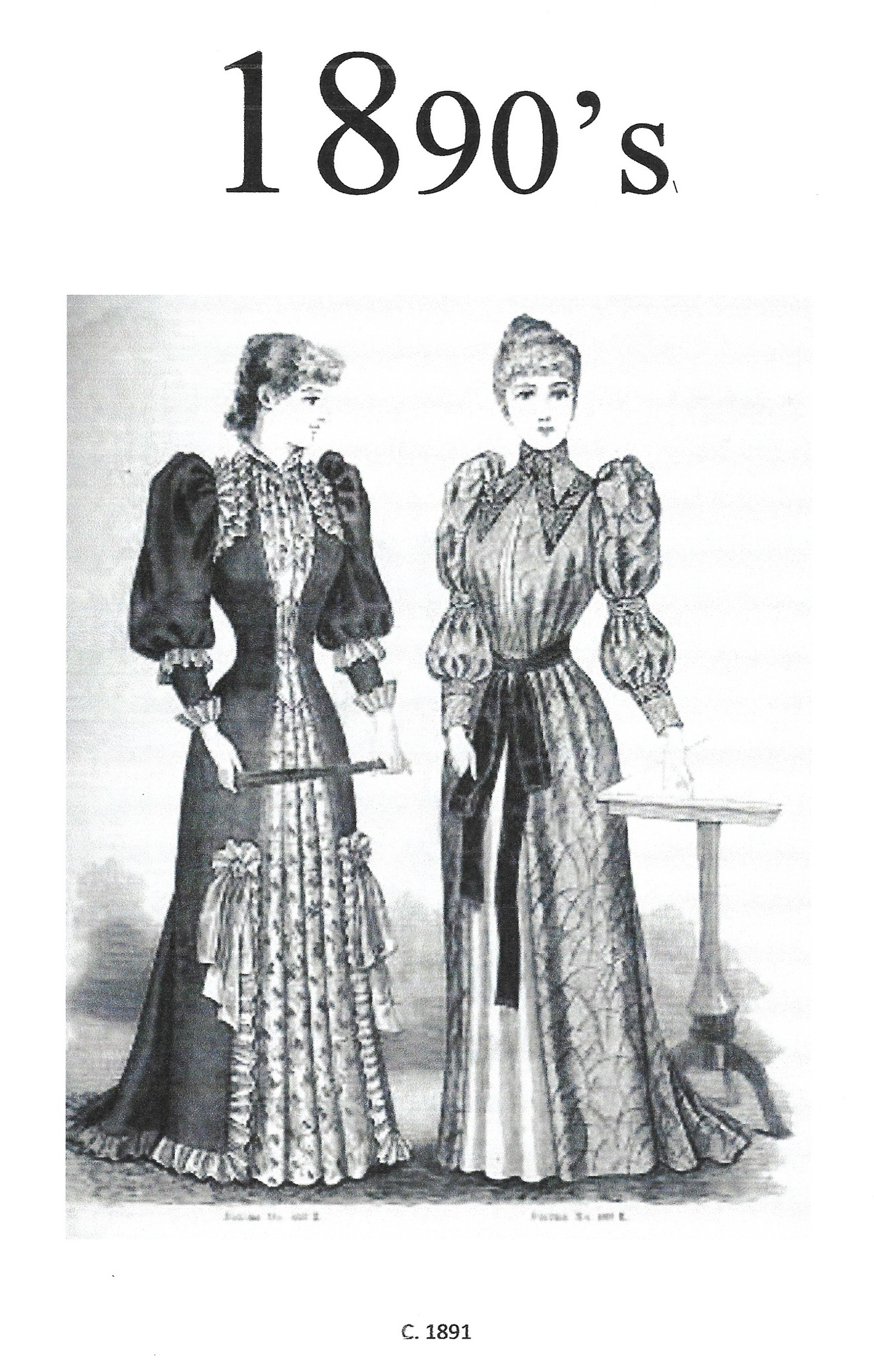
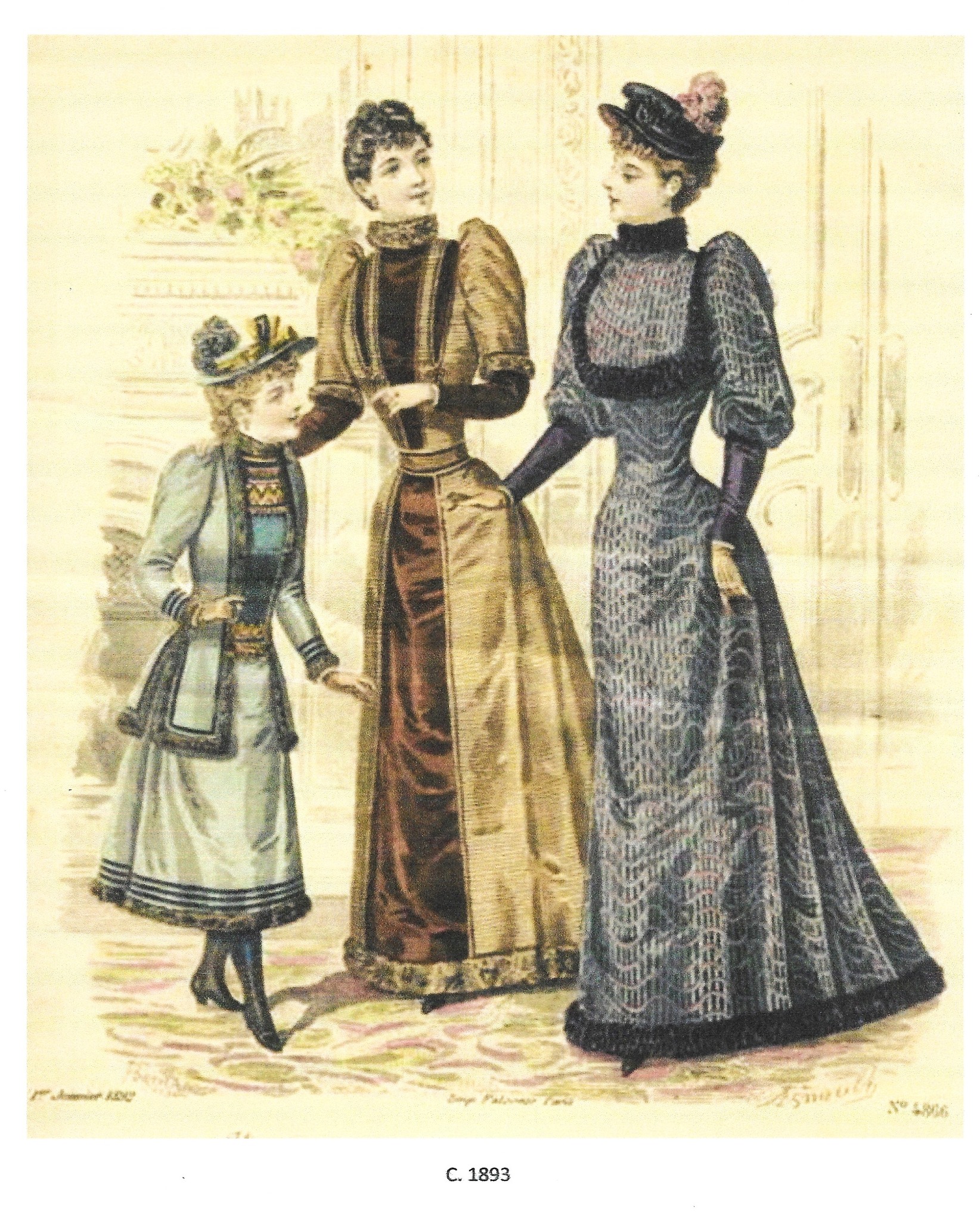
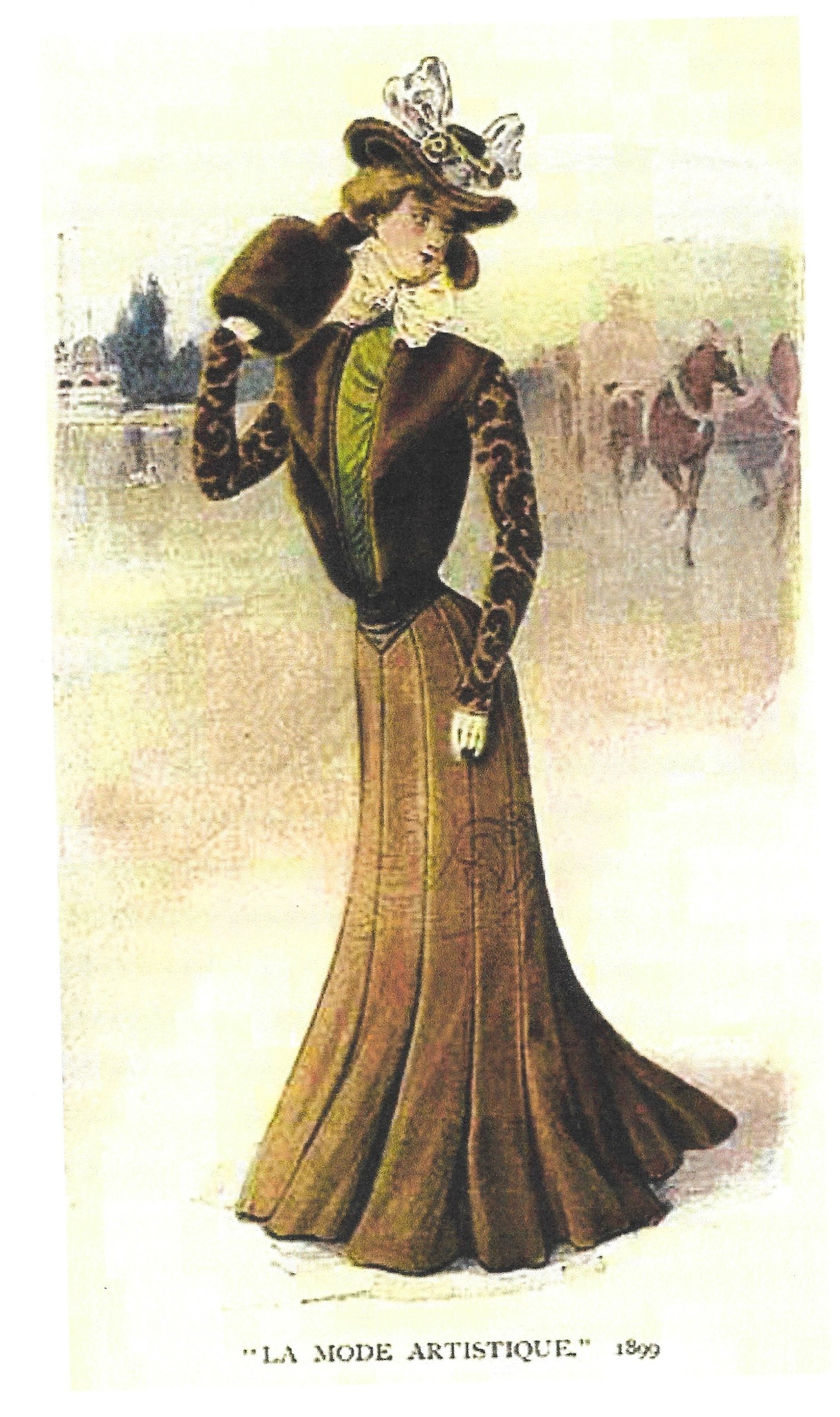
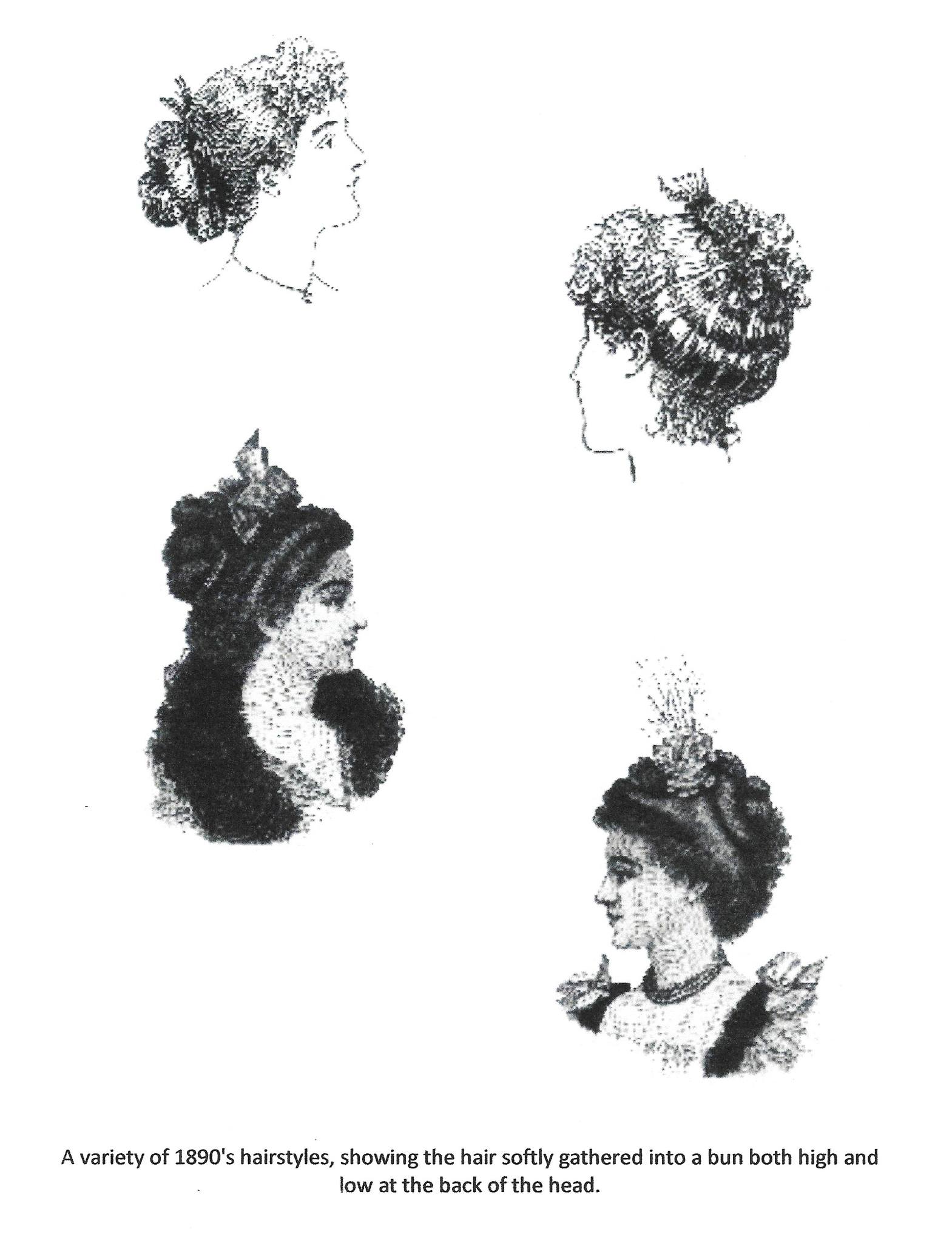
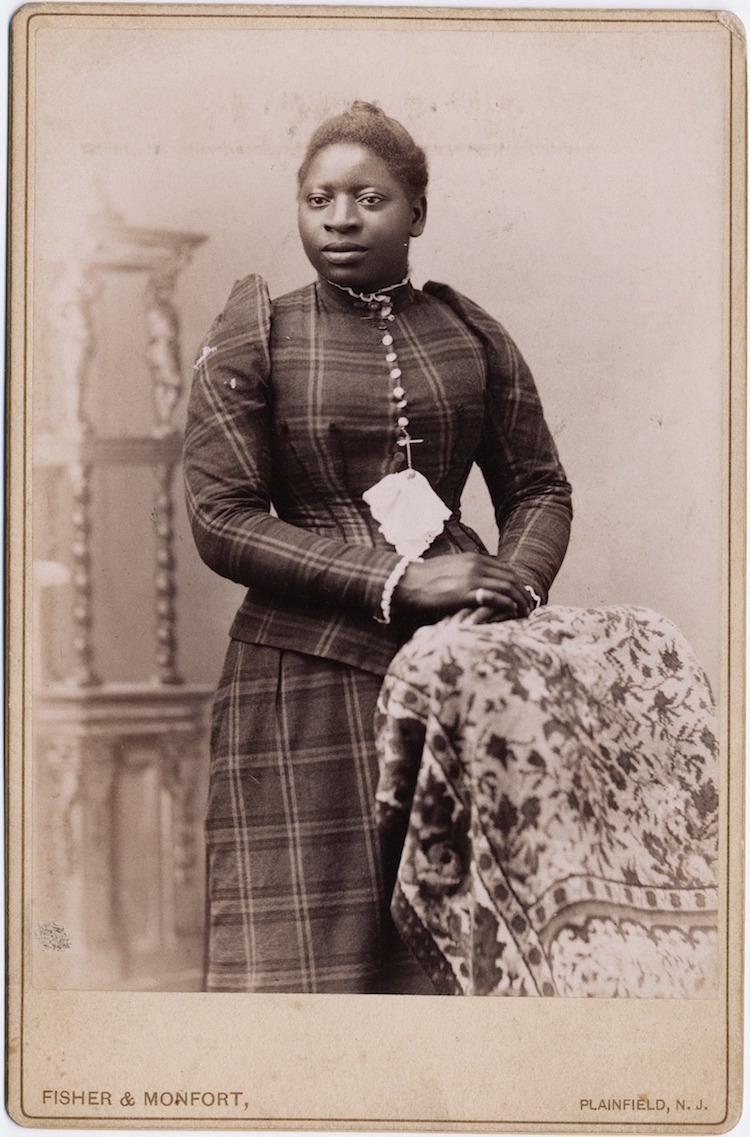
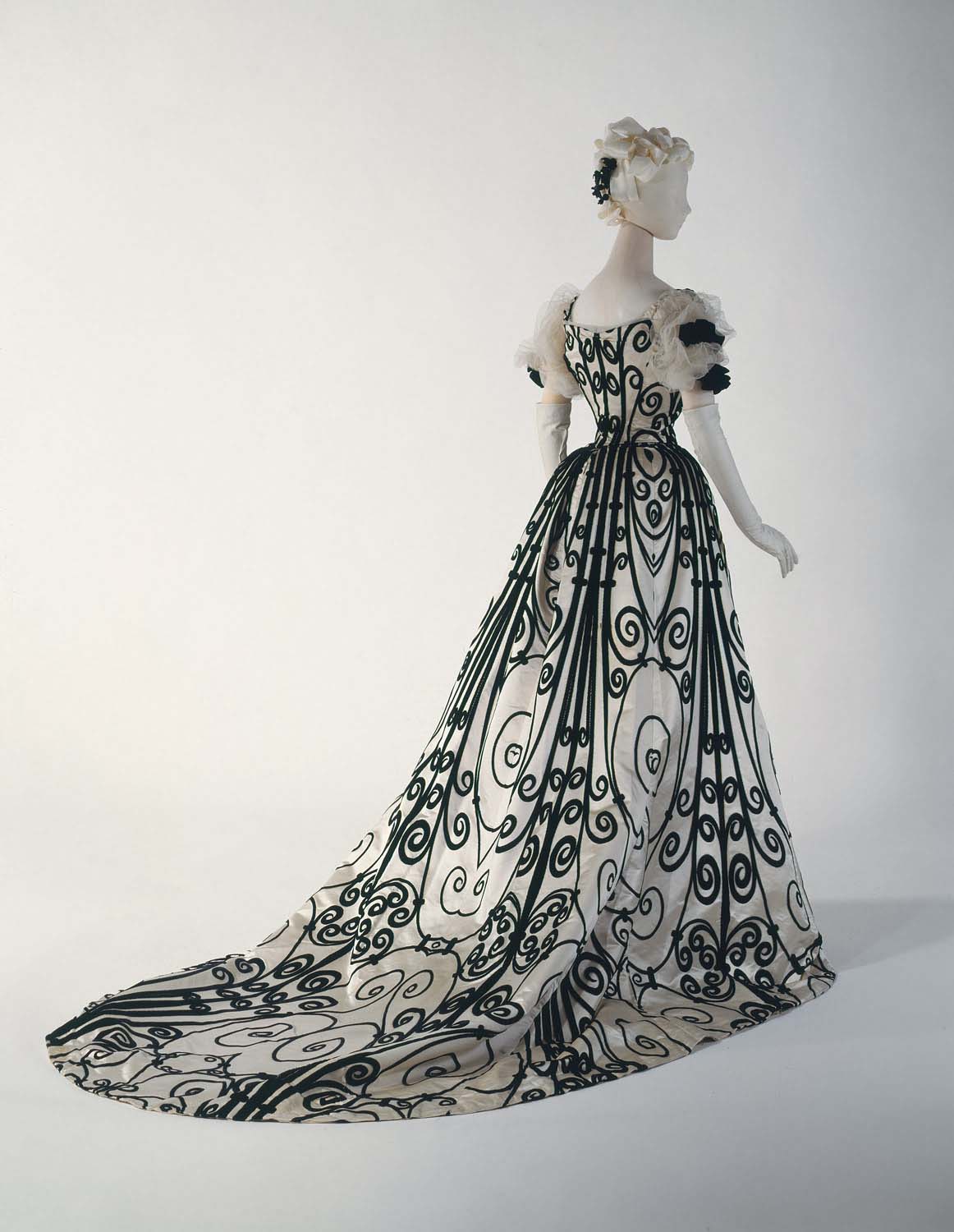
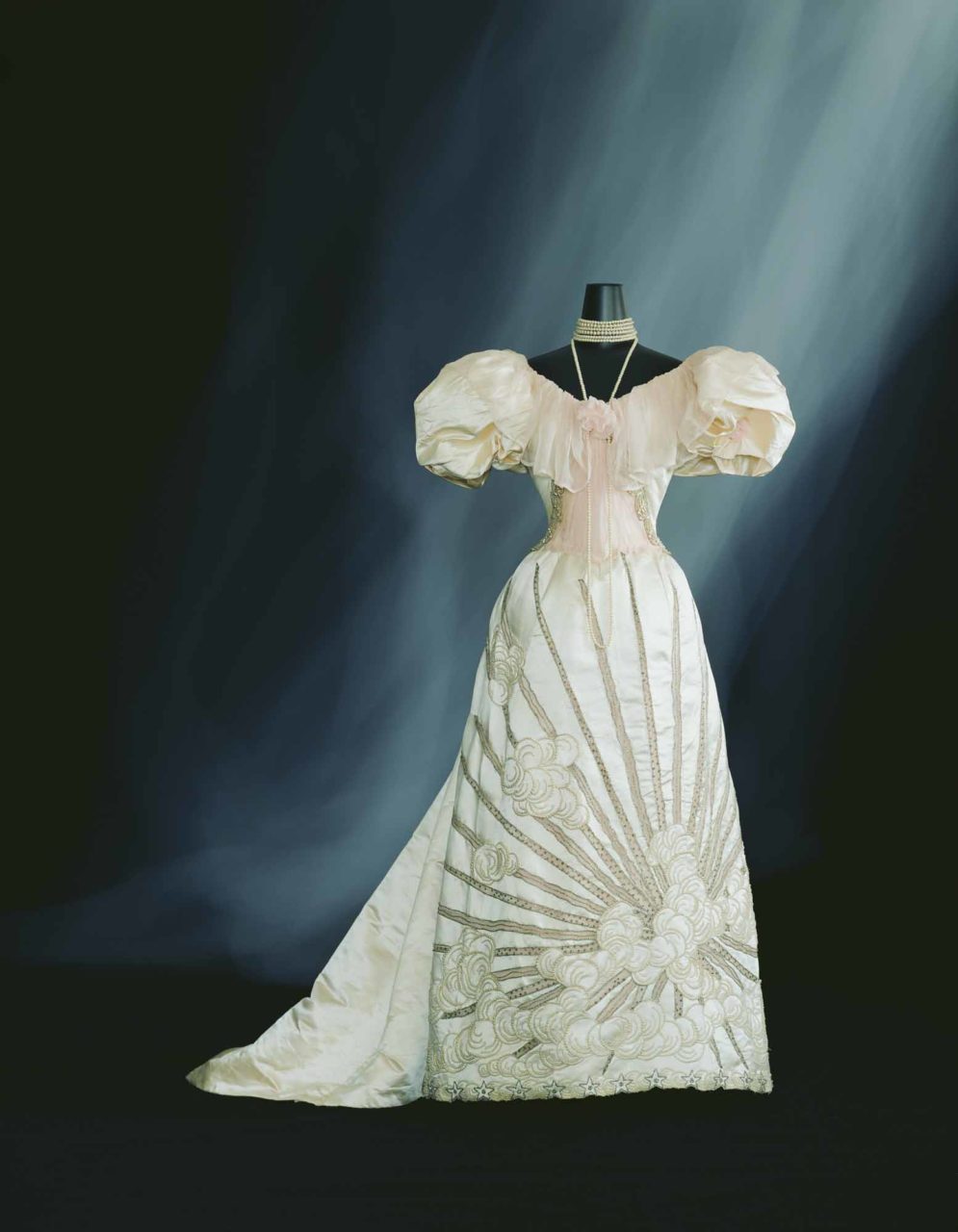
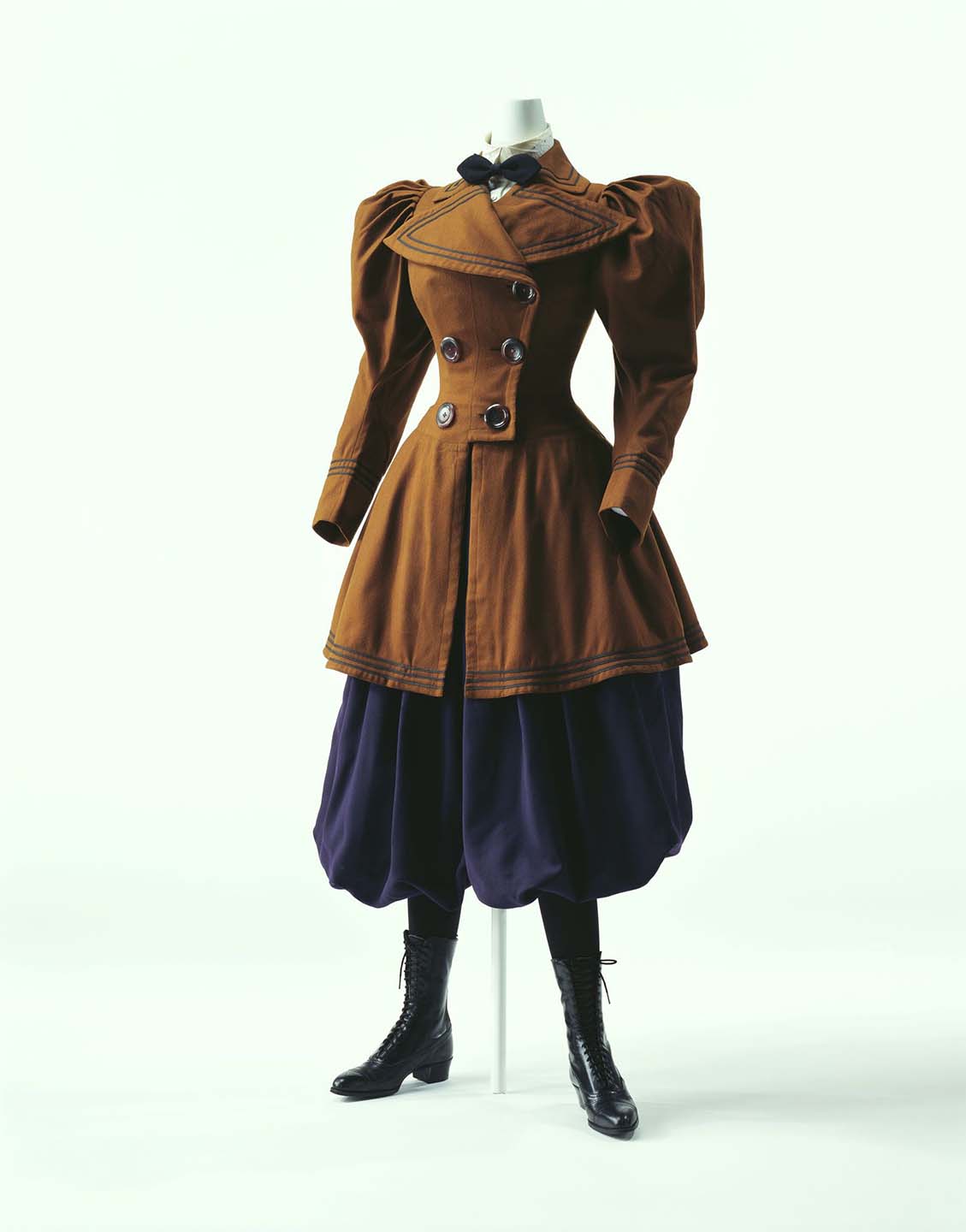
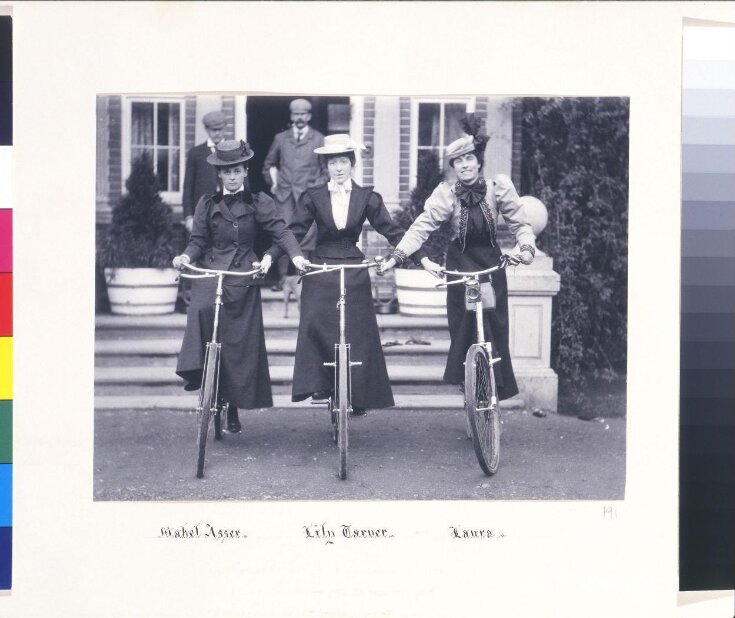
The 1890s were a period of change. As the century drew to a close, the world began to move away from the stiff, moralistic, Victorian Era (Laver 211). Urban centers were growing, and new technologies, such as the introduction of electricity into clothing manufacturing, produced a boom in the ready-to-wear market. Women were enjoying new levels of independence; during the decade the number of women employed outside the home almost doubled (Tortora 380-382). The “New Woman” of the era was an intellectual young female who worked, cycled, and played sports.”
“In the first years of the decade, the silhouette was a continuation of the late 1880s style, with the notable development of a small vertical puff at the shoulder (Severa 458; 476-481). By 1892, the dramatic, protruding bustle had completely disappeared, and the silhouette most associated with the 1890s took hold. Skirts were bell-shaped, gored to fit smoothly over the hips, while bodices were marked by the large leg-o-mutton or gigot sleeves. The early puff grew greatly in size, reaching an apex in 1895. The width at the top and bottom of the silhouette was balanced by a nipped waist, to create an hourglass effect (Tortora 397; Shrimpton 26-27). Around 1897, the silhouette began to slowly shift with the introduction of the straight-front corset. Supposedly designed as a healthier alternative, these new corsets forced a woman’s chest forward and hips backward into a curvilinear “S” shape, that became the dominant silhouette by 1900 (Laver 213).”
“Culture in the 1890s was swiftly changing in Western countries, as the turn of the century saw a shift away from rigid Victorian ideals. 1890s fashion allowed for more self-expression, particularly for women as gender roles became more flexible. As more and more women began working, cycling, and participating in sports, clothing began to reflect those changes. “
References and Photo Credits:
Mary Ann Spinelli for DOLL NEWS, https://fashionhistory.fitnyc.edu/1890-1899/, https://www.familysearch.org/en/blog/1890s-fashion-changes, Kyoto Fashion Institute, The Victoria and Albert Museum, The Metropolitan Museum of Art, Beinecke Rare Book and Manuscript Museum.

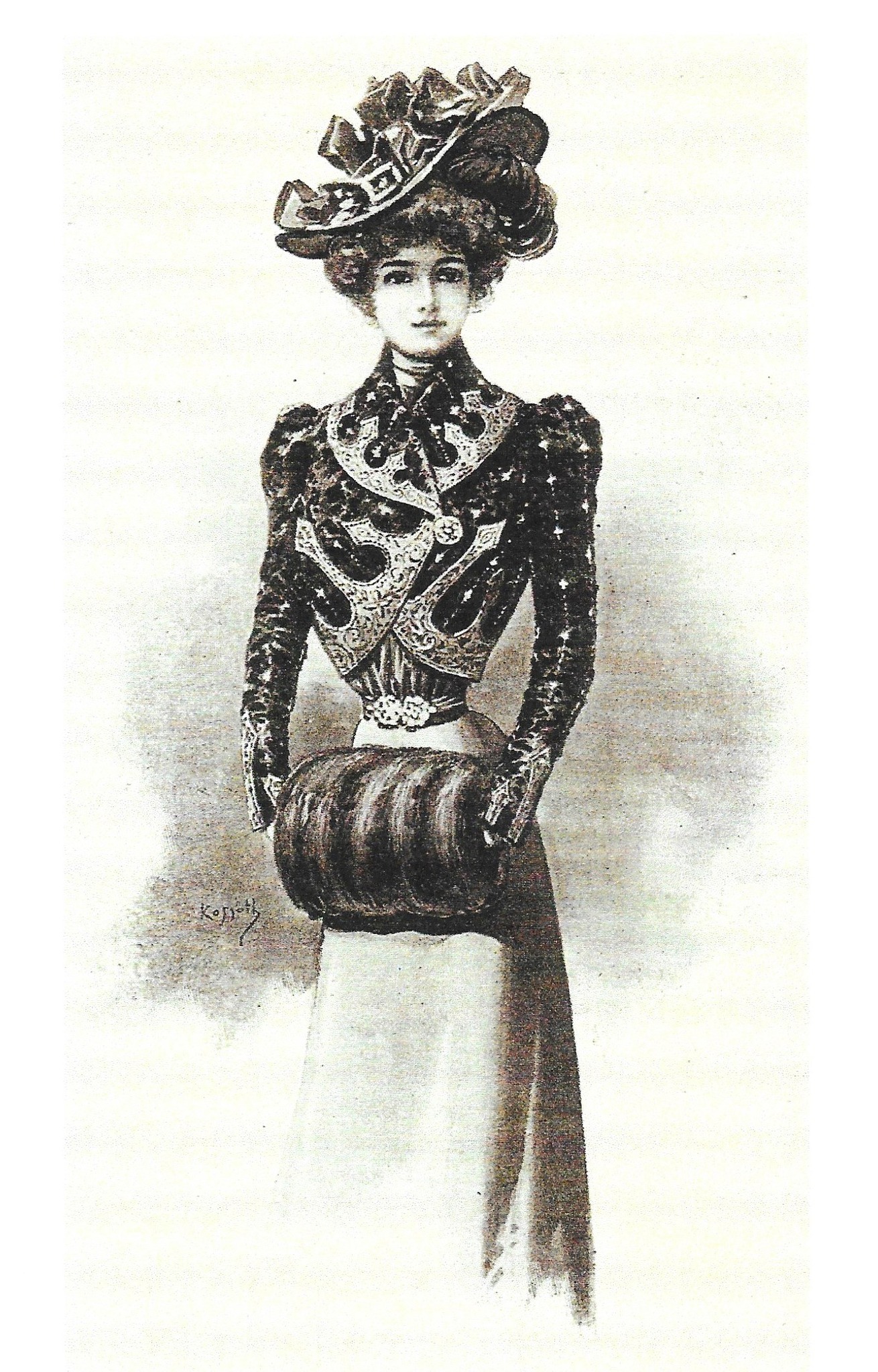
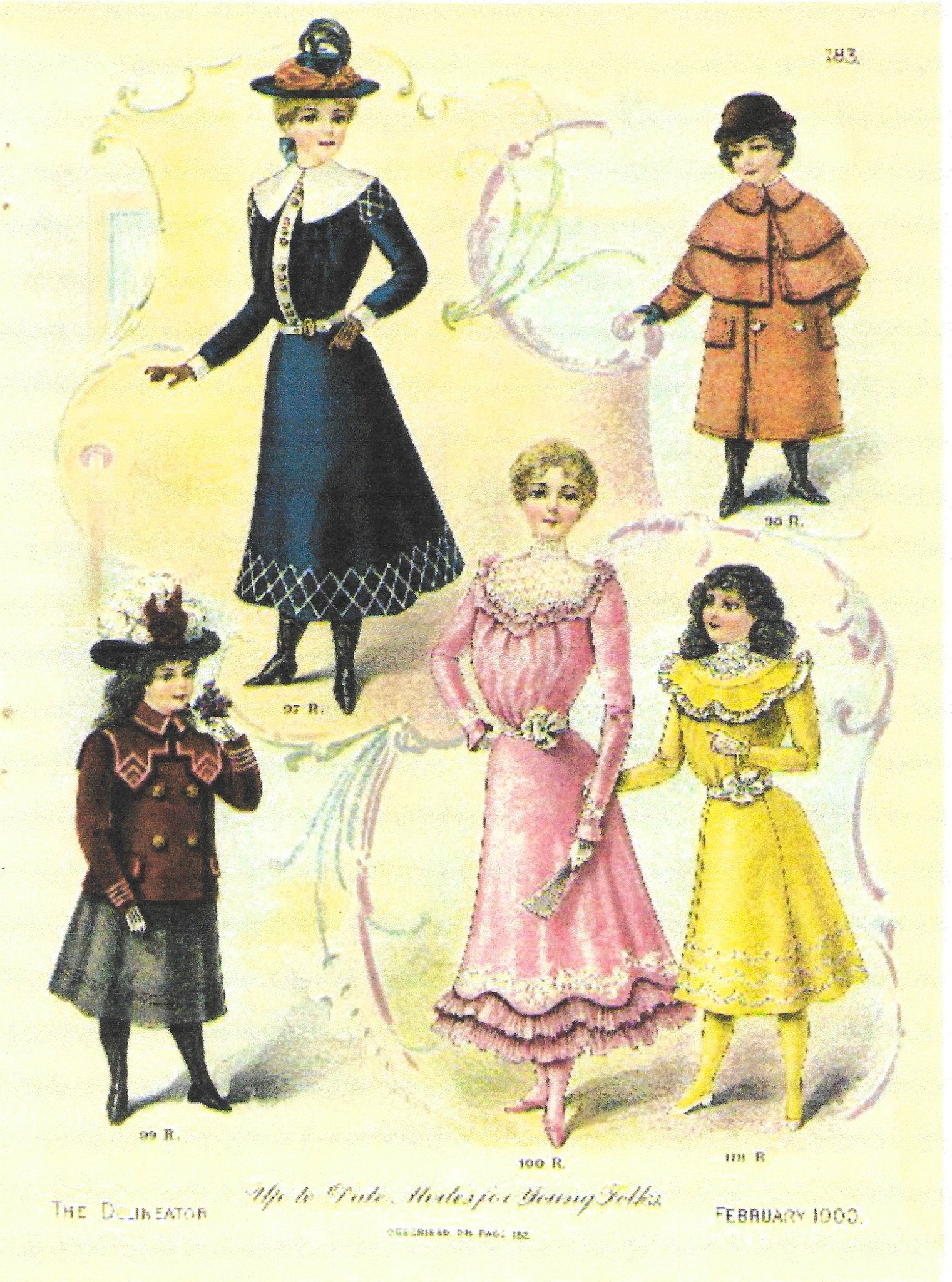
1900….
The trends that marked 1900-1910 fashions reflected a significant turning point in history and style. The end of the Victorian era and beginning of the Edwardian era, this period reflected the manner in which men’s and women’s clothes were losing a little of their rigid formality and becoming more useful.
An important aspect of 1900 to 1910 fashions is the change of technology across many countries. The Industrial Revolution was in full swing and cloth could now be mass produced. This led to clothing that could be mass produced, which was an entirely new fashion concept. People no longer had to make their clothes themselves or rely on a seamstress or tailor. Some outfits could be bought off the rack for the very first time.
Women adopted a simpler fashion form from 1900 to 1910 than they had done in previous years. Restrictive corsets and high collars relaxed slightly. Dresses were still the standard, but they no longer needed to be puffed up around the hips with petticoats. Skirts became floor length instead of trailing.
One of the popular styles later in the decade between 1900 to 1910 was the hobble skirt. This skirt was somewhat full at the waist and tapered towards the ankles. Hats were still all the rage and the larger the better. It didn’t matter what your hat was decorated with, as long as it was decorated and big.


Allan Scott Pate
Good, Better, Best: Evaluating Japanese Ichimatsu Dolls
I want to thank NADDA for asking me to contribute to this important educational format. Every member of NADDA is committed to not only providing the best dolls in whatever genre they focus on, but also informing and aiding the larger doll community, adding their expertise to the general discussion. My particular area of focus and expertise is Japanese dolls, also known as ningyô. My one overriding mission since 1993 has been to expand the awareness of and appreciation for Japanese dolls; to present and explore the immense range of ningyô produced in Japan over the last several hundred years; and to help people better understand the nuances of this important category of doll. This is done through my participation in doll shows, curation a number of museum exhibitions highlighting the artistry of ningyô, guest lecturing at various events in the US and around the world, a YouTube channel presenting in-depth studies of various aspects of Japanese doll history and culture, and through the publication of a number of books focusing on the beauty that is ningyô. You can see some of this through my website www.antiquejapanesedolls.com
For too long, outside of Japan, Japanese dolls have been known primarily as a cheap souvenir doll, beautiful dolls in glass cases brought home after a military tour of duty, or a much-loved but over-handled play doll found in an antique market. While each of these has their value, this is such a sadly narrow view of the world of Japanese dolls. There is so much more to see, explore, and understand (and buy!). [Fig. 2]
So in these pages, over the next few weeks, I want to take a deeper dive into one category of doll that will be familiar to many, but also elusive in terms of truly understanding and evaluating: ichimatsu-ningyô. I hope to provide a filter through which the doll collector can evaluate the ichimatsu they find or are offered and make intelligent, knowledge-based decisions on its merits. This is not really a difficult task once a few basic tips and key points of reference can be established. In shorthand, I refer to this as “Good, Better, Best.” [Fig. 2a]


Japanese dolls can be found residing in almost every doll collector’s home. Some are gifts received from a husband, father, favorite uncle or aunt stationed overseas. Some are delightful finds from antique fairs, flea markets and doll shows. Some are appreciated for their beauty, others more for sentimental reasons. Japanese dolls have long been a go-to gift for Japanese businesses to present to their American counterparts as well, and have therefore matriculated into many collections through more formal avenues. These dolls may be of magnificent geisha set in glass cases. Or perhaps an “emperor and empress” pair from the Hina Matsuri Girl’s Day display. They may be simple play dolls, lovingly worn and abused by the tender affections and ministrations of a distant, previous owner. Others may have merely caught the eye of the collector and were purchased for visual appeal and exotic intrigue as opposed to a fact-based rationale. One common denominator related to nearly all of these dolls, however, is a general inability of their current owners to evaluate them. Are they good dolls? Are they cheap souvenirs? Should they be insured? [Fig. 3]
What is a “good” doll? For many familiar with the wide range of categories within the Western doll world, there is a mental check list that one can go through to help in evaluating a doll already placed within a collection or when contemplating a potential purchase. People who focus more narrowly on a specific category will have an even more finely tuned set of criteria. This comes from years of experience collecting, seeing other examples that are held up or published as “good” examples of a given type of doll, as well as a large base of friends and dealers familiar with these dolls. So, in general, collectors can decide for themselves, or quickly determine, if a doll is “good,” “better” or “best.” Within the realm of Japanese dolls, this experience/exposure system seems to break down. This is largely due to a lack of opportunity for collectors outside of Japan to compare and contrast, to see why one doll is better or worse than another. This brief series is designed to h@Gailelp begin that process for at least one specific category of Japanese doll: ichimatsu.
In 1950, Albert Sacks published his seminal book on American furniture entitled: Fine Points of Furniture: Early American. He is credited with popularizing the concept of “good, better, best” as a basis for evaluating examples of a like type: Queen Anne Highboys, for example. It is an exceptionally handy tool and has been embraced by many, even in more traditional arenas of commerce. By comparing examples of Japanese ichimatsu we will begin to isolate the important elements to look for and how to combine these together so that a collector looking at a Japanese ichimatsu can decide if it is a good one, a better one, or a fantastic (best) one. The obvious question then follows: why not worst, better, best? I have always felt it better to train the eye by looking at the good stuff. Then the bad stuff will essentially sort itself out. There are five basic criteria points I look at when evaluating a Japanese ichimatsu: condition; face, hands/feet; textiles, and artist. For me, size is not particularly important. I am searching for the base quality of the doll itself. I have seen truly lamentable large-scale ichimatsu, and equally stunning smaller examples. Size is more a question of real estate allocation than necessarily intrinsic value. [Fig. 4]
Of course, each of these criteria can be used to evaluate to a certain extent other categories of Japanese dolls, from classic hina-ningyô used in the Girl’s Day display [Fig. 5]; to gosho-ningyô (palace dolls), those cherubic roly-poly boys (and girls) gift dolls Fig. 6]; to ishô-ningyô (fashion dolls) designed to delight the viewer through depictions of figures drawn from history and popular culture [Fig. 7]; to takeda-ningyô memorializing Kabuki theatrical performances [Fig. 8]; to the modern sosaku-ningyô (art doll) that emerged in the 1930s and continues to astound audiences today for their creativity and outside-the-box subject matter (Fig. 9)
But let’s start with condition, which frequently for me is a full-stop before we even get out of the gate. Condition: This is perhaps the easiest category to understand and evaluate. After all, even for the most virgin collector, dirt is dirt. Frequently, however, dirt and soiling on a Western doll may not be a deal breaker, for bisque heads can be cleaned, some textiles can be readily replaced and the doll redressed. So while the initial condition may not be so attractive, the potential is there to recover the doll. With Japanese ichimatsu this is a much more problematic proposition. For example, the “skin” surface of most Japanese dolls is composed of a wood or wood composite sub-strata over which layers ofgofun (shell white) have been applied. Gofun is created through the mixing of pulverized oyster shell with animal glue. In its thickest iteration it can be worked, molded and sculpted. As it gets more finely attenuated it serves more as a skin coating that can appear porcelaineous, with a lovely sheen. Unlike porcelain, however, gofun is completely water-soluble. And while a bit of dirt or a fingerprint on a fine china head can likely be readily cleaned, cleaning gofun is not an easy maneuver, and for pigmented gofun, which attempts a more natural skin color, it is essentially impossible. Also, a bit of moisture on a cloth can strip away a hundred-year coating of gofun in seconds. So a soiled face on a Japanese ichimatsu is usually a “no-go” for me. Gofun is also prone to cracking, this is why the Japanese have over the centuries experimented with base materials: woods of different species, wood composite with different bonding elements, clay, etc. But not all cracking on a Japanese doll is equal. Usually I can look past a bit of stress cracking along the seams running along the sides of the head. These are typically obscured by the hair and also indicate that stress related to expansion/contraction of the substrata has already been dealt with by the doll itself in his/her own way. Mid-surface cracks, however, on the cheeks, forehead, etc, usually prevent me from moving forward and compromise the value, if not the very longevity of the doll itself. (Fig. 10)
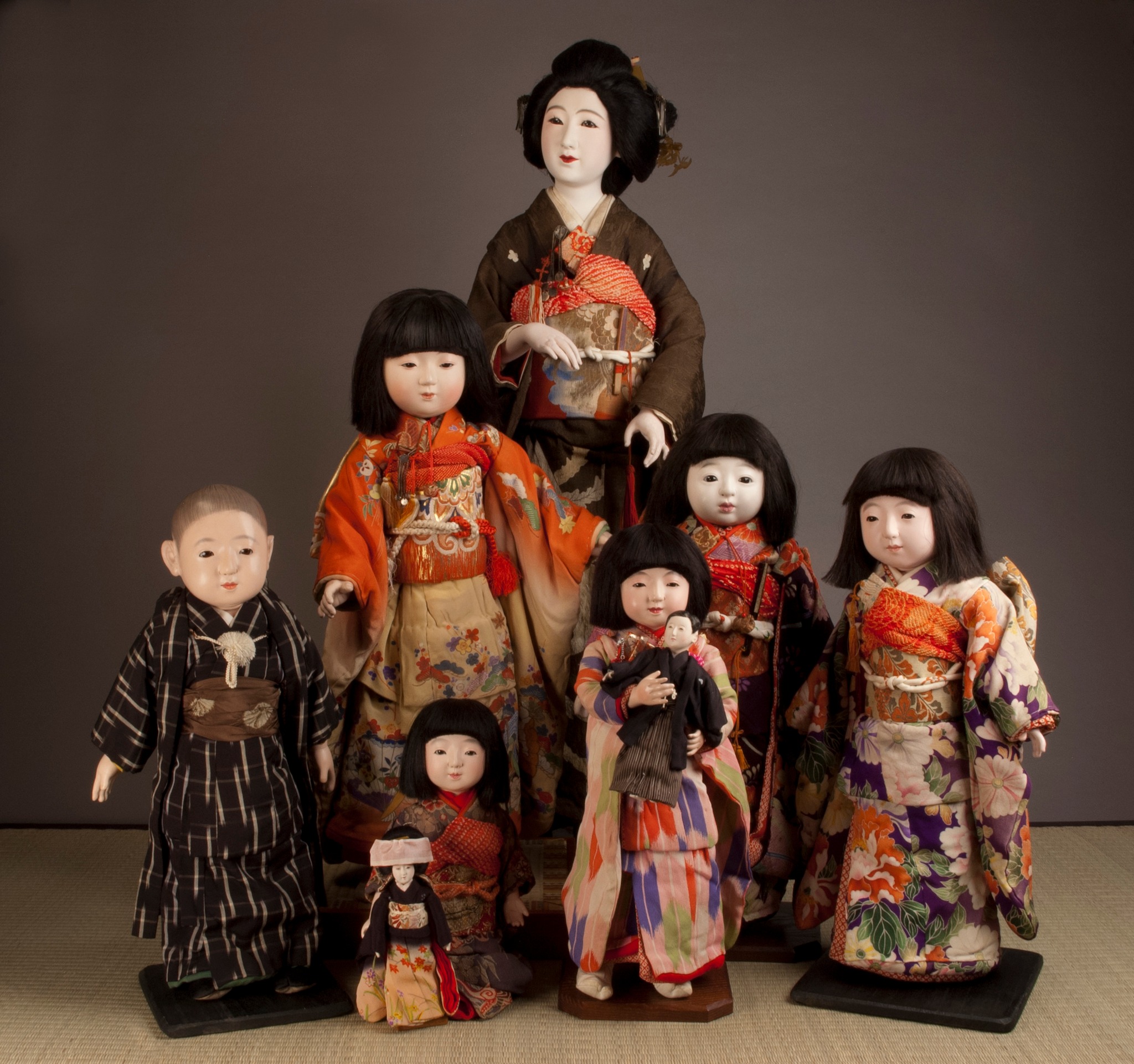
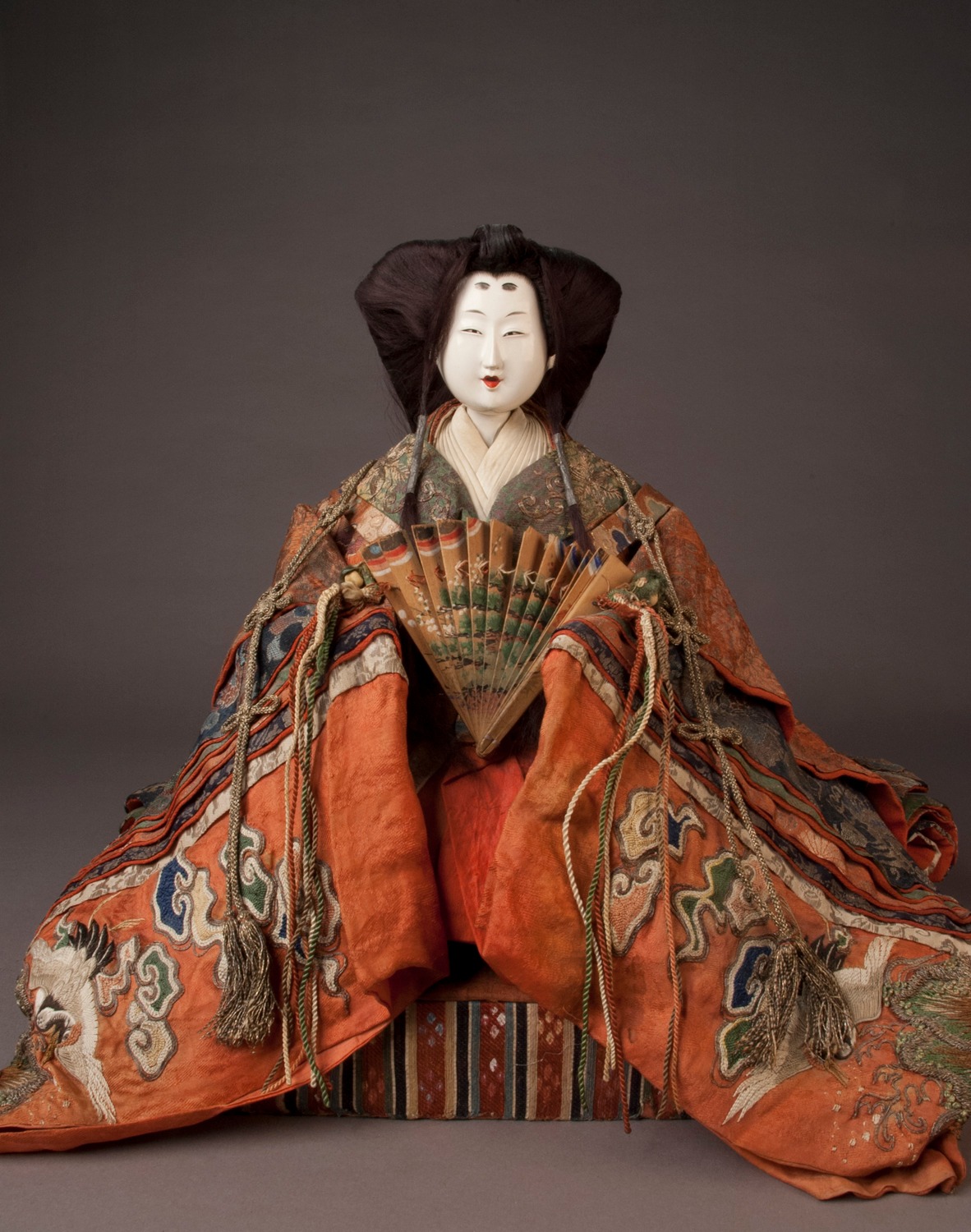
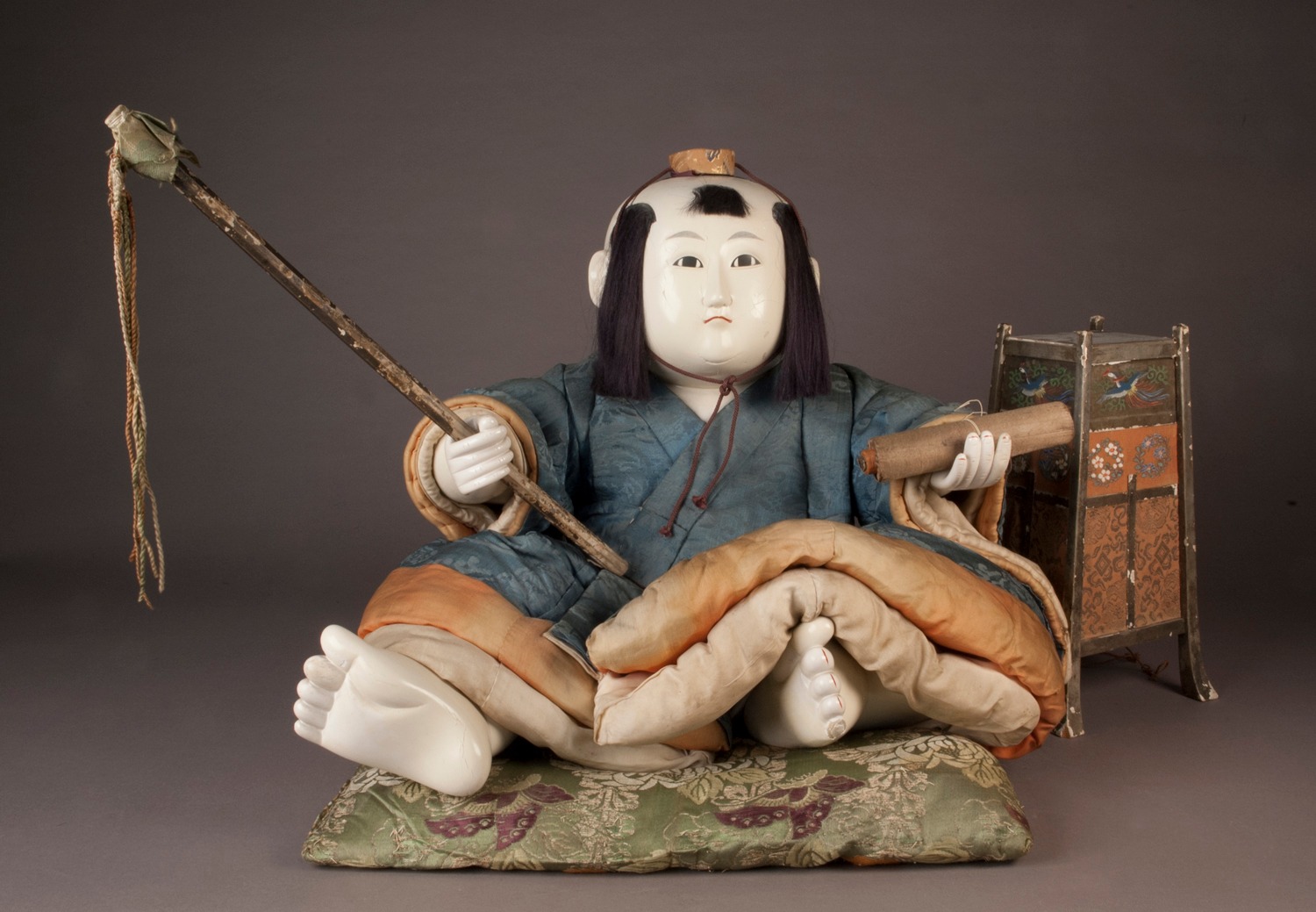

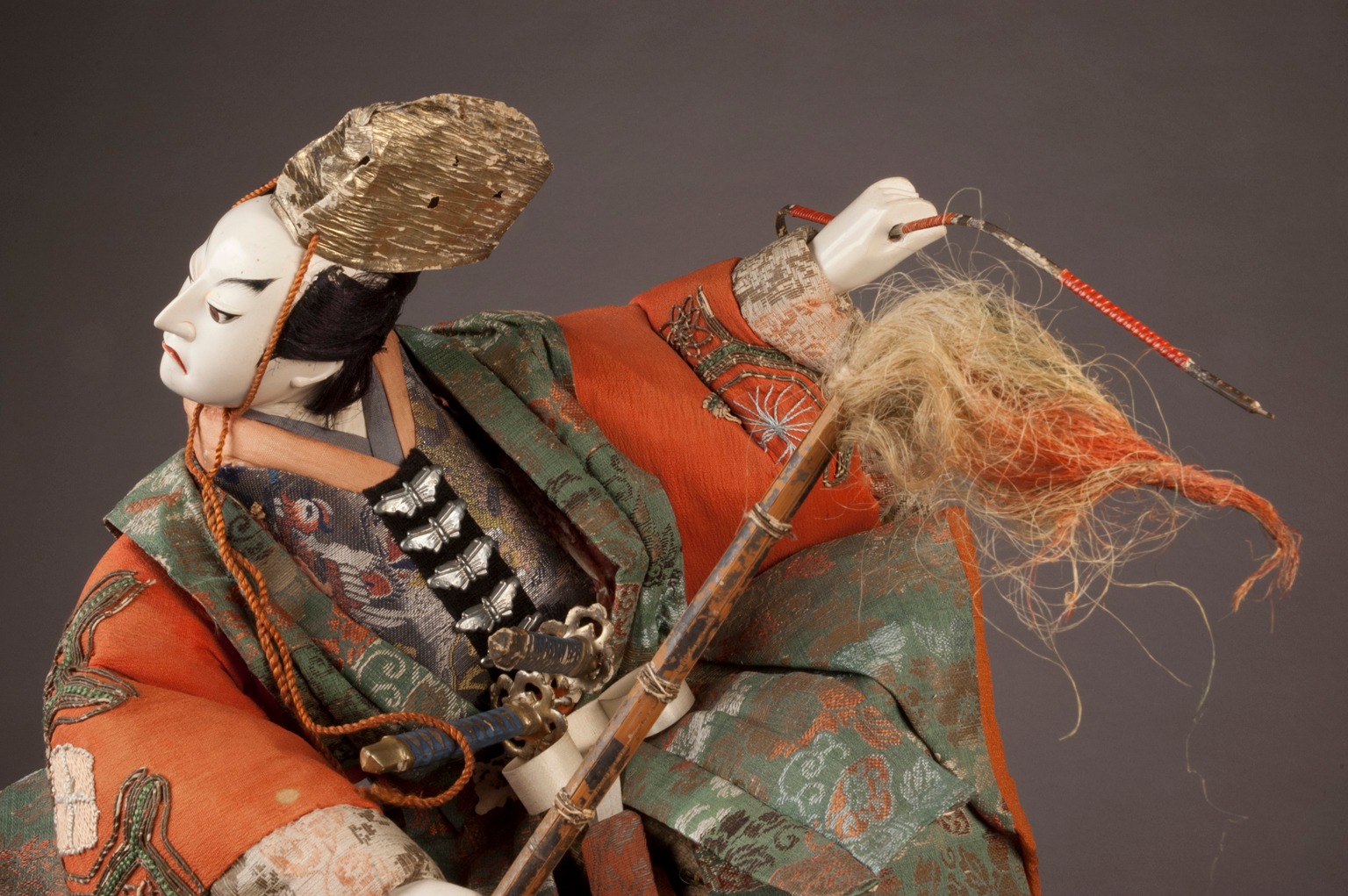

Gofun is also prone to cracking, this is why the Japanese have over the centuries experimented with base materials: woods of different species, wood composite with different bonding elements, clay, etc. But not all cracking on a Japanese doll is equal. Usually I can look past a bit of stress cracking along the seams running along the sides of the head. These are typically obscured by the hair and also indicate that stress related to expansion/contraction of the substrata has already been dealt with by the doll itself in his/her own way. Mid-surface cracks, however, on the cheeks, forehead, etc, usually prevent me from moving forward and compromise the value, if not the very longevity of the doll itself. [Fig. 10]
Another area is the hair. Classical Japanese girl ichimatsu use human hair or silk wigs. But unlike Western doll wigs, which are largely designed to be easily removed, hair wigs for ichimatsu are firmly glued into place and removing them is a very aggressive procedure. Also, both the human and silkhair is more fragile than many Western doll hair types. Dry, aged hair cracks easily and simply can simply fall off the doll, while sunlight can give the originally black hair a red tint not easily remedied. [Fig. 11]
High-quality Japanese ichimatsu are generally not designed to be undressed and redressed. They usually are attired by the artist or atelier that made them, with careful attention paid to pattern and contrast between kimono and obi tie belt. Some dolls even have their clothes sewn on (kitsuke) which indicates that they are display figures rather than designed for play and changing of clothes. And while it is possible to find replacement kimono, or make replacement kimono (there are many books with doll kimono sewing and cut out patterns available in Japan), for the Western collector this might pose significant obstacles: sourcing fabric at a minimum, and tying an obi can pose challenges even for the Japanese. So a faded, soiled or worn kimono on an ichimatsu is also frequently a “no-go” proposition for me. [Fig. 12]
In short, as a general rule, Japanese ichimatsu must be evaluated on their condition, as is, not anticipating some wonder surgery or fashionable redressing. That said, some ichimatsu are so important, or so intrinsically beautiful that the restoration can be well worth it. But it is not an easy, or an inexpensive endeavor. One of the Friendship Dolls, Miss Aomori, was found in a sad state of repair, with extensive flocking and discoloration to the face, the hair was unevenly cut and damaged in parts, with extensive fading, damage and even the loss of a sleeve to her kimono. Essentially violating every one of the principals I have just laid out. But (!) as one of our original 58 ambassador dolls from 1927, she too important to let languish, and was well worth the conservation. So I took her back to Japan and had her treated by Iwamura Shôkensai III (Kenji, son of the original maker) and through a lengthy process she was brought back to her original glory. Well worth it! [Fig. 13, 14, 15, 16, 17] So condition; it is a starting point. But it is only the beginning….
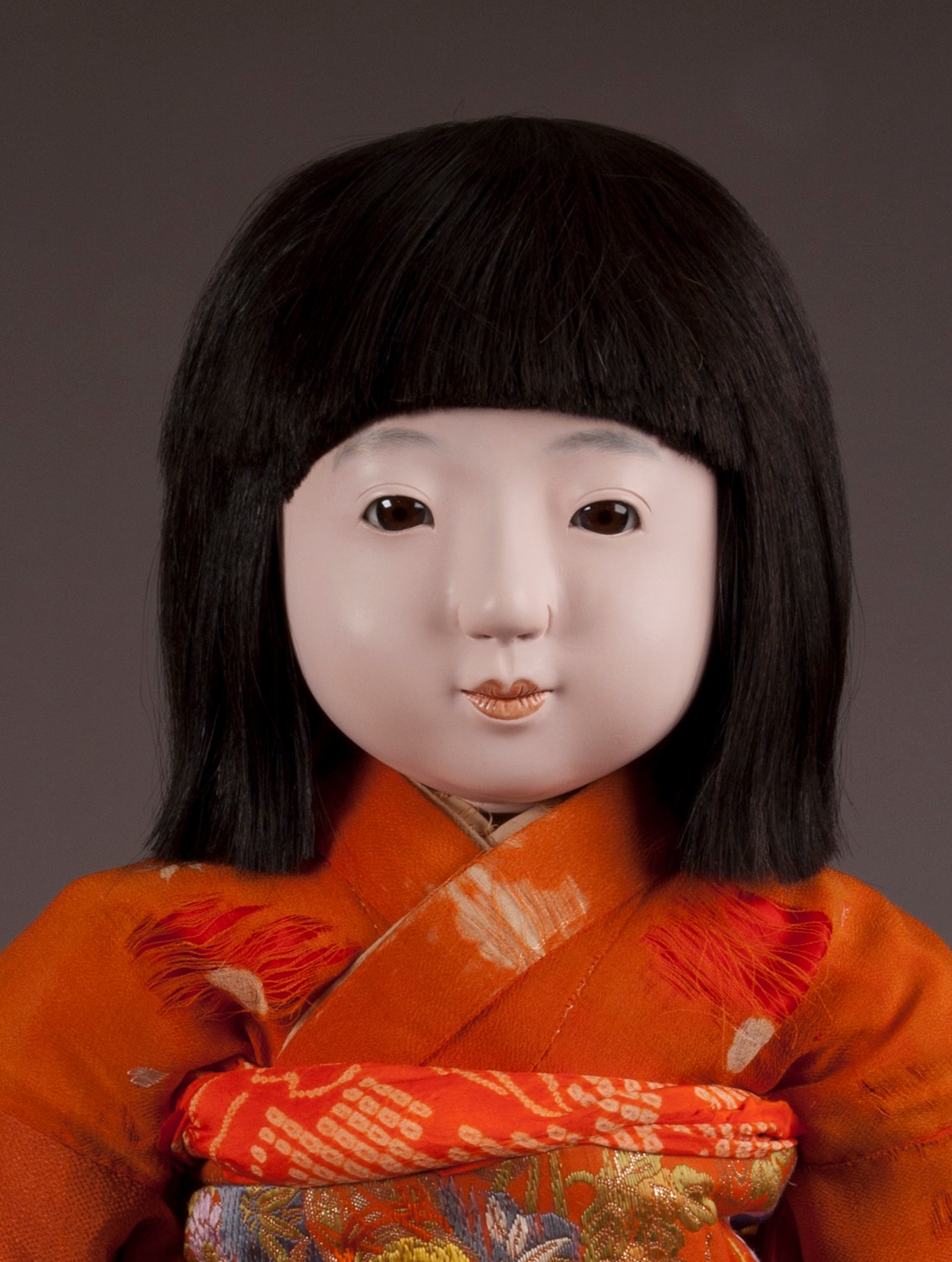


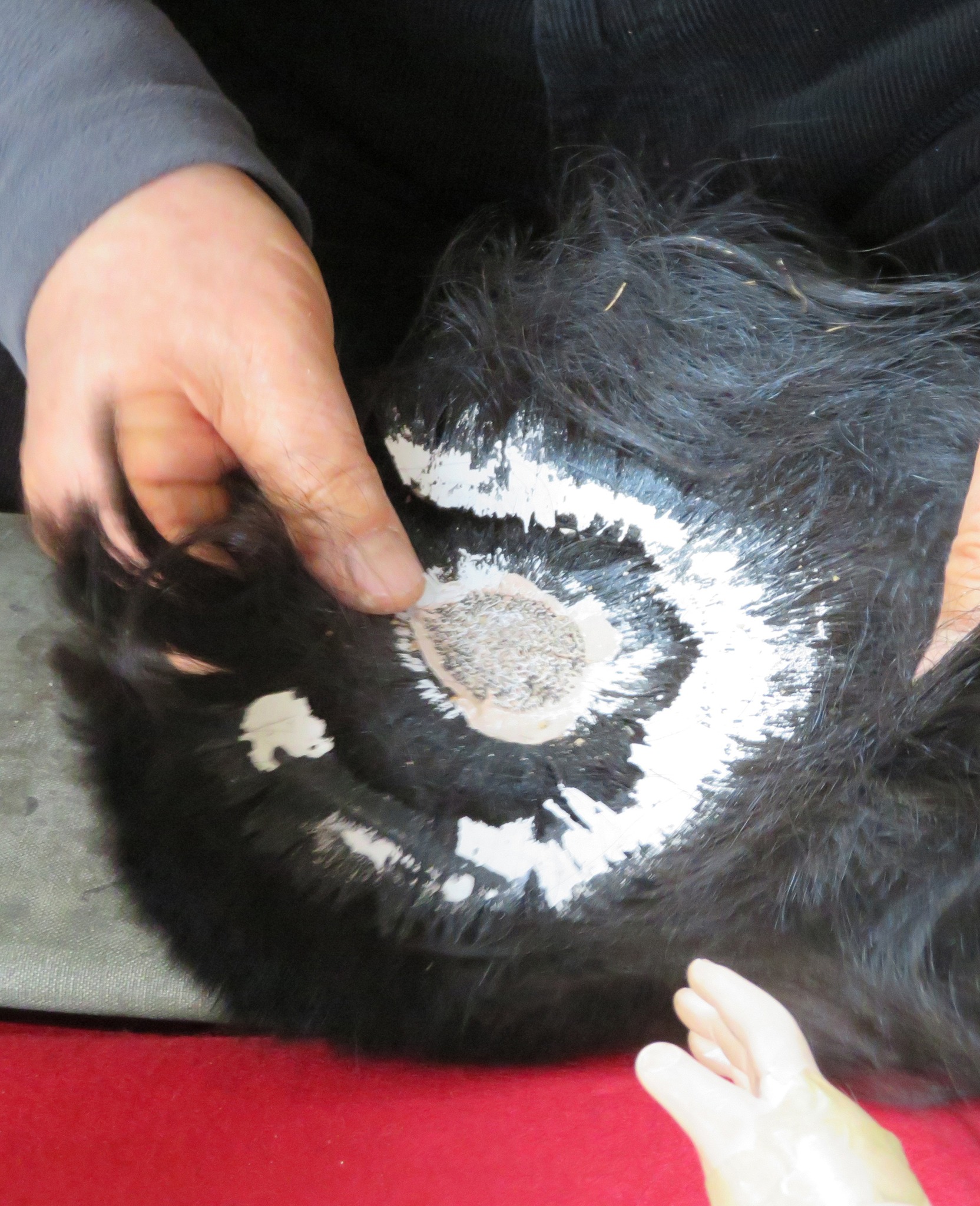

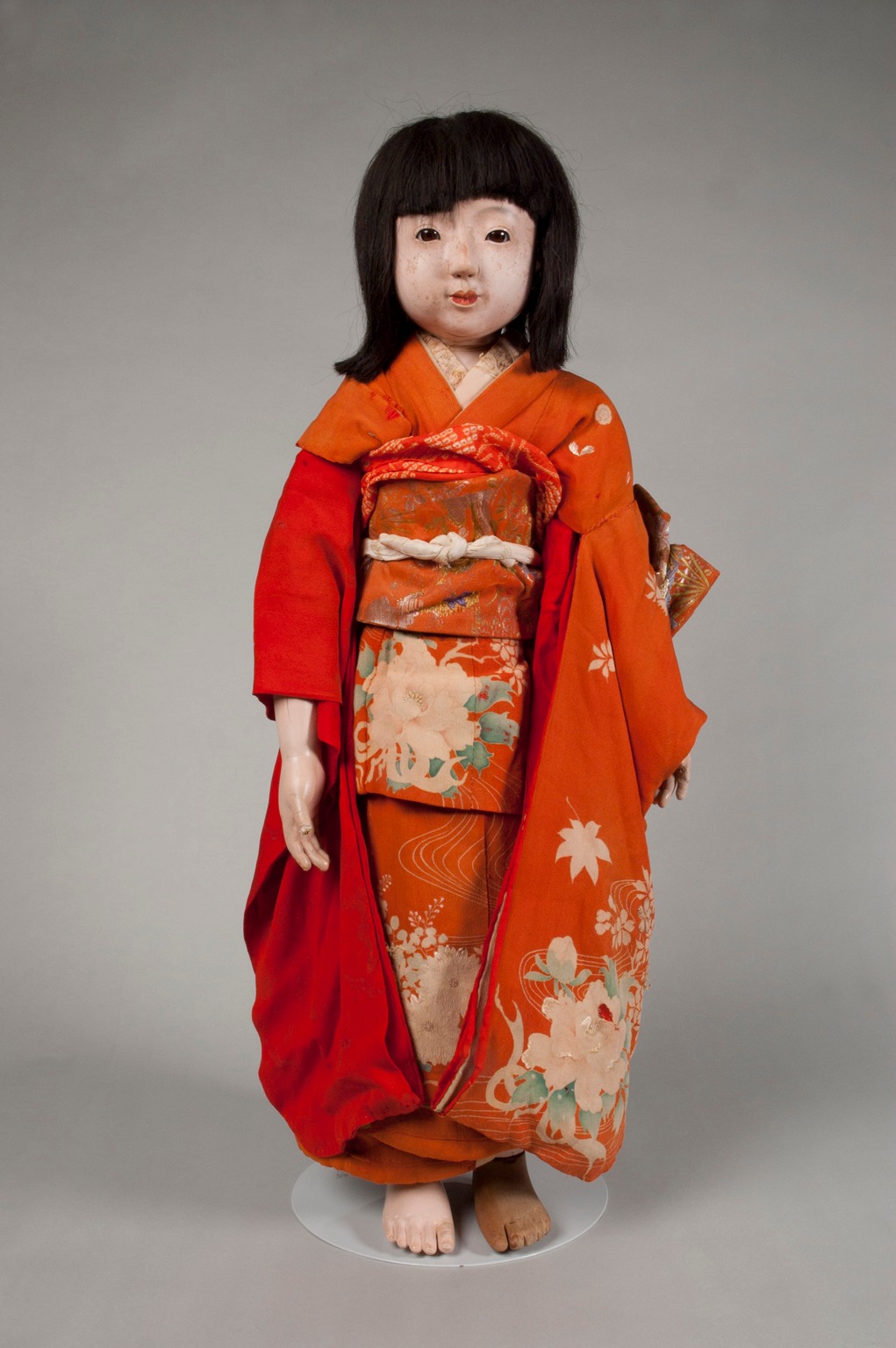
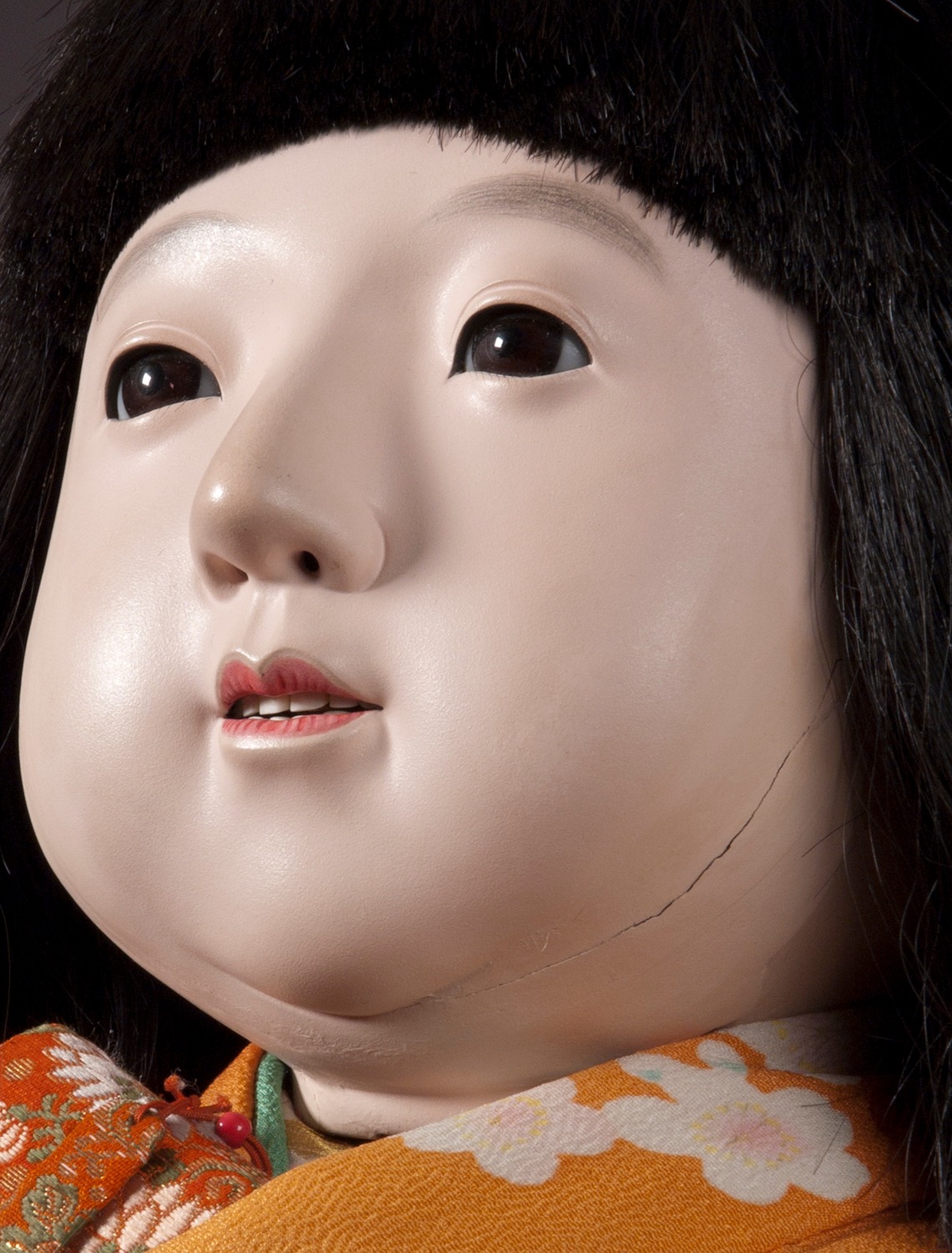
Continuing our discussion of Good/Better/Best in Japanese dolls, we now turn to the doll itself, its personality and quality of execution by looking at the face as well as the hands and feet.
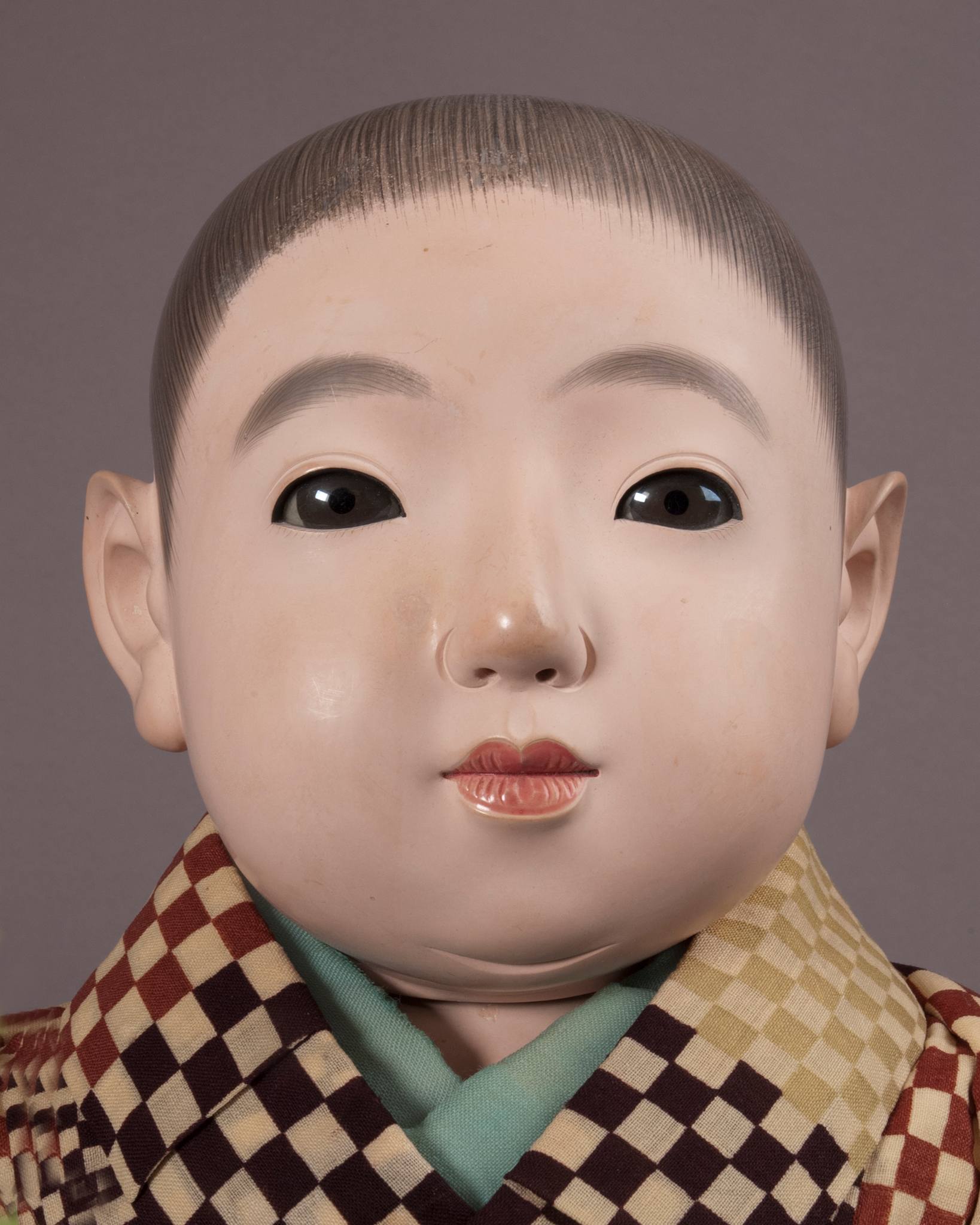
Let’s be honest, for most doll collectors, it’s almost always about the face! The face is what catches the eye. The face is what holds the attention. And the face is what we fall in love with. We look at them, and they look back. A bond is forged. A love kindled. A purchase made. We will overlook many other issues if we fall in love with the face. I know! I’ve been there!
So continuing with our evaluation of Good/Better/Best let’s talk about the face and how we can go about technically evaluating the gradations of quality and desirability in a Japanese ichimatsu-ningyô face, recognizing all the while that if we have already fallen in love, this is a secondary exercise!
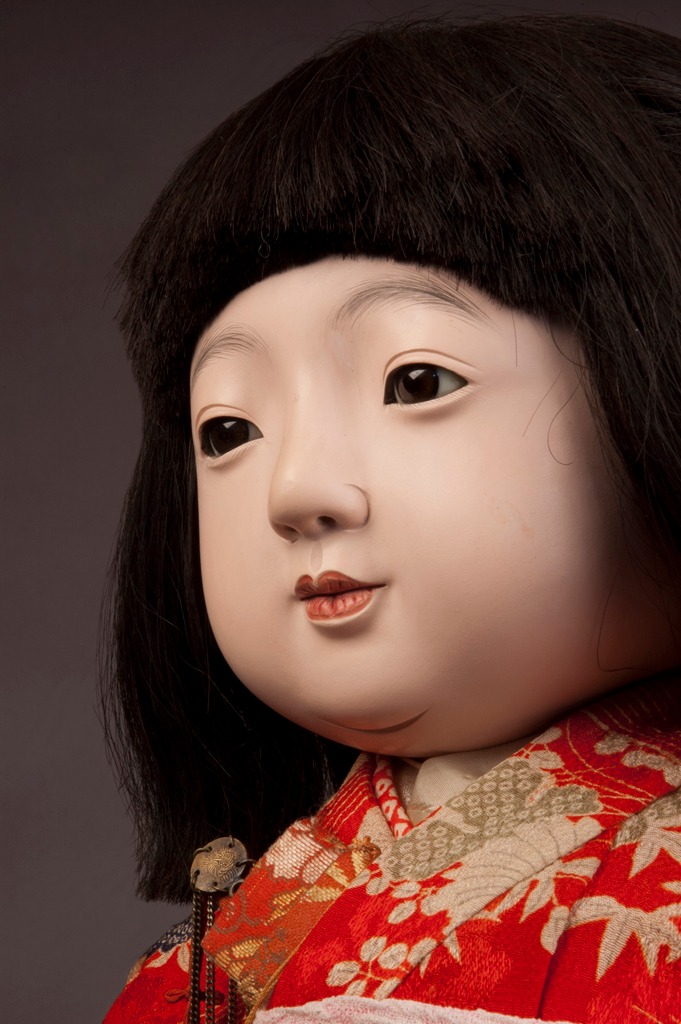
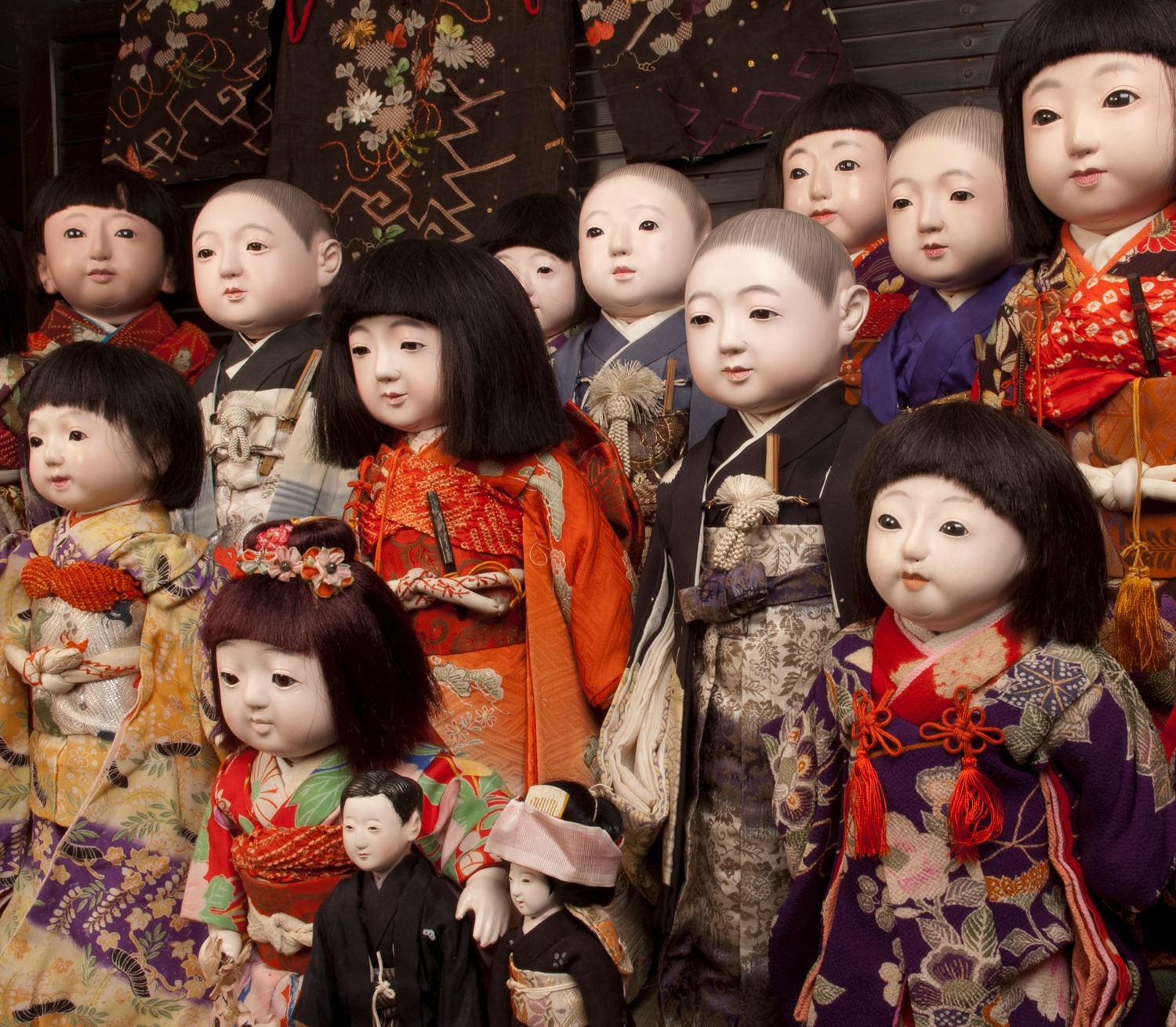
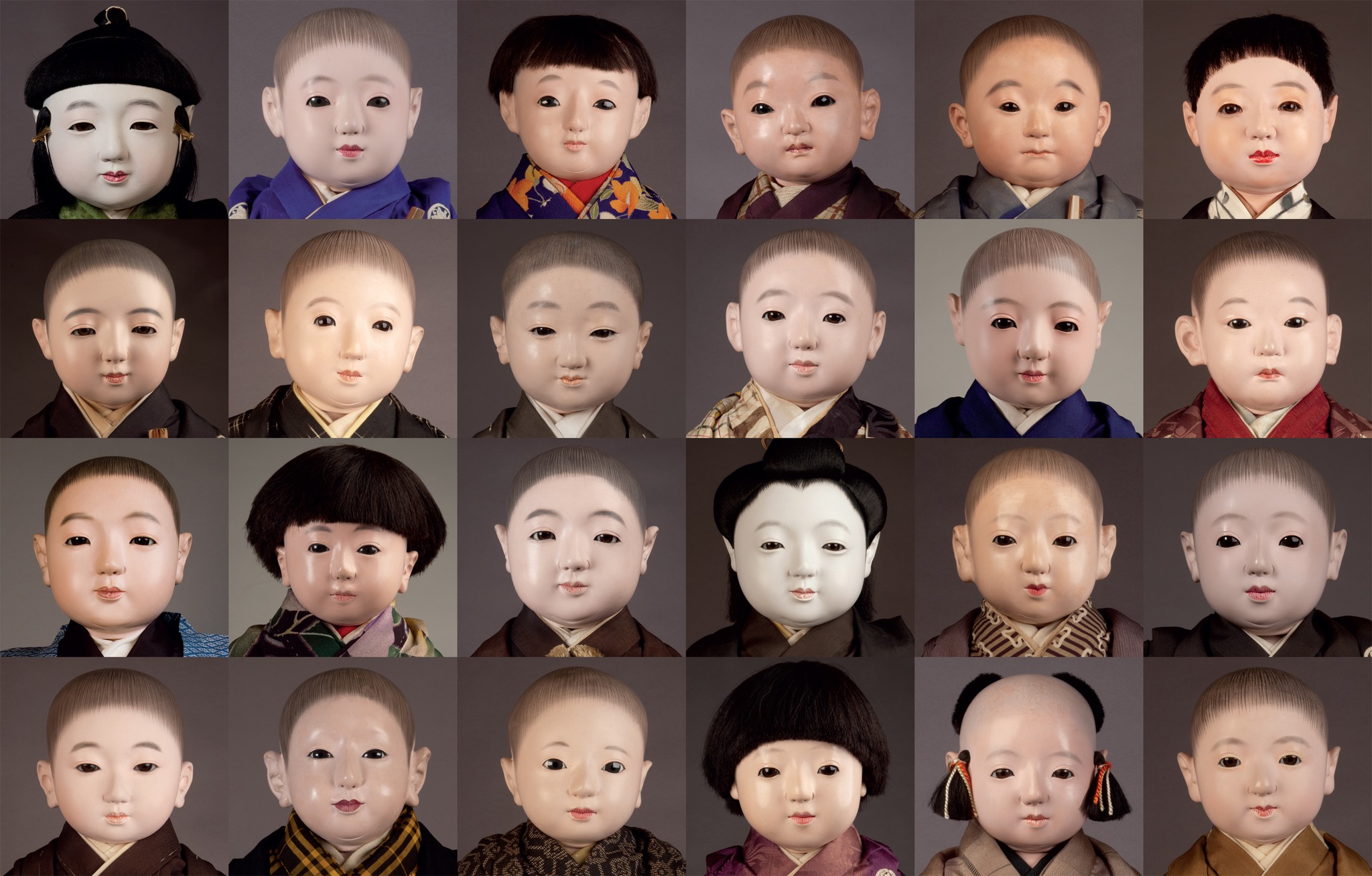
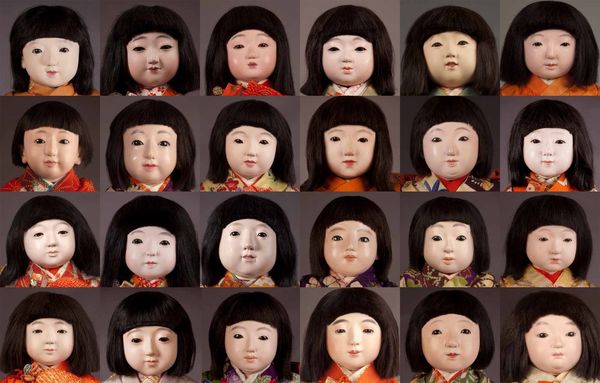
One of the most disheartening comments I ever hear (or read) about ichimatsu-ningyô is: “They all look alike”! Those 4 words actually hurt! When one becomes aware of the extremely complicated and time consuming processes that go into the creation of an ichimatsu-ningyô head and face, and begin to really compare one face with another, this first impulse of only seeing their similarities fades away and a deep recognition of their infinite individuality becomes clearer. [Figs. 18 ,19]
So let’s look at some faces!
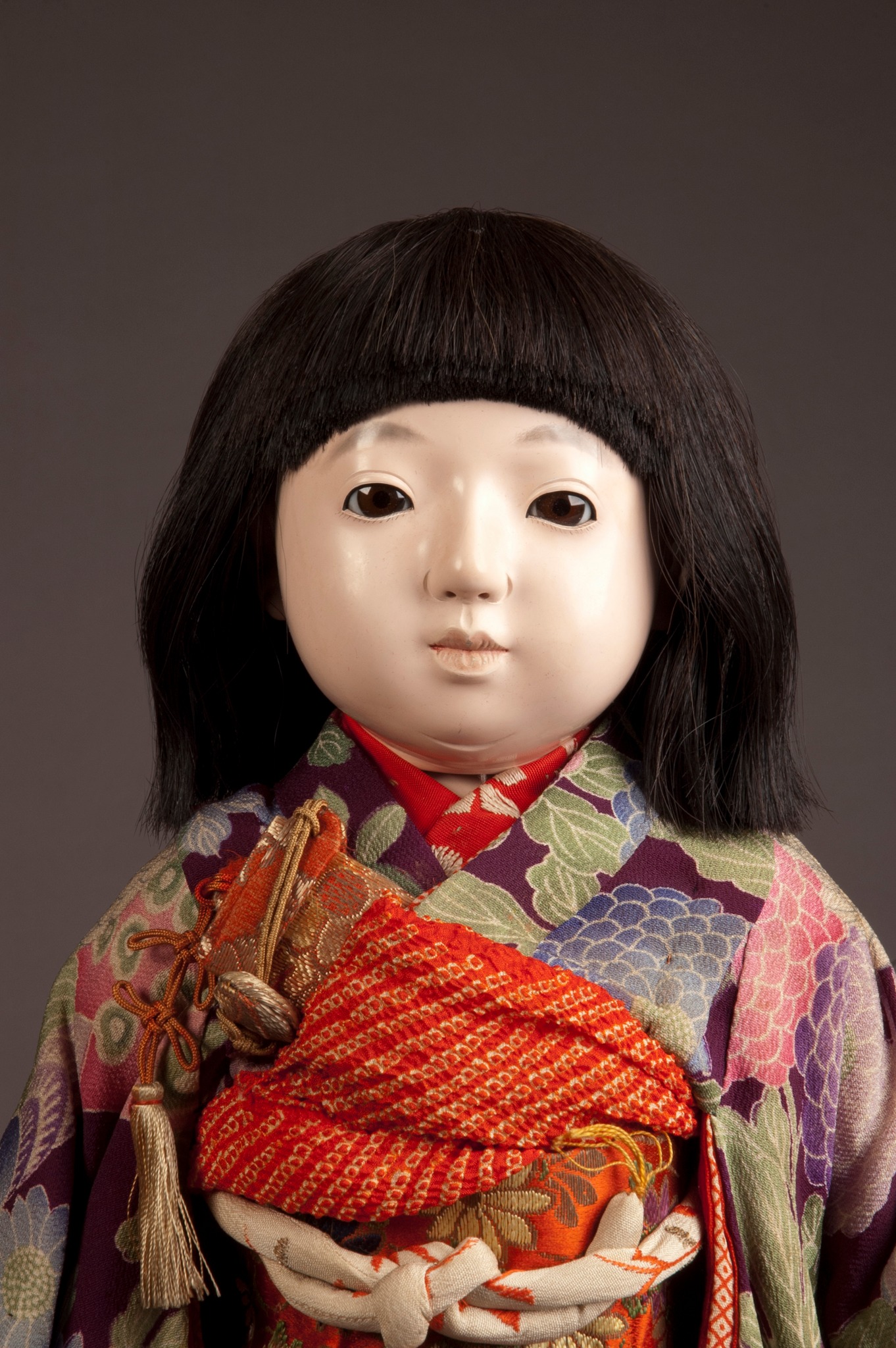
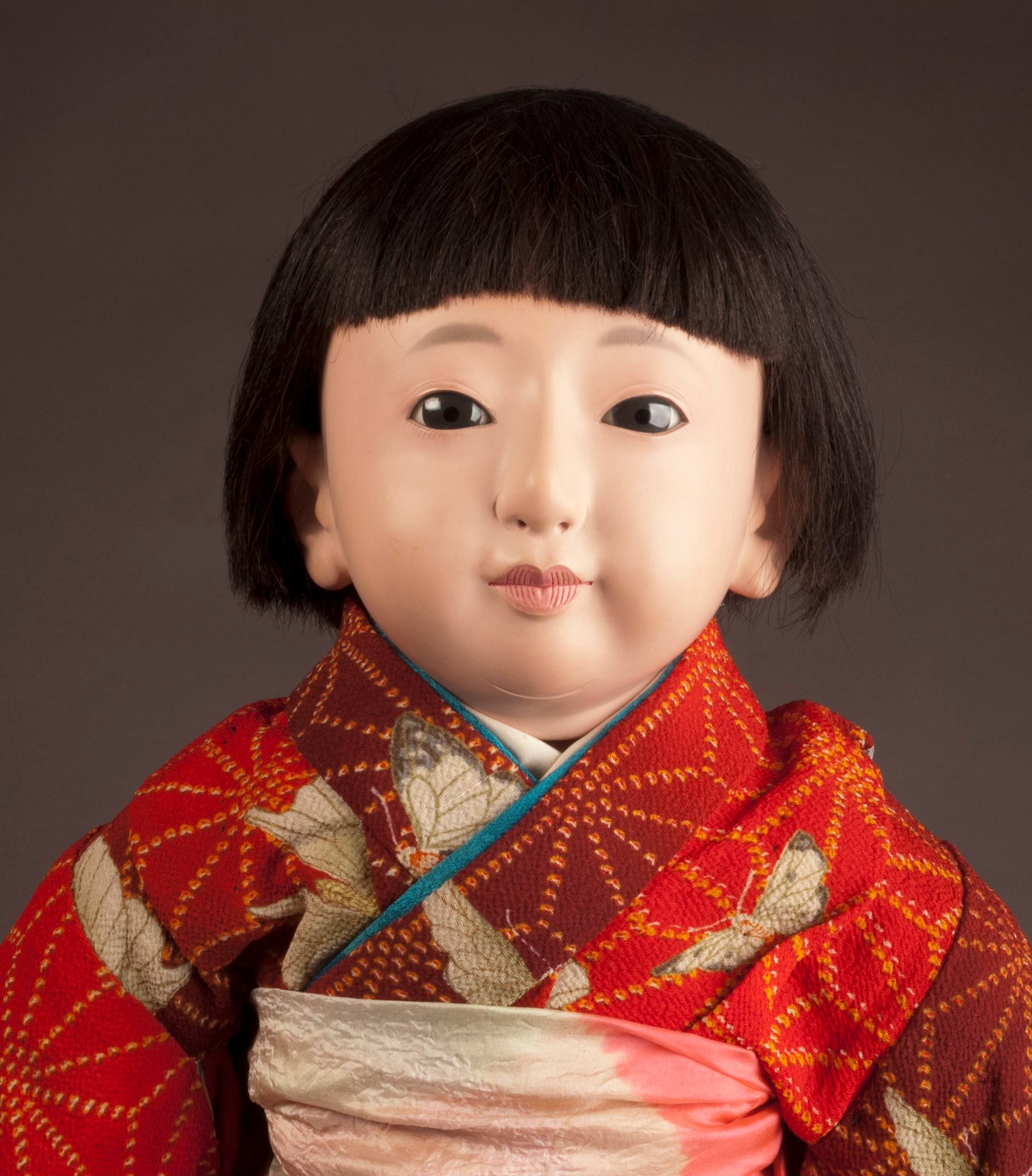
Face: If our hypothetical ichimatsu has passed the basic condition requirement, clean gofun, no cracking or damage and a well-preserved kimono, we can start our evaluations in earnest. For nearly all doll collectors the face is perhaps the most important element of the doll. Do we love it? Are we drawn to it? Does it make us smile? Laugh? Cringe? It is natural therefore to begin with the face.
Unfortunately, for those unfamiliar with Japanese dolls and the specific qualities to look for, they tend to “all look alike”–narrowed eyes, black hair in an okappa shoulder-length banged cut. What is a good face? A better face? The best face?
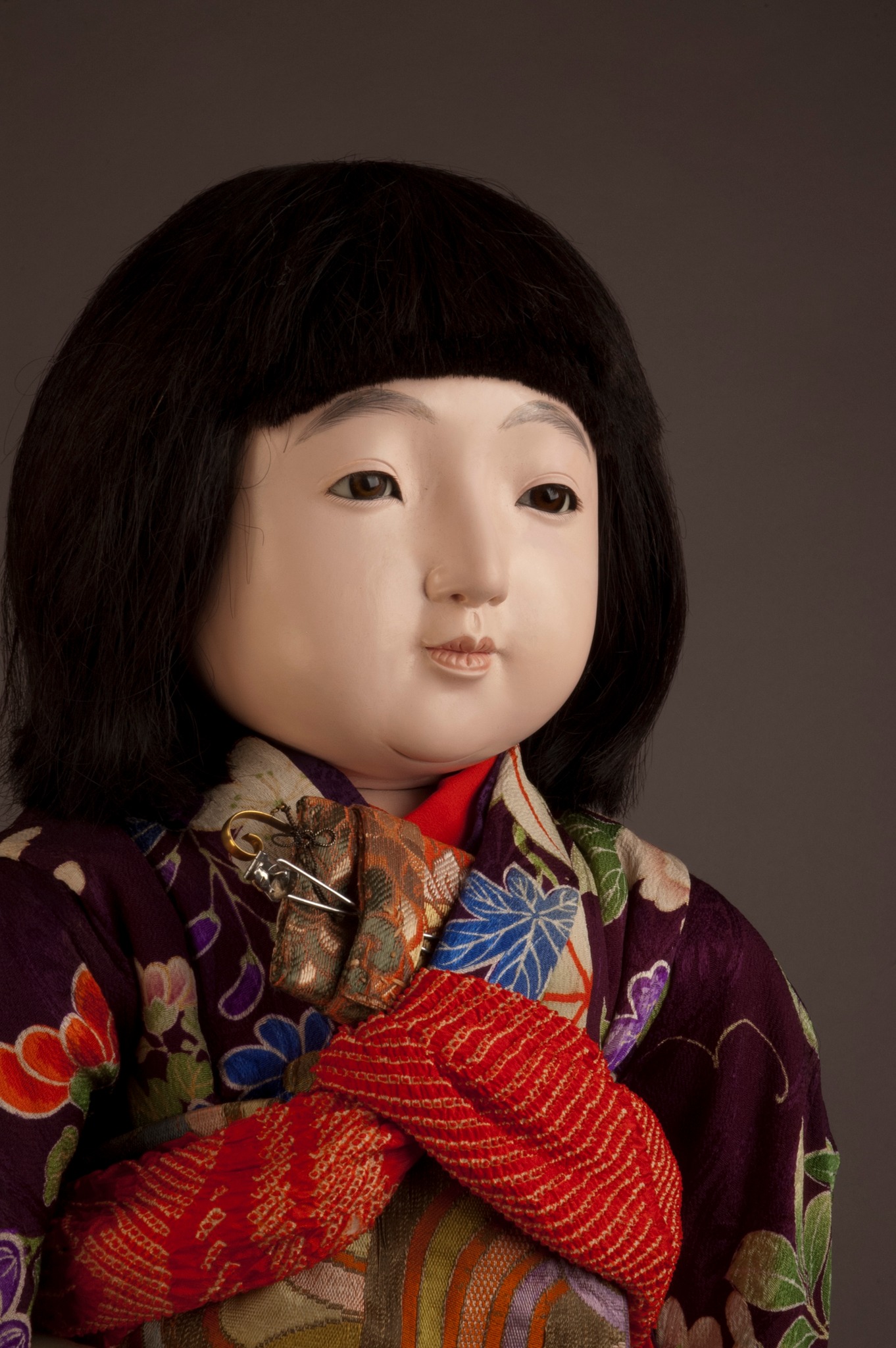
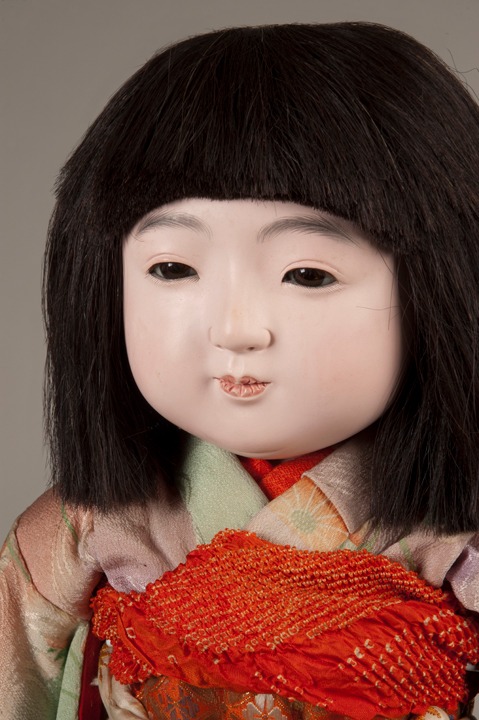
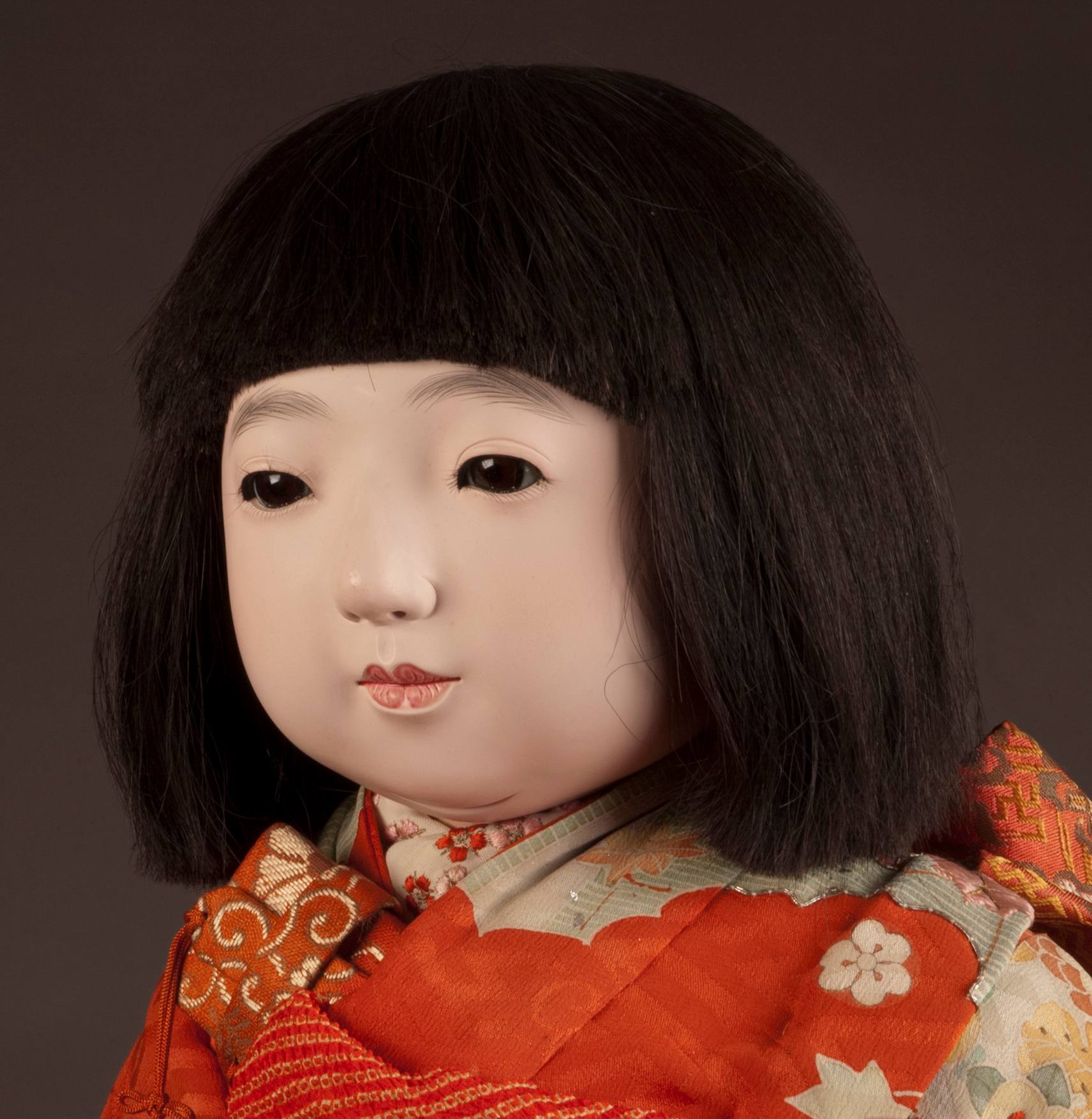
Every Japanese ichimatsu is one of a kind. Unique. This is due to the process through which they are made. Although a mold is used for the head, this only creates the basic shape and size. All of the individuating features, from the fullness of the cheeks, the shape of the ears, the contour of the lips or eyelids to the depth of the philtrum, are all hand done, individually, by the artist through the skilful modeling and carving of the gofun surface. No two are the same. Thus these features need to be looked at carefully and not taken for granted. Good dolls will be pleasing, well balanced and skillfully rendered. Better dolls will have certain elements setting them apart, an open mouth for example, or more realistic glass eyes, or a greater depth to the carving. The best dolls, have all of this and more.
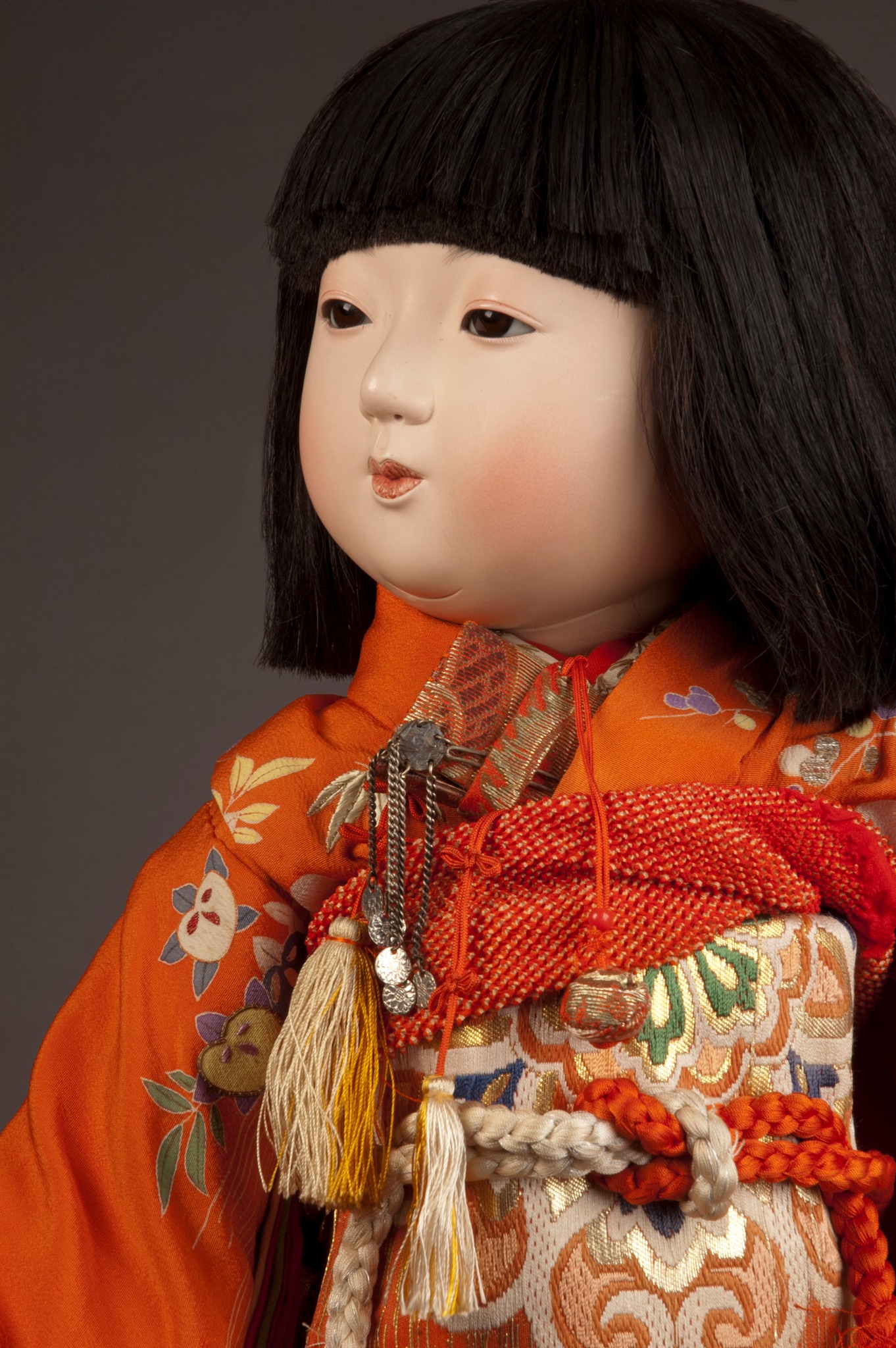
Take for example the three faces presented here. All are good. But if we look carefully we can see why one is good, one better and one best.
The first is a very “good” ichimatsu girl by Katsumitsu, a student of Takizawa Koryûsai II (1888-1986) [Fig. 20, 21, 22]. Her face is very well done with nicely shaped eyes and well rendered features. She has a bright, happy expression so endemic to the Koryûsai tradition, but here she is especially impish. The gofun is slightly pigmented intentionally to give her a more fleshly tone, but it is even and lustrous throughout.
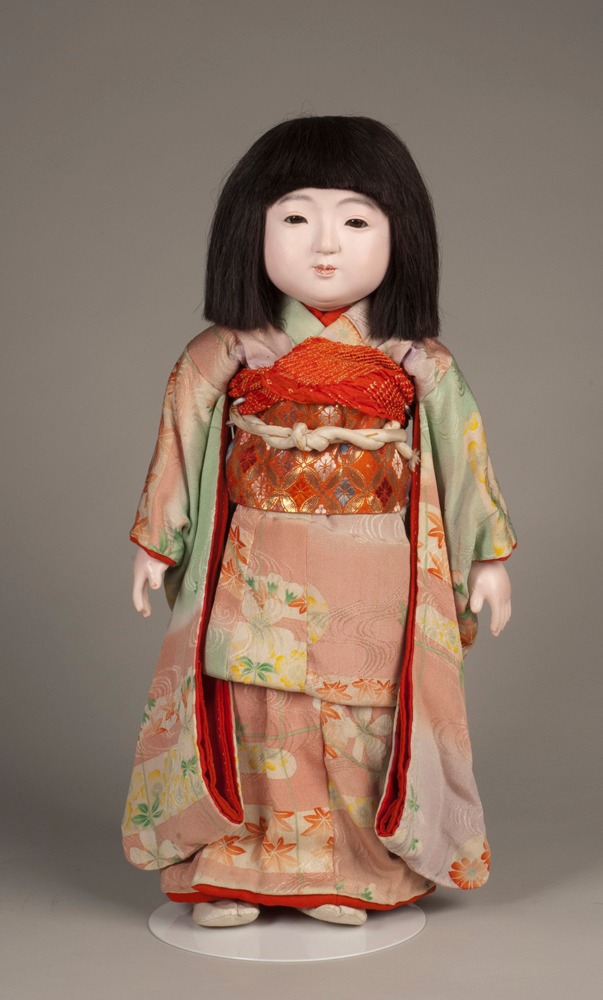
Now compare her to a “better” ichimatsu by Iwamura Shokensai I (Tôkô, 1892-1968) [Fig. 23, 24, 25, 26]. This lovely girl is actually part of pair by Tôkô. Again, the face is very well done. But if we look we can see that in comparison with the Katsumitsu doll, the creases around the nose are a little less sharp, the eyebrows are more finely painted with individual lines radiating inwardly, and a little more attention paid to the eyelids with the eyes deeply set. Her face, while smiling and pleasant, is a bit more subdued, which is very much in keeping with the Shokensai tradition, having trained initially as a carver of Buddhist sculpture.
Now, to take it to the “best” level, let’s look at the final example from Hirata Gôyô II (Tsuneo, 1903-1981) [Fig. 27, 28, 29]. This doll is actually a jiyû-ningyô, more closely paralleling a BJD construction, rather than a soft-jointed ichimatsu. Here we see a much higher level of realism. The folds around the eyes and nose are done very naturalistically, the eyebrows show the same inwardly radiating brush strokes, but are much more fine. And here, real hair eyelashes are included rather than the painted ones from the previous example. The gofun has been worked to a closer approximation of natural skin tone, with pink-flushed cheeks. The mouth, also, has a slightly pursed aspect, very skillfully executed, not formalized or completely balanced and symmetrical. Of course, Gôyô was the first doll Japanese doll artist to be designated as a living National Treasure, so one would expect the best of him.
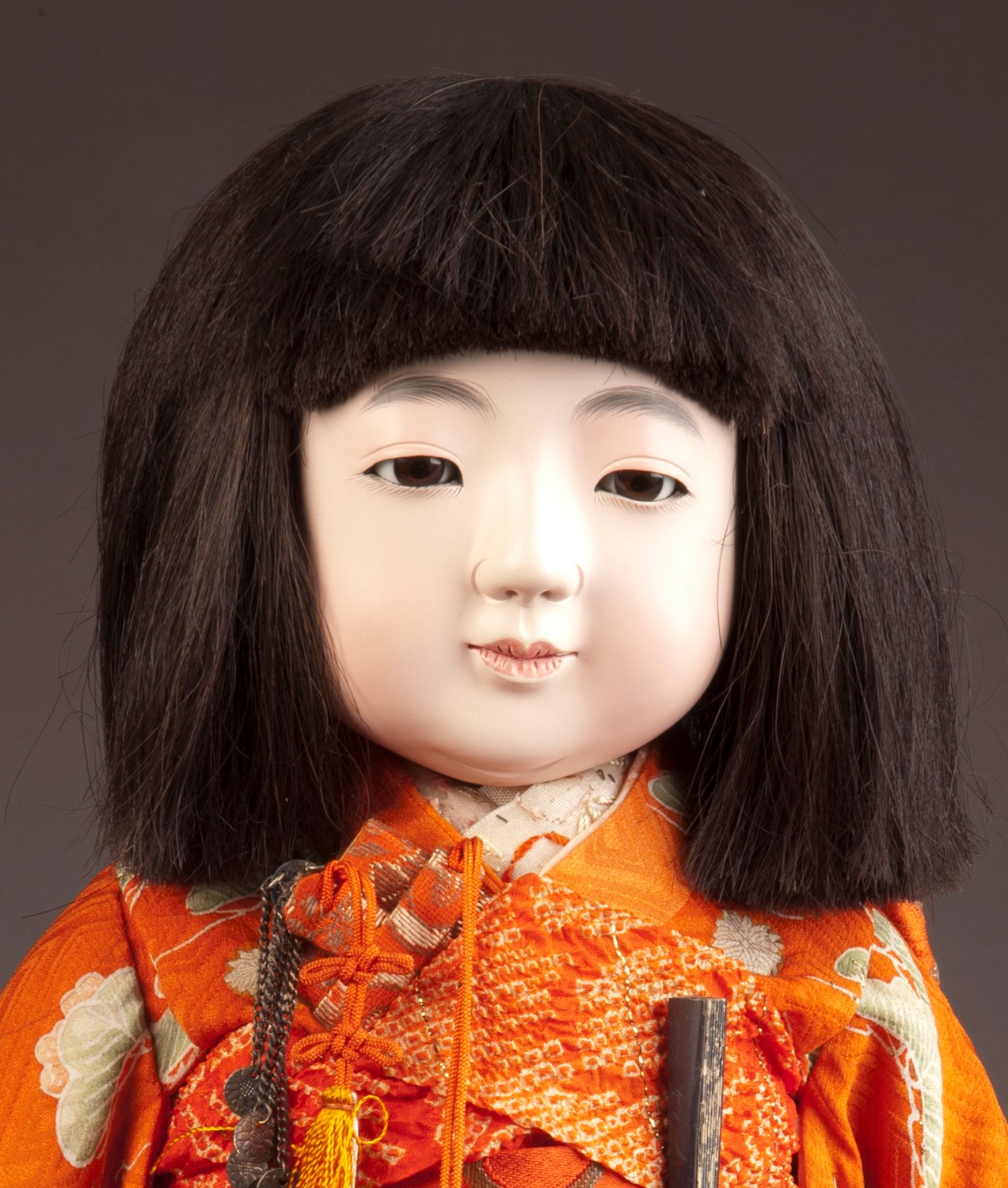
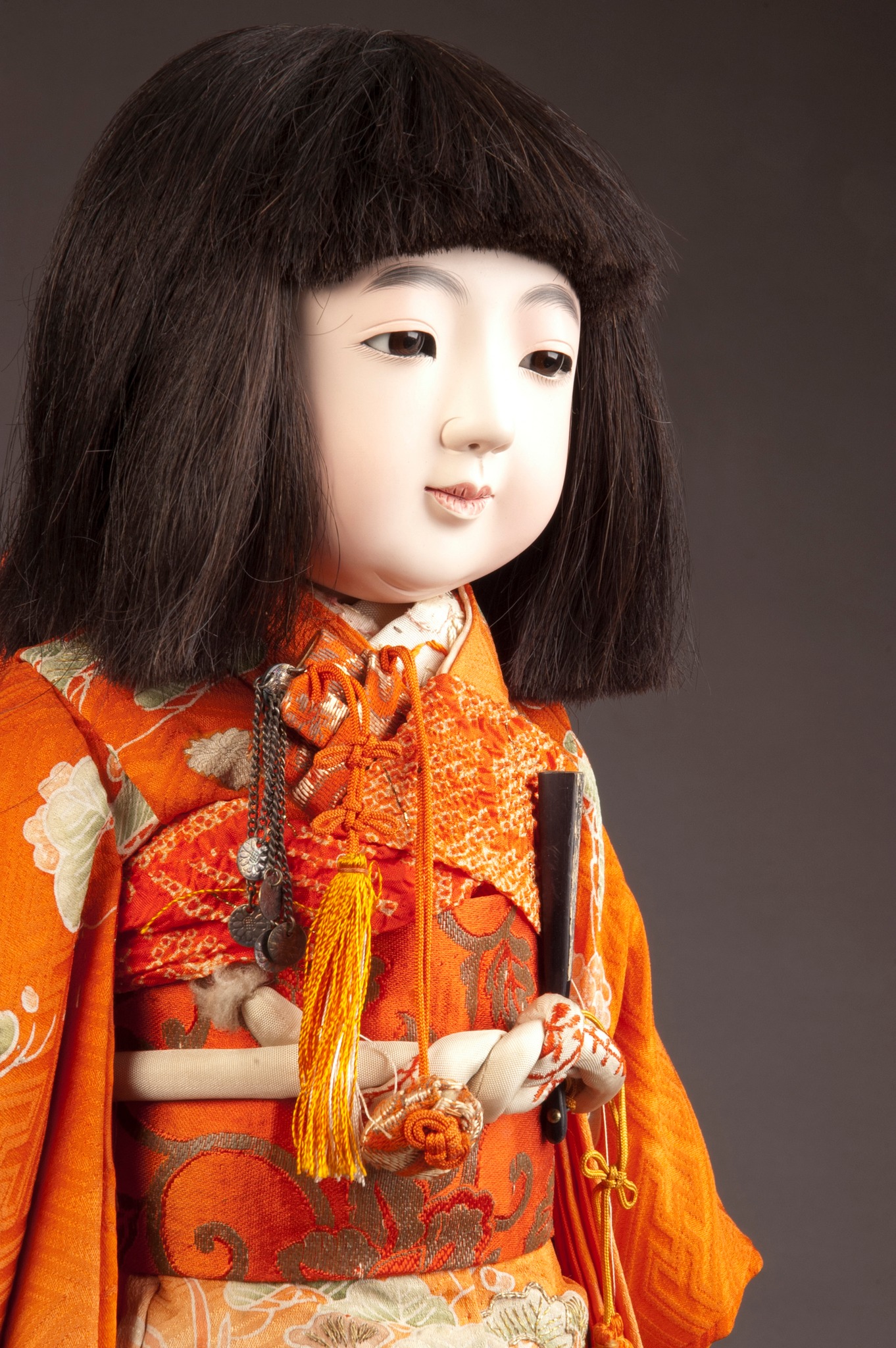
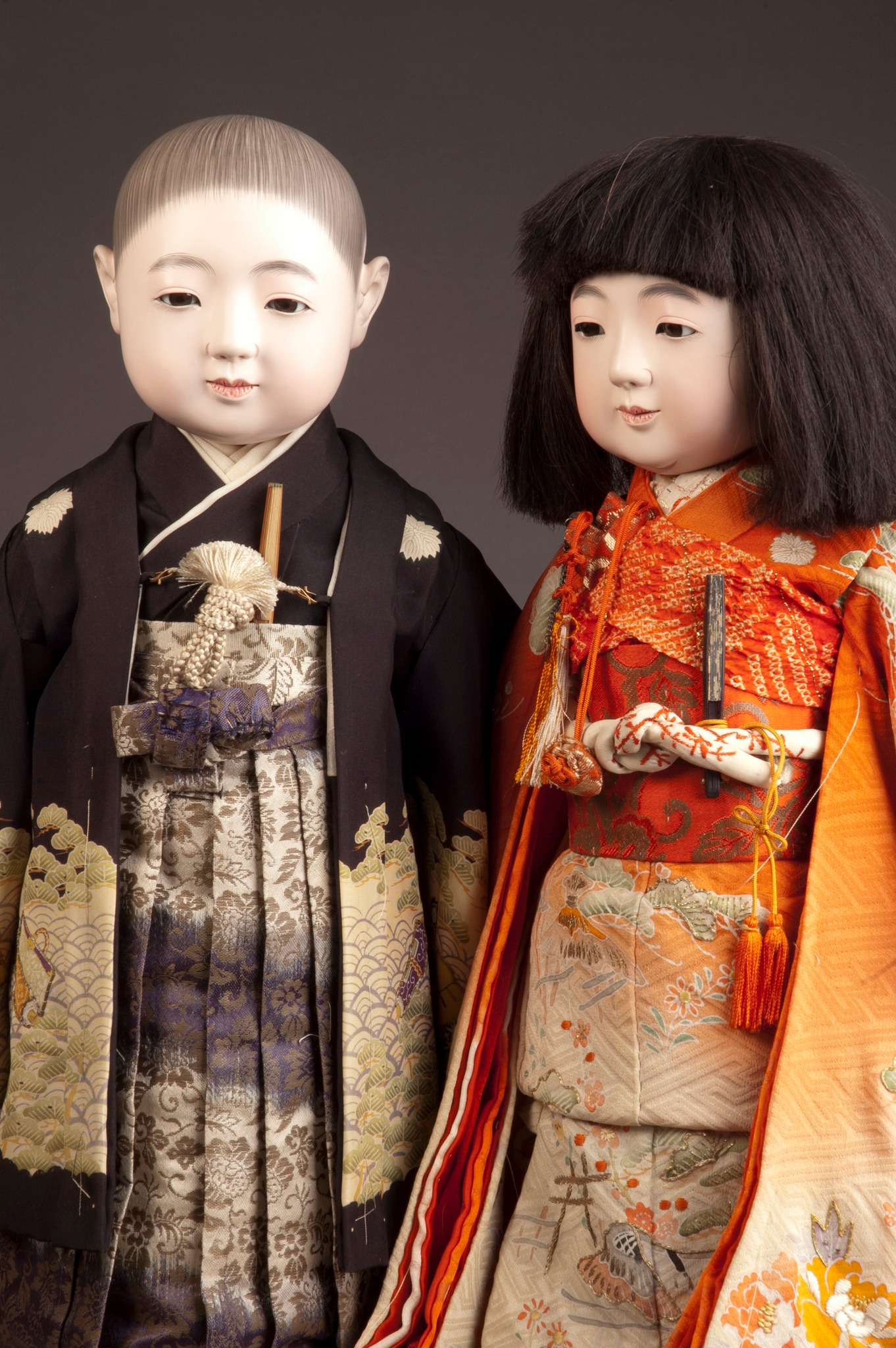
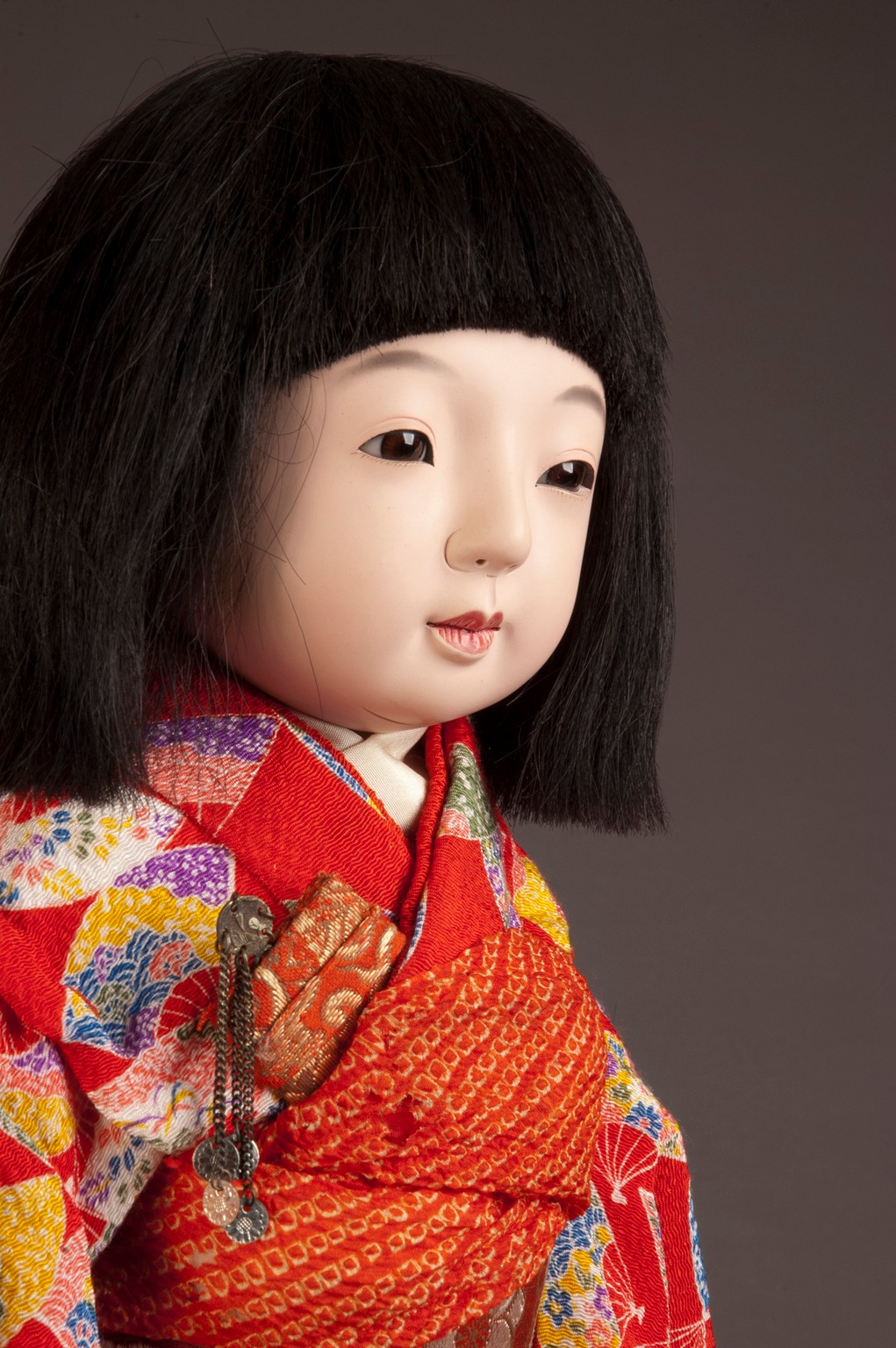
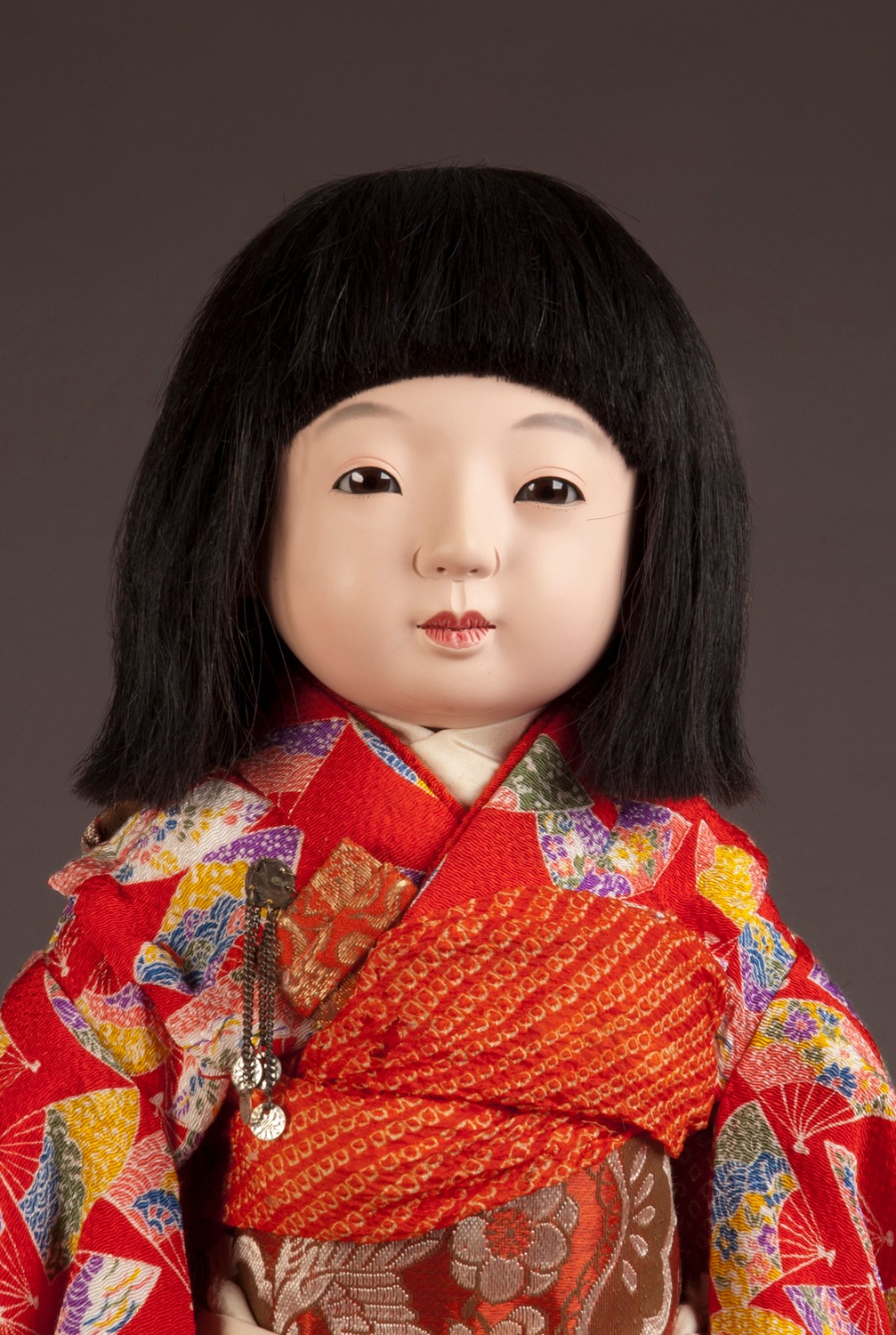
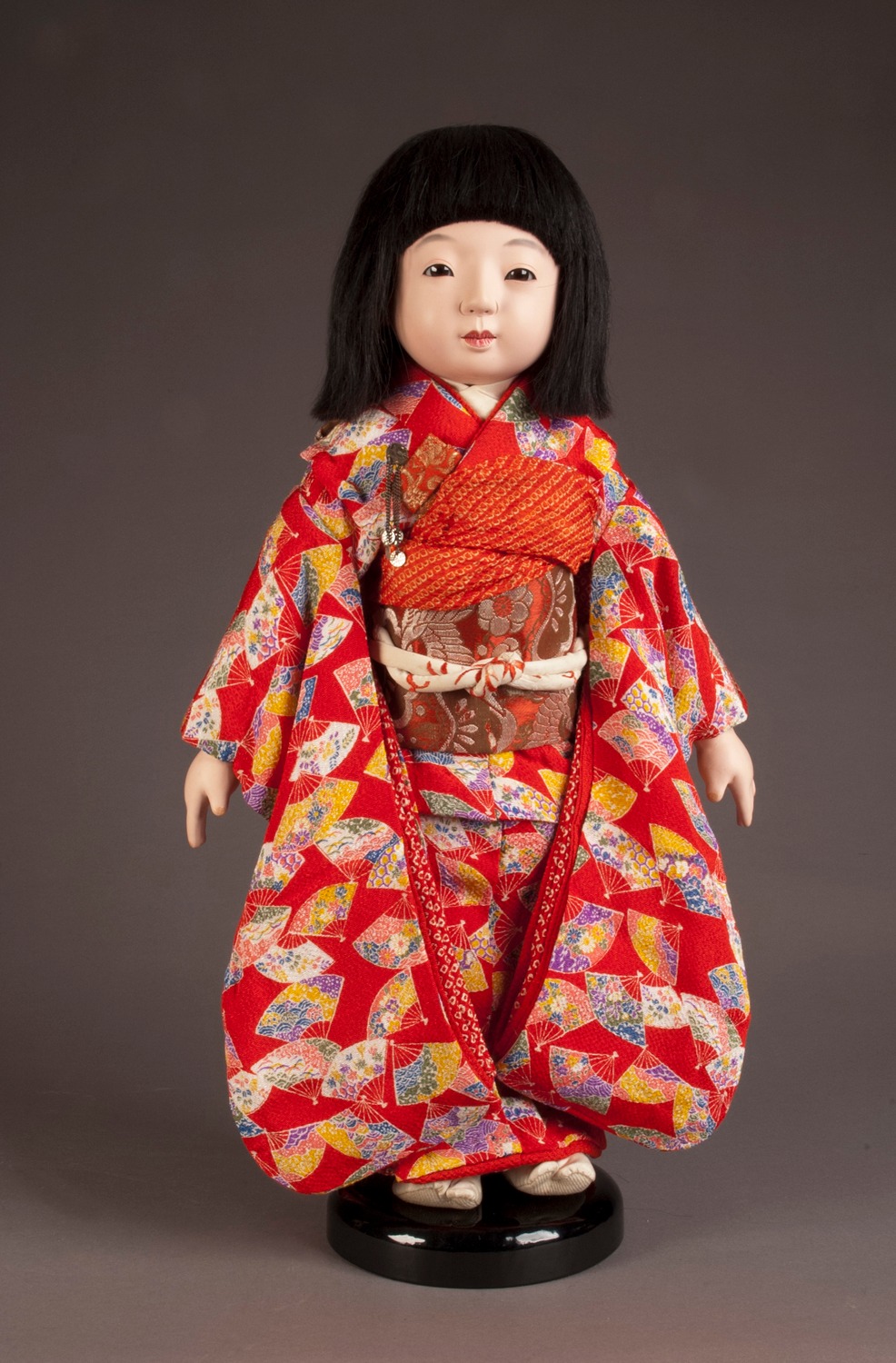
In continuing our review of qualities to look for in evaluating ichimatsu, we can’t just stop at the face, but we need to look at the hands and feet as well as indicators of quality.
Hands/Feet: In terms of doll artistry and determining the overall quality of a doll, the hands and feet are also an important indicator. Although typically the better doll artists executed both the faces as well as the hands and feet, this is not always the case and therefore a good, better or best head does not always have commensurately high quality hands and feet to go with it.
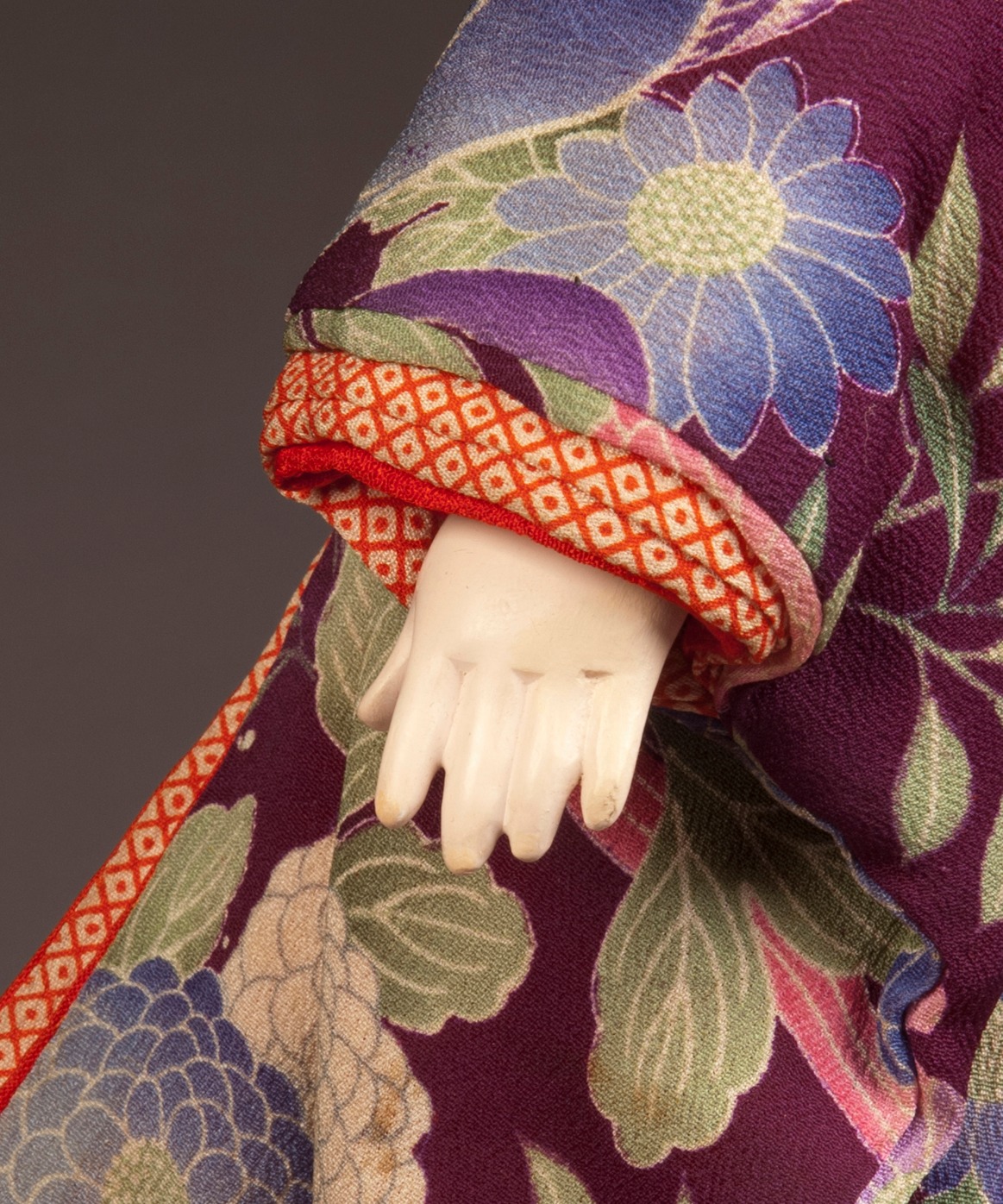
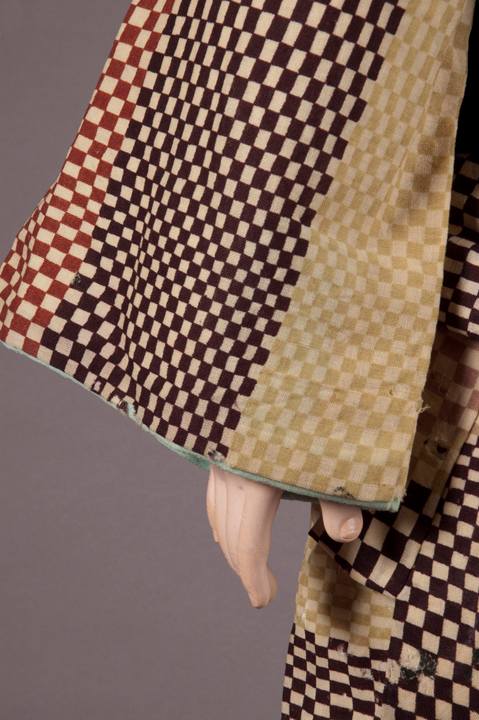
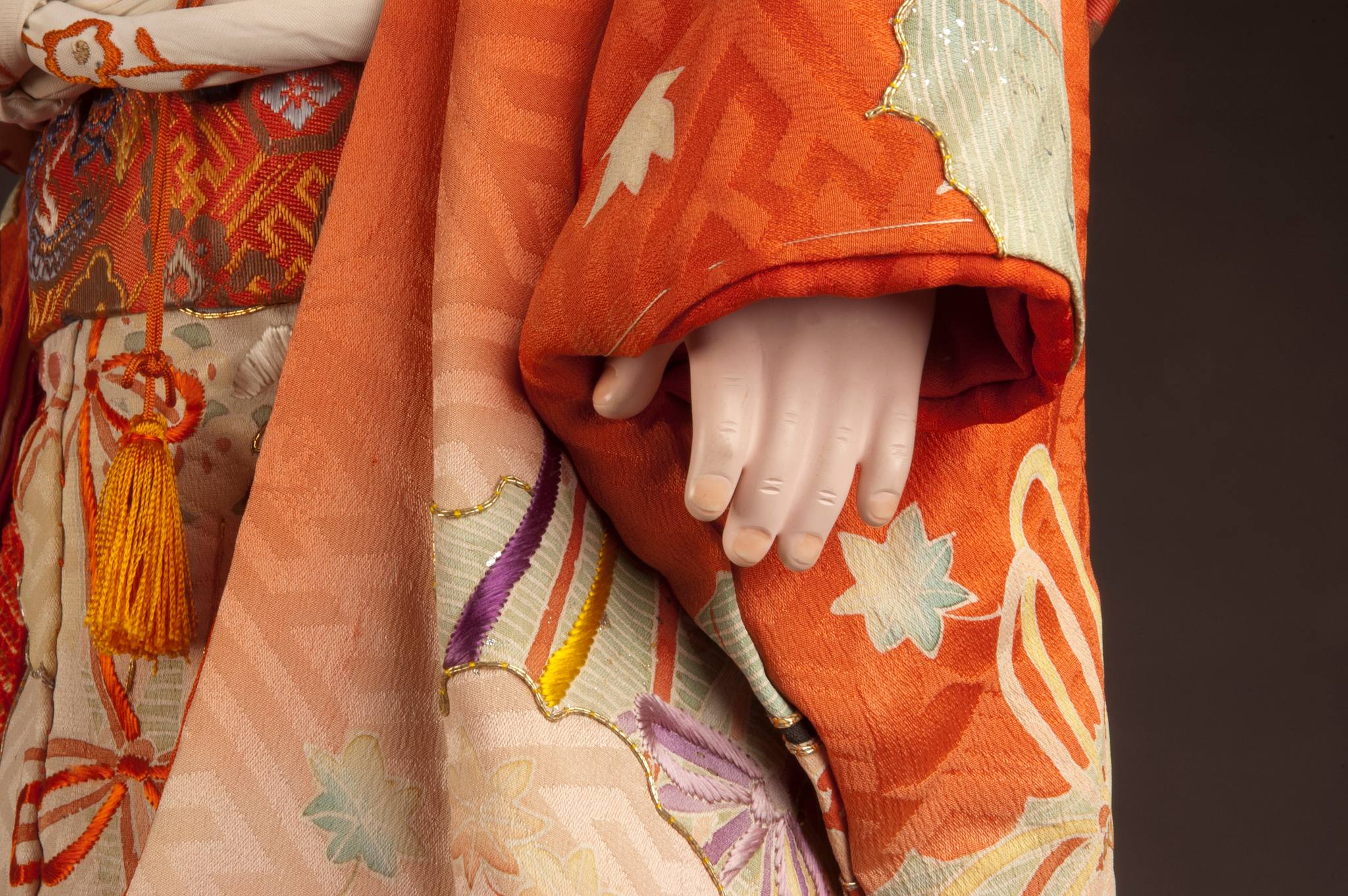
In terms of hands, we are looking for delineation of fingers, naturalness of hand shape, and the inclusion of details. The poorest quality dolls typically have club hands, with no attempt to create fingers at all. As you slide up the scale of quality, the hands become more lifelike.
Let’s take a look at three hands, good, better and best, that help illustrate this.Our “good” hand is from an ichimatsu by Koryûsai [Fig. 30, 31, 32] Each of her fingers is well delineated, with the addition of painted fingernails. There is a certain sense of plumpness and a slight contour or undulation to the fingers giving them some feeling of life. Note the sharp v-channel at the top of each finger separation. This is typical of Koryûsai’s more general dolls and a quick shorthand identifier when looking at ichimatsu.
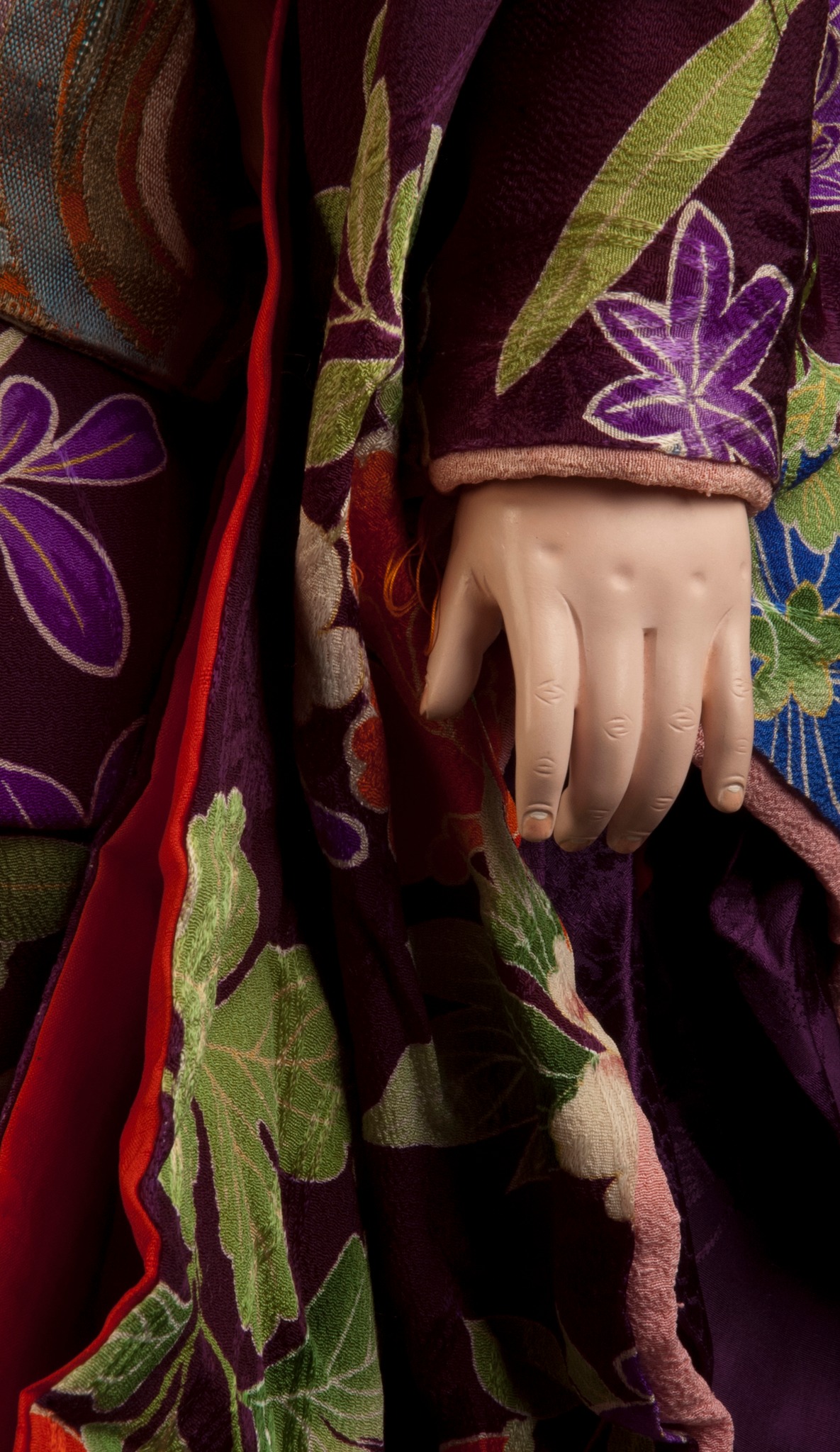
Now a second example comes from an ichimatsu girl bearing the kotobuki “high quality” level mark from the Kyoto atelier of Maruhei Ohkiheizô, and shows a higher level of sophistication. [Fig. 33, 34] These, “better” fingers are even more separated and individualistically rendered, with dimples at the knuckles, etched creases at the joints. And, rather than painted, the fingernails are carved and painted in a technique known as tsumekiri. The back of the hand is very well rounded, giving a greater sense of fullness. In addition the fingers are slightly bent, rather than stiffly straight, feeling natural and relaxed.
Our “best” hand comes from an exceptionally tall ichimastu girl by Shokensai. [Fig. 35, 36, 37] Here the fingers are nearly completely individualized with deep separation, particularly the index and pinky. We see the tsumekiri fingernails, with sharply defined nail walls and cuticle, and some lighter pigment to simulate the lunula at the base of the nail. The hand also has the knuckle and joint creases on the back as well as the palm side of the hand. I am including both left and right hands images here, because the right hand is truly exceptional and a bit inexplicable.
The right hand is depicted slightly closed, as if holding an object, a fan perhaps.
By tradition, Tokyo made ichimatsu always have their hands depicted flat, or relaxed, with only a slight flexion of the fingers. Kyoto made dolls, however, typically have their right hands holding a fan. That a Tokyo artist made a doll with a Kyoto-style hand is indeed unusual and intriguing. But the naturalism with which both hands are rendered point to Shokensai’s mad skill sets.
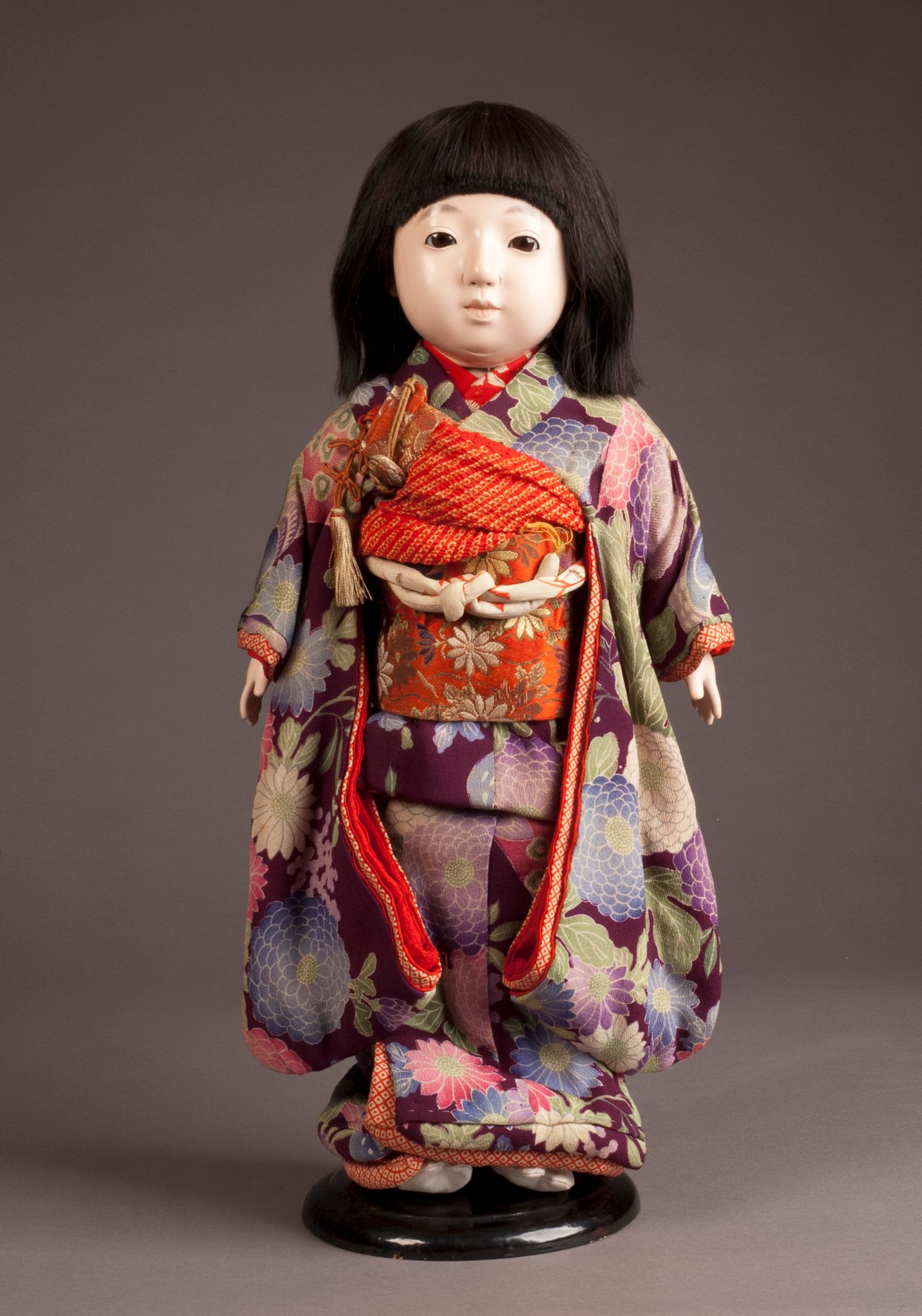
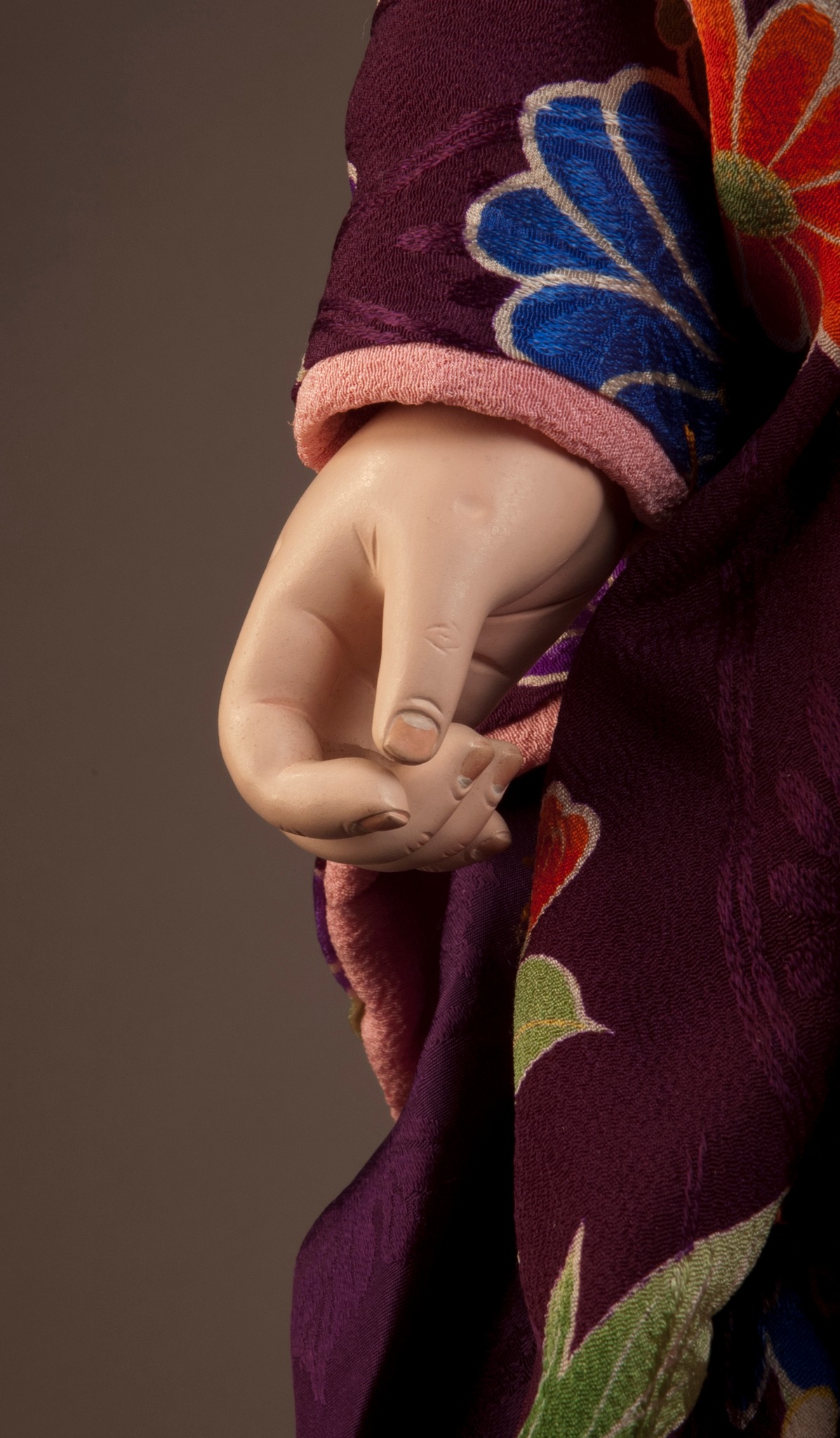


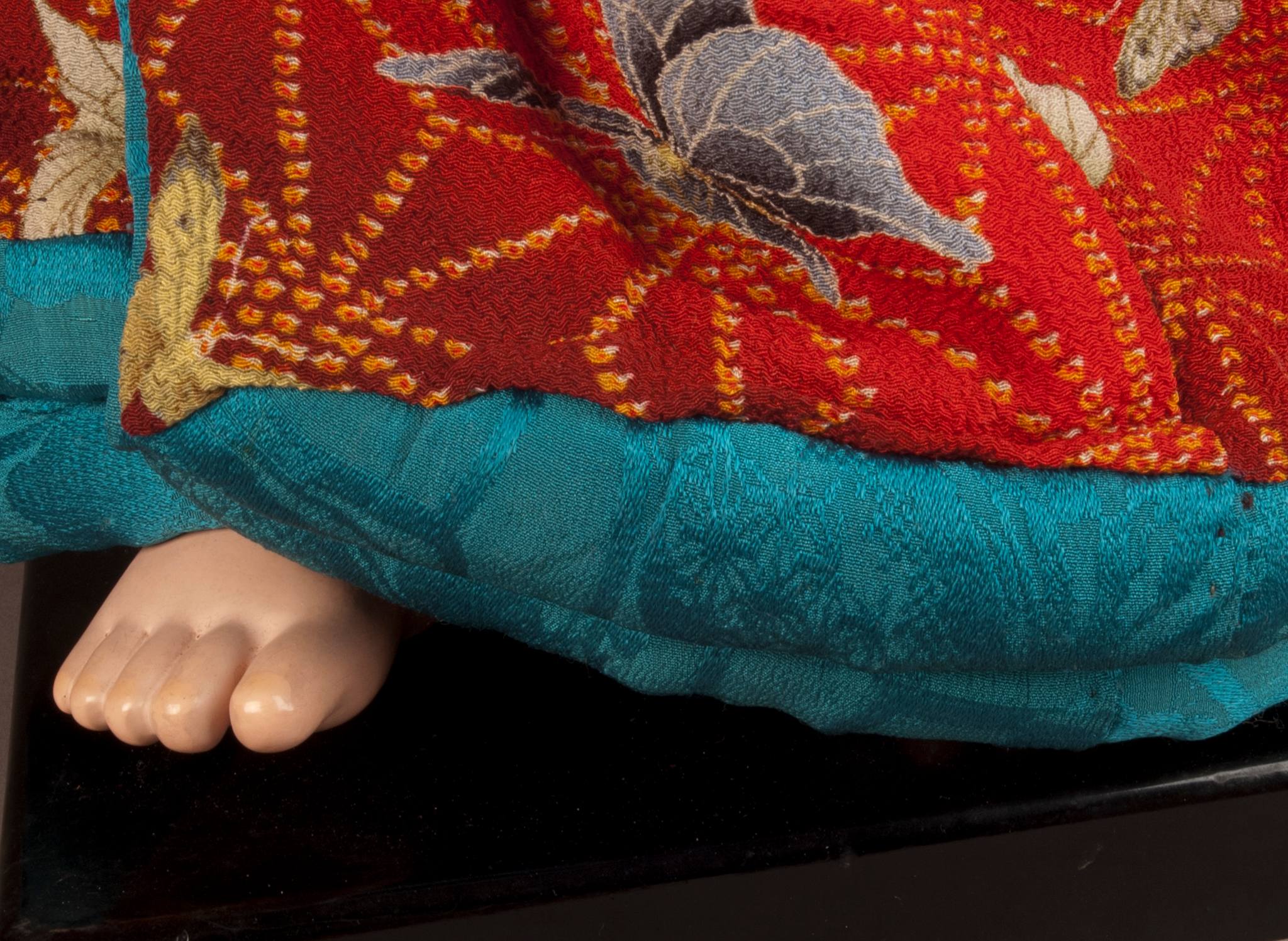
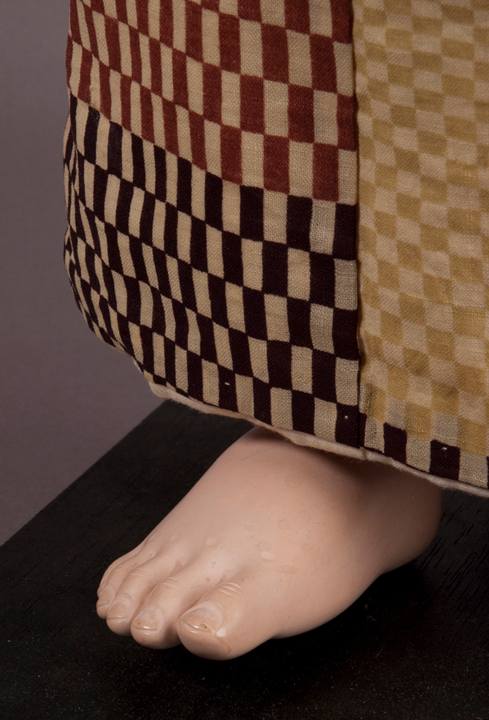
We’ve looked at condition. We’ve looked at faces. We’ve looked at hands. But don’t forget the feet–these can be the really telling difference between good, better and best in ichimatsu-ningyo.
Beginning with the Friendship Dolls of 1927, it became almost universally standard practice to place tabi socks on the feet of ichimatsu, both girl and boy dolls. Prior to this they were always depicted bare footed. Though covered by tabi, the good, better and best doll artists always treated the feet with the same level of attention they gave their hands.
But we will start with a doll by Saiki Tôgyoku. Tôgyoku was a prominent artist beginning in the Meiji Era and continued in popularity through the Taisho Era and was a very influential maker in determining the look and feel of ichimatsu girls. This girl was made when dolls were generally rendered barefoot. [Fig. 38, 39, 40] The toes are all well formed, but with no toenail details or separation of large and small toes.
Next is an example of another girl by Shôkensai, with her tabi on her right foot and her left foot bare. [Fig. 41, 42, 43] We can see the separation of the big toe that allows the tabi to be worn naturally. We can also see the tsumekiri treatment for the toenails, carved and painted. There are also knuckle indications and clearly individuated toes. But they remain a bit stiff and formalized.
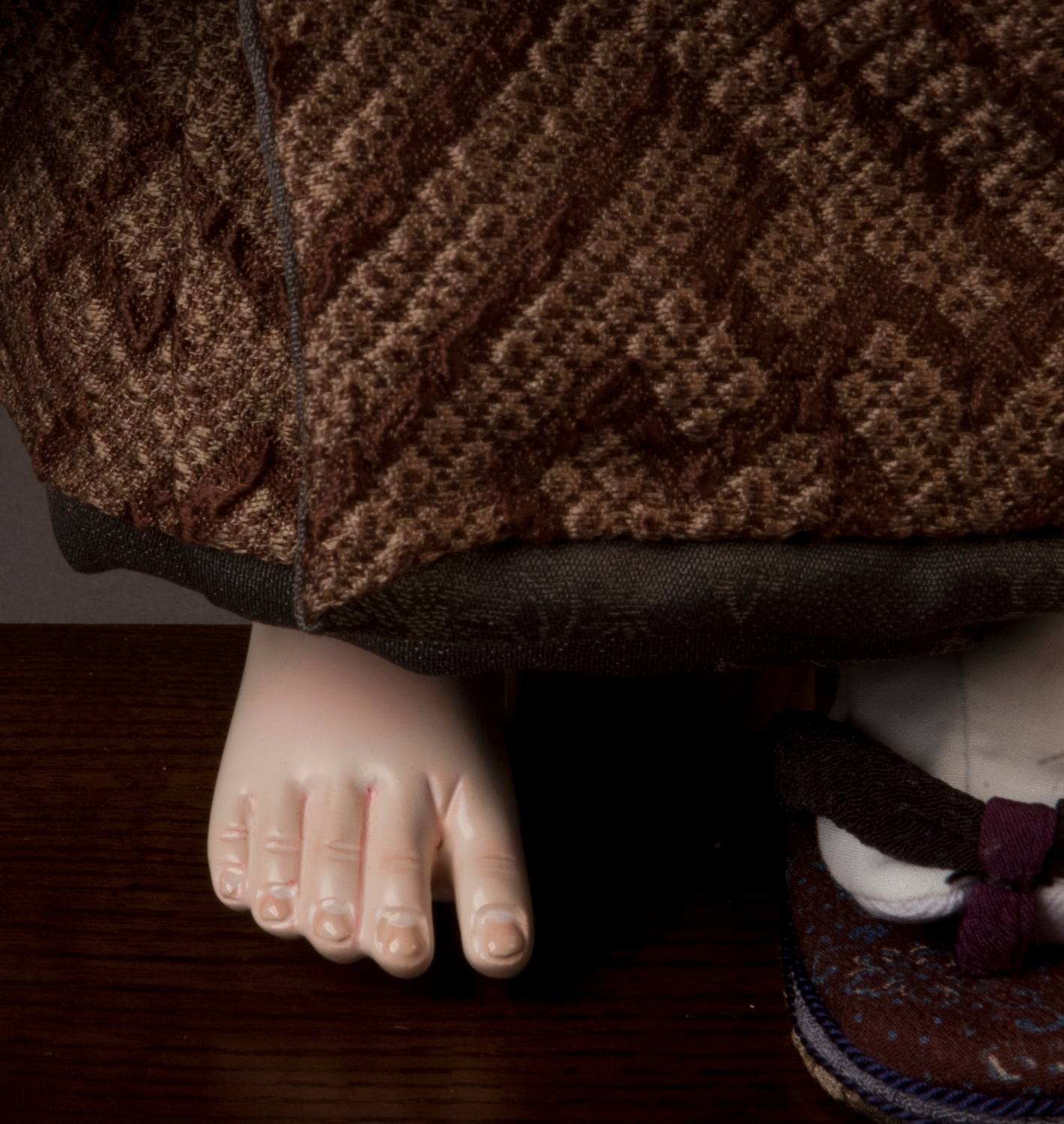
Now compare this to the right foot found on a boy doll by Takizawa Koryûsai II. [Fig. 43, 44, 45, 46] The toe separation for the tabi is less dramatic, more naturalistic. The feet also have a rounder, fuller sense, and the nails are much more realistically rendered with attention to the nail walls, and inclusion of the lunula.
In essence, when examining the feet, all of the qualities described above for the hands stay consistent in determining good, better, or best.

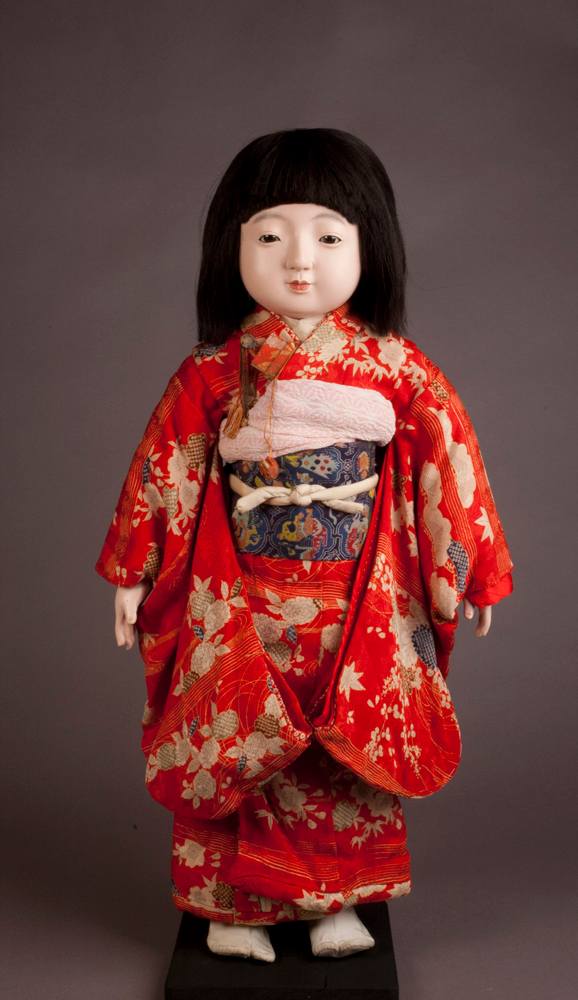
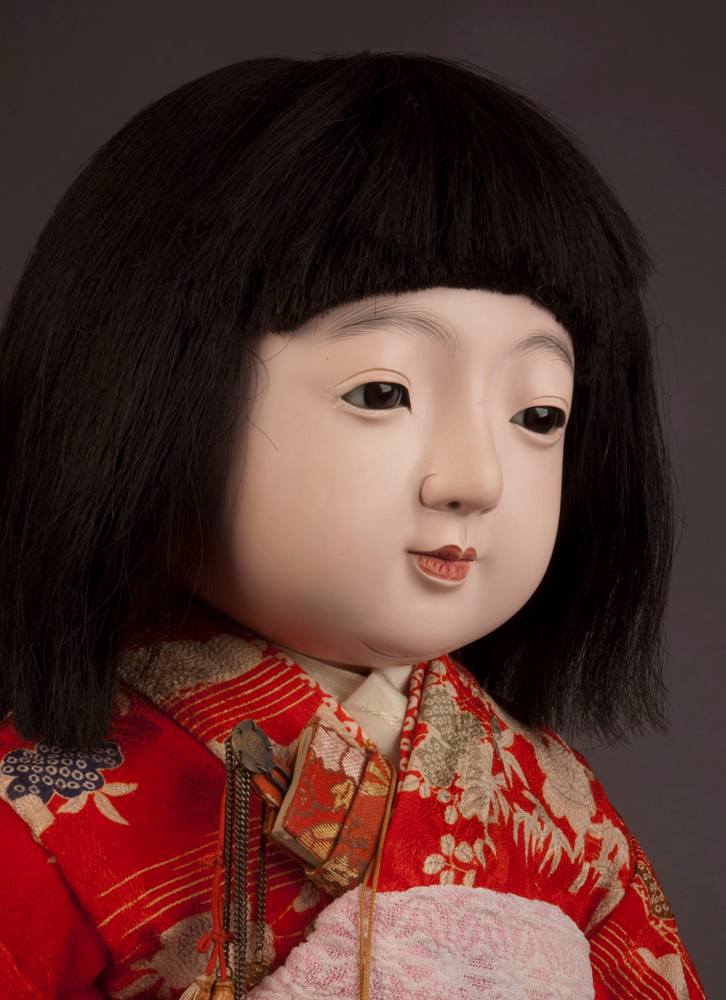
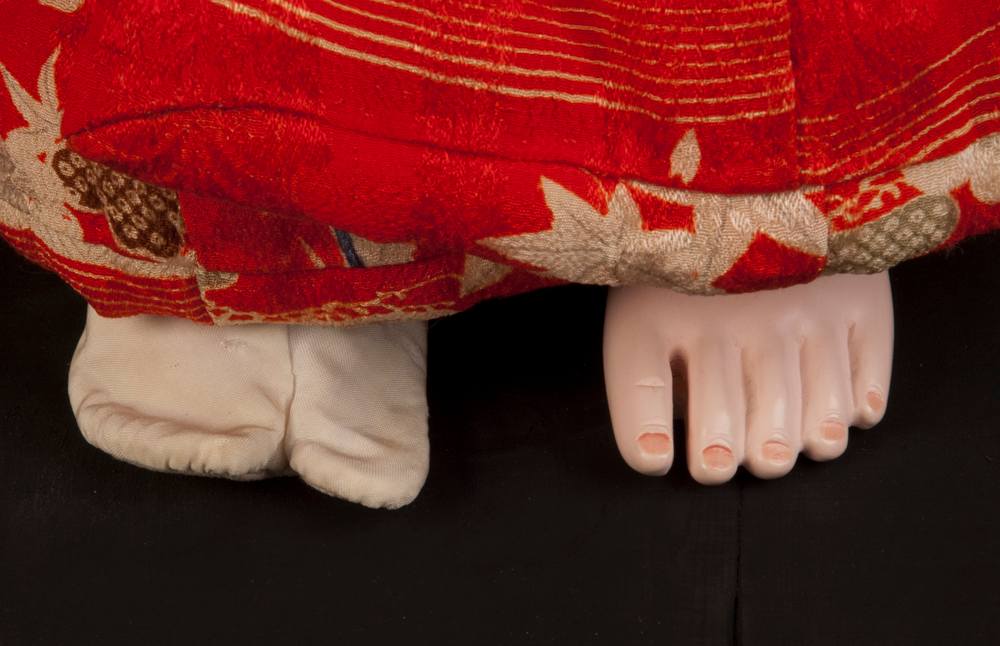
In our on-going discussion on evaluating ichmatsu-ningyo we now turn our attention to textiles.
Thus far in this short series we have looked at condition and fundamental carving elements that help us to evaluate an ichimatsu-ningyô, determining where it falls in or Good/Better/Best range of quality.
Now, let’s turn to the textiles. This is the hook that first really got me interested in Japanese dolls as a whole. Due to the display practices for many types of dolls in Japan, they frequently remain out for only short periods of time and can spend the vast majority of their “lives” in storage boxes, utterly shielded from damaging sunlight and corrosive dust. Therefore it is not uncommon to find 18th century ningyô with near-mint textiles. This is a rare opportunity to see, enjoy, and inspect very fine textile art that is centuries old that is less readily preserved in other media.
While ichimatsu as a genre originated only(!) in the late 19th century, here too we can find truly marvelous examples of the weaver’s art, immaculately preserved, beautifying the doll it graces and pleasing to our eye as we take in its details. [Fig. 44]
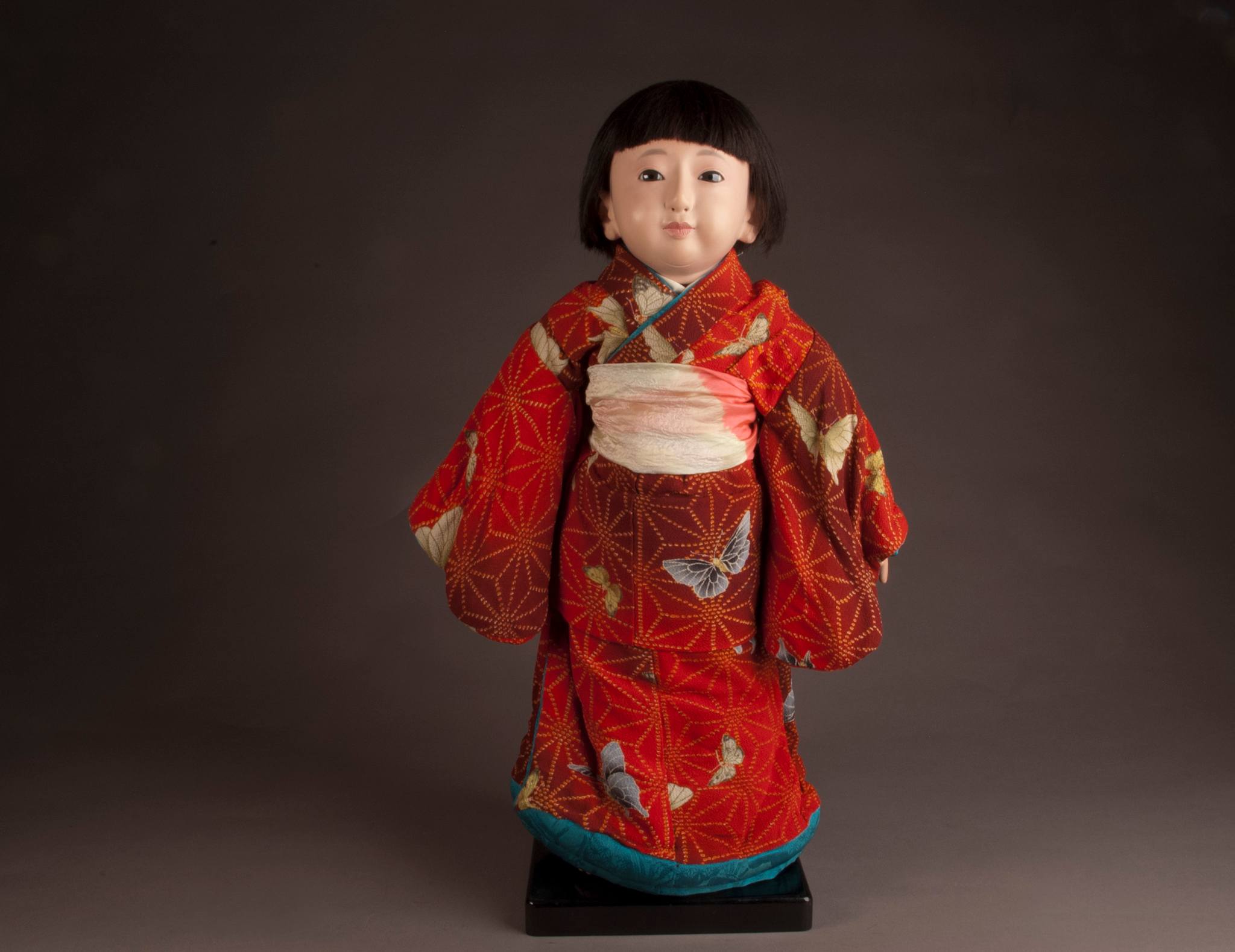
Textiles: For many collectors of Japanese dolls it is the textiles that truly set them apart from Western dolls. The exceptional quality of Japanese silk, the bold patterns and color combinations, the supplemental embroidery with the inclusion of gold or silver couched thread, the vibrant brocades of the elaborate obi tie belts with their fantastic bows at the back, the long flowing sleeves with additional under layers peaking out at the cuffs, all speak of luxuriousness, and to the Western eye, an undeniable sense of the exotic. This is not your grandmother’s Effanbee! [Fig. 44a]
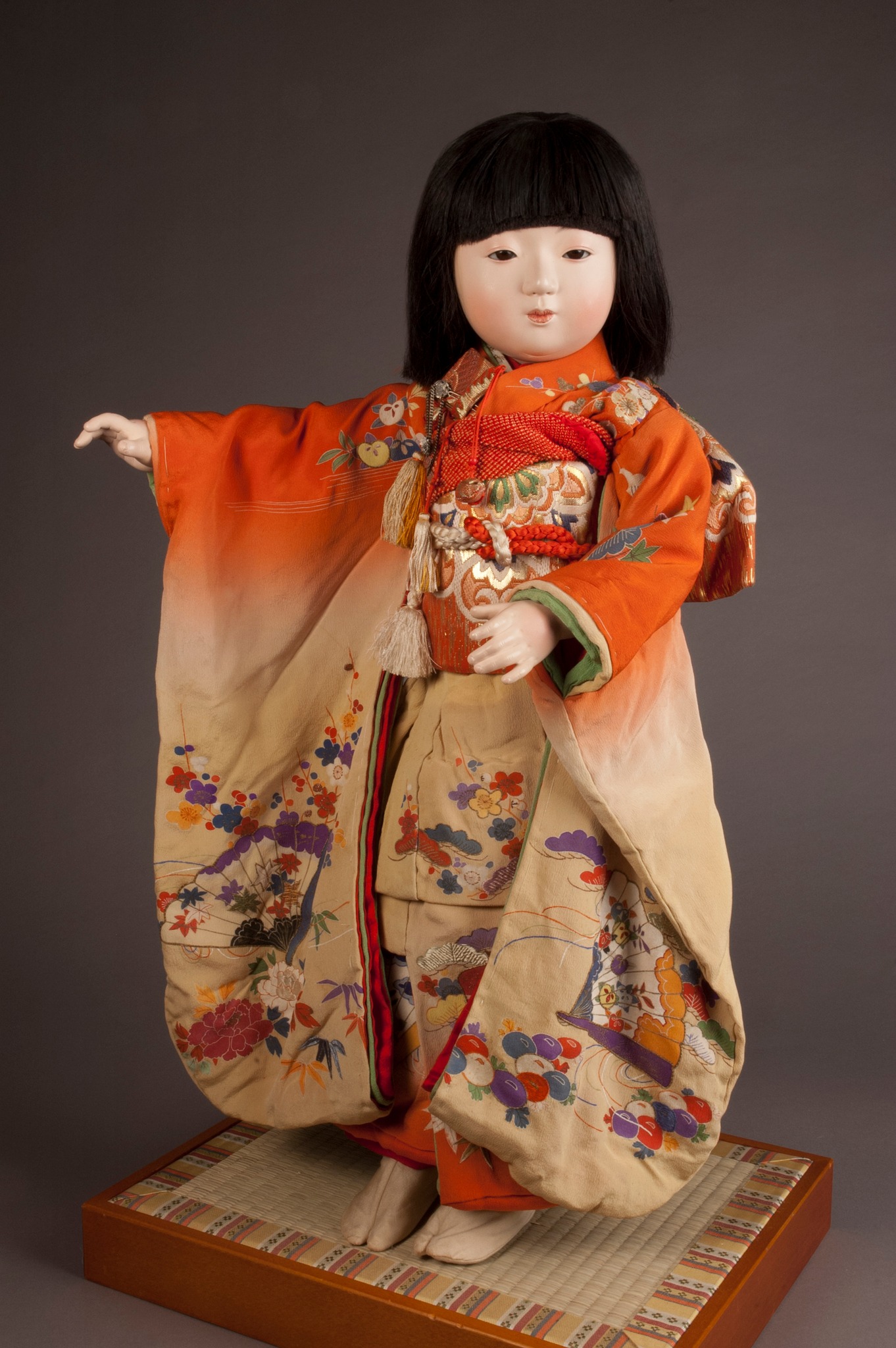
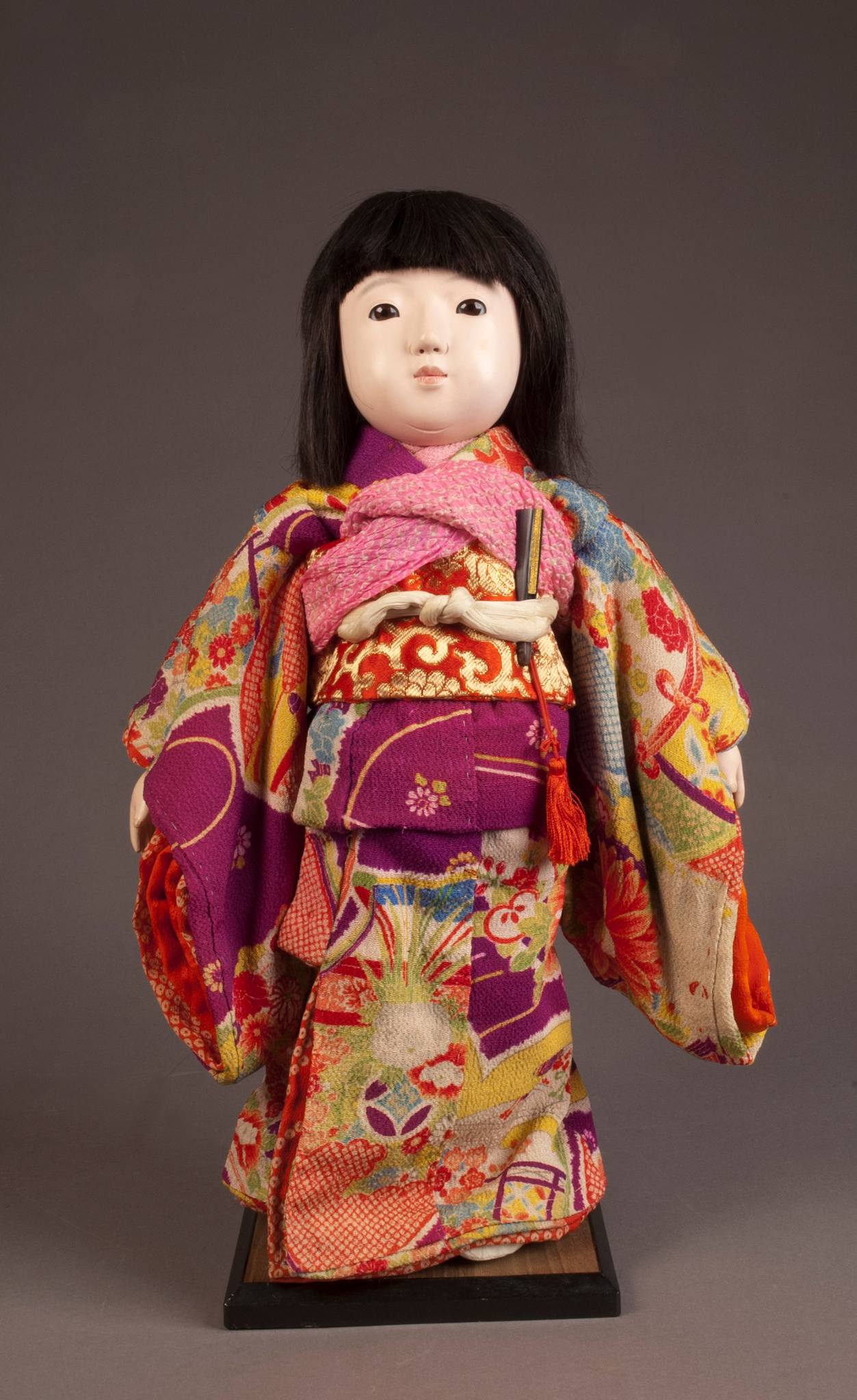
Girl ichimatsu, particularly those created after the Friendship Doll exchange, are usually depicted in their most formal attire. This includes a furisode long-sleeved kimono, obi tie belt, along with various accessories: hakko-seko purse, fan, etc. But we cannot become distracted by the attractiveness of this attire in general, we have to look closely at the quality of the textile itself. This takes a bit more practice. All of our good, better, best ichimatsu will be wearing gaily patterned silk. But some of this is printed silk, others are done through a more complex dyeing process known as yuzen, and the best will also include supplemental embroidery and family crests. Some silks are plain weave, others are figured, still others are of a fine silk crepe known as chirimen.
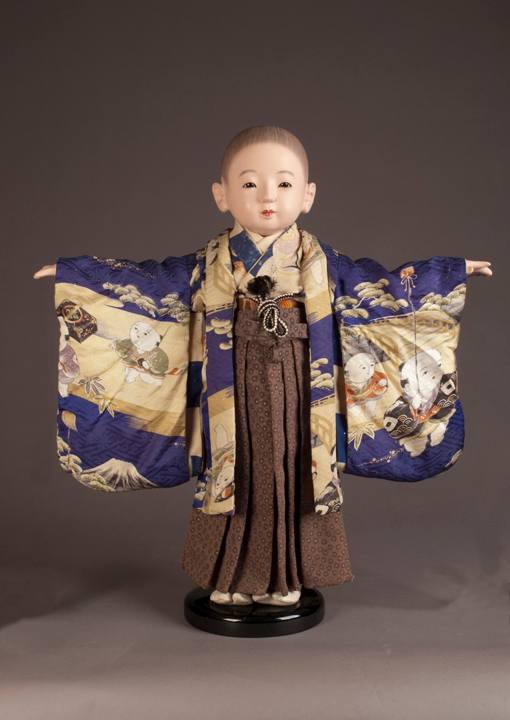
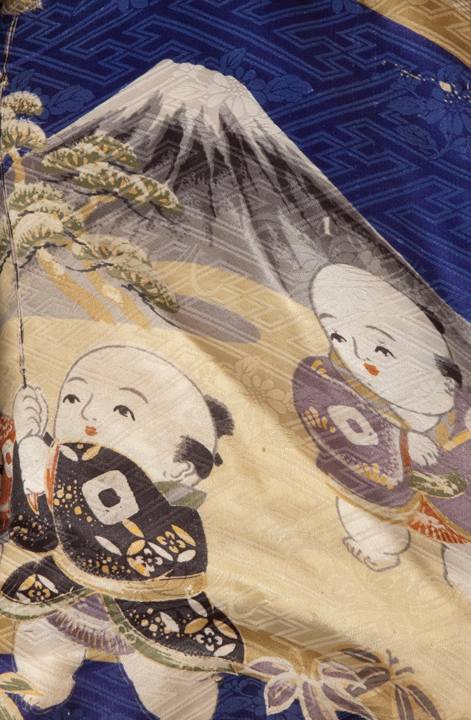
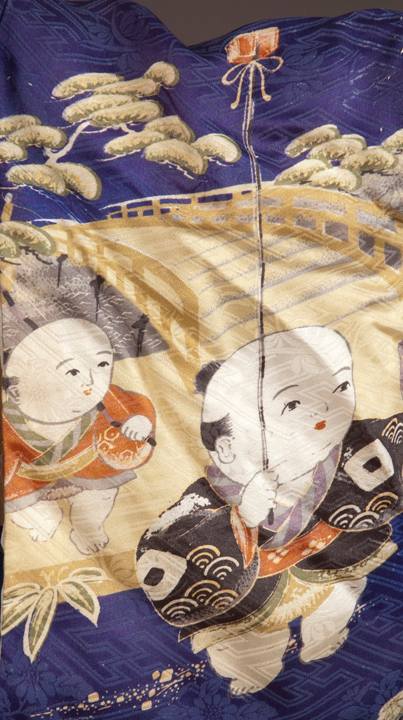
Our good textile is revealed on an ichimatsu boy by Katsumitsu. We saw his sister doll above, so we know she is of very good quality. [Fig. 45, 46, 47] The textile is done in a painterly manner with images of a gosho-ningyô procession along the Tôkaido Road, extending from the great Nihon-bashi Bridge in Edo/Tokyo all the way to Kyoto, passing below the slopes of Mt Fuji. The scenes in and of themselves are delightful, the plain weave silk done in a strong blue. But the silk is a printed silk. However fine, printed silk will always be only a “good” option.
Now let’s compare this to a yuzen-dyed kimono also featuring a number of design elements ranging from floral bursts to curtains of state to straw-roofed huts. The silk is a fine chirimen, silk crepe [Fig. 48, 49] This comes from a “better” ichimatsu girl by the artist Eitokusai III (Yamakawa Yasujirô, 1864-1941). We can see that the base fabric is a high quality chirimen silk crepe and that, rather than printed, all of the patterning is done through the much more sophisticated and labor-intensive yûzen paste-resist technique. There is also additional layering with a fawn-spot inner layer visible at the sleeve openings, which have been tied closed with red silk threads, that adds an even additional element of care and sophistication when looking at the kimono quality.
Now let’s again compare these to the kimono for a “best” category doll. Here a spectacular ichimatsu by Hirata Gôyô II wears a light green yûzen dyed chirimen kimono bearing family crests at the shoulders, elbows and the back of the neck, five in all as befitting the kimono of a girl of position. [Fig. 50, 51] All of the design elements are rendered in a painterly way, and, in addition to our more typical flower motifs, we also find field curtains and noblemen in court regalia enjoying an outing. Silver foil thread helps to form cloud like bands and gold foil is used to pique out the center of the floral blossoms. [Fig. 52].

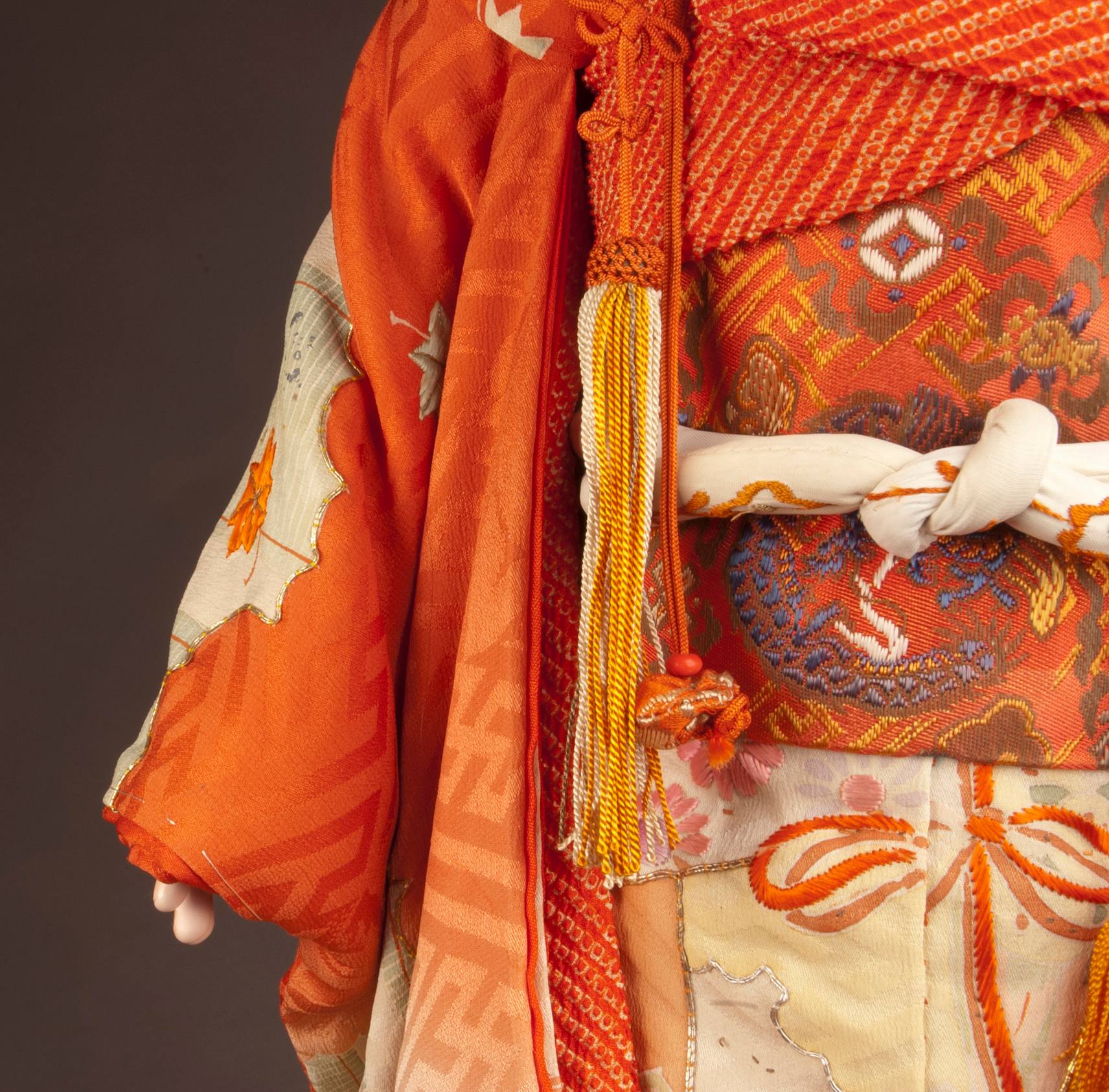



And finally in our series we turn to the artisans/artists that made these amazing examples of doll art, and what role they play in determining good/better/best in ichimatsu-ningyô.
Historically, Japanese doll makers worked in anonymity, the proverbial unknown craftsman. [Fig. 53] The ateliers they worked under frequently sold and marketed their pieces under the shop name only. Periodically, a specific artisan might emerge that became a selling point in their own right. Sometimes the artisan was also a shop owner and direct marketer and thus their names are better preserved in the historic record. This record is generally preserved in their original storage boxes which frequently lists type of doll, date of its making, seasonal references, the maker, and, occasionally, the original owner. [Fig. 53a]
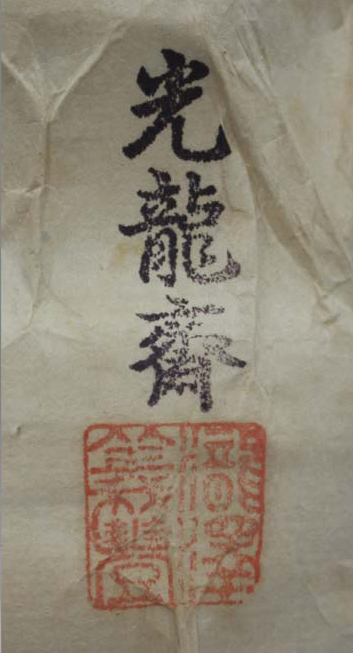
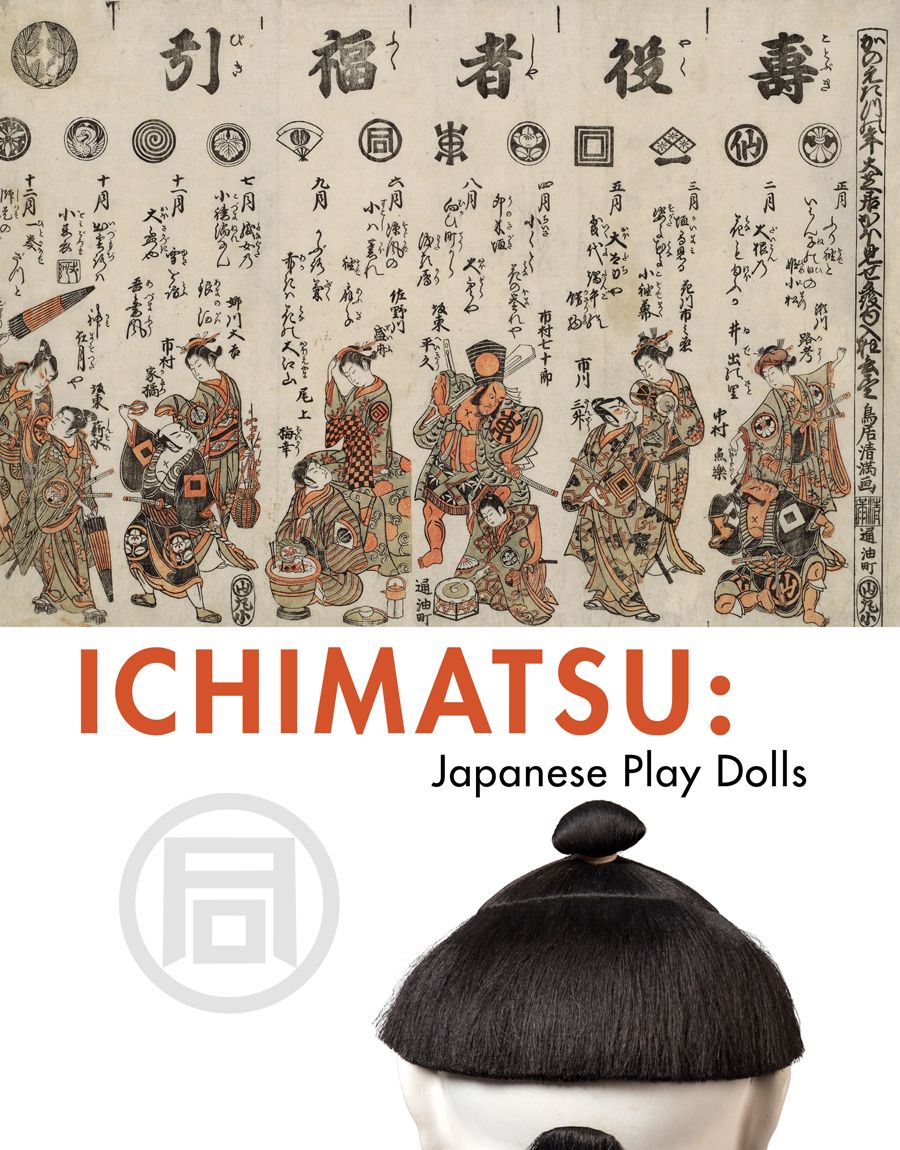
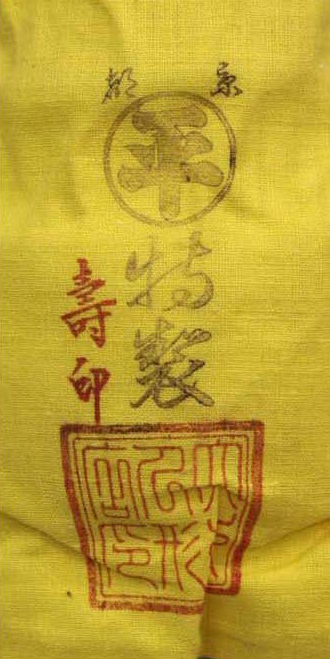
Beginning in the late 19th century, however, a new tendency among doll makers, particularly those working in the daki-ningyô and ichimatsu-ningyô areas, was to start signing their dolls by placing a paper or silk wrapper around the doll’s waist underneath the kimono. These are called a dôgami (body paper), and frequently included the artist’s shomei (signature) and his rakkan (seal). The seals become important as they frequently changed over time and a careful study of them can helpful in dating a doll within the arc of a given artist’s career. [Fig. 54, 55] I include an extensive index of artists along with the various signatures and seals in my book: Ichimatsu: Japanese Play Dolls ( https://www.antiquejapanesedolls.com/…/ichimatsu… ) [Fig. 56]
Artist: The final category that I look towards in my evaluation of ichimatsu is that of the artist: who actually made the doll. A unique component of most ichimatsu of good, better, and best quality is the inclusion of the dômei “signature cloth” around the waist underneath all of the clothing. [Fig. 57] This signature cloth frequently bears the name and seal of the doll artist, and sometimes the shop selling the doll. This is important information for the doll collector to know, for artists (as well as atelier) also help influence value.
Early important artists for ichimatsu collectors to know and look for include: Takeuchi Masujirô (c.1860-1941), [Fig. 58] and Saiki Tôgyoku (active late 19th -early 20th century) [Fig. 59] are two influential early makers based in Tokyo who did much to help define the look of 20th century ichimatsu. Hirata Tsunejirô (Gôyô I, 1878-1924) was also extremely influential, creating his own unique blending of hyper-realism with a stylized appeal. [Fig. 60] Catalogs dating from the late 1920’s and 1930’s printed by Yoshitoku Doll Company in Tokyo featured dolls by representative artists without clothing, revealing their signature cloths. [Fig. 61] Prices were also listed. Artists such as Gyokusui, Shunsui, Okoku, Shogetsu, and Kinsei, among others, established their reputations as fine ichimatsu makers through their associations with Yoshitoku. By contrast, important Kyoto ateliers such as Maruhei Ohkiheizô and Namikawa, shielded the names of their participating artists and their signature cloths frequently only bear their shop logo and quality rankings. [Fig. 62]
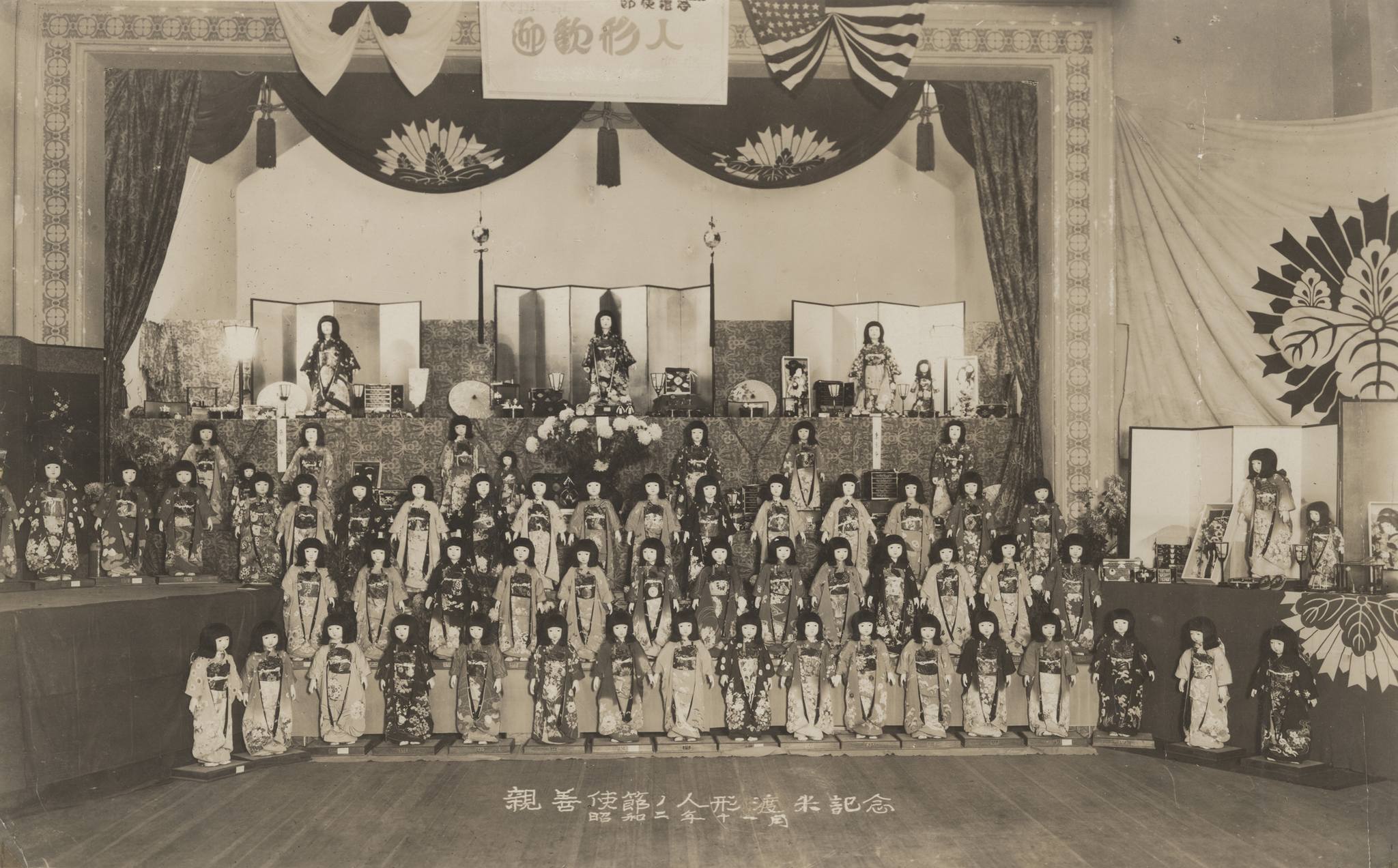
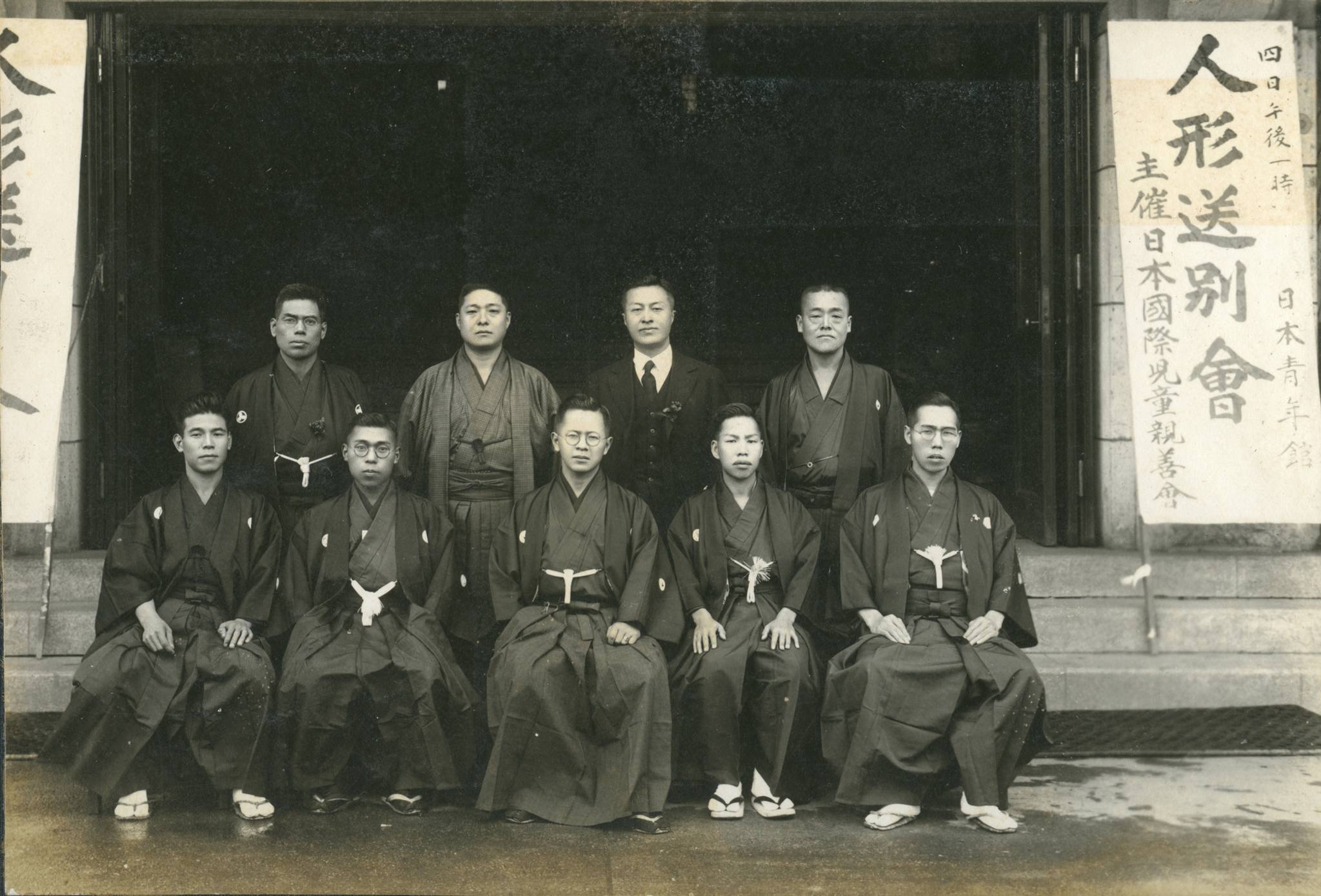
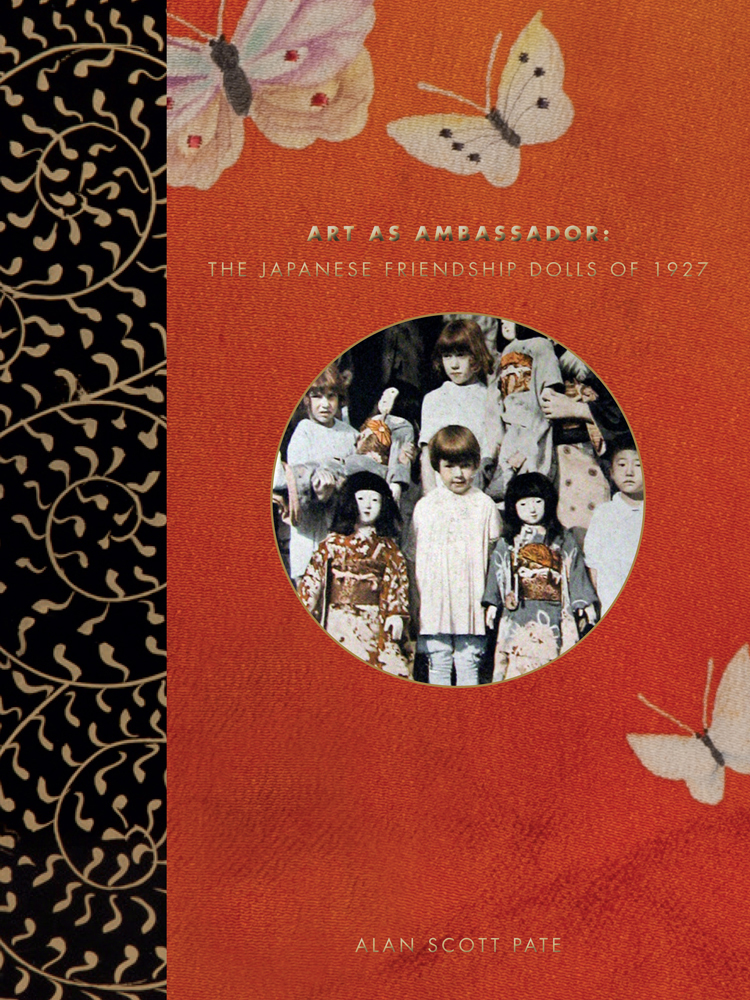
In general, however, the most important ichimatsu artists were those that participated in the 1927 Japanese Friendship doll exchange. [Fig. 63] This historic exchange not only raised the popularity of ichimatsu around the world, it also help to elevate their artistry. Nine artists were selected to participate in this event from Tokyo, and I provide detailed biographies where possible in my book: Art as Ambassador: The Japanese Friendship Dolls of 1927. [Fig. 64, 65]
But for our purposes here, the three most important artists to remember and look for are: Iwamura Shôkensai (Tôkô, 1892-1968) [Fig. 66, 67], Takizawa Koryûsai II (1888-1966) [Fig. 68, 69] and Hirata Tsuneo (Gôyô II, 1903-1981) [Fig. 70, 71]. We have seen examples of all three in the discussion above. The fame and reputation of these three artists in particular elevated them to the very top of the ichimatsu market and their works became highly sought after. Shôkensai, also known as Tôkô, and Koryûsai largely dominated the industry, focusing almost exclusively on the creation of ichimatsu for both the general and more specialized, high-end market throughout the rest of their careers. While Gôyô, along with his young brother Yôko (Hirata Yôko, 1906-1975) [Fig. 72, 73], took his new-found popularity and used it to promote the sosaku-ningyô (art doll) movement, fighting to have doll artisans properly recognized as artists. He was rewarded for his efforts by becoming the first doll maker to be designated as a ningen kokuhô (Living National Treasure) in 1955. [Fig. 73a]
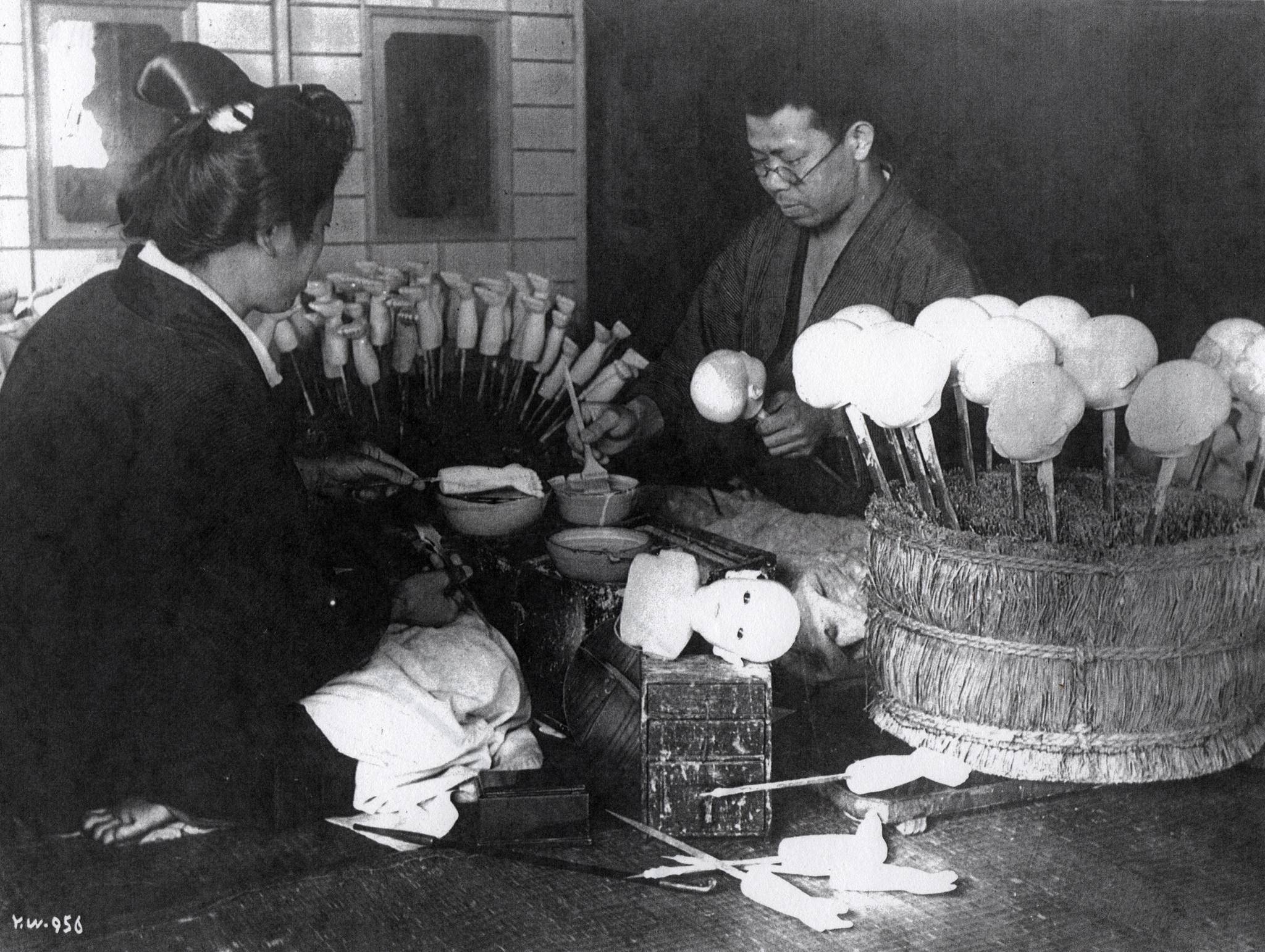



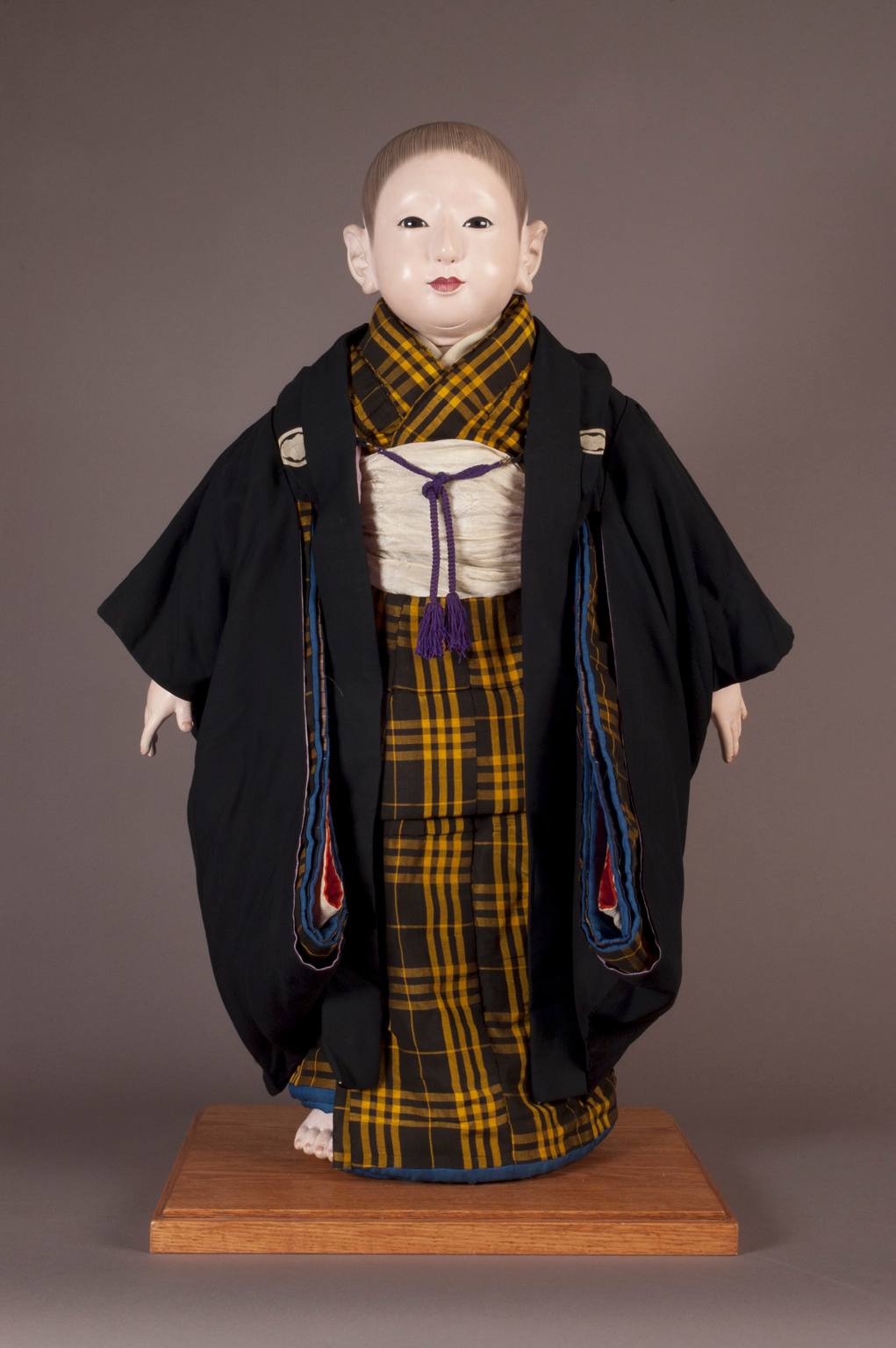
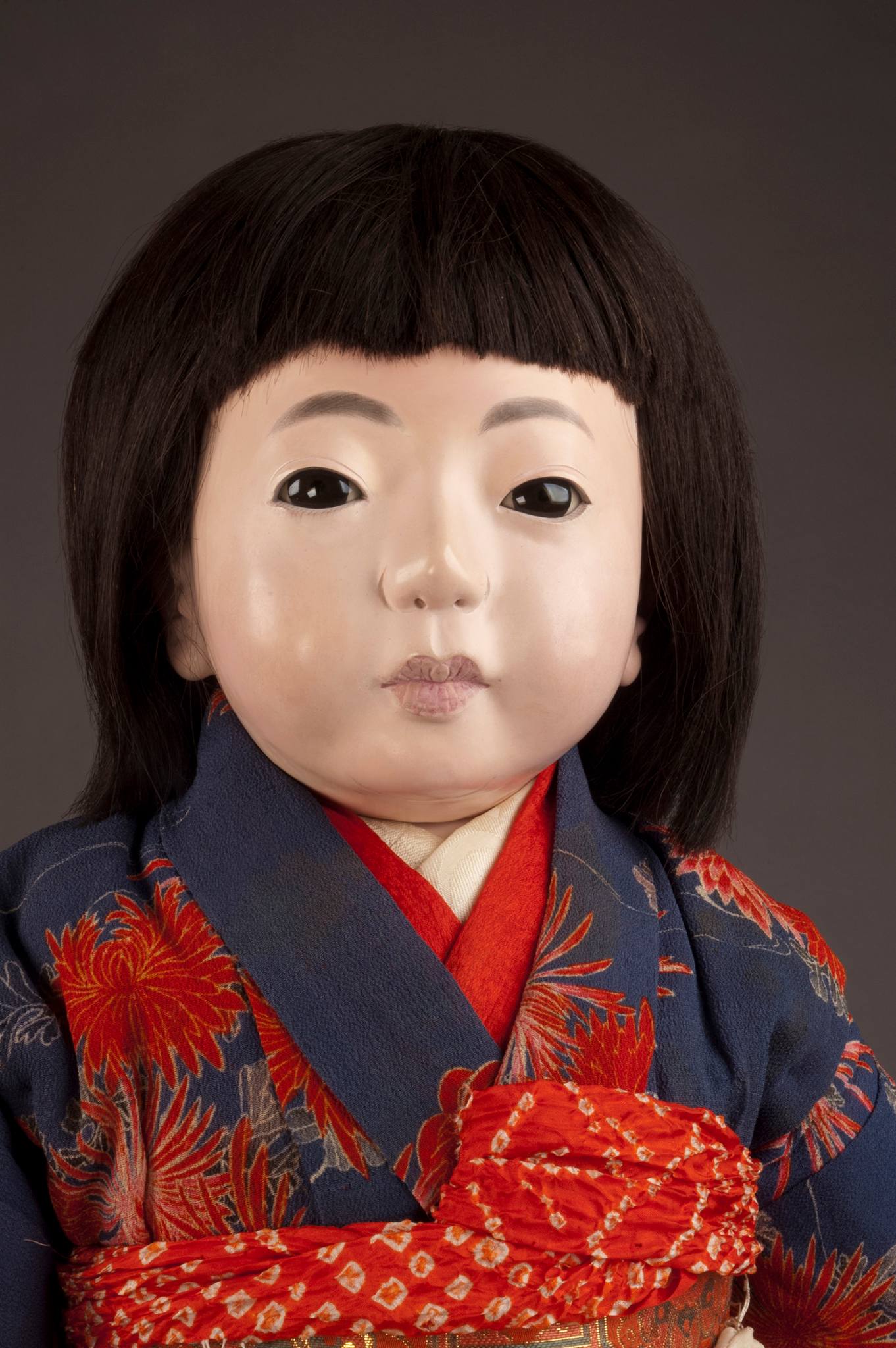
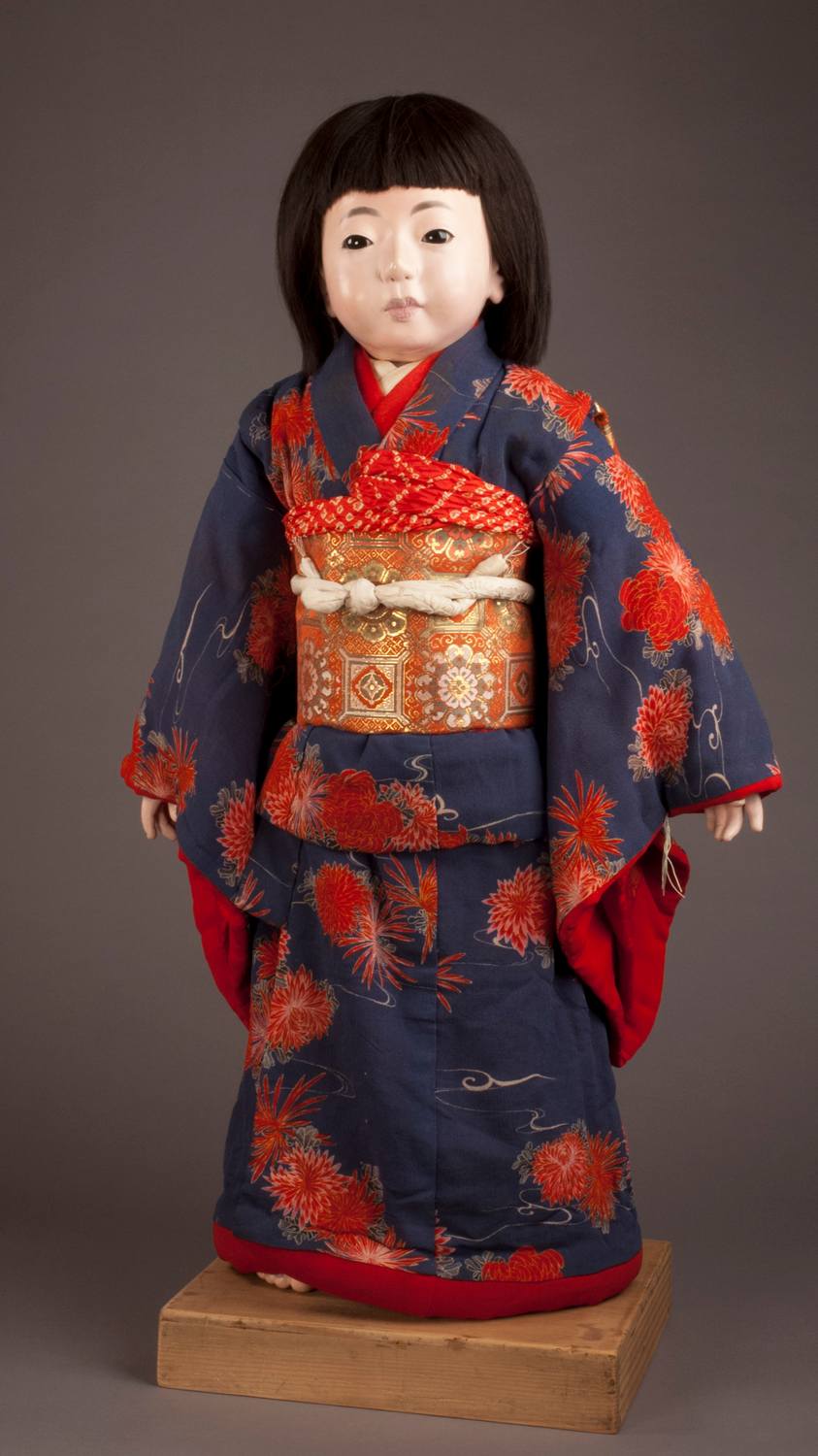
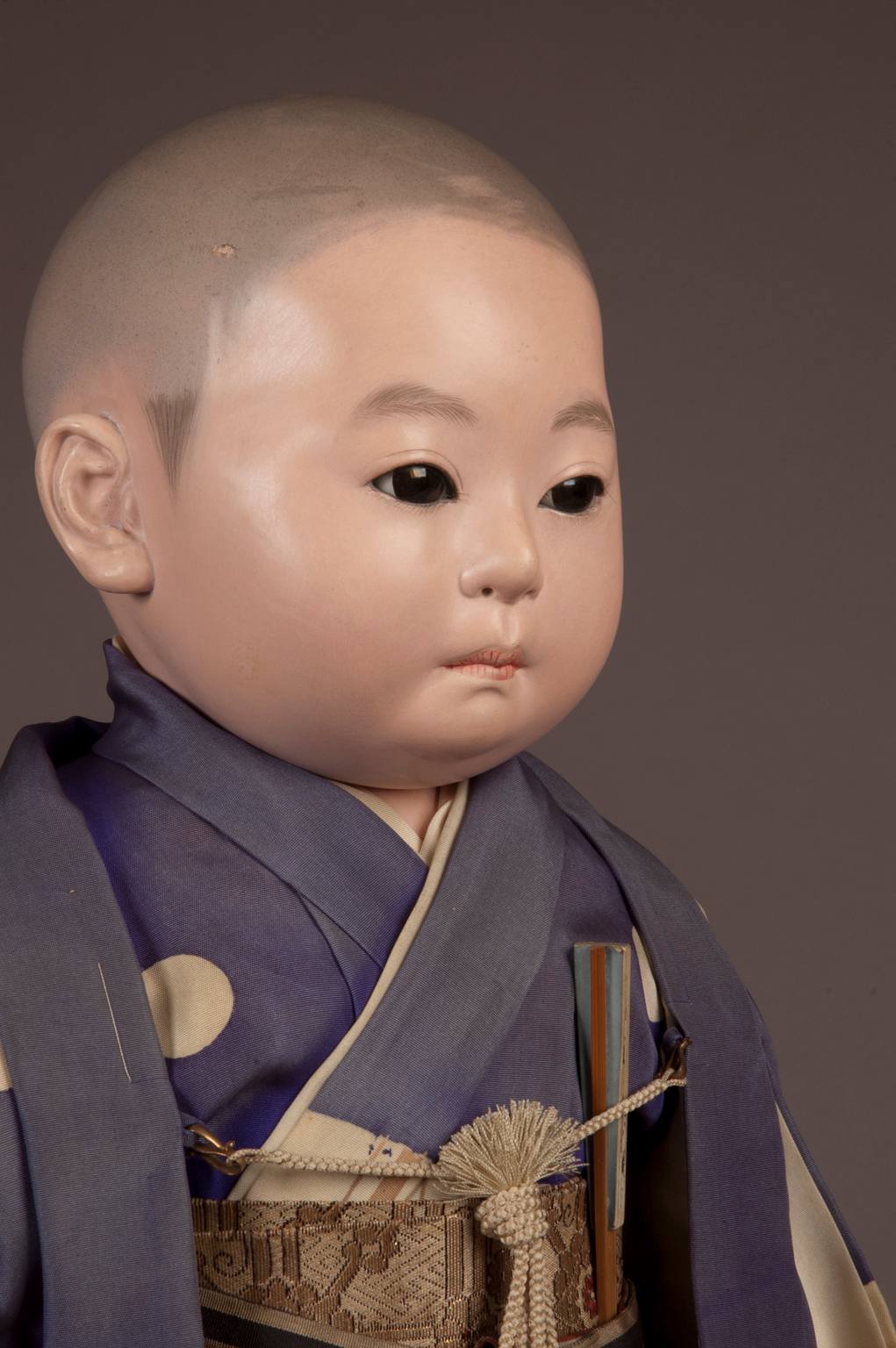

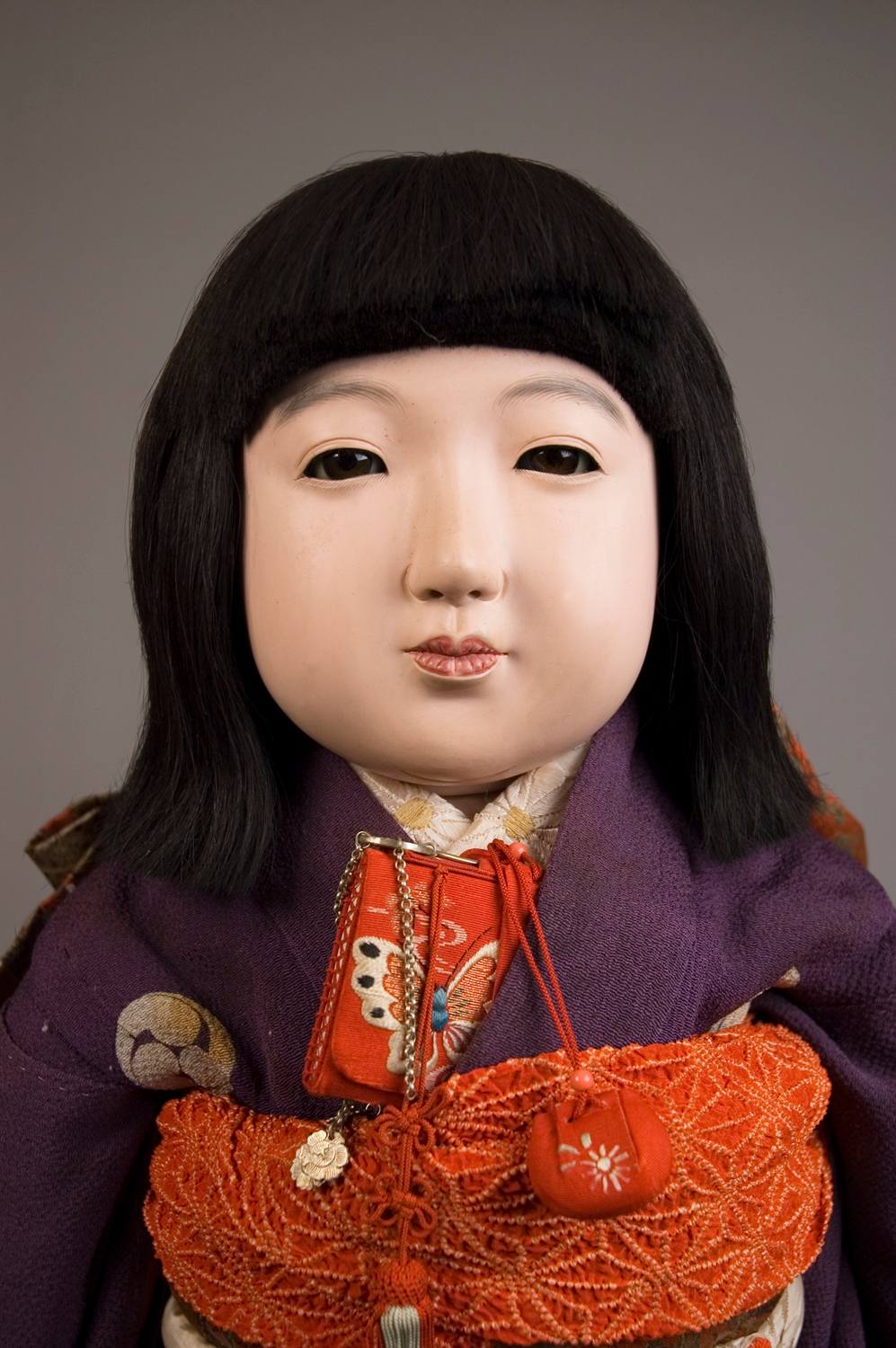
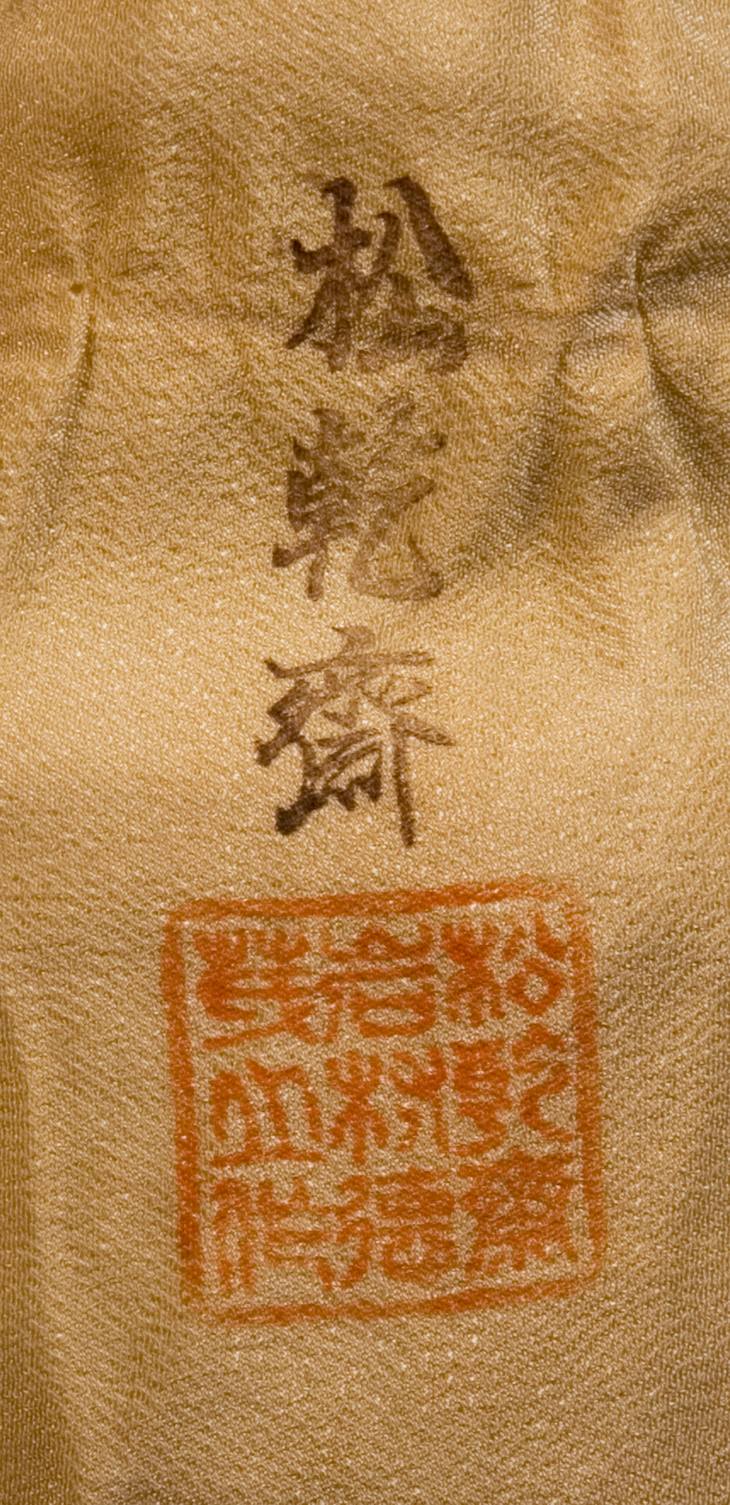
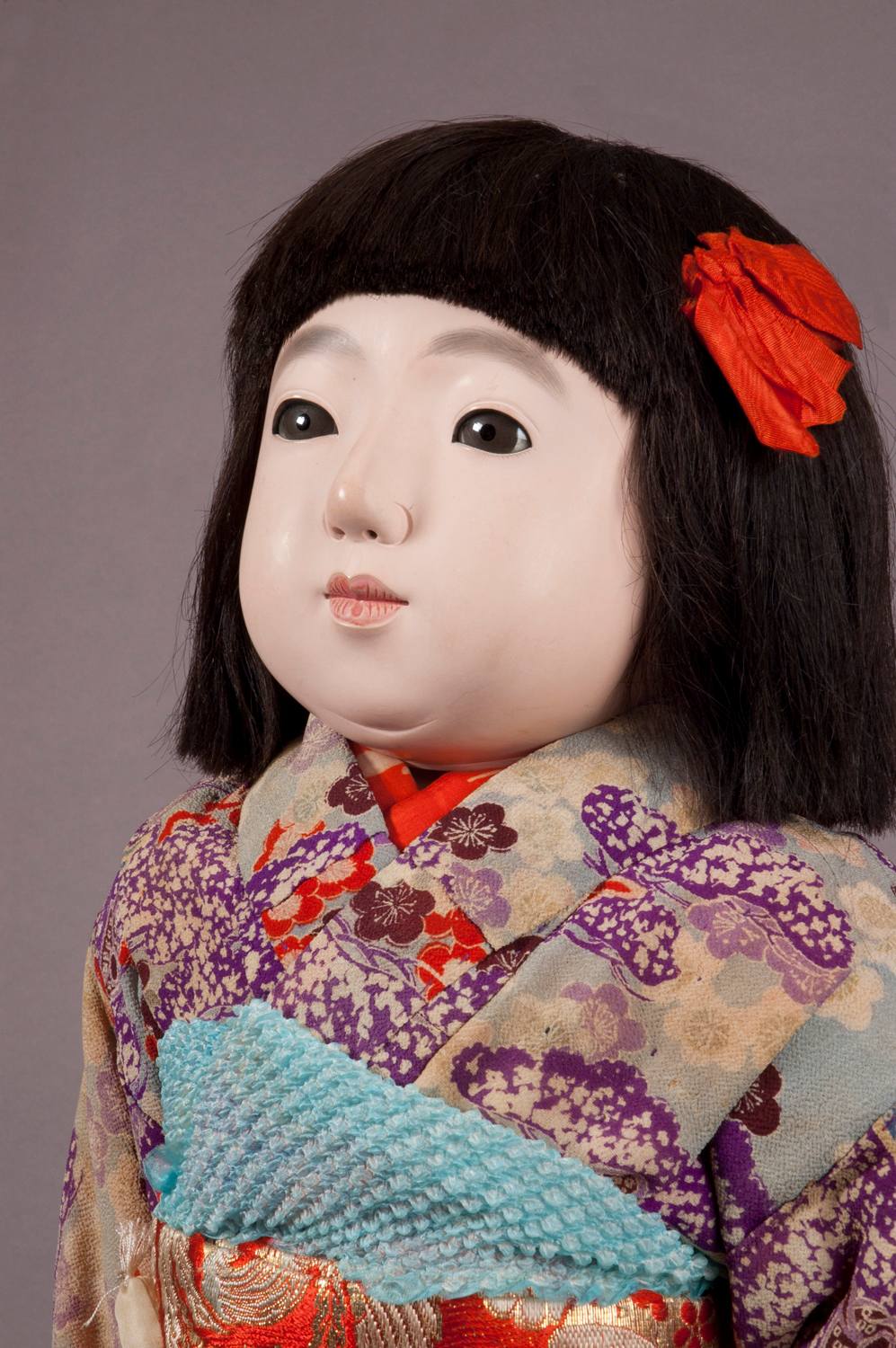
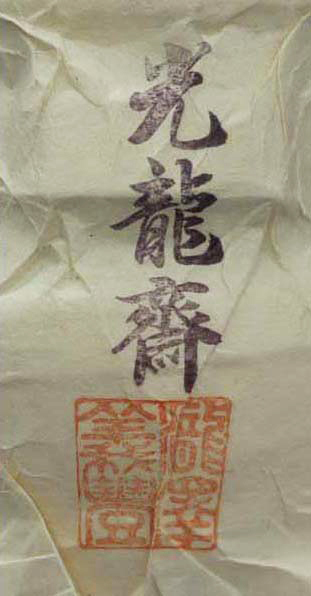

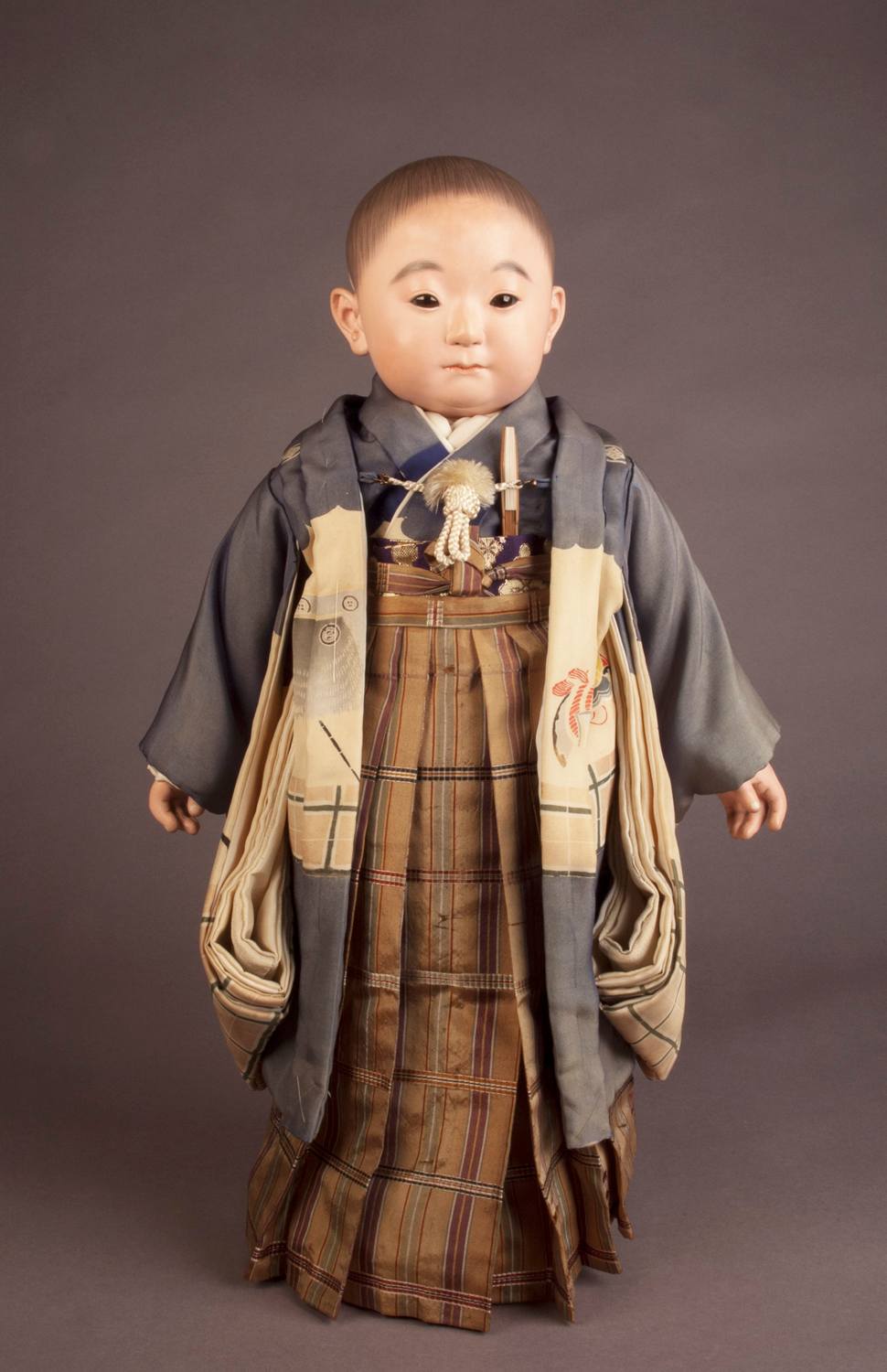
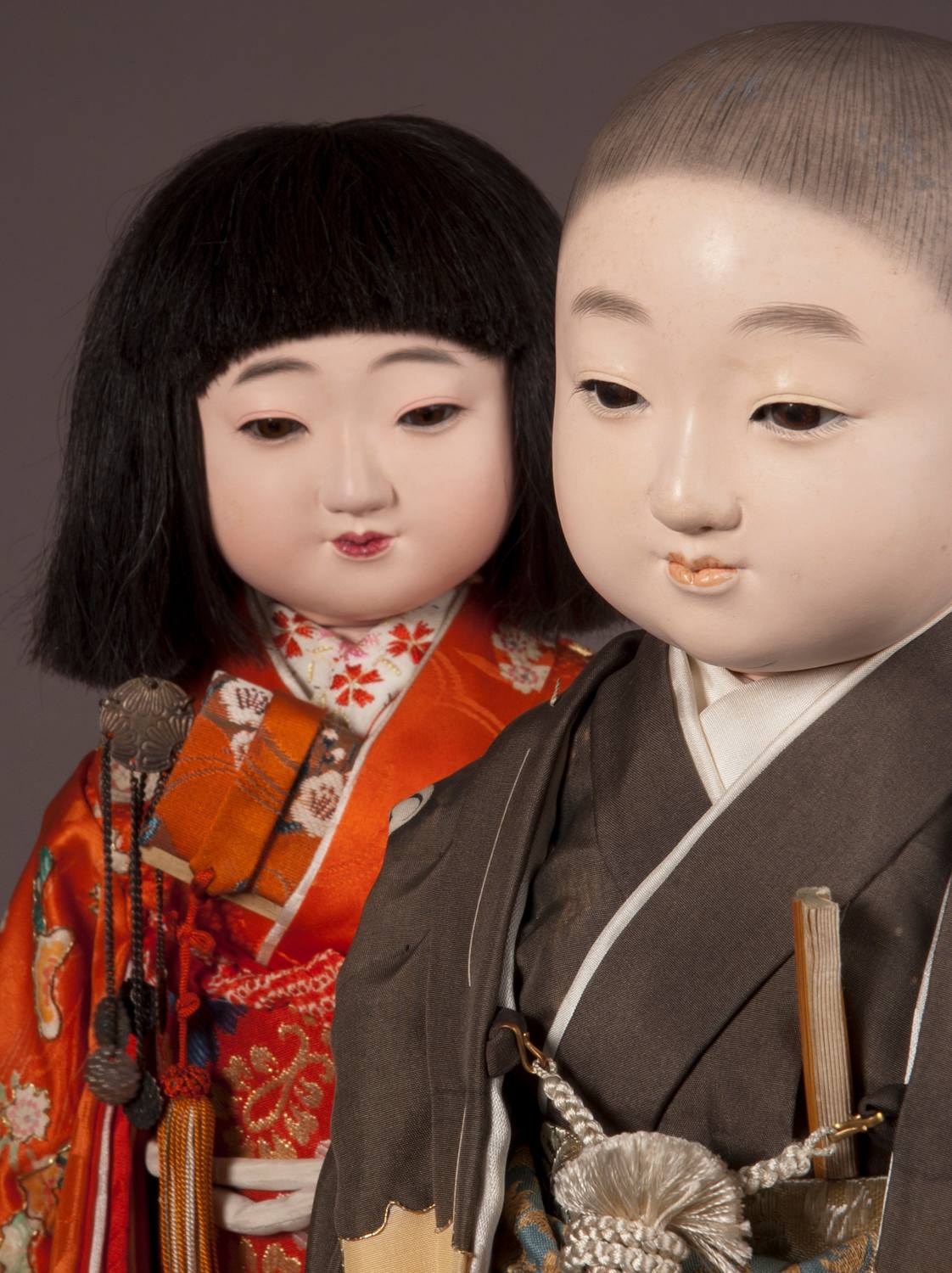
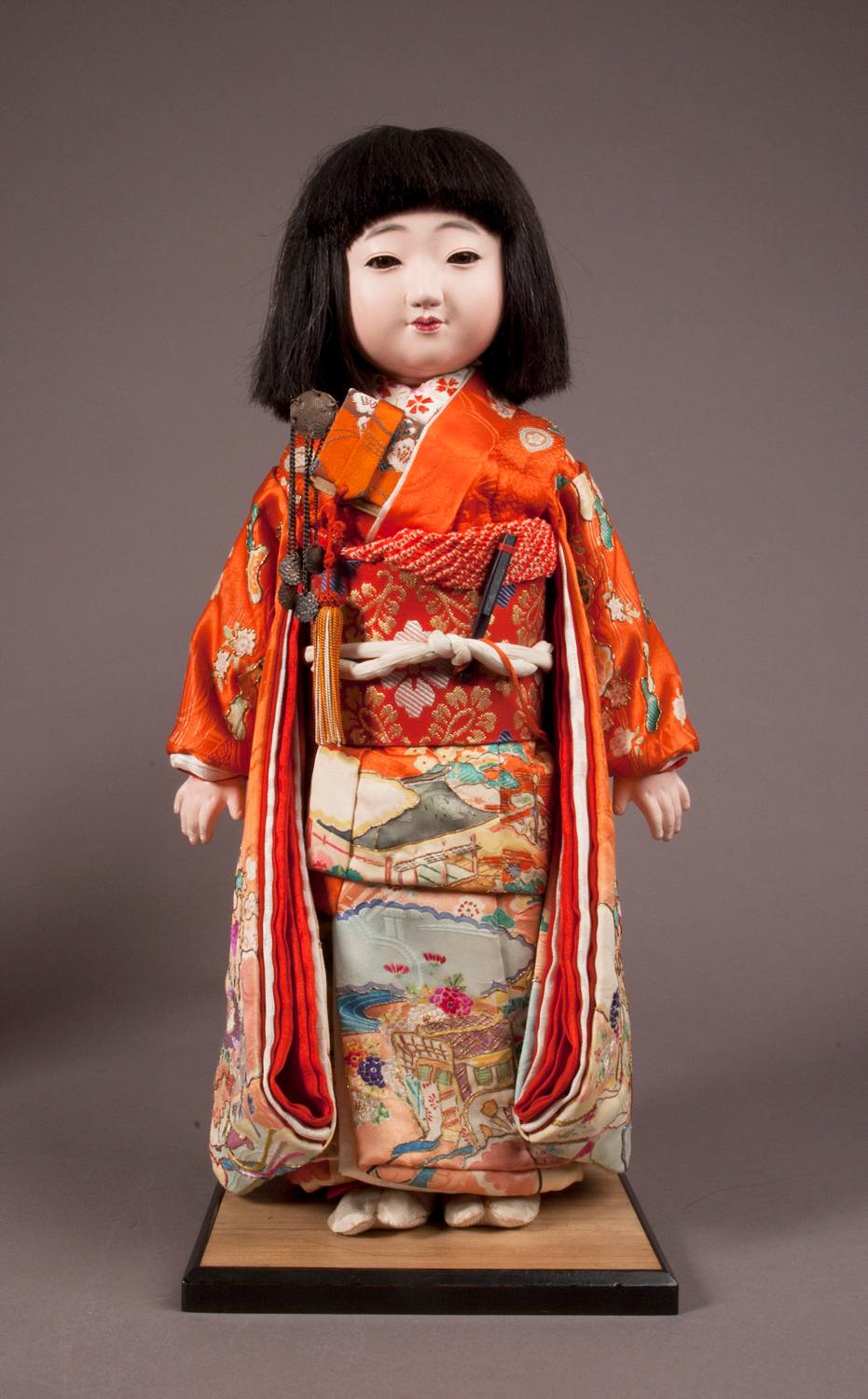
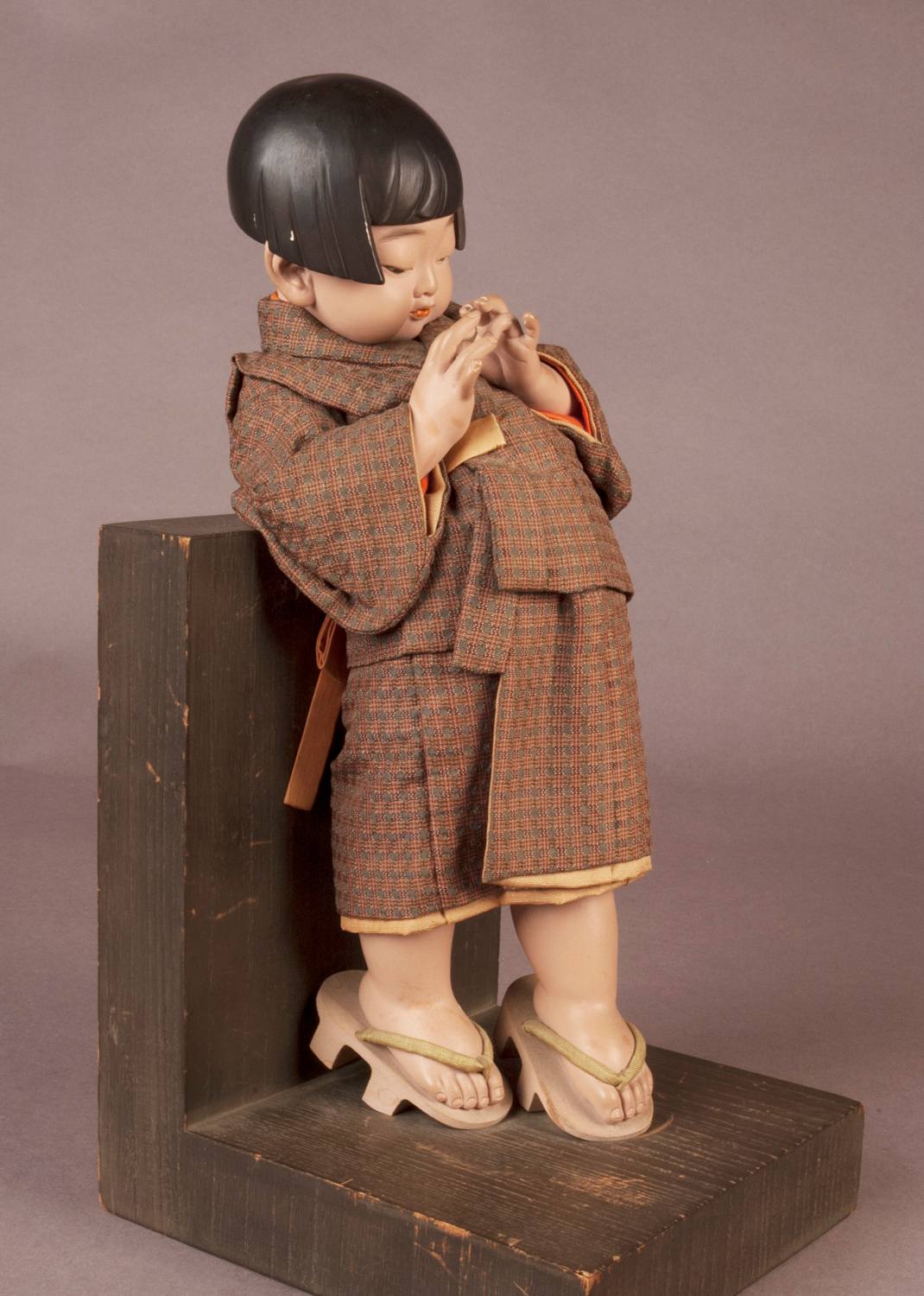
To conclude I would like to shift gears and use three boys that I feel are all “Best” in their own way. Each is in mint condition; each has wonderful face, hands/feet; amazing kimono; and each bears the hallmarks if not the signature of significant artists.
First is this amazing unsigned boy ichimatsu that has all of the elements we are looking for: exceptional condition, exceptional face and hand modeling, exception textiles, are all immediately apparent. The surprise for me when I found this piece is that it is unsigned. It bears all the hallmarks of the Gôyô lineage in terms of the quality of the face and the slightly folded fingers with exceptional detailing throughout, but is lacking a signature cloth. [Fig.74, 75, 75a, 76].
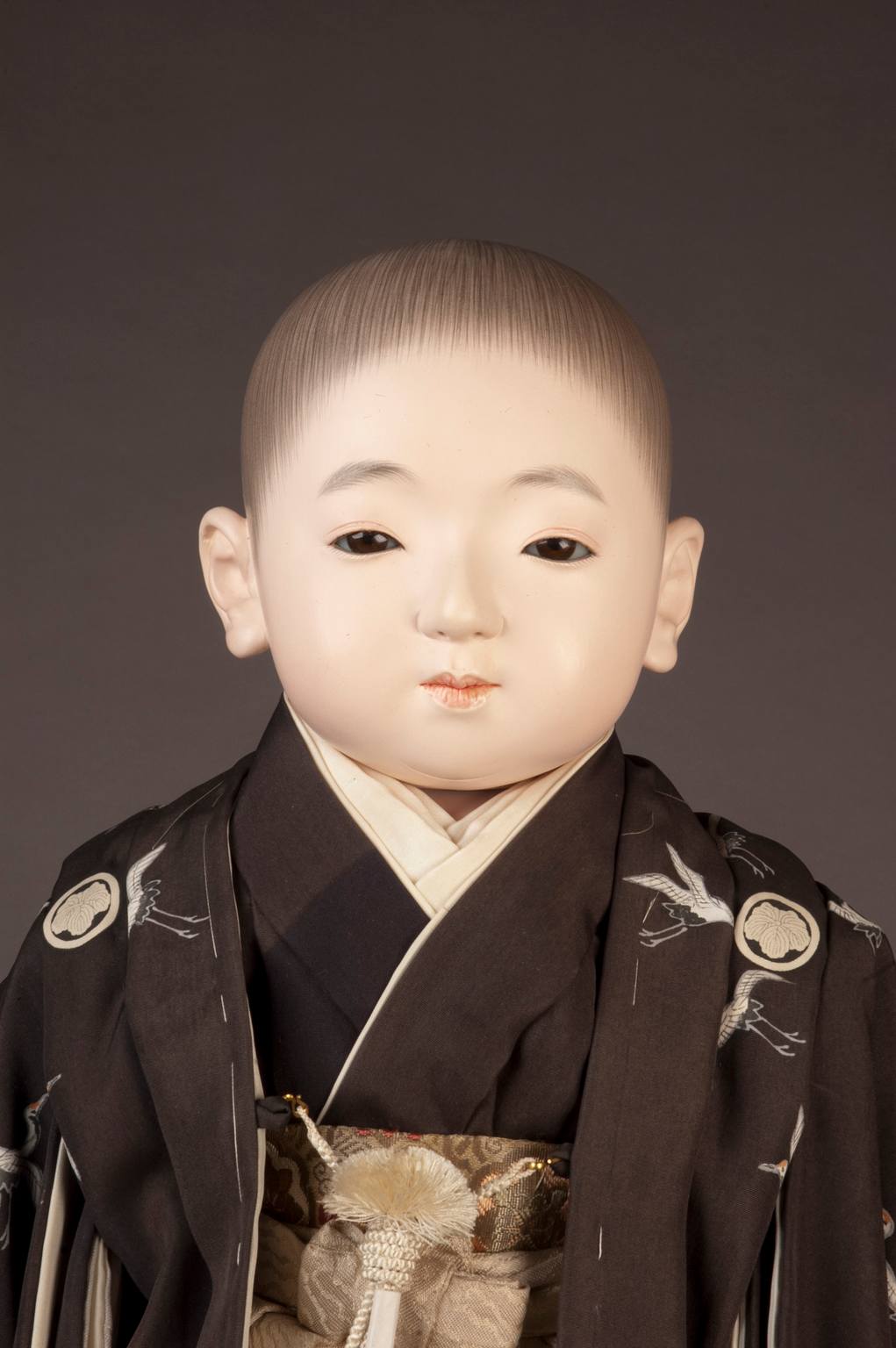
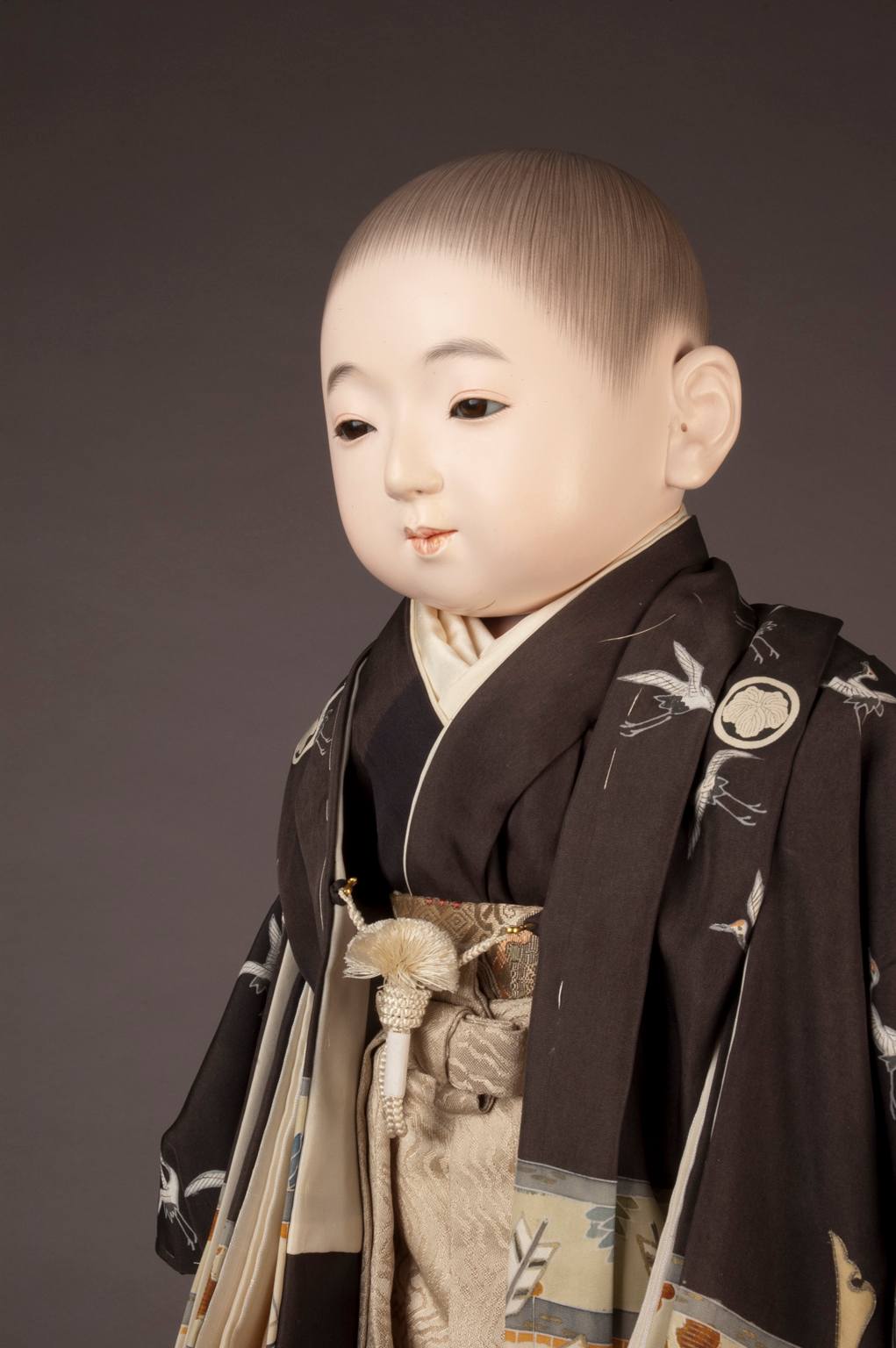
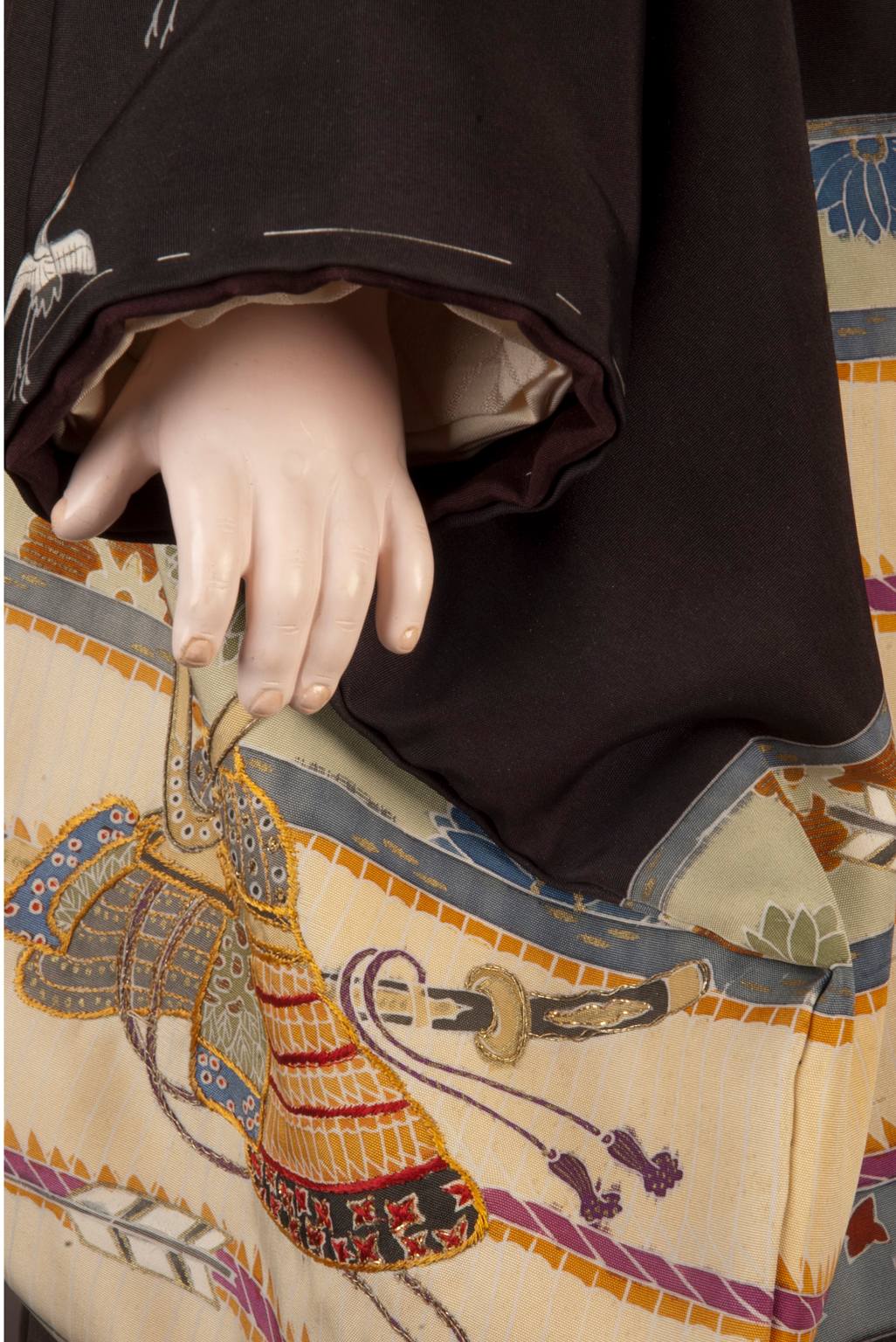
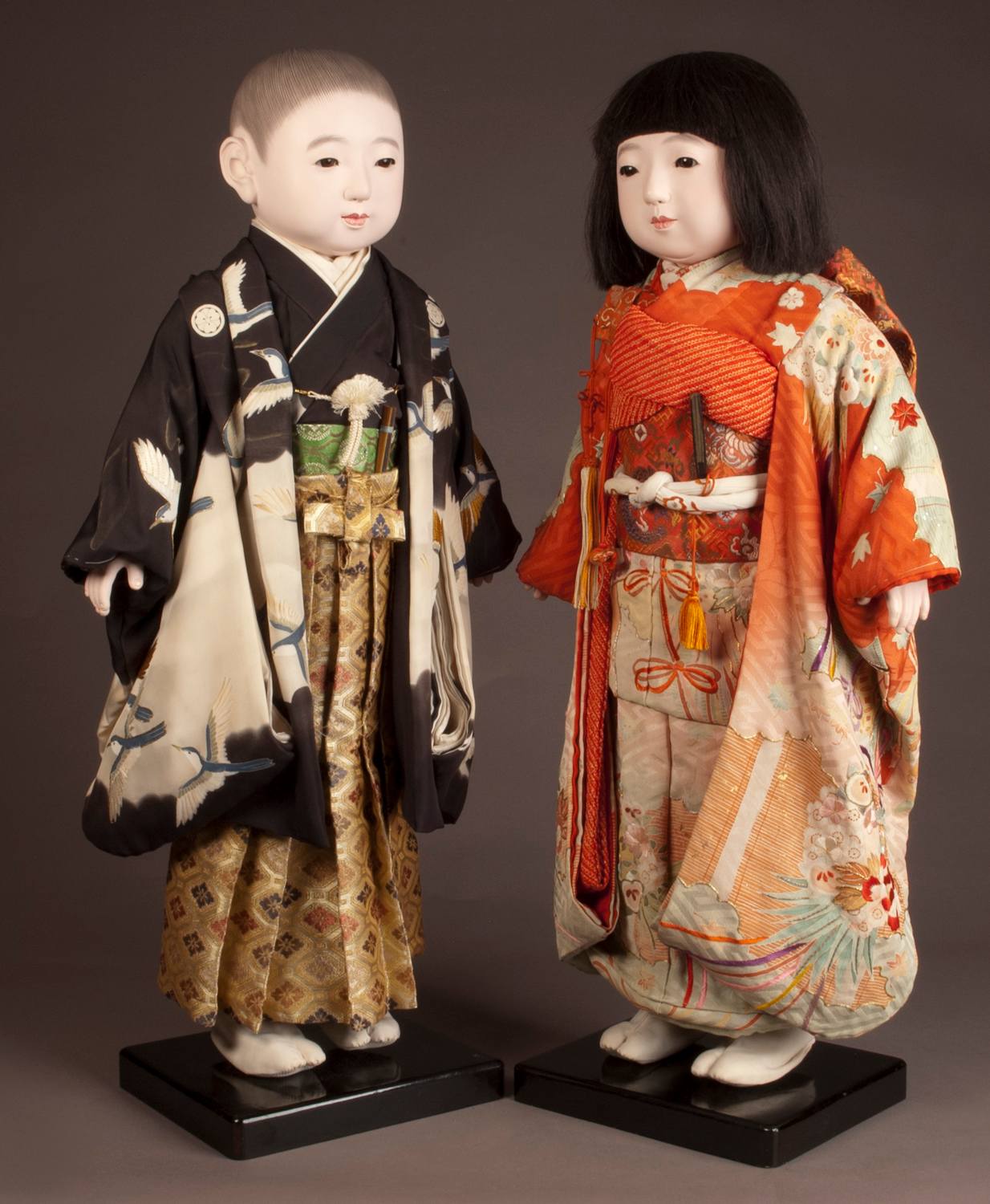
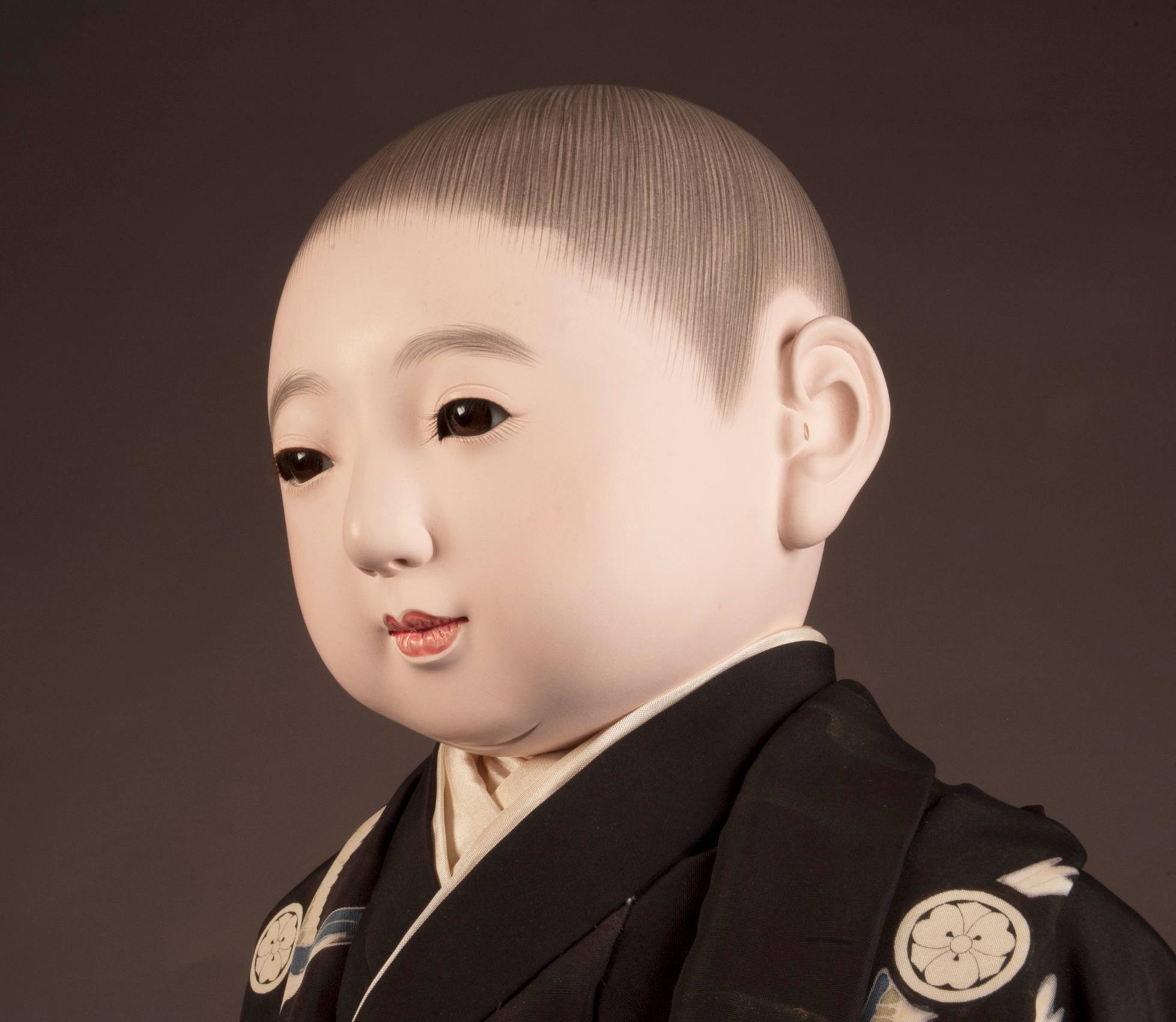
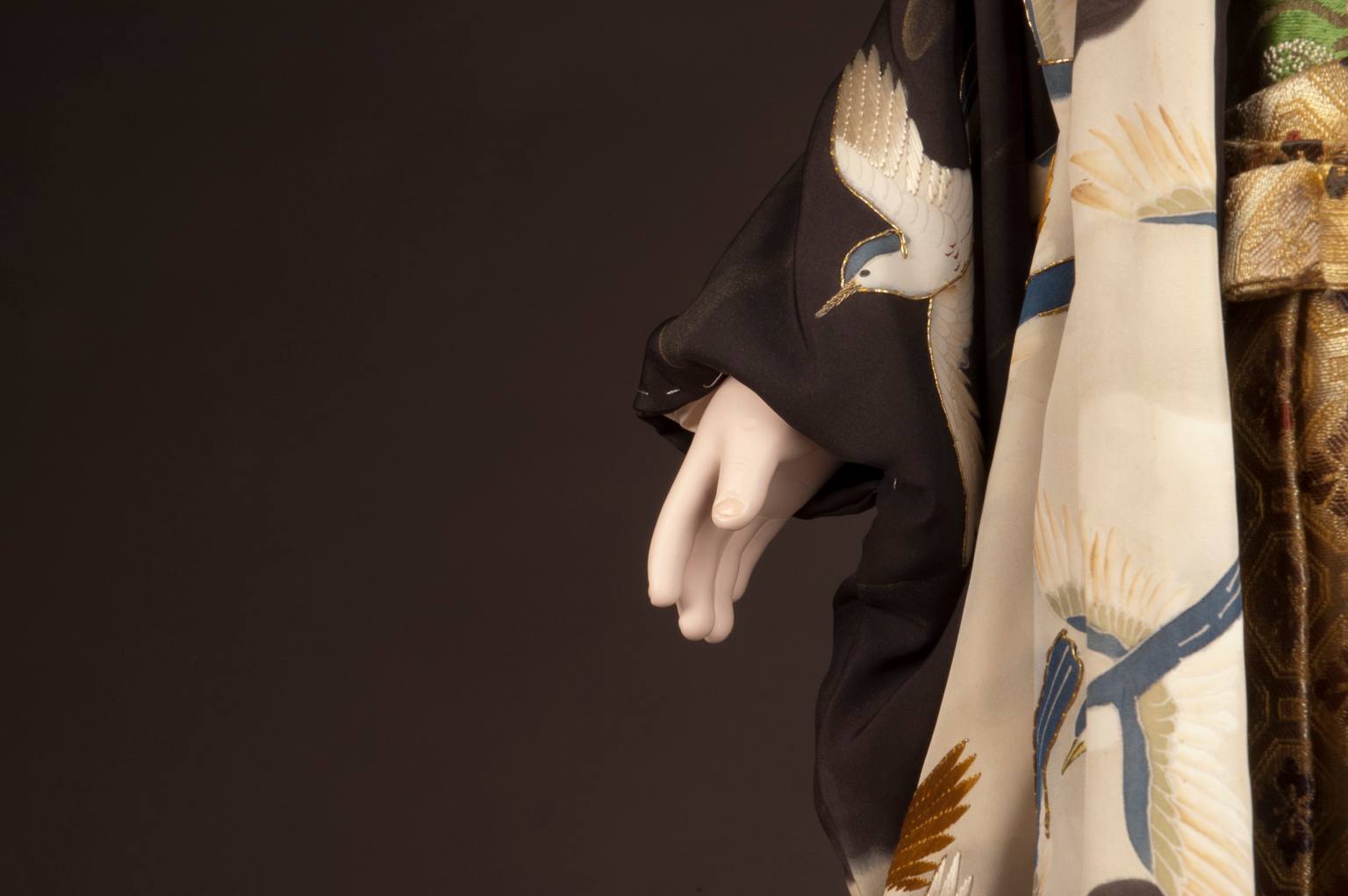
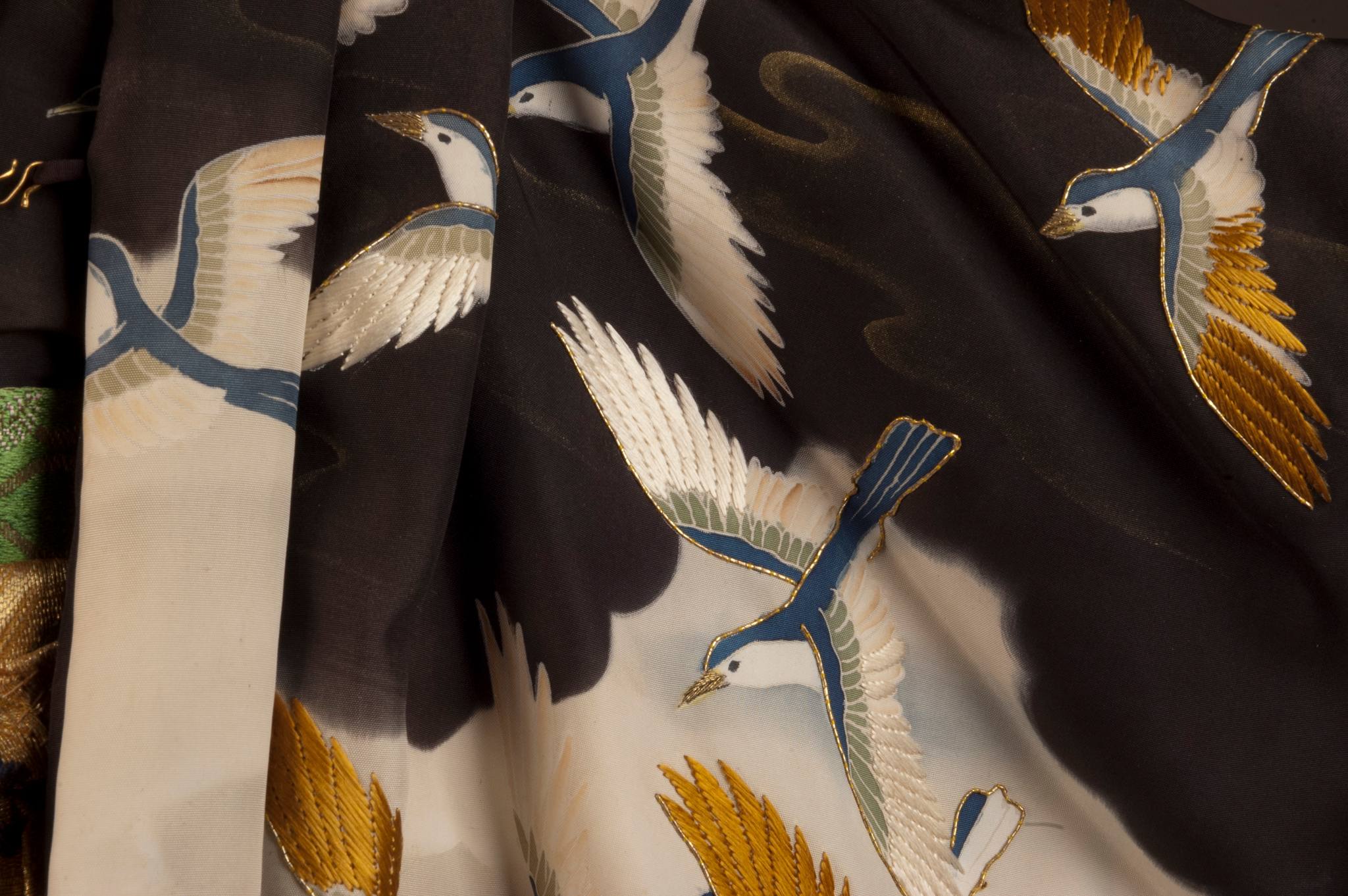
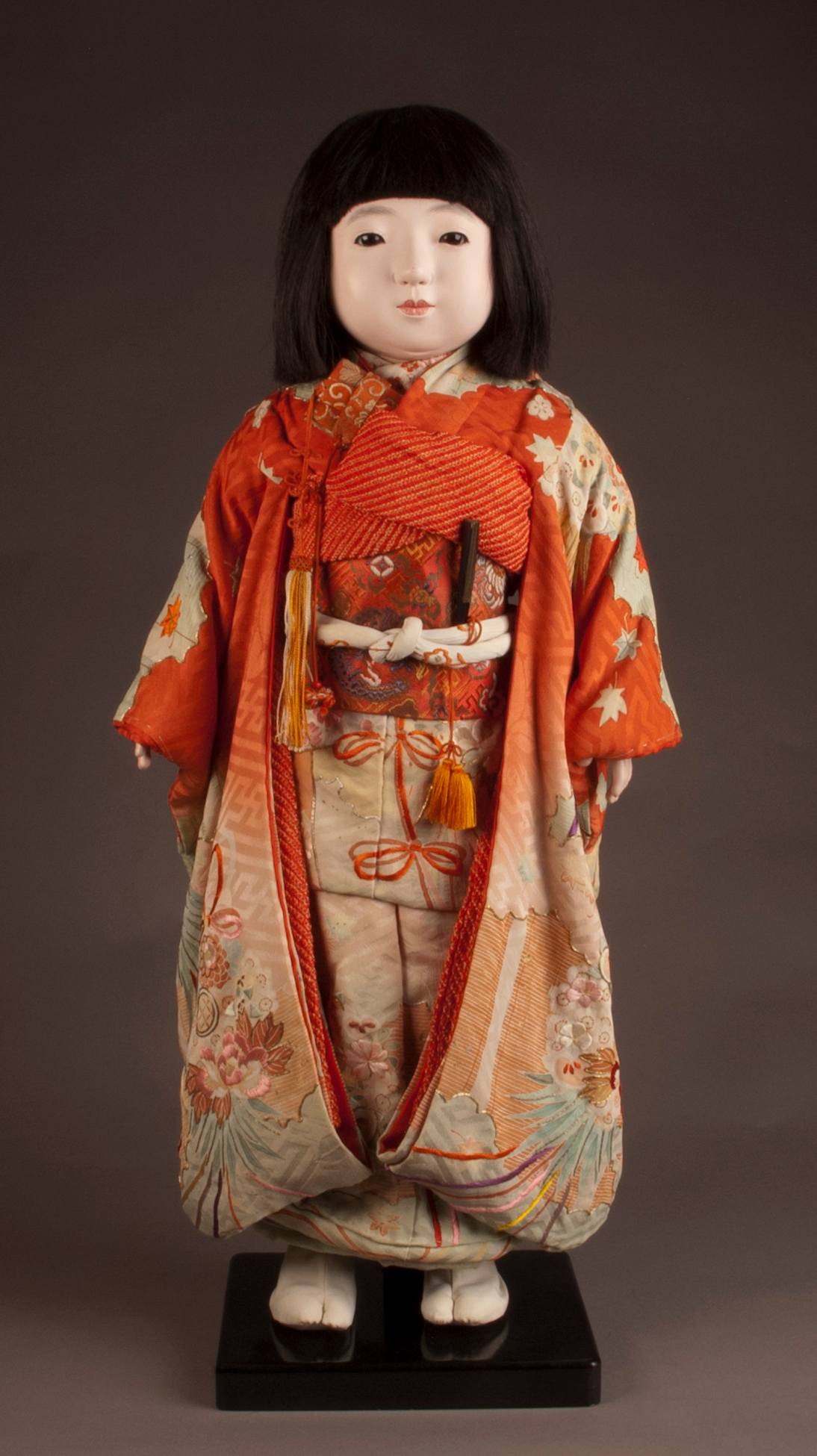
Next is a spectacular boy by Koryûsai. He is actually part of a glorious large-scale pair. He wears a formal black haori outer jacket with an impressive design of flying cranes, each piqued out with supplemental embroidery. It bears the katabami word sorrel crest of the family that commissioned him. His face is classic Koryûsai with a bright and happy expression, with finely wrought features that includes real eyelashes. Hands, as to be expected, are naturalistically rendered with tsumekiri fingernail details. His painted hair is done evenly and his exposed ears are done with a high level of naturalism. And his dômei bears the signature and seal of Takizaku Yoshitoyo (Koryûsai II). [Fig. 77, 78, 79, 80] His female companion is equally fabulous and I share a few images of her here. [Fig. 81, 82, 83]
And although NADDA is exclusively an organization focusing on antique dolls, my final example is actually from the contemporary ichimatsu master maker, Fujimura Kokan (b. 1953).
I do this intentionally as the art of the ichimatsu-ningyô was nearly lost after the WWII, when economic challenges and a need to replace so many lost dolls resulted in a tremendous and tragic downgrading in the skill sets of the ichimatsu makers who, by necessity, had to sacrifice quality over volume.
Fukimura Kokan has been instrumental in establishing a group of Tokyo-based makers dedicated to restoring the highest level of artistry to their dolls. Kokan’s work with gofun, though in a decidedly modern vein, captures the beauty and elegance of this very difficult material. Similarly, he employs only the finest textiles, frequently taken from antique kimono to adorn his dolls, adding to their elegance and desirability.
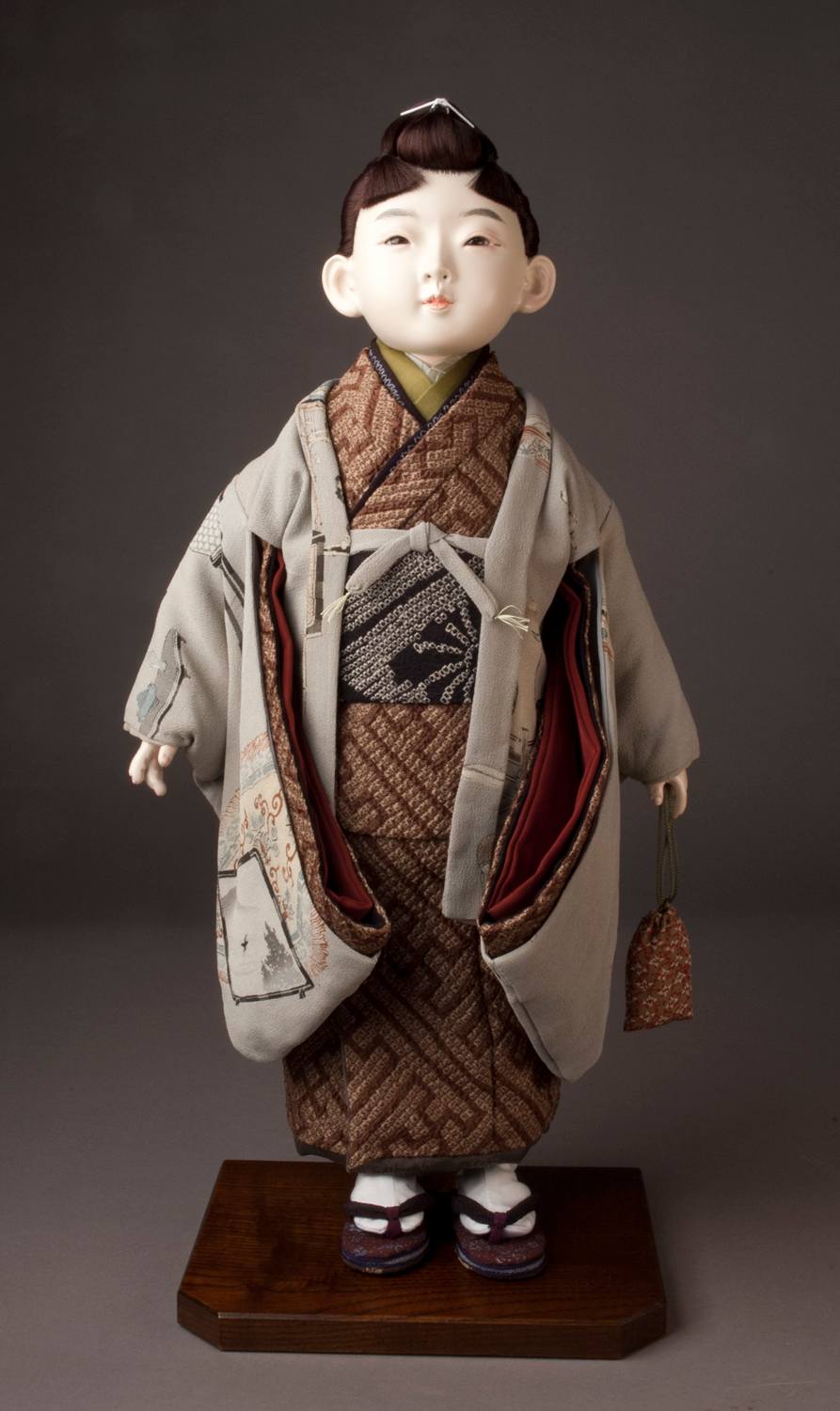
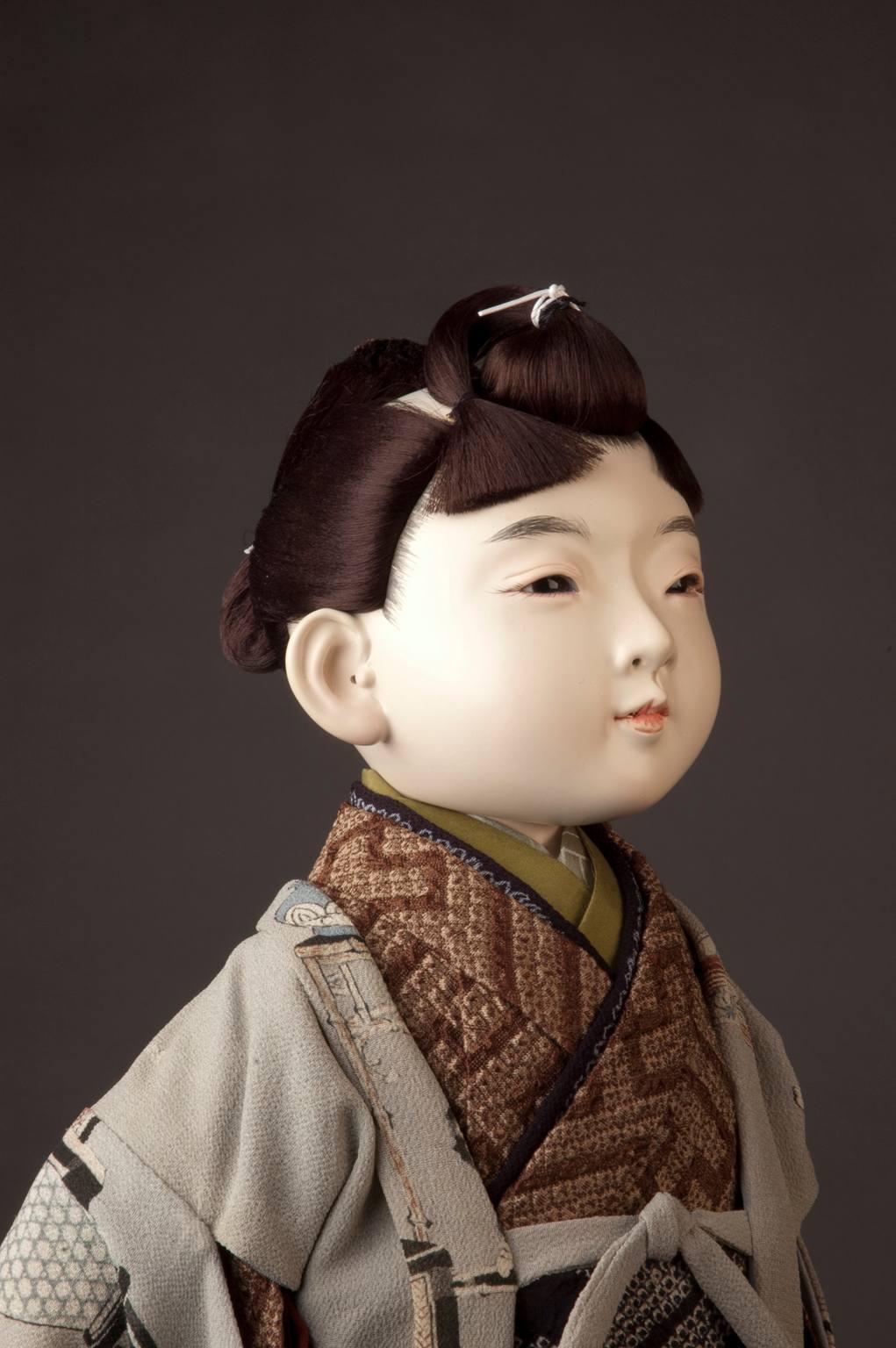
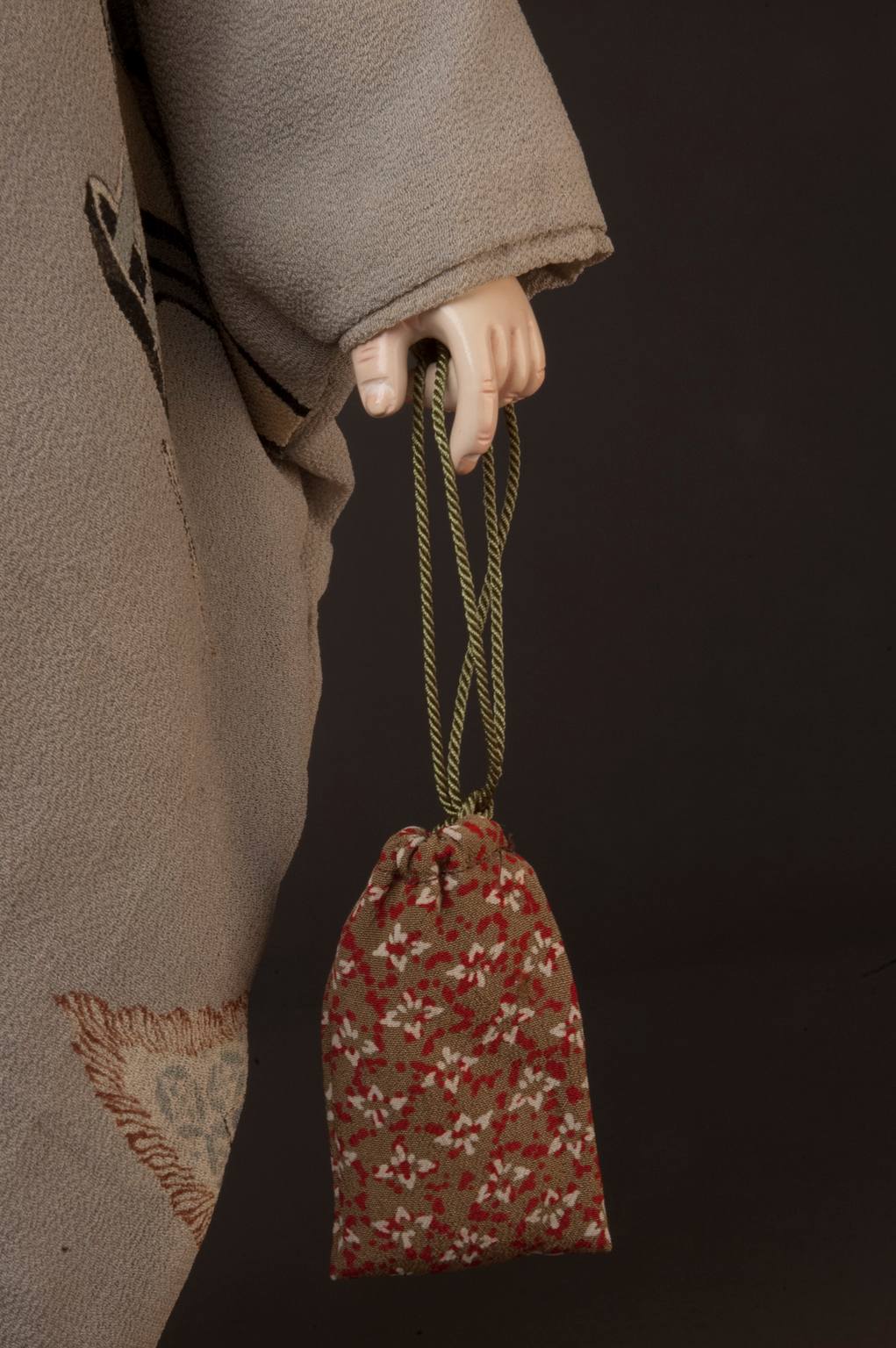
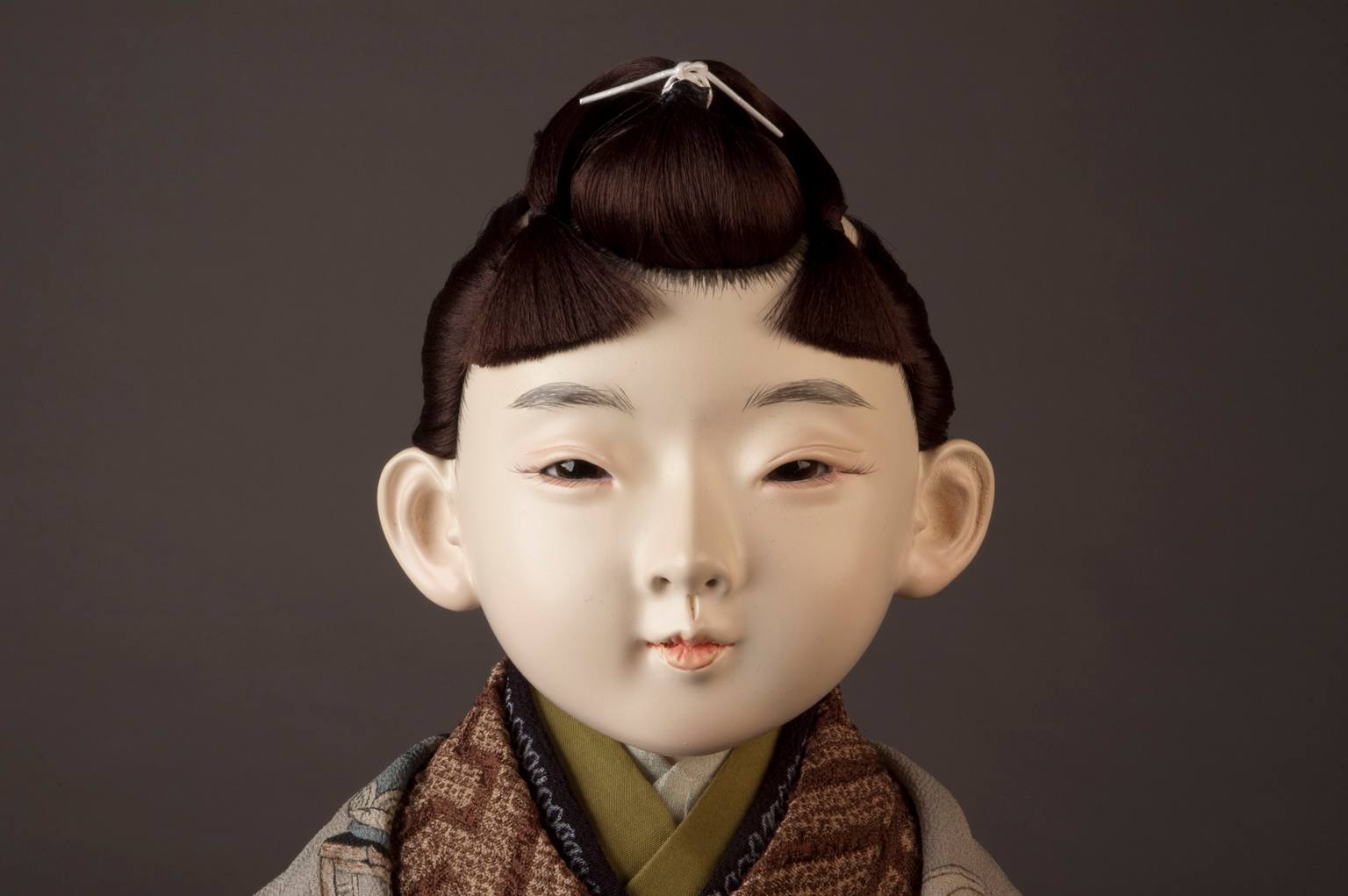
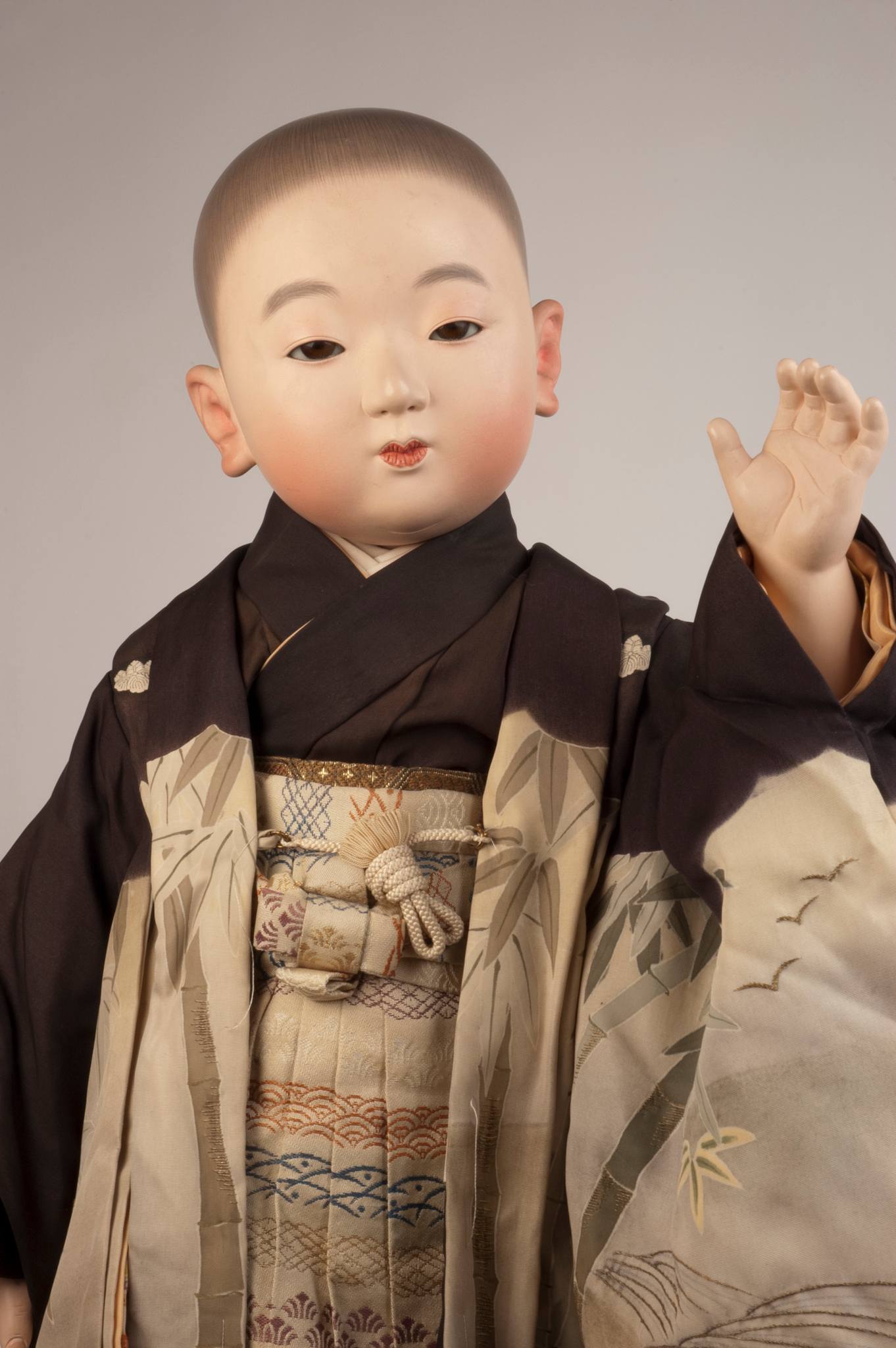
So here I present a contemporary ichimatsu boy that Kokan has entitled: Waka-danna (Merchant’s Son). In this piece, all of Kokan’s skills are clearly in evidence, from the detailing of the face with its lustrous gofun, the arrangement of the hair in a complicated Edo style for young men, to the articulation of the fingers which he has accentuated on the left hand to allow him to hold a small money purse. The feet as well, show the same level of detail. His haori jacket is taken from an antique chirimen silk crepe kimono bearing a sophisticated scholar’s table motif with writing implements, scholar’s rock and incense. Simply the best of the modern ichimatsu makers. [Fig. 84, 85, 86, 87, 88, 89]
I trust you have enjoyed this brief(!) series on Good. Better. Best. A convenient tool for beginning to understand the quality differences between those Japanese ichimatsu dolls that “all look alike.” [Fig. 90]
If you liked this series you might want to look at my YouTube video on this topic which goes into greater depth with even more images: [Fig. 91, 92]




Rachel Hoffman and Diane Hoffman’s Doll Collection
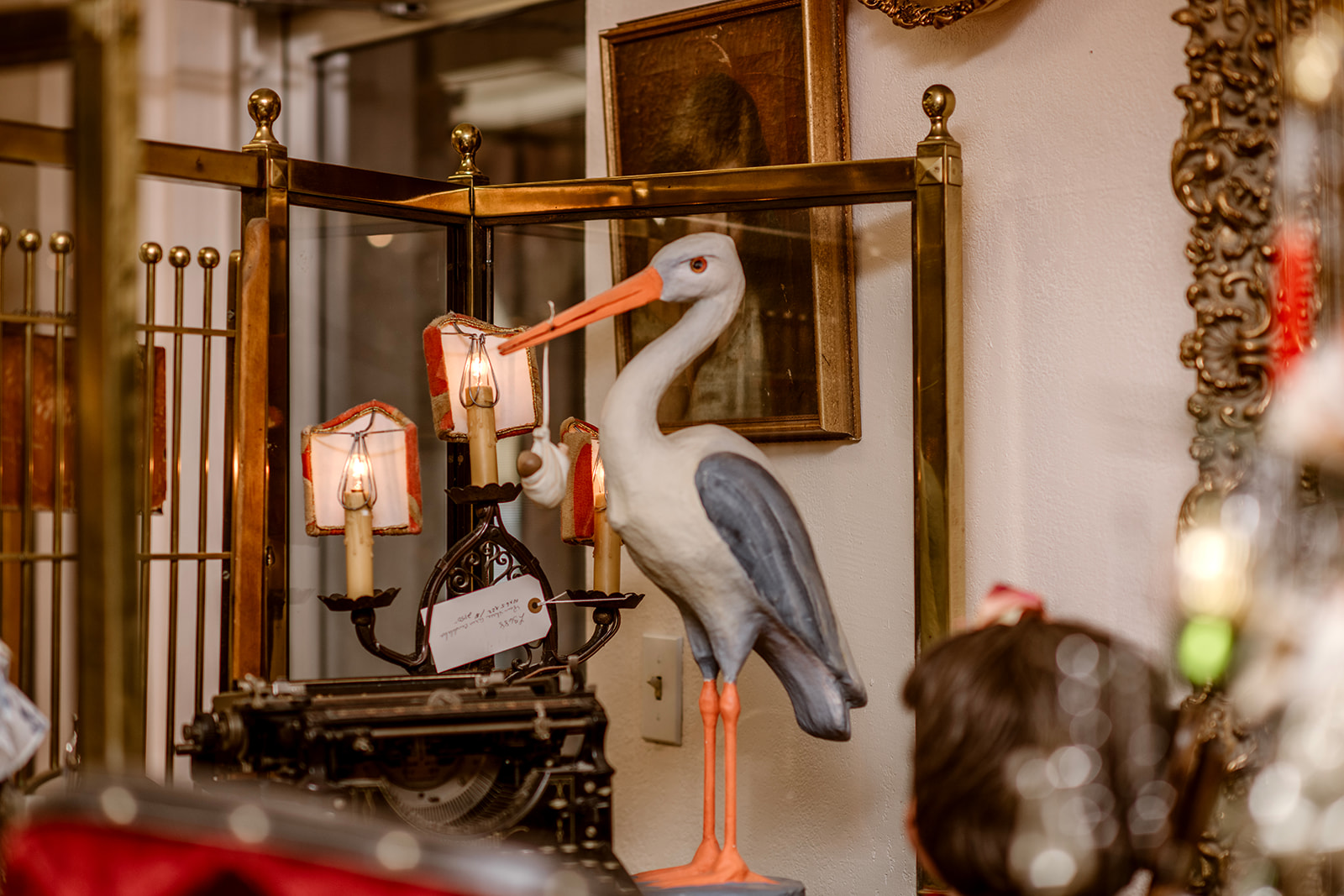
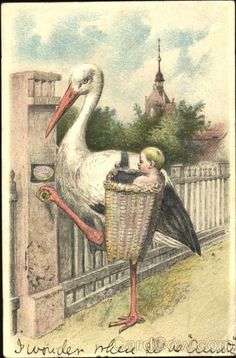
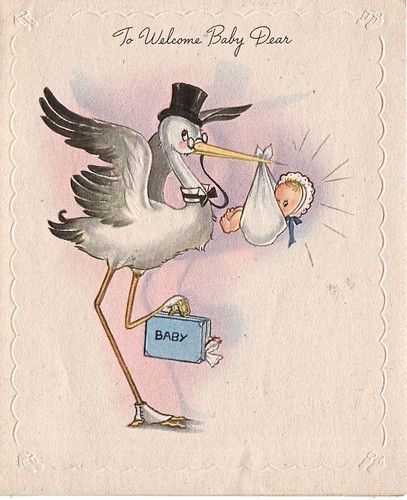
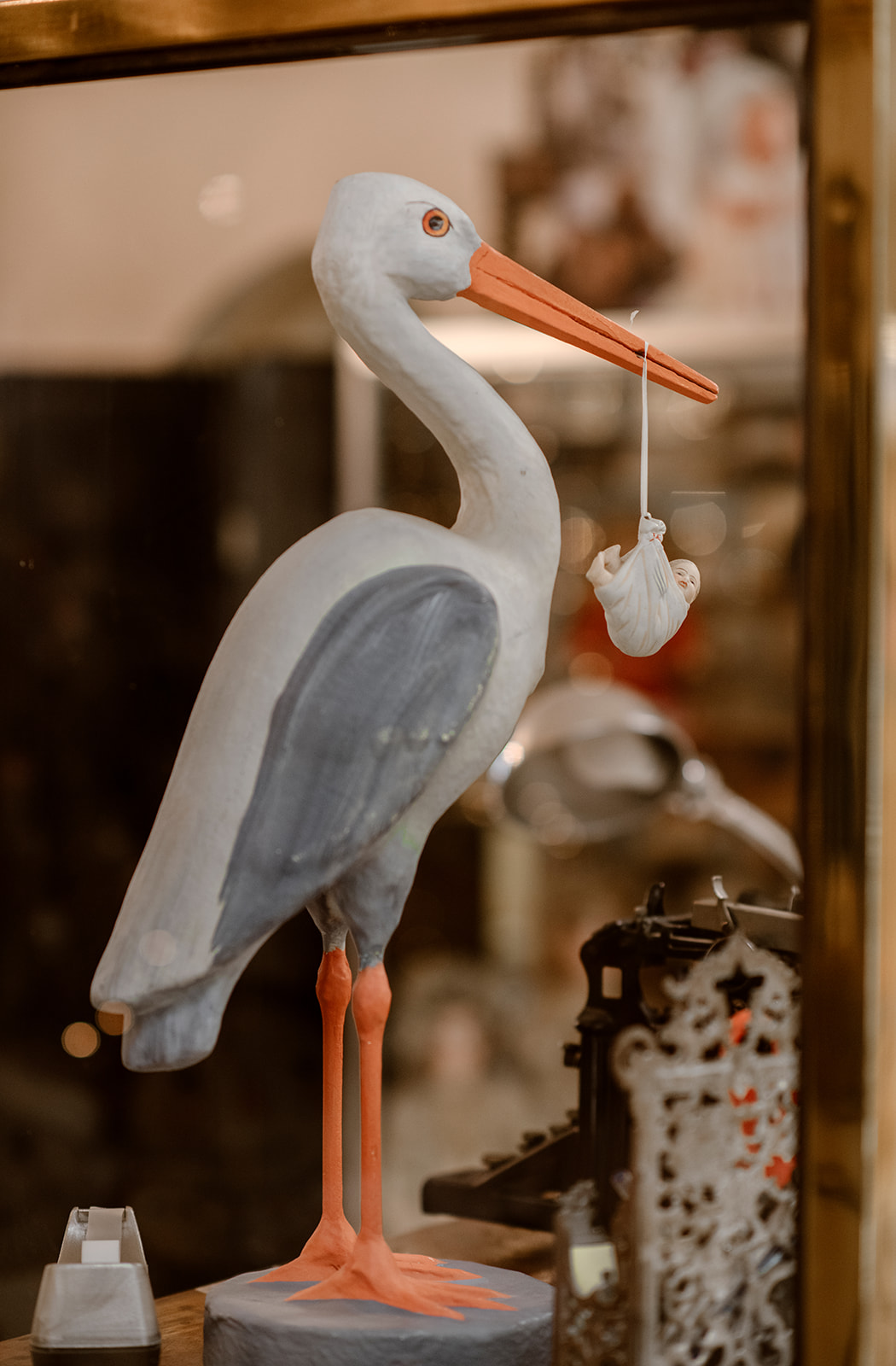
For generations, the stork has been a symbol of new life and family blessings. This endearing tradition dates back to ancient mythology and folklore, with several cultures citing the bird as a harbinger of happiness and fertility. The story gained widespread appeal in the 19th century through Hans Christian Andersen’s fairy tale, “The Storks,” which depicted storks delivering babies to homes.
This whimsical tale was likely a gentle way for parents to explain the arrival of a new sibling to children. The image has endured through the ages, becoming a classic representation of birth and the joyous arrival of a new family member. The stork’s poised, nurturing image, gently ferrying an infant bundled in cloth, has become a symbol of the timeless joy and wonder of family growth.
Today, this charming figure of the stork carrying a newborn continues to evoke warmth and affection, a reminder of the precious moments of life that our dolls often seek to capture. This particular stork, carrying its precious bundle, was a beloved piece in my mother, Diane Hoffman’s collection. It now stands as a cherished part of our doll shop, representing the legacy of love and the cycle of life that dolls encapsulate so beautifully.
We, at Turn of The Century Antiques, are proud to preserve and share not just this piece of history, but the countless stories that each doll in our collection holds. May they continue to bring joy and a sense of wonder to our lives.
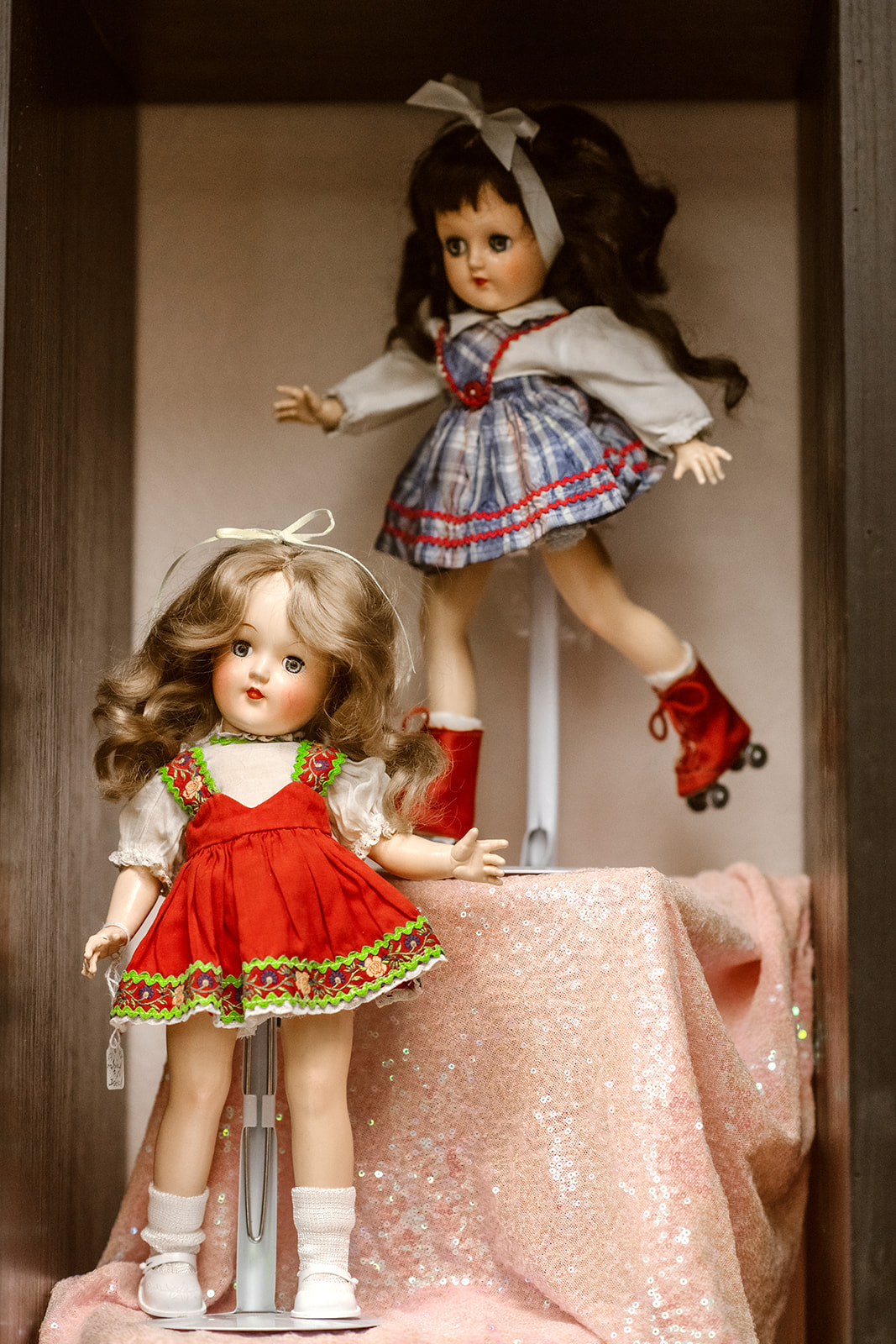
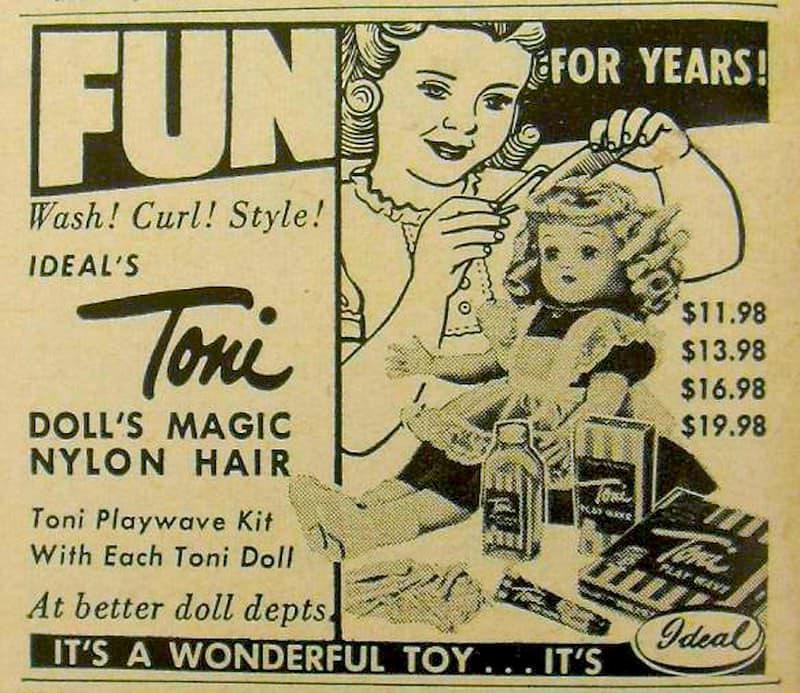
The Toni Doll by Ideal Toy Company has been a beloved figure in the world of doll collecting since its introduction in the late 1940s. These dolls were groundbreaking for their era, featuring washable hair that could be styled, and they often came with their own “Play Wave” kit. Toni dolls were crafted to reflect the American beauty standard of their time, with their sparkling eyes and stylish outfits.
This array of Toni dolls holds a special place in our hearts and on our walls. It was assembled for a very memorable visit from the renowned doll artist Robert Tonner in 2021. Robert, with his exquisite eye for doll artistry, is not just a creator but also a collector himself. Fun fact: he has a passion for vintage dolls, including the delightful Toni dolls, which reflects his deep appreciation for the rich history of doll craftsmanship.
The Toni dolls here not only represent a chapter of doll history but also remind us of the connections and friendships we’ve forged in the doll-collecting community. It’s a testament to how dolls can unite people, celebrating shared passions and creating lifelong friendships.


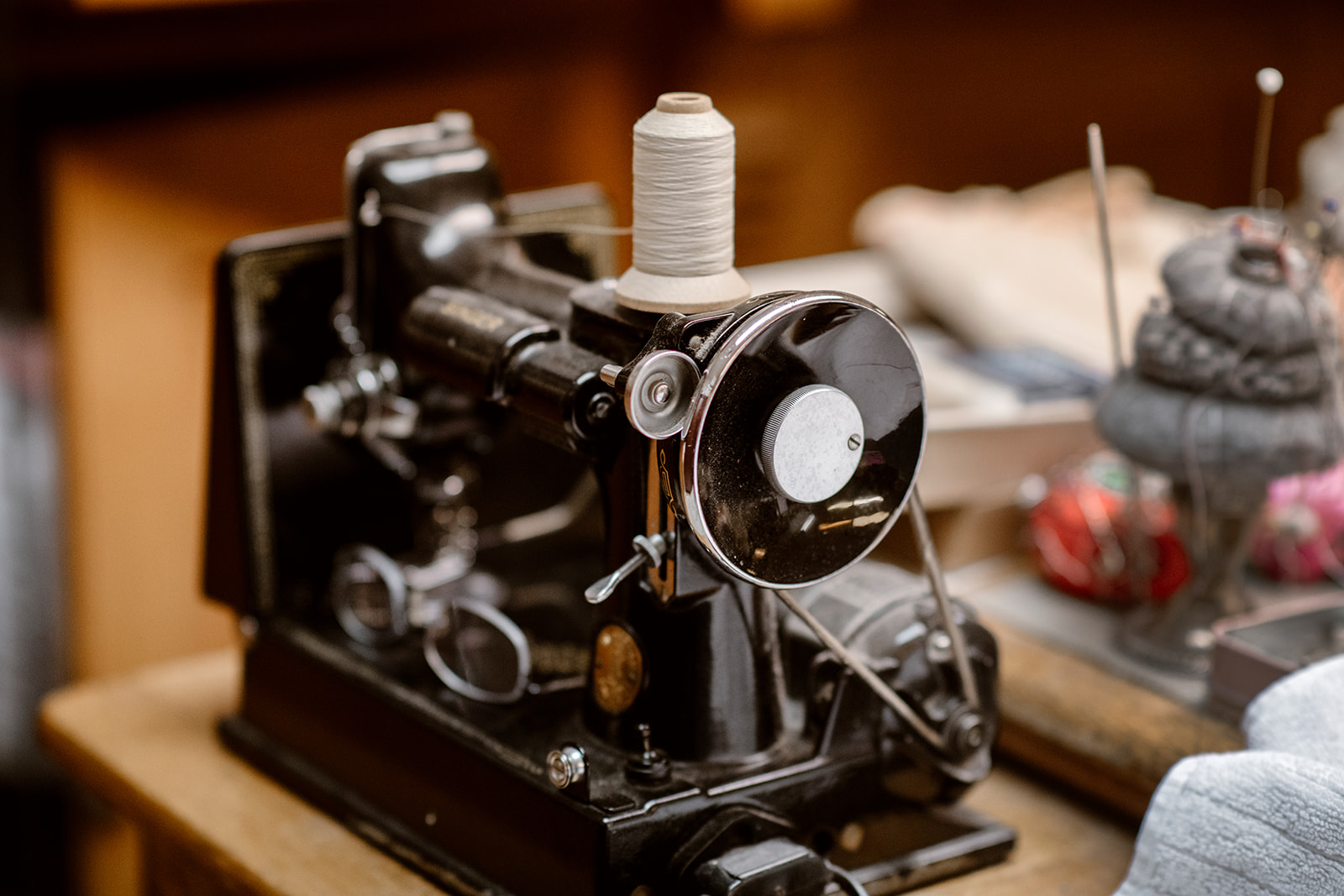
As we continue our virtual tour of the doll shop, we step into the heart of creation and care – our doll repair department. Here, nestled among the tools and threads of the trade, sits a true classic: a Singer sewing machine.
Since its inception in the 1850s, the Singer Sewing Machine has been a staple in homes and businesses, a testament to the innovation of Isaac Merritt Singer. These machines revolutionized the textile industry and brought the art of sewing into countless households. The Singer’s sturdy construction and reliable stitching made it a favorite for all, from homemakers to professional seamstresses.
In the world of doll collecting, a Singer sewing machine holds a special place. It’s the silent witness to countless repairs, restorations, and creations of miniature garments that dress our beloved dolls. Each stitch is a note in the symphony of doll collecting, where the love for craftsmanship and detail is as evident in the clothes our dolls wear as in the dolls themselves.
The Singer in our workshop not only serves a practical purpose but is also a nod to the history of sewing and the handcrafted charm that doll collectors cherish. It’s an emblem of the care we put into every repair, ensuring that each doll returns to its owner ready to be loved for many more years.
Join us in marveling at the Singer sewing machine’s legacy and its role in keeping the tradition of doll collecting vibrant and alive.
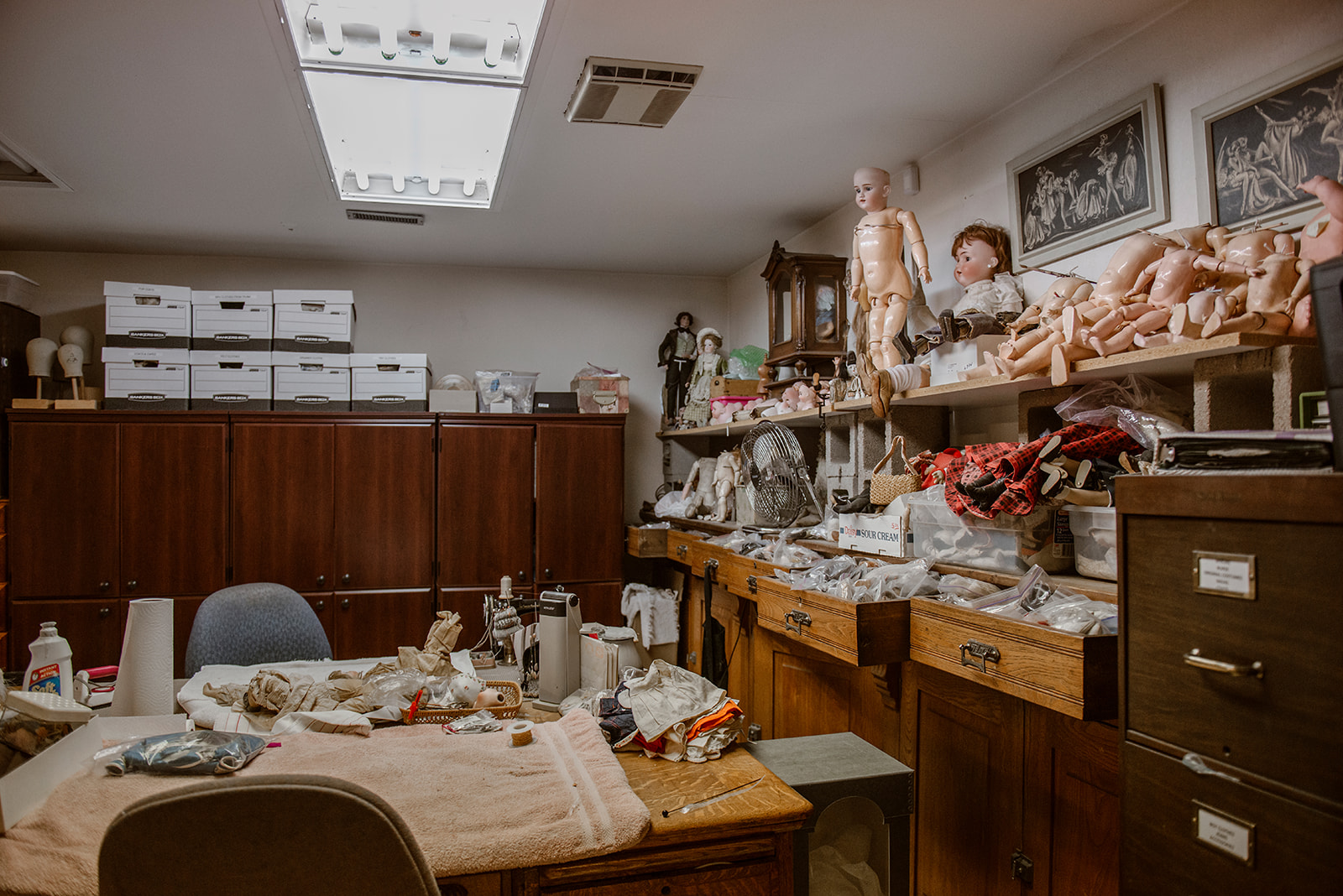

Step into the past with us as we explore the enchanting history of doll repair—a craft as old as doll making itself. This time-honored tradition has brought countless beloved playmates back to life, much to the delight of collectors and children alike.
The art of doll repair is deeply rooted in our collective history. As early as the 1800s, “Doll’s Hospitals” began appearing, first in Europe and then spreading worldwide. In these magical places, skilled artisans, much like the caring professionals in a real hospital, would mend broken limbs, refresh worn faces, and replace tattered clothing.
These images from a bygone era capture the essence of the doll hospital’s charm. From the expert hands of a repair artist to the hopeful eyes of a child waiting for their treasured companion’s return, these snapshots remind us of the timeless bond between us and our dolls.
Our very own doll repair department continues this legacy with pride. We not only mend and restore, but we also preserve the stories and memories woven into each stitch and seam. In our hands, dolls are not just playthings but treasured keepsakes, carrying the legacy of those who loved them before. You can see a lot of our old doll repair videos on YouTube; search “repair,” and you will see some great videos with Linda! https://www.youtube.com/@RachelHoffmanDolls
You can also find a list of doll hospitals on the Madame Alexander website (scroll to the bottom): https://madamealexander.com/doll-care/
Let’s celebrate the craftsmen and women, past and present, who have made it their life’s work to ensure that no doll is ever beyond repair, and every doll has the chance to be cherished once again.
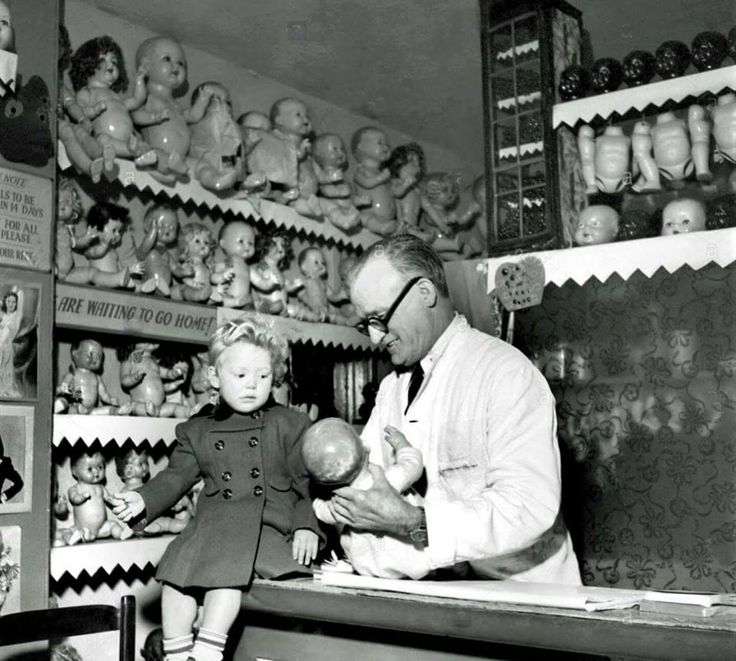

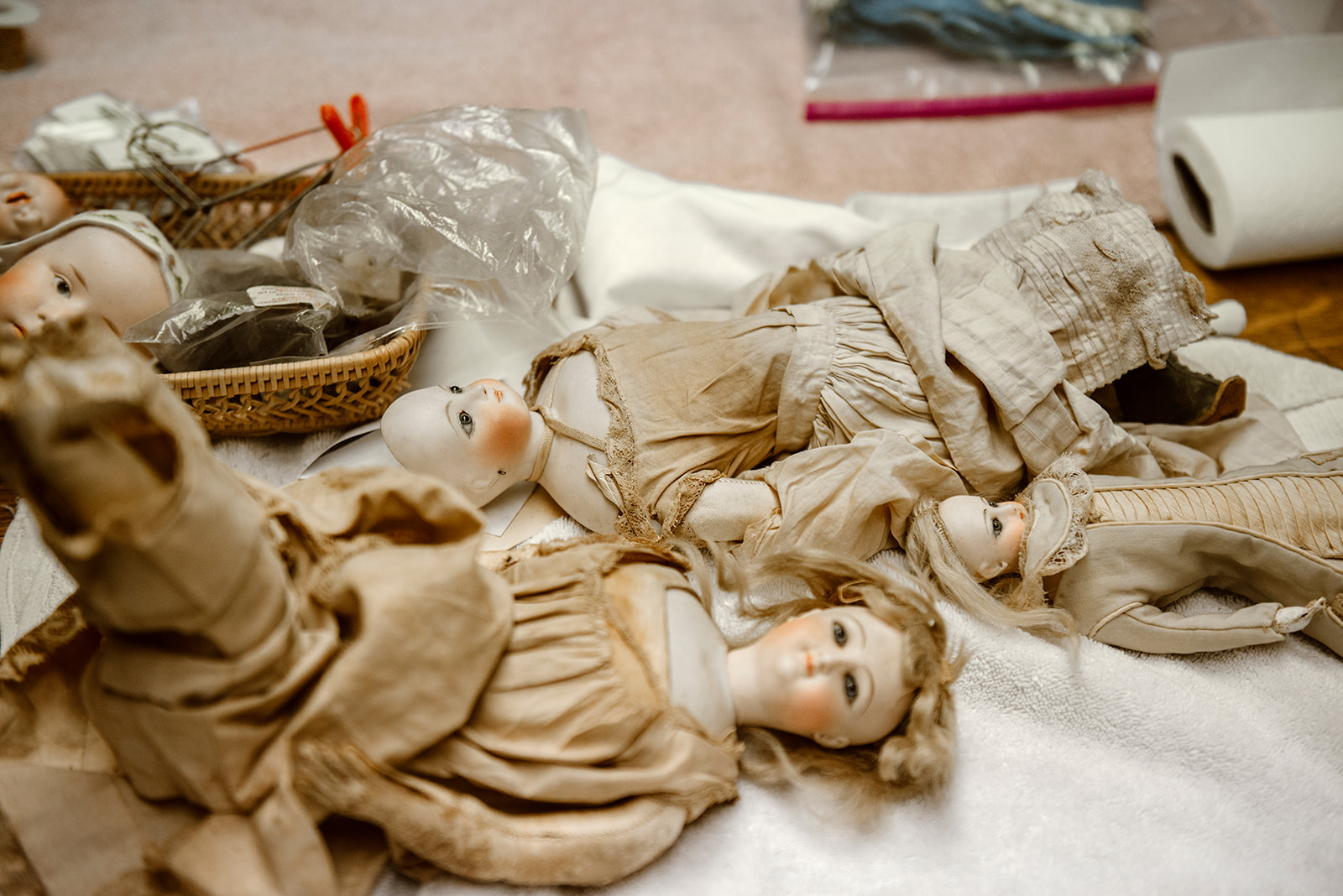
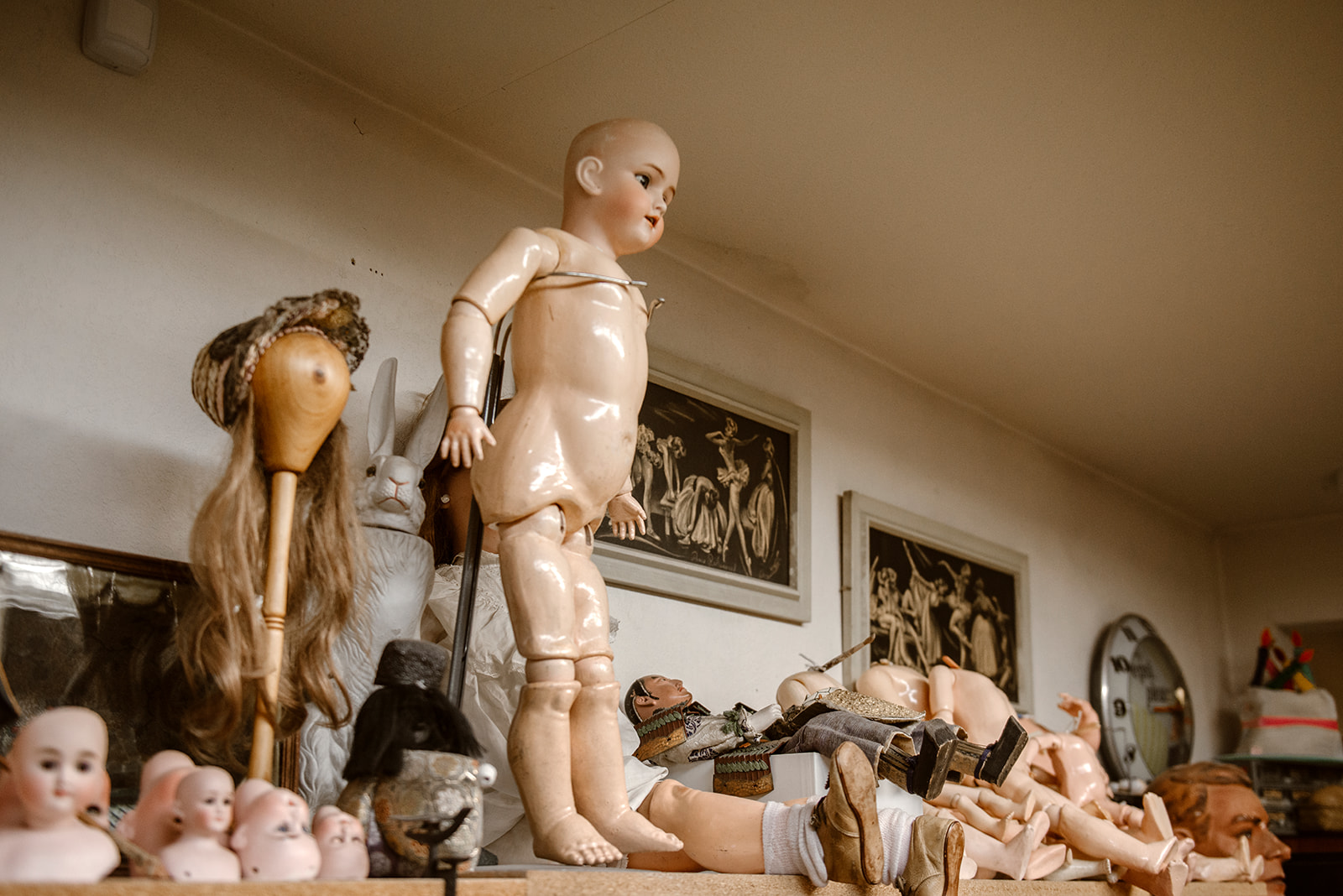
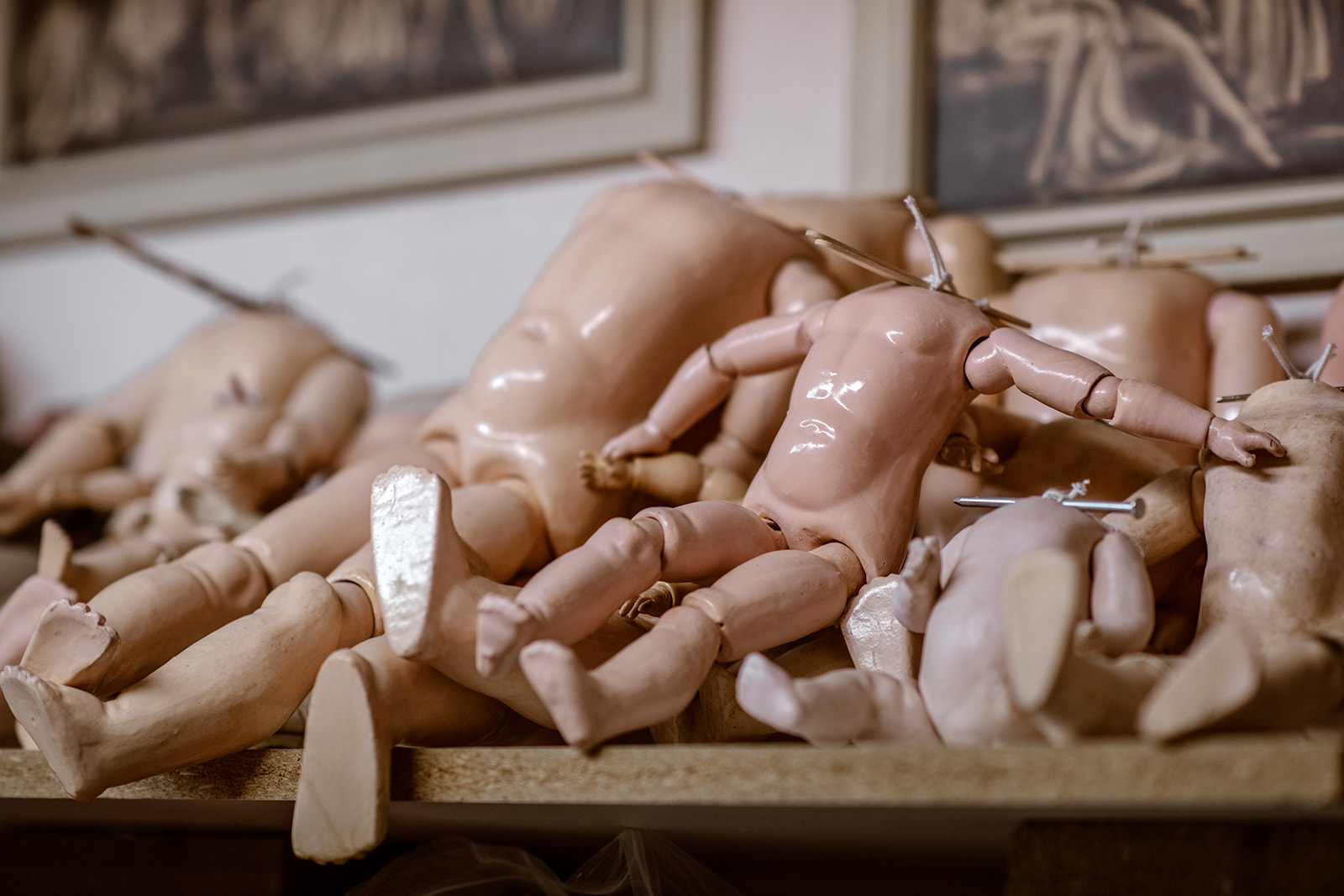
Doll stores have been enchanting spaces for collectors and children alike since the 19th century. With the advent of industrialization, dolls transitioned from being handcrafted at home to being mass-produced, giving rise to dedicated doll shops. These shops were not just places of commerce but wonderlands where fantasy met reality. They became cultural staples in cities and towns, enchanting passersby with their displays of miniature beauty and artistry.
The evolution of doll stores reflects the changing trends in society, from the porcelain beauties of the Victorian era to the introduction of character dolls in the early 20th century, and eventually to the iconic fashion dolls of the 1950s and beyond. Each era’s doll stores offered a window into the contemporary world, dressing dolls in the latest fashions and often becoming trendsetters themselves.
Our very own shop is a tapestry of this history. Here, amidst our curated displays, we not only sell dolls but also continue the tradition of being a space for community and shared joy. We are a part of a legacy that has brought joy, comfort, and a touch of the fantastic to daily life for over a century.
This photograph captures the essence of our shop’s spirit—a place where each doll tells a story, and every shelf holds a piece of history. We are proud to be part of this ongoing story, connecting past to present, and we invite you to continue to create beautiful memories with us.
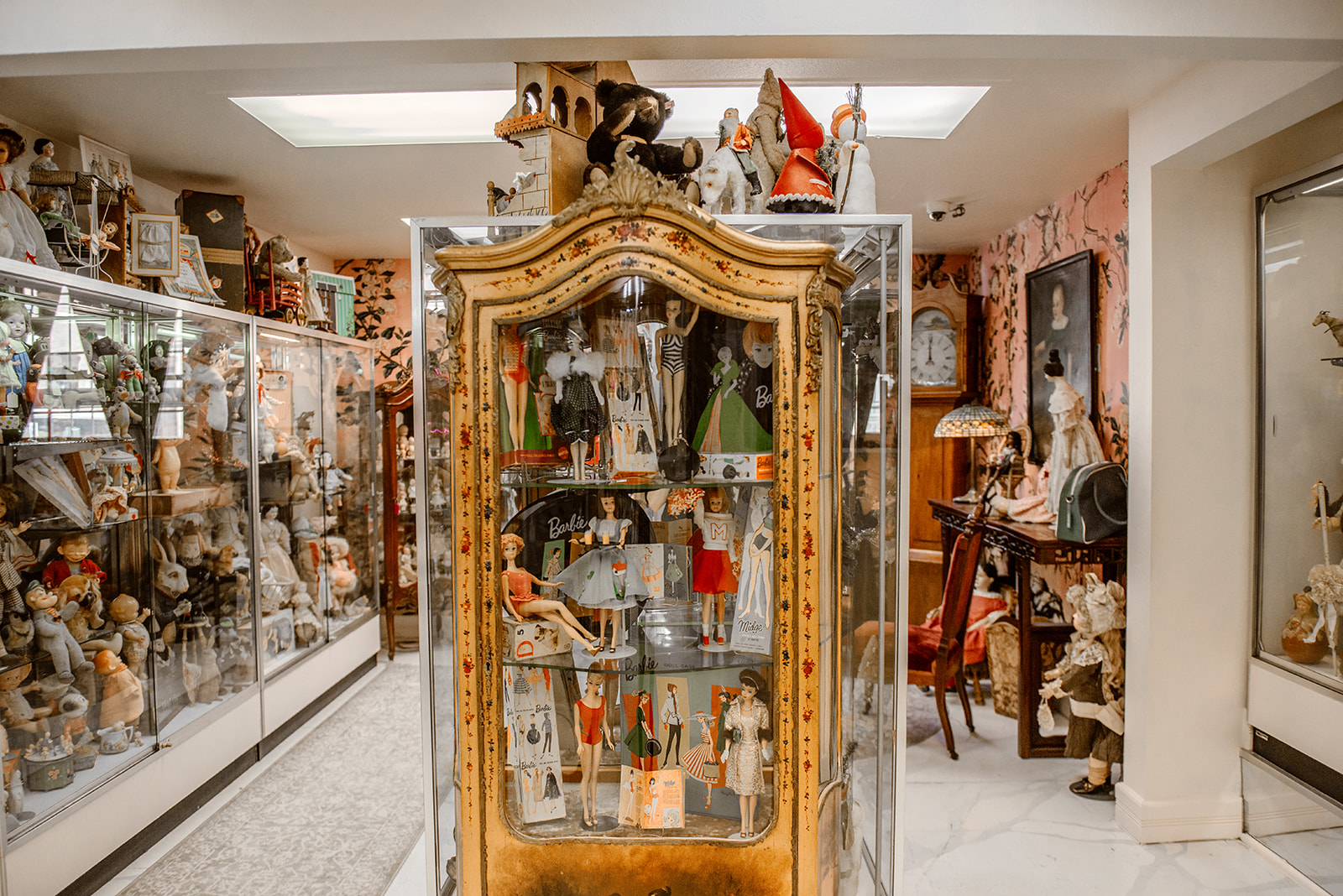

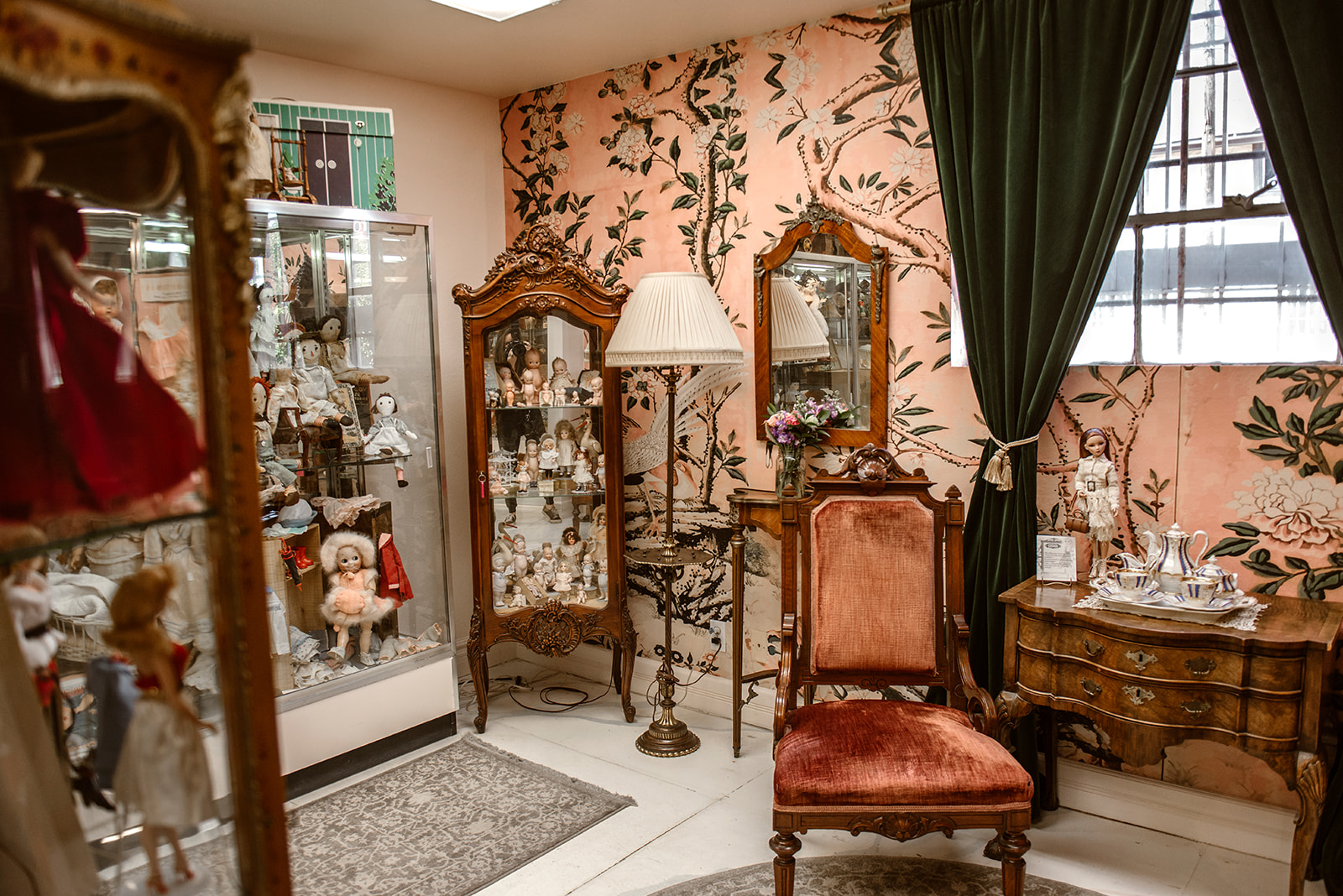
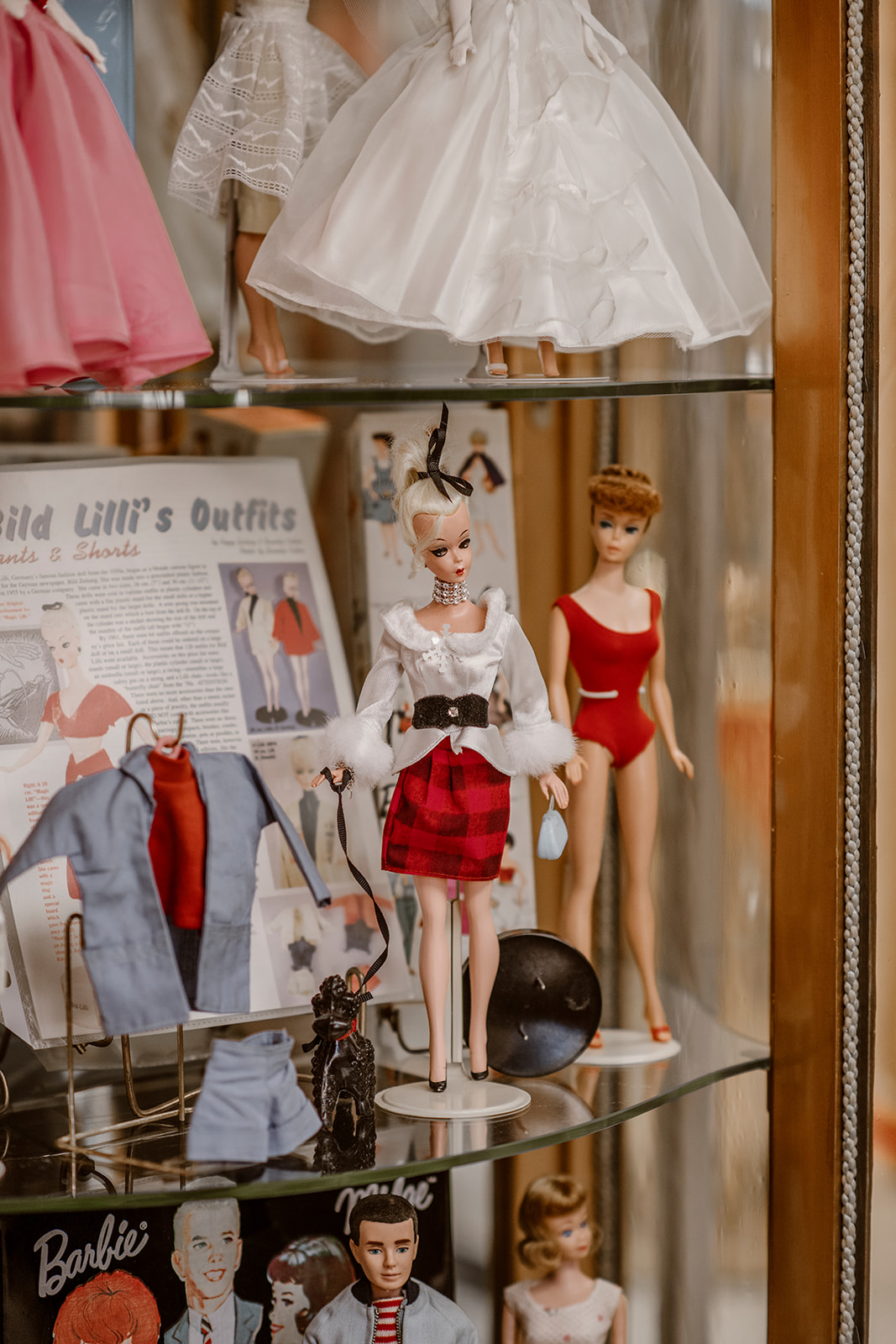
Bild Lili, the stylish German fashion doll, was originally produced from 1955 to 1964. She was based on a comic-strip character and swiftly became an icon of her era, embodying the chic, independent woman of the 1950s. Lili was not initially intended for children; instead, she was a novelty item sold to adults in bars and tobacco shops. With her hourglass figure and a wardrobe fit for any high-society event, Lili became a sought-after collector’s item.
Interestingly, Lili’s design would later inspire the creation of the world-famous Barbie doll, which debuted in 1959. Barbie would go on to become a household name, leaving an indelible mark on the toy industry and pop culture.
The Bild Lili doll in our collection was more than just a toy; she was a treasure trove of history and style, a reminder of the doll’s evolution through the ages. While we cherished her presence in our store, she now resides at La Casa de las mil Muñecas in Mexico City, continuing to delight and educate visitors about her rich and fashionable legacy.


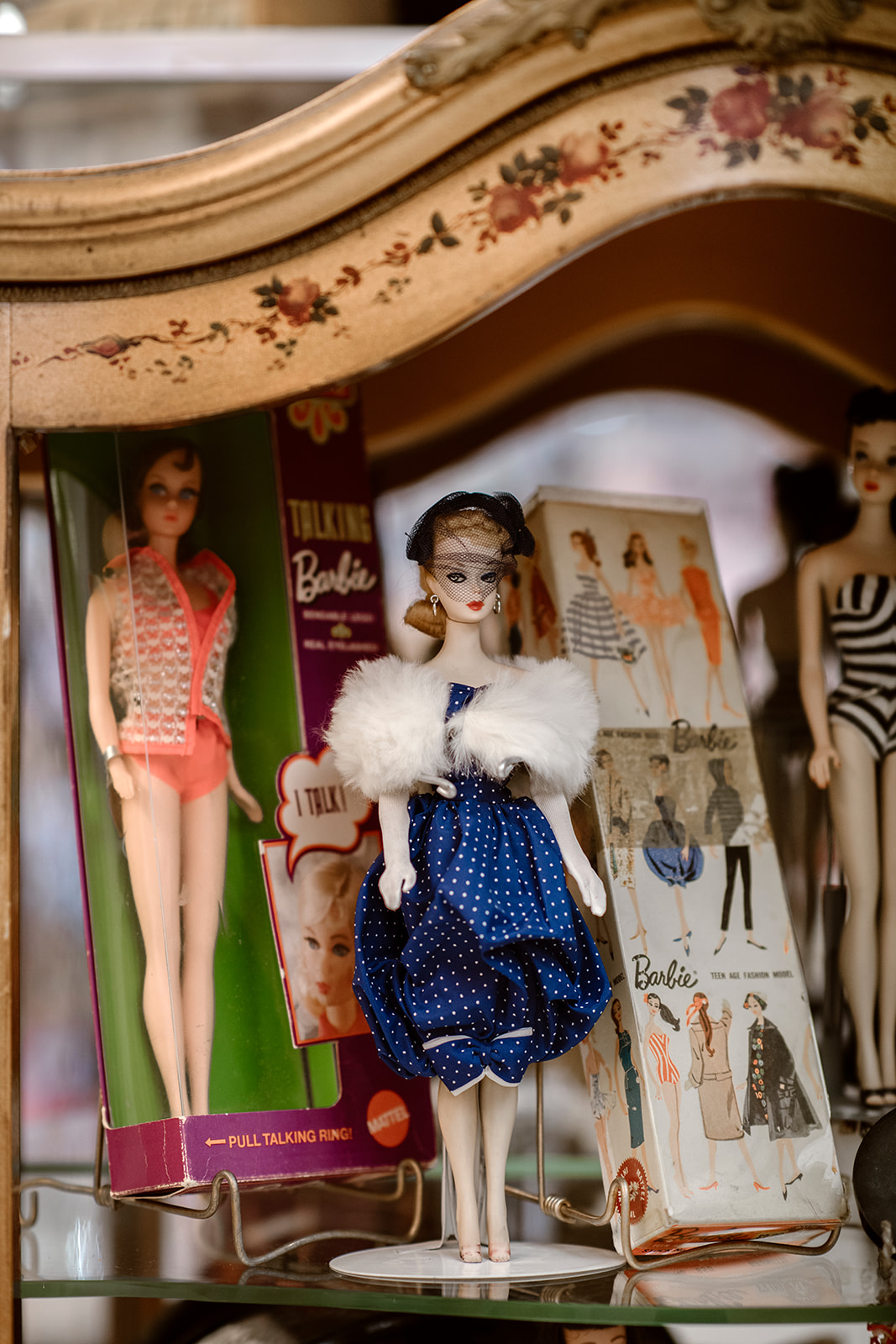
Step back in time with us to 1959, as we highlight a true jewel from Diane Hoffman’s esteemed collection at Turn of the Century Antiques—a Number One Barbie doll, an inaugural piece that sparked a global phenomenon.
This doll isn’t just a toy; she’s a piece of history. As the first of her kind, Number One Barbie introduced the world to a new era of play and imagination. With her distinctive features, like the iconic ponytail and arched brows, she was a departure from the baby dolls that dominated the market. Barbie was a trailblazer, reflecting a more grown-up, glamorous life that little ones could dream about.
Dressed in the luxurious “Gay Parisienne” outfit, complete with a puff-sleeved navy cocktail dress adorned with white polka dots and accessorized with a faux fur stole, this Barbie epitomizes the elegance and style of the late 50s. The “Gay Parisienne” is one of the rarest and most sought-after Barbie outfits, making this doll an even more precious member of our collection.
This cherished doll continues to be admired by collectors and enthusiasts who visit us, each captivated by her grace and story. She’s more than just a part of our collection; she’s a beloved member of our doll family, embodying the legacy of passion and preservation that Diane Hoffman championed throughout her life.
Come visit to take a closer look at this classic beauty and the countless other treasures that live within the walls of Turn of The Century Antiques. Every doll has a story, and we’re eager to share it with you.
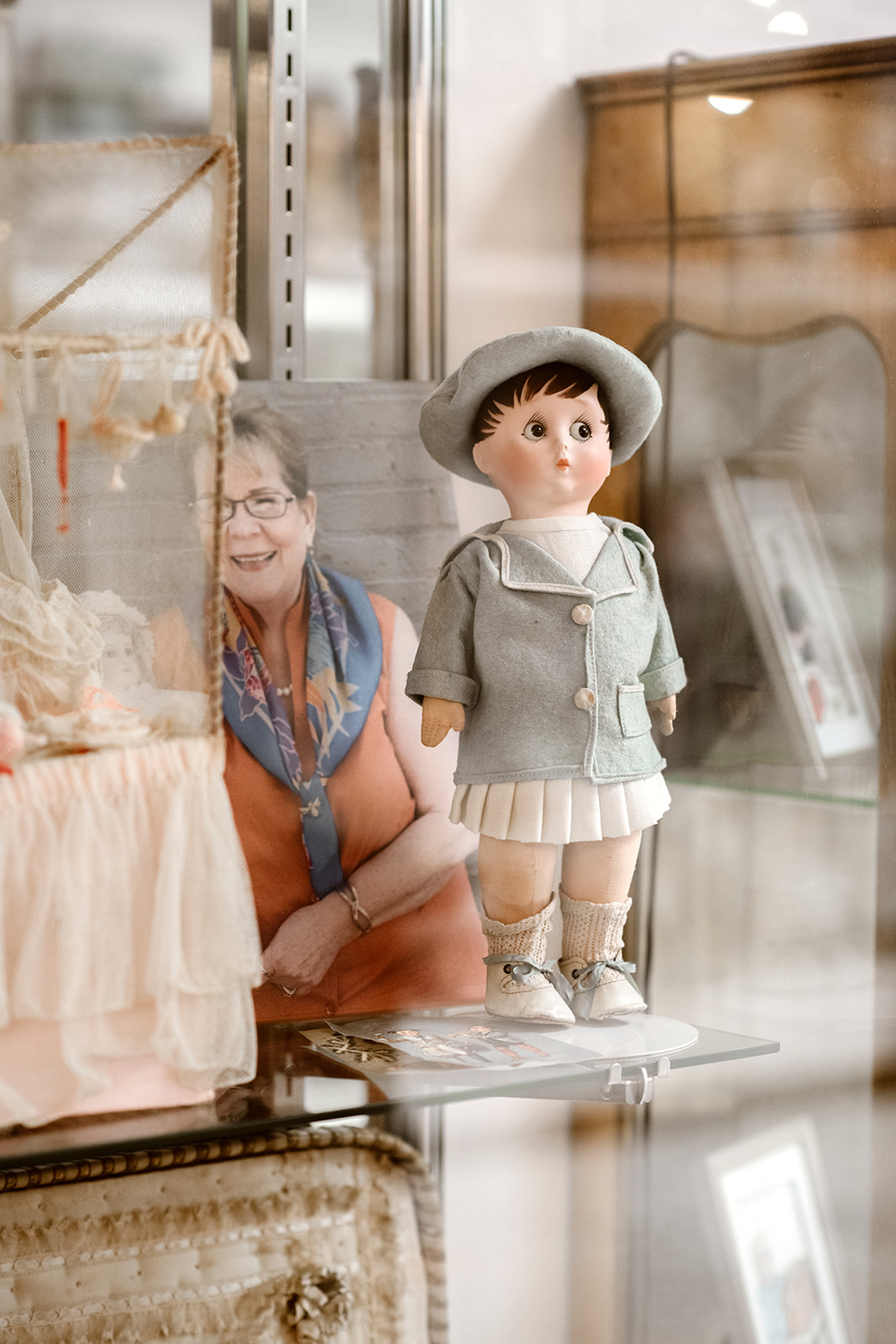
Captured here is a rare Oscar Hitt Googly doll, a cherished favorite of Diane Hoffman. Its whimsical expression and unique charm reflect the joy and depth found in doll collecting. Here are 10 reasons why doll collecting is an incredible hobby:
Historical Connection: Dolls are pieces of history that capture fashion, culture, and art from different eras, allowing collectors to hold a piece of the past.
Artistic Appreciation: Collecting dolls involves an appreciation for the intricate craftsmanship, from hand-painted features to hand-sewn garments.
Emotional Bond: Dolls can evoke nostalgia and warmth, creating a sentimental link to childhood or cherished memories.
Educational Value: Doll collectors often learn about the historical context of their dolls, including the periods they represent and the stories behind them.
Community and Friendship: Collectors join a community of like-minded enthusiasts, sharing their passion and forming lasting friendships.
Preservation of Craft: Each addition to a collection helps preserve the fine skills involved in doll-making, often passed down through generations.
Investment Potential: Many dolls, especially rare finds like the Oscar Hitt Googly, can increase in value, making doll collecting a potential financial investment.
Therapeutic Effect: The hobby offers a therapeutic retreat, providing a creative outlet and a calming influence.
Cultural Diversity: Collecting dolls from around the world offers insight into different cultures and their unique artistic expressions.
Legacy Building: For many, like Diane Hoffman, doll collecting is about building a legacy that can be passed down and enjoyed by future generations.
As we appreciate this Googly doll’s playful gaze, let’s recognize doll collecting as a hobby that is as rewarding as it is delightful.
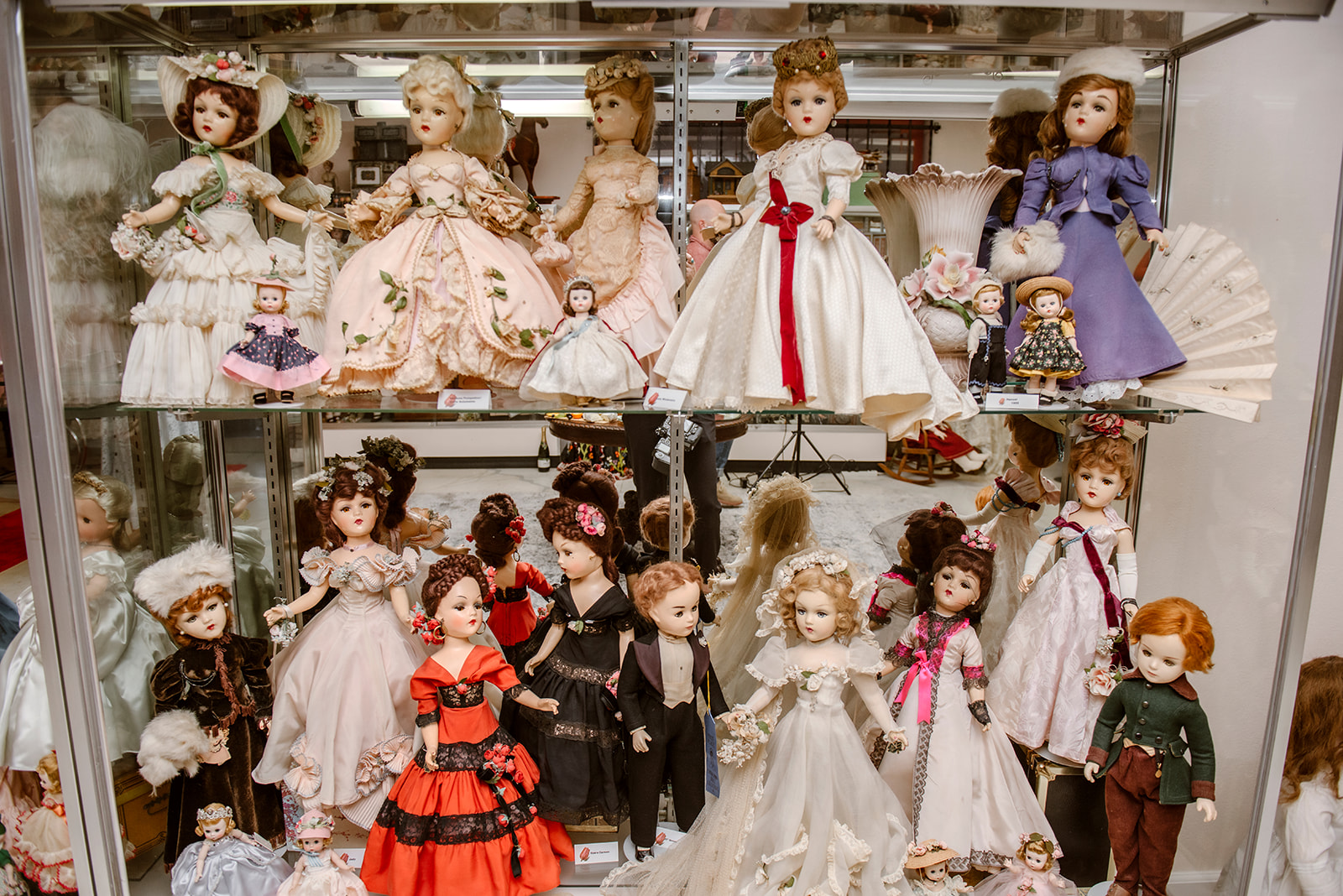
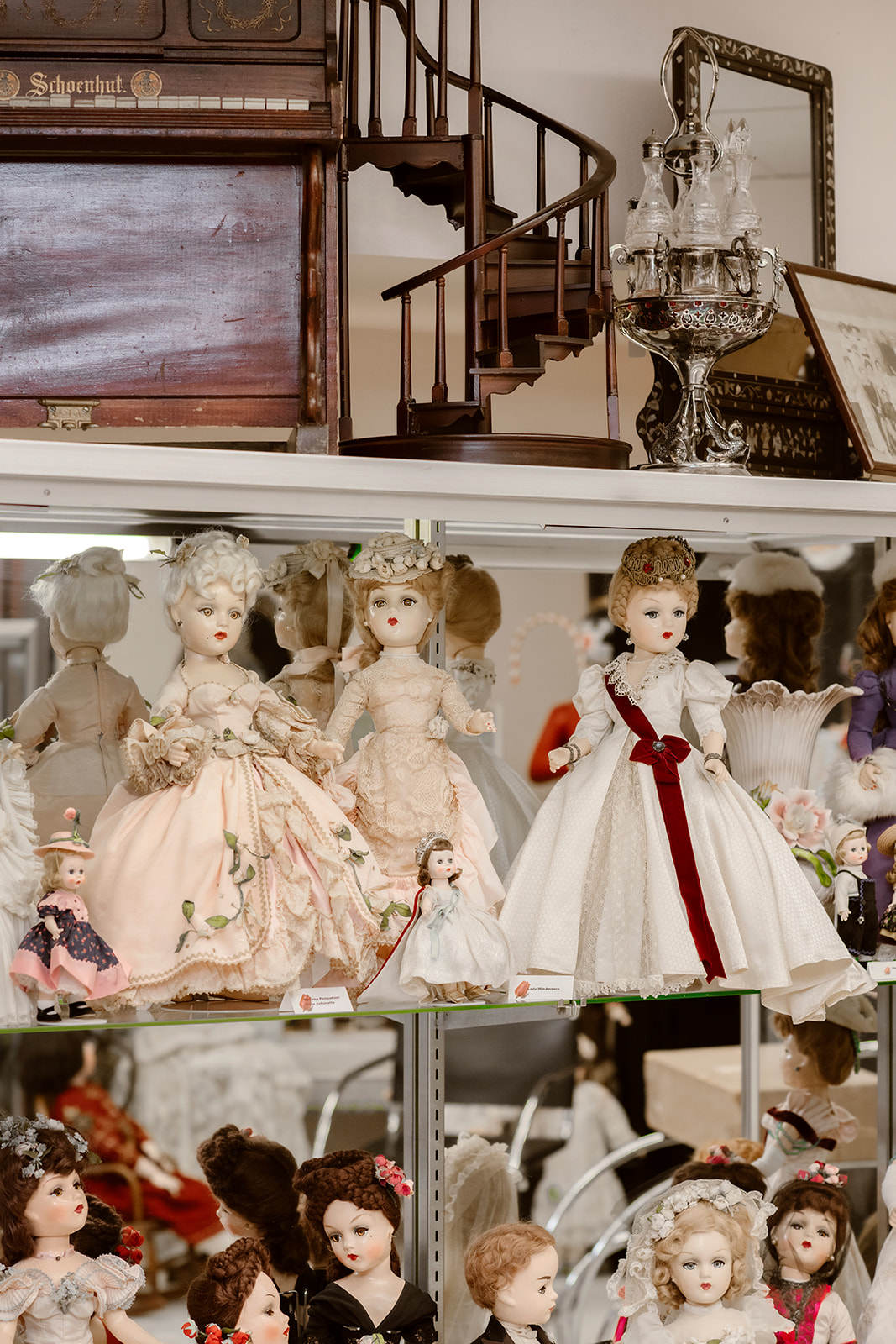
As we continue our delightful April takeover on the NADDA page, we turn our attention to the romantic and elegant world of wedding-themed dolls. The ones featured here are splendid Madame Alexander wedding party dolls from the cherished collection of Diane Hoffman at Turn of the Century Antiques.
Wedding-themed dolls have graced collections for generations, reflecting the customs and fashions of their times. Since the 1950s, these dolls have celebrated the beauty and ritual of marriage ceremonies, with intricate bridal gowns and meticulously tailored suits that capture the essence of the joyous occasion. They often serve as cherished mementos of one of life’s most significant milestones.
Madame Alexander has been at the forefront of this tradition, creating wedding party dolls that are sought after for their exquisite detail and craftsmanship. Each doll, from the blushing bride and groom to the adorable ring bearer, is a masterpiece, encapsulating the grandeur and emotion of a wedding day.
Diane Hoffman’s eye for exceptional pieces has brought together this stunning ensemble, which continues to be a centerpiece in our store. They stand as a testament to the lasting union between artistry and the celebration of human experiences.

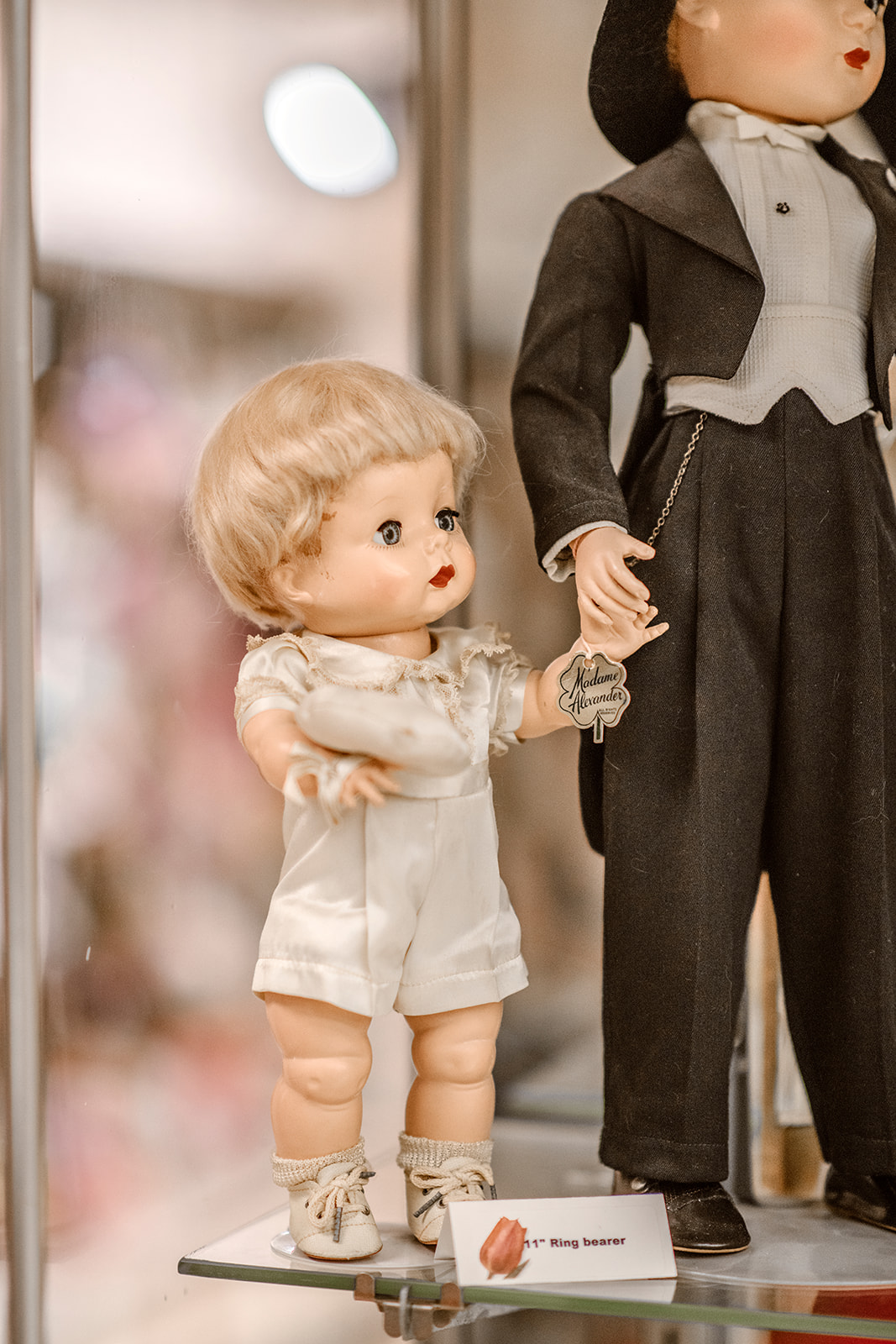
This April, as part of our NADDA page takeover, we’re proud to spotlight a distinguished member of our collection at Turn of the Century Antiques—the vintage Ring Bearer doll by Madame Alexander.
The tradition of ring bearers is a long-standing one, dating back to ancient Egypt, where valuables were often carried on ornamental pillows during important ceremonies. This role became a staple in wedding customs, symbolizing the delivery of the couple’s promises to one another. The role of the ring bearer, traditionally a young boy dressed in his finest, is to carry the wedding bands to the altar, heralding the imminent vows with sweetness and solemnity.
Madame Alexander, esteemed for their finely crafted dolls that capture the spirit of their times, lovingly crafted this Ring Bearer doll. With his crisp suit and earnest expression, he brings to life the pageantry and joy of the wedding tradition in miniature form.
Rest assured, this charming little fellow is still with us, bringing joy and a touch of nostalgia to everyone who visits Turn of the Century Antiques. He is a beloved piece, symbolizing the joyous beginnings that weddings represent and the meticulous craftsmanship of Madame Alexander dolls.
I’m honored to share a more in-depth look into the storied history of the Madame Alexander Doll Company, alongside some of the exceptional pieces from my mother, Diane Hoffman’s collection at Turn of the Century Antiques.
The Madame Alexander Doll Company was born out of the vision of Beatrice Alexander, a woman who grew up surrounded by dolls in her father’s doll hospital in New York City. She started her company in 1923, and it grew from a small family-owned business to an internationally recognized brand, synonymous with quality, innovation, and an unwavering commitment to craftsmanship.
Beatrice, known professionally as Madame Alexander, was a visionary in the field. She recognized early on that dolls could be more than just children’s playthings—they could be a medium for artistry and storytelling. She introduced dolls with characters, giving them backstories and personalities, and setting the stage for play that was both imaginative and instructive.
Madame Alexander was the first to produce dolls representing characters from literature, such as “Alice in Wonderland” and “Gone with the Wind.” Her company gained fame for the “Scarlett O’Hara” doll during the height of the movie’s popularity. The company also pioneered ‘sleep eyes’ in dolls, which could open and close, rooted hair that could be styled, and dolls with bending knees.
Over the decades, the company has celebrated historical events, cultures around the world, and even created dolls in the likeness of living people. Each creation is a piece of a larger narrative, one that honors the fabric of our shared experiences.
The Madame Alexander Doll Company remains a beacon of the American dream, proving that with innovation and passion, a small family enterprise can leave an indelible mark on the world.
The dolls you see here from Diane Hoffman’s collection are not just masterfully designed; they also represent the heart and soul of a company that has brought joy and inspiration to generations of doll enthusiasts.

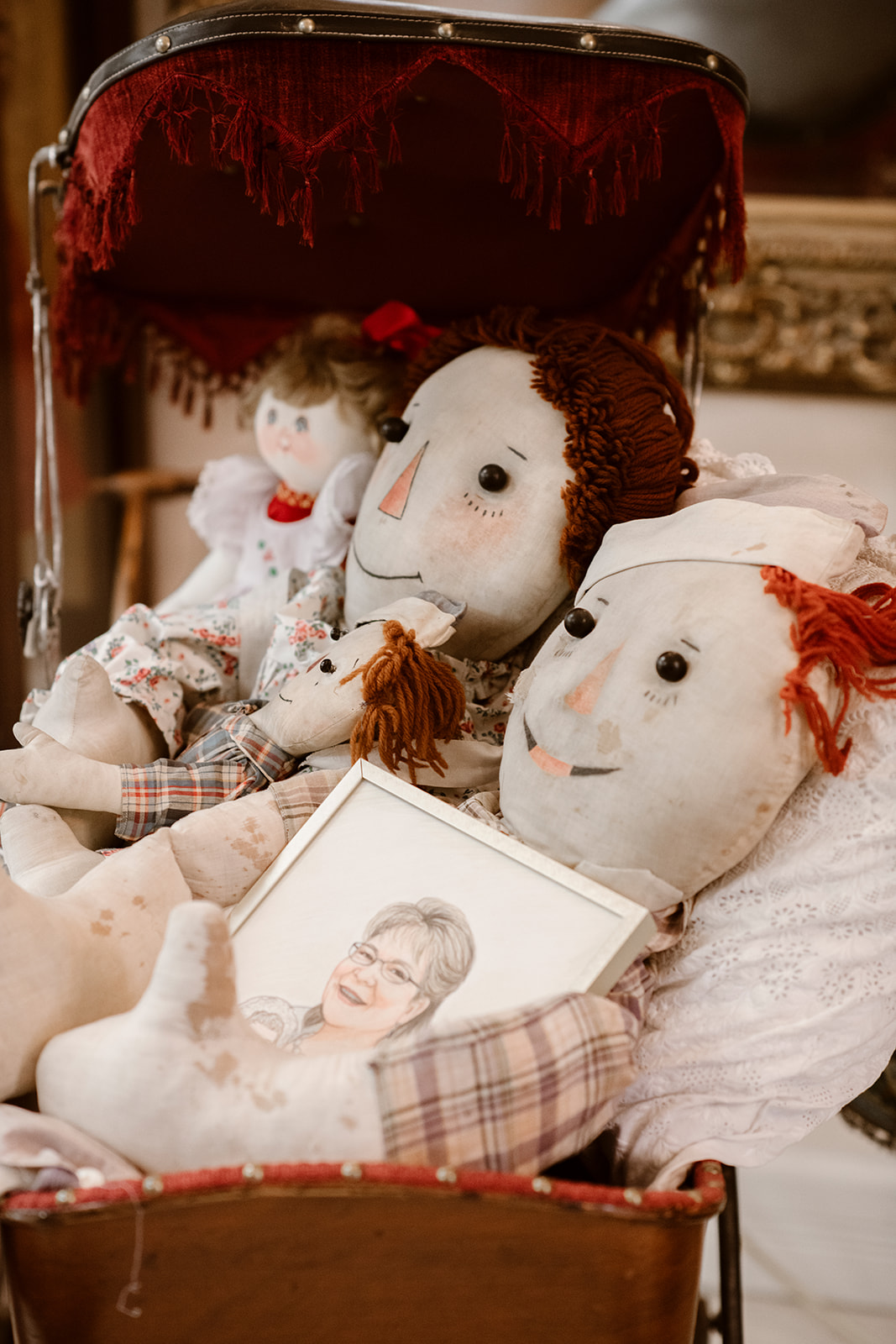
Let’s delve into the heartwarming history of Raggedy Ann and Andy, showcased here as RARE “Oversized” dolls by Volland, cradling a portrait of Diane Hoffman by Diana Vining.
Raggedy Ann first captured hearts in 1915, created by American author Johnny Gruelle for his daughter Marcella. The doll, with her red yarn hair and triangle nose, became the protagonist of Gruelle’s stories, which were published in 1918 to instant acclaim. Raggedy Ann was patented that same year and the dolls began production by the P.F. Volland Company as storybook companions.
Raggedy Andy, her equally lovable brother, joined the family in 1920, sporting a sailor suit and a contagious spirit of adventure. Together, the dolls became a symbol of childhood innocence, imagination, and enduring love. Their simple, yet expressive features and soft construction made them comforting companions and their popularity soared.
These “Oversized” Raggedy Ann and Andy dolls are exceptional examples of the early craftsmanship of Volland dolls. Standing much larger than the standard dolls, they were likely made for display purposes, adding to their rarity and charm.
The portrait they hold of Diane Hoffman, expertly crafted by artist Diana Vining, is a testament to Diane’s own legacy as a celebrated doll expert and beloved figure in the doll-collecting community.

Step into the whimsical world of Kewpie dolls, an enduring classic that continues to capture hearts! Created by illustrator Rose O’Neill in the early 20th century, these cherubic figures first appeared in Ladies’ Home Journal as whimsical, cupid-like characters. They quickly soared in popularity, leaping off the page and into the physical world in the form of dolls first produced in 1912.
Kewpies were distinct with their impish smile, side-glancing eyes, and tuft of hair on top. They were not just playthings; they symbolized joy and kindness, which Rose O’Neill felt strongly about spreading. The dolls were originally made from bisque in the early years and later transitioned to celluloid and, eventually, vinyl and rubber, making them accessible to many.
Here at Turn of the Century Antiques, we’re proud to have an adorable assortment of Kewpie dolls, ranging from miniature to more sizeable, cuddly figures. These Kewpies, with their signature look and playful spirit, remind us of the simpler pleasures of life and the universal language of love they were meant to convey.
Whether you’re a seasoned collector or just discovering the charm of Kewpies, these dolls are more than just toys; they are historic symbols of goodwill, with the power to bring a smile to anyone’s face.
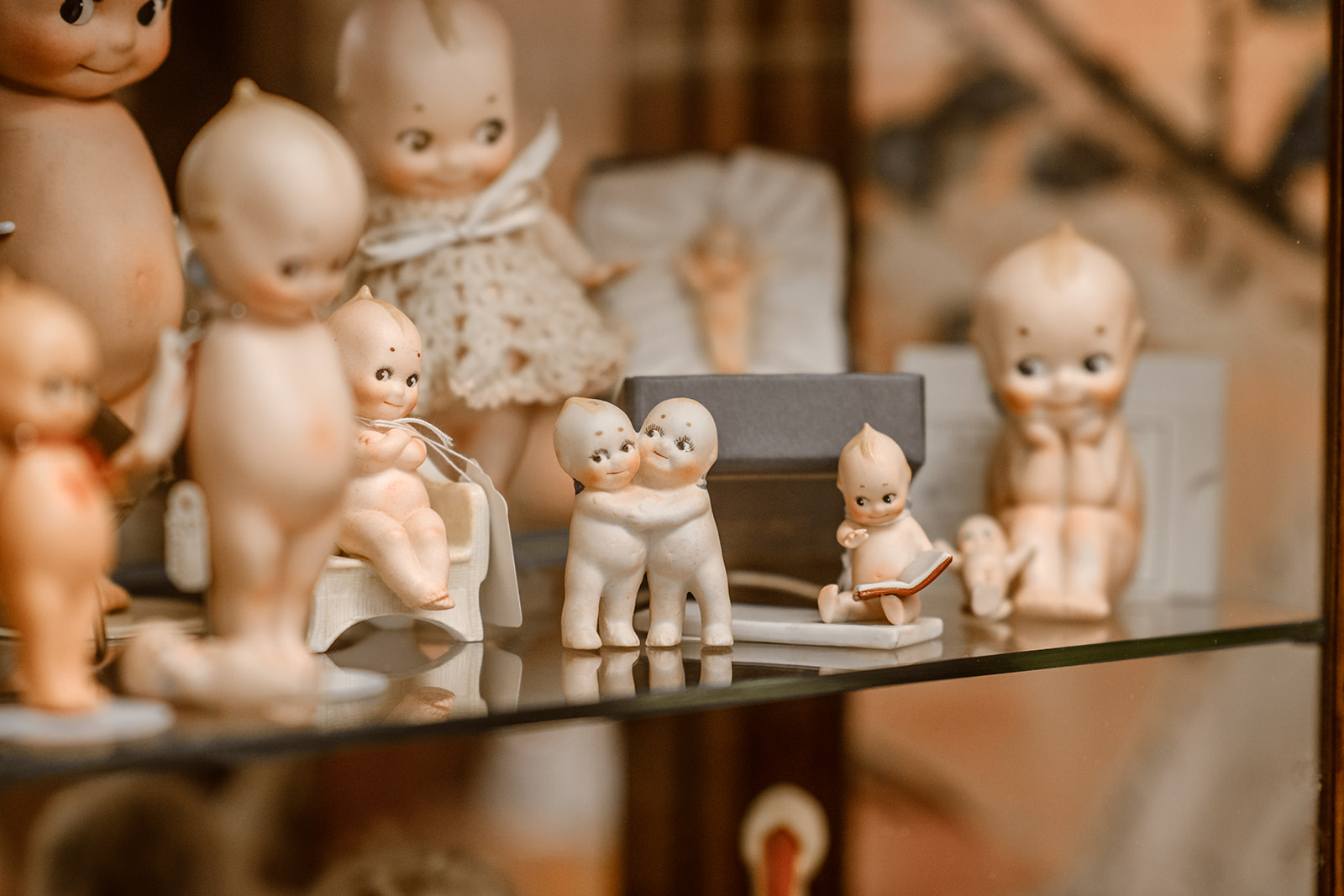
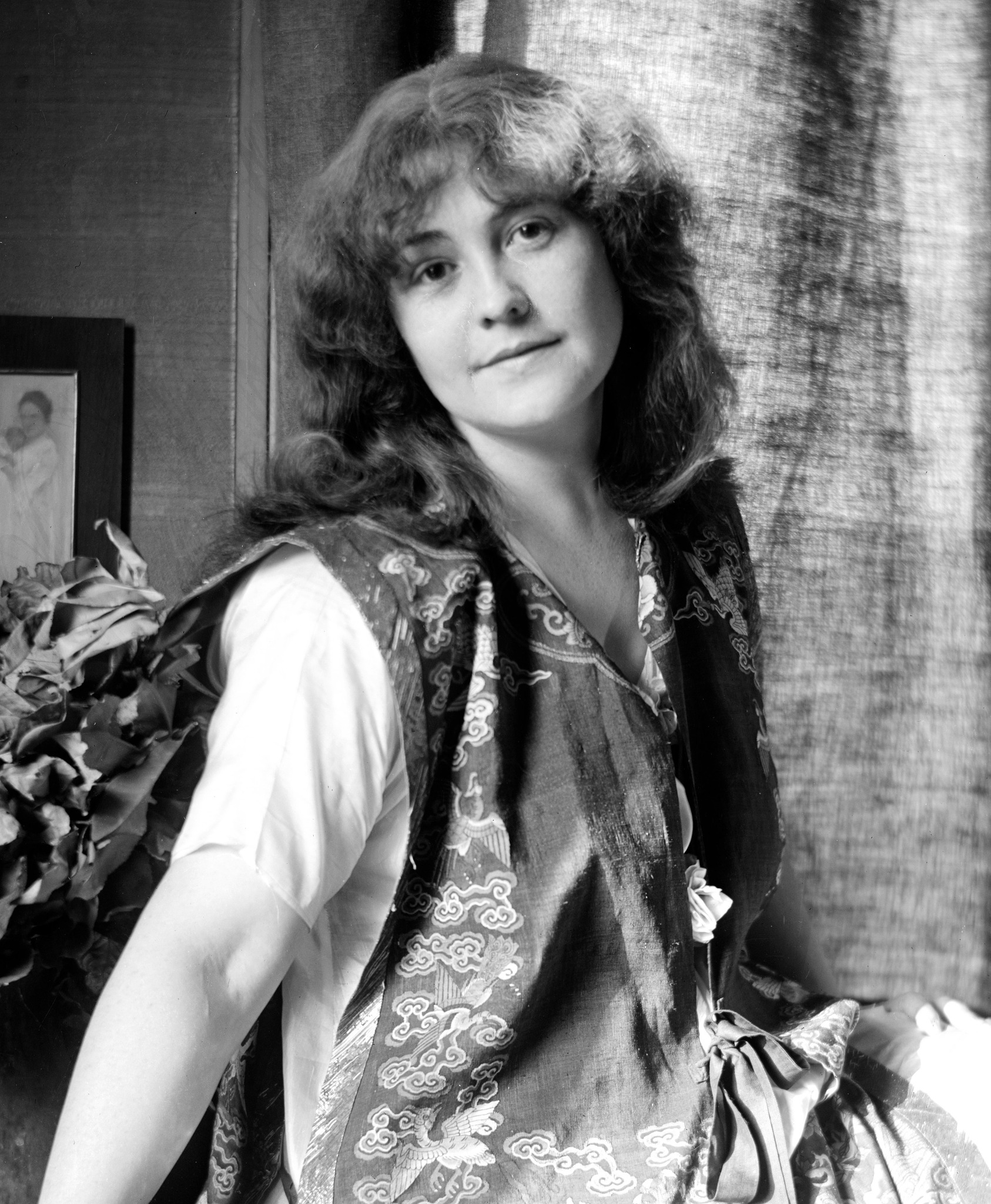
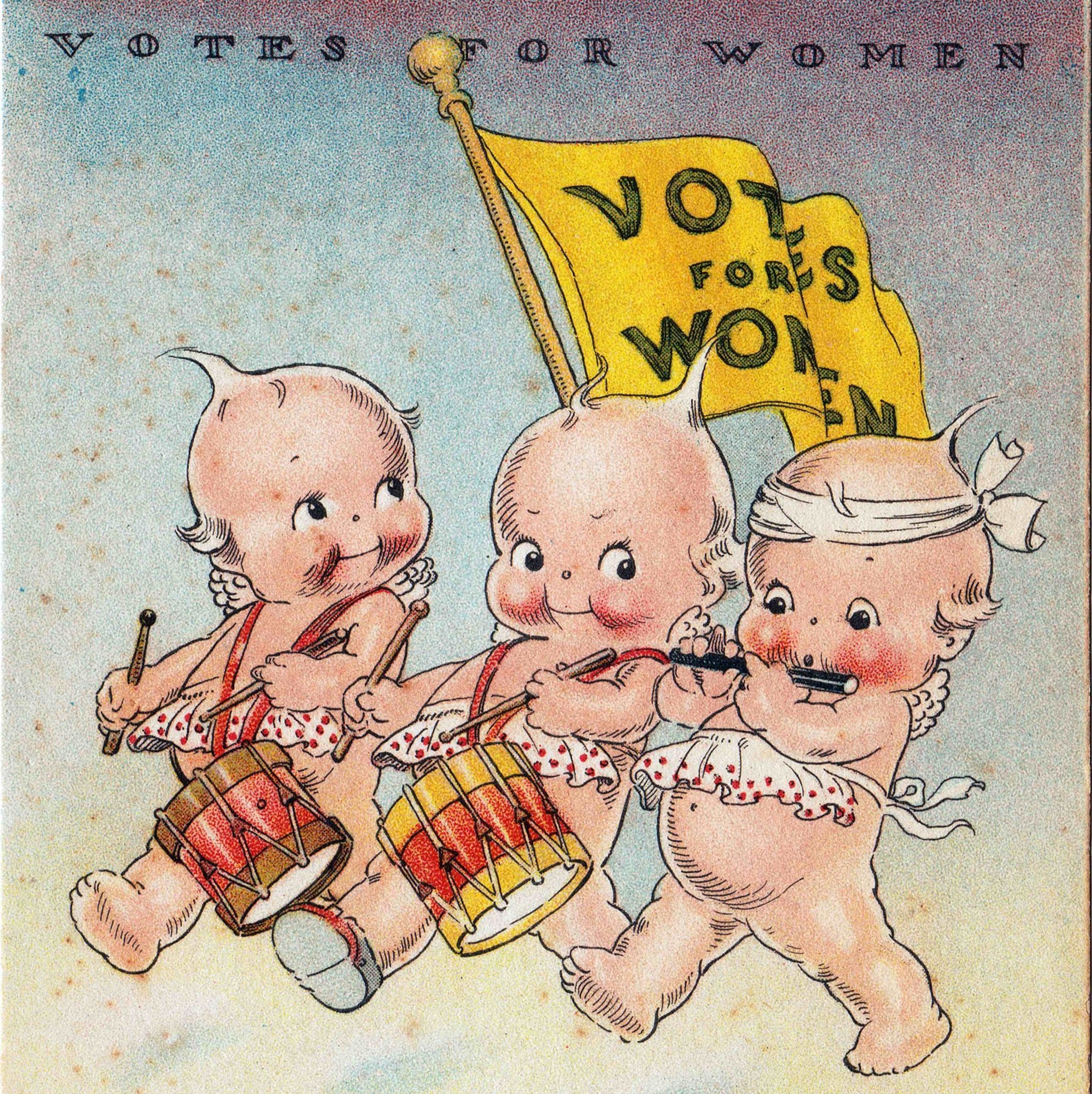

Let’s snuggle into the storied past of the Steiff Company, beloved creators of the teddy bear. Pictured here are two of Diane Hoffman’s favorite Steiff Teddy Bears, exuding the charm and quality that Steiff is known for.
The Steiff Company, founded in 1880 by Margarete Steiff, began in Giengen, Germany, with Margarete selling felt clothing. However, it was the creation of a small felt elephant intended as a pin cushion that led her down the path to creating toys. Steiff’s nephews joined the company, and with their support, Margarete expanded Steiff into a toy company that made plush animals.
The big break came in 1902 when Margarete’s nephew Richard created “Bear 55 PB”, the world’s first stuffed bear with movable arms and legs. Shortly after, at the 1903 Leipzig Toy Fair, an American buyer noticed the bears and placed an order for 3,000 units, launching the teddy bear craze in the United States. The name “Teddy” originated from President Theodore Roosevelt, after a famous incident where he refused to shoot a captured bear during a hunting trip.
Over the years, Steiff has become synonymous with high-quality plush toys, and their products are cherished by collectors worldwide. Steiff’s trademark, the “Knopf im Ohr” or “Button in Ear”, ensures authenticity and is a symbol of craftsmanship and heritage.
These Steiff bears from Diane Hoffman’s collection are more than just toys; they are pieces of a rich legacy that continues to bring warmth and joy to hearts around the globe.
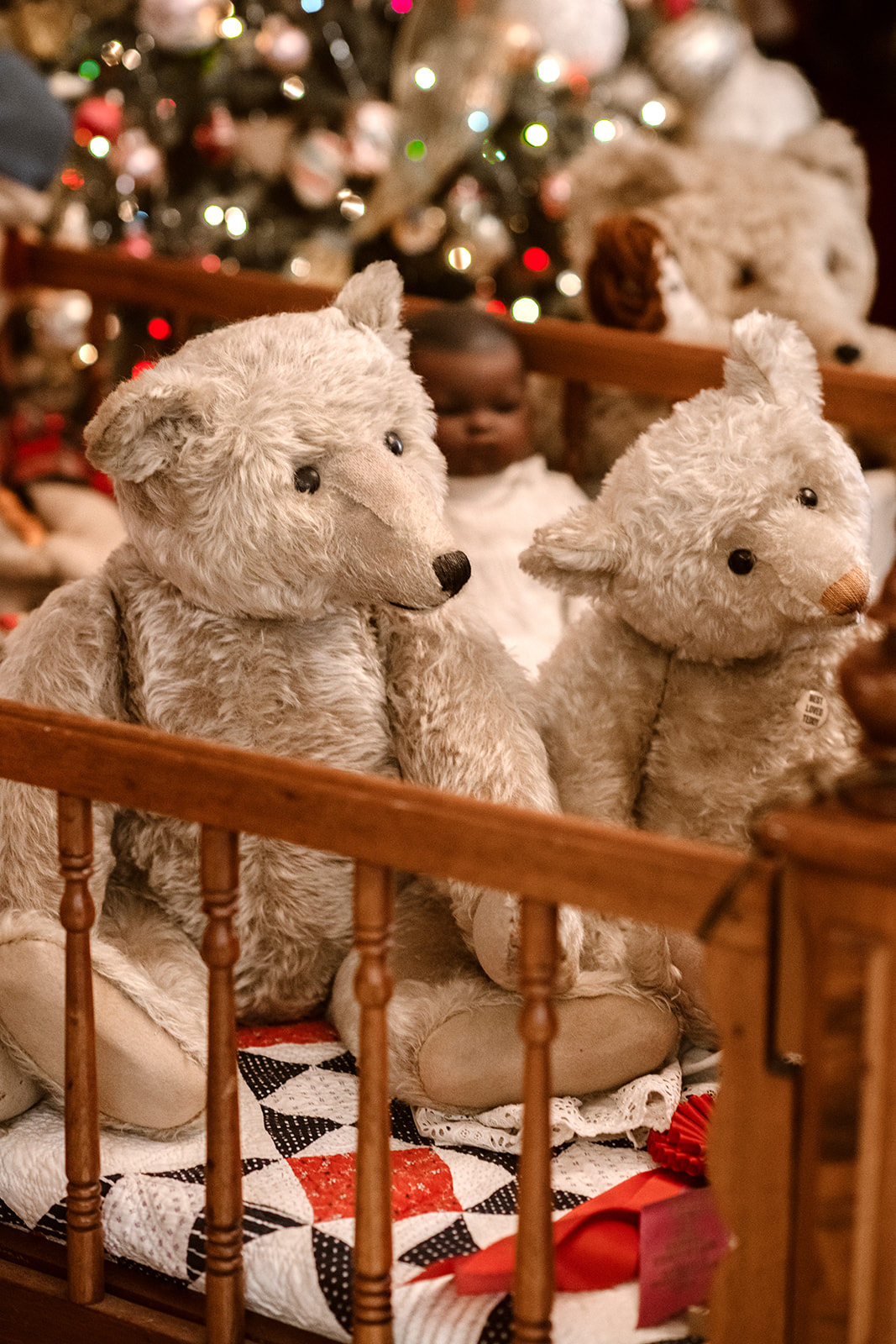
Dollhouses and miniatures have captivated the imaginations of both children and adults for centuries, and they hold a special place in the history of play and craftsmanship.
The origins of dollhouses date back to the 16th century, originally created as baby houses that were exacting replicas of stately homes, complete with miniature furnishings. These were not toys, but rather symbols of wealth and status among the European elite, used to display the finest miniature items one could possess.
By the 17th and 18th centuries, these baby houses evolved into dollhouses with more detailed interiors, and they began to be used as educational tools to teach children about household management and domestic affairs.
The 19th century brought industrialization, which made dollhouses more accessible to the public. They were no longer just bespoke creations for the wealthy but could be mass-produced and owned by families of various economic backgrounds.
In the 20th century, dollhouses and miniatures saw a surge in popularity as hobbies for adults, with collectors and artisans dedicating significant time and resources to creating and furnishing detailed replicas of homes. Miniature art also became recognized as a form of fine art due to the skill and precision required to create detailed pieces.
The artistic house by Eric Lansdown featured in our doll shop is a perfect example of this fine art. Lansdown’s houses are known for their whimsy and meticulous attention to detail, blending storytelling and craftsmanship.
Today, dollhouses and miniatures remain a beloved hobby, with collectors cherishing the tiny details that tell grand stories. They continue to be a source of wonder, reflecting the tastes and artistry of their creators, and a canvas for limitless creativity.

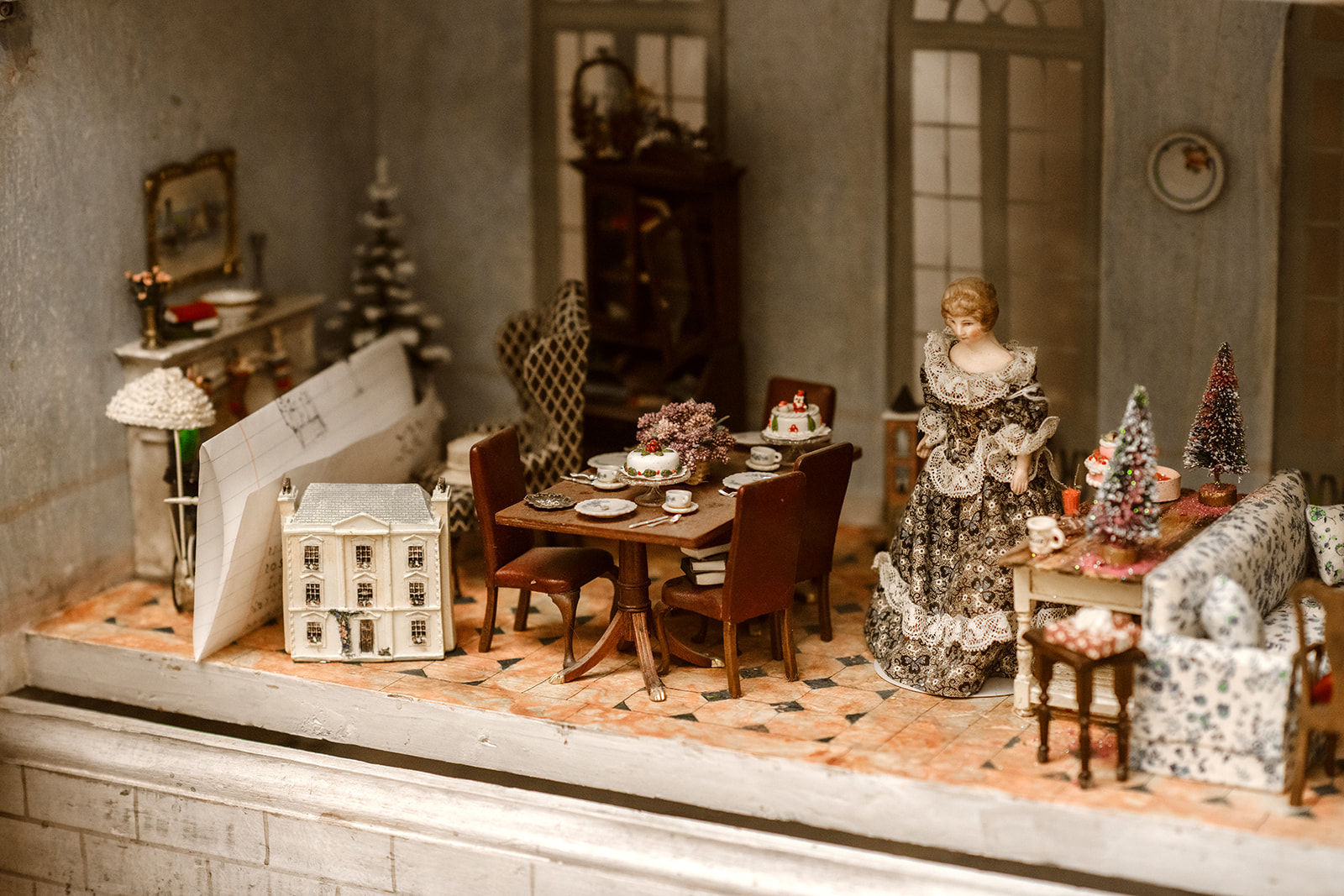
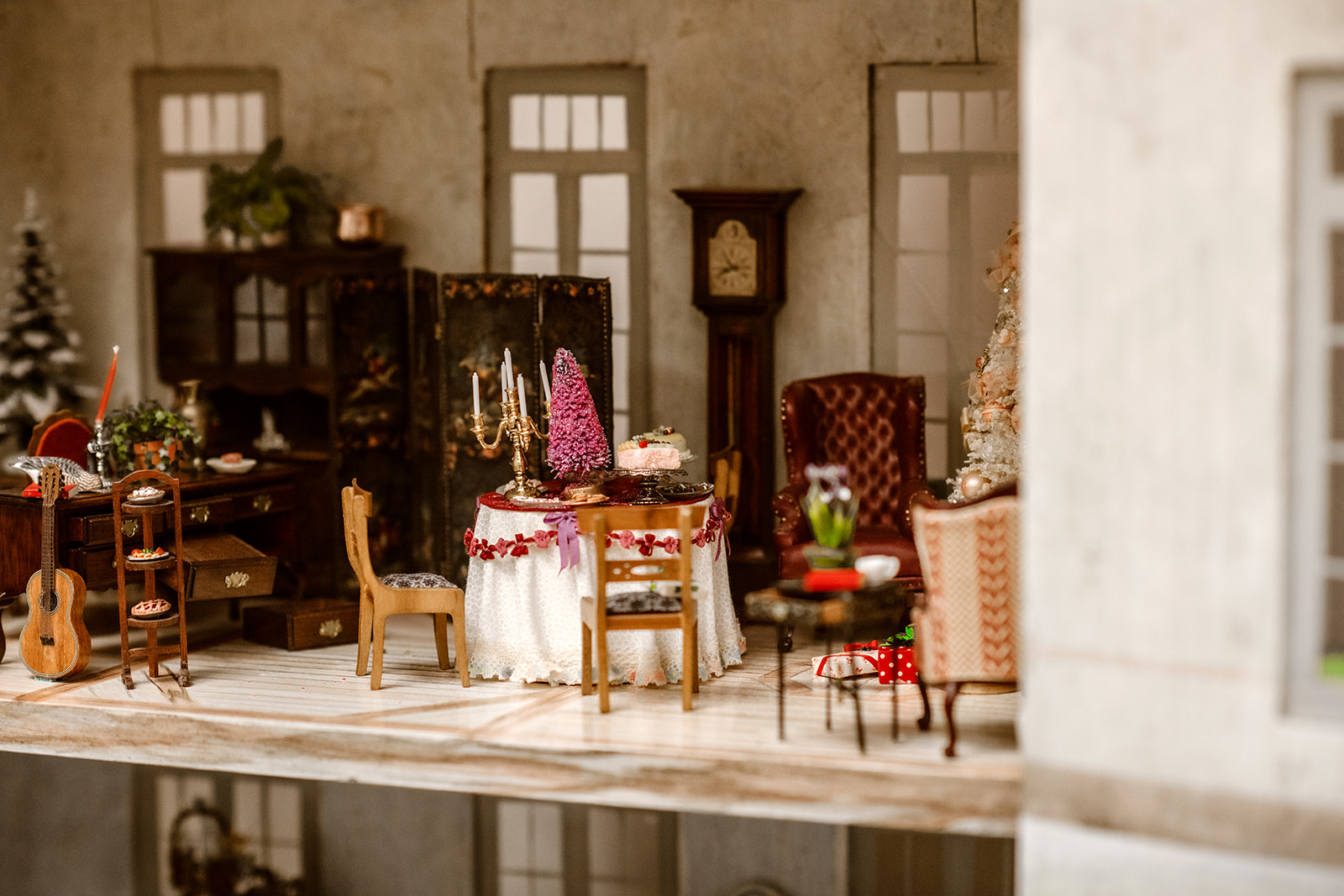
Disney collectibles have a magical history that intertwines with the evolution of the Walt Disney Company itself, enchanting fans and collectors around the world for generations.
The phenomenon began with the inception of Mickey Mouse in 1928. The first piece of merchandise to feature Mickey was a child’s writing tablet that hit the shelves shortly after the release of “Steamboat Willie,” the first Mickey Mouse cartoon with synchronized sound. Mickey’s instant popularity kicked off a merchandising frenzy that has continued to this day.
In the early 1930s, Charlotte Clark designed the first Mickey Mouse doll, and Disney collectibles began to take their iconic form. These early plush toys are now considered highly valuable. The 1930s also saw the first Mickey Mouse watch by Ingersoll, which became a sensational hit, saving the Ingersoll-Waterbury company from bankruptcy.
Over the decades, Disney collectibles expanded beyond Mickey to include a vast array of characters from Disney’s ever-growing portfolio of films and animations. From Snow White and the Seven Dwarfs to the latest Pixar creations, Disney toys, dolls, figurines, and limited edition items have become cherished keepsakes.
Vintage Disney items, especially those from the ’20s and ’30s, like the antique Mickey Mouse featured here, are particularly sought after. The craftsmanship, rarity, and the nostalgia they evoke, make them timeless treasures that are often the centerpiece of any Disney collection.
The antique Disney Mickey Mouse doll, with its early depiction of the now-iconic character, stands as a testament to the enduring love and admiration for Disney’s creations. Collecting these pieces is like owning a fragment of the joy and wonder that Disney has brought to the world for nearly a century.
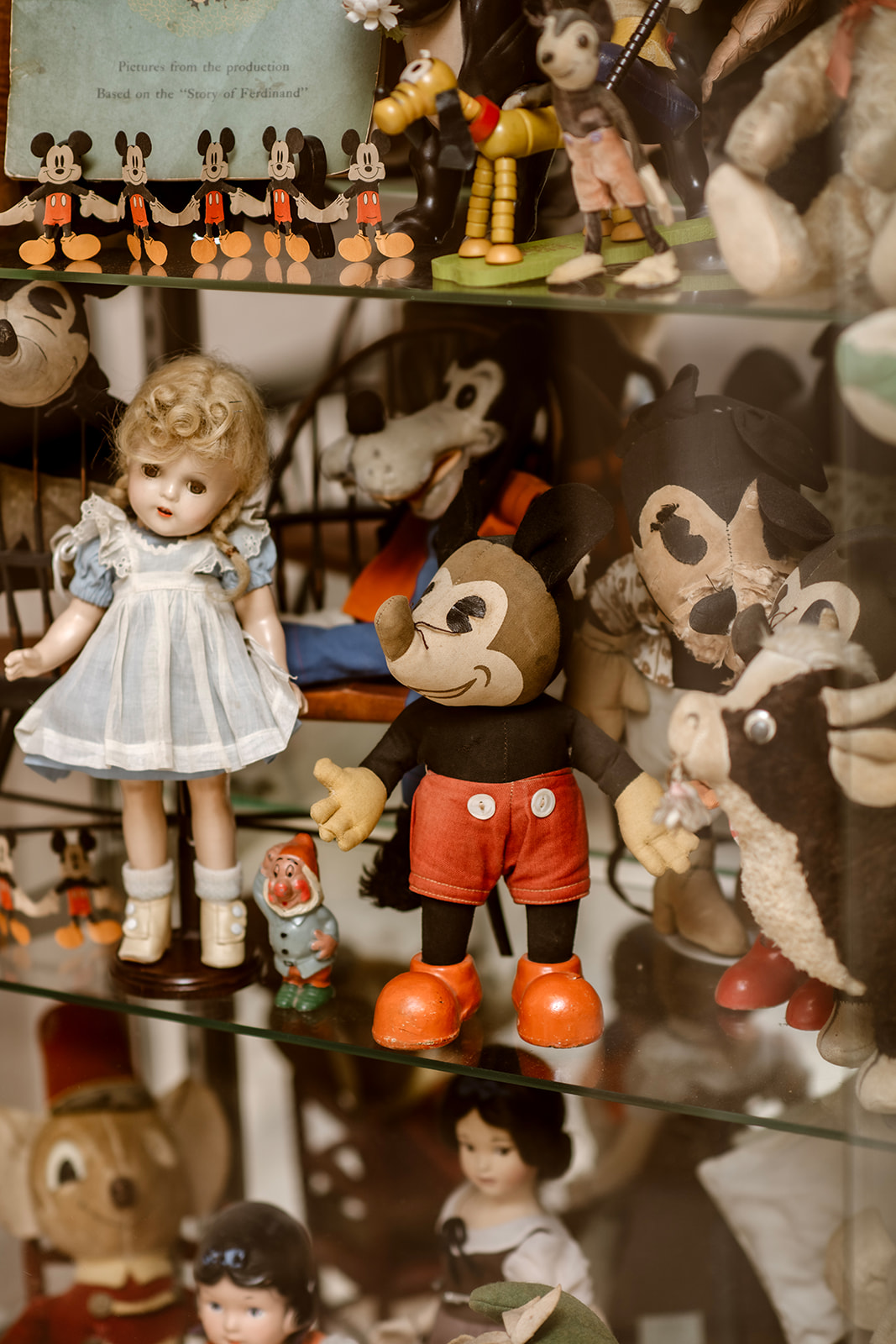
Doll collecting is a passion that dates back centuries and spans across many cultures. The earliest dolls were not just playthings but artifacts of cultural and religious significance. As time progressed, dolls became more sophisticated, mirroring the fashion and societal standards of the eras they represented.
By the 18th century, European dollmakers elevated the craft to an art form, with dolls dressed in the latest fashions of the Parisian courts. These dolls were often used as fashion models, showcasing the latest trends in miniature form. It wasn’t long before dolls became cherished collectibles for adults as much as they were beloved toys for children.
The 19th century saw the rise of porcelain dolls, which became highly coveted items for their beauty and intricate detailing. The Industrial Revolution made doll production more accessible, and dolls began to be manufactured in greater numbers, which meant more varieties became available for enthusiasts to collect.
In the 20th century, companies like Madame Alexander and the German-based Steiff broadened the appeal of doll collecting with their high-quality products. Doll collecting took on a new dimension with the introduction of character dolls from books, movies, and later on, television shows, allowing fans to own a piece of their favorite narratives.
Fast forward to today, and doll collecting has become a global phenomenon. With the advent of the internet and communities like the National Antique Doll Dealers Association, collectors can now connect, share, and trade with unprecedented ease.
The rich tableau you see here, featuring an assortment of dolls from different eras, captures the essence of doll collecting—a hobby that preserves history, celebrates artistry, and embodies the joy of storytelling through the ages.
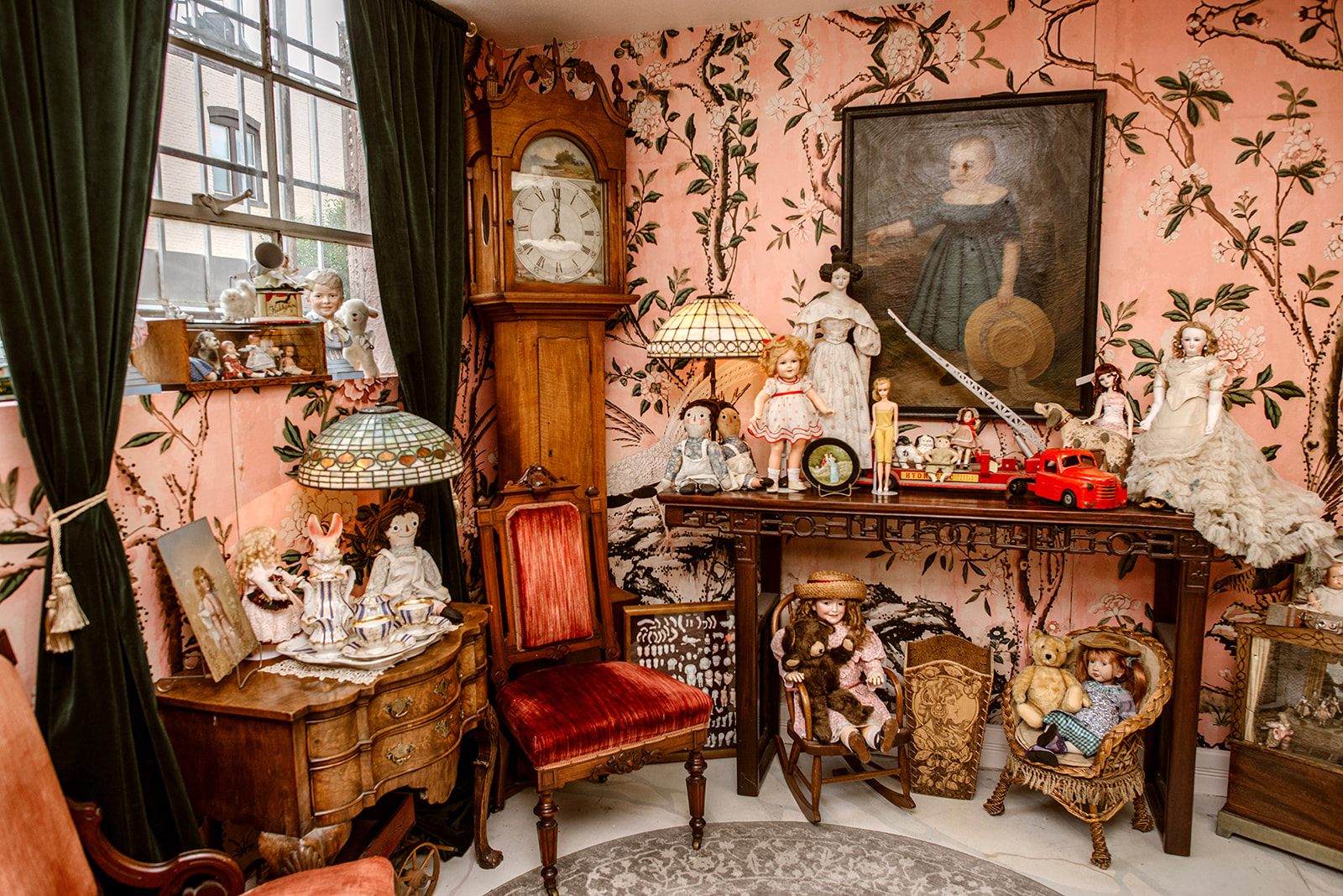
As we continue our NADDA takeover, today’s post is adorned with the spirit of yesteryears’ festive seasons. We present to you Diane Hoffman’s treasured antique feather tree, a centerpiece at Turn of the Century Antiques, graced with a collection of antique ornaments, each with its own story.
Diane loved Christmas and we never tire of sharing her wonderful tree, we hope you enjoy, too!
The tradition of adorning Christmas trees with ornaments dates back to the 16th century, with the Germans credited for bringing decorated trees into their homes. It was in the 19th century, in the German city of Dresden, that cardboard ornaments began to gain popularity. These “Dresden ornaments” were often intricately cut, embossed, and sometimes lacquered to resemble more expensive silver items. Their lightweight and decorative features made them the perfect adornment for the delicate branches of the traditional feather tree.
Feather trees themselves were a German innovation from the late 19th century, created as an eco-friendly alternative to chopping down evergreens. Crafted from dyed goose feathers wrapped around wire branches, these artificial trees were designed to mimic the look of a snow-covered tree while also providing a safe foundation for hanging ornaments.
The ornaments on Diane’s tree are likely to be as varied as they are historic, from colorful glass baubles blown by skilled artisans to spun cotton figures and hand-painted lead figurines. Each piece hanging from the feathered branches is a fragment of the past, a small work of art that reflects the customs, craftsmanship, and celebratory spirit of the times in which they were created.
Gazing upon this feather tree is like stepping back in time, enveloped in the warm glow of nostalgia and the magic of Christmas past. It stands not just as a festive decoration but as a loving homage to the artistry and innovation of antique Christmas décor.
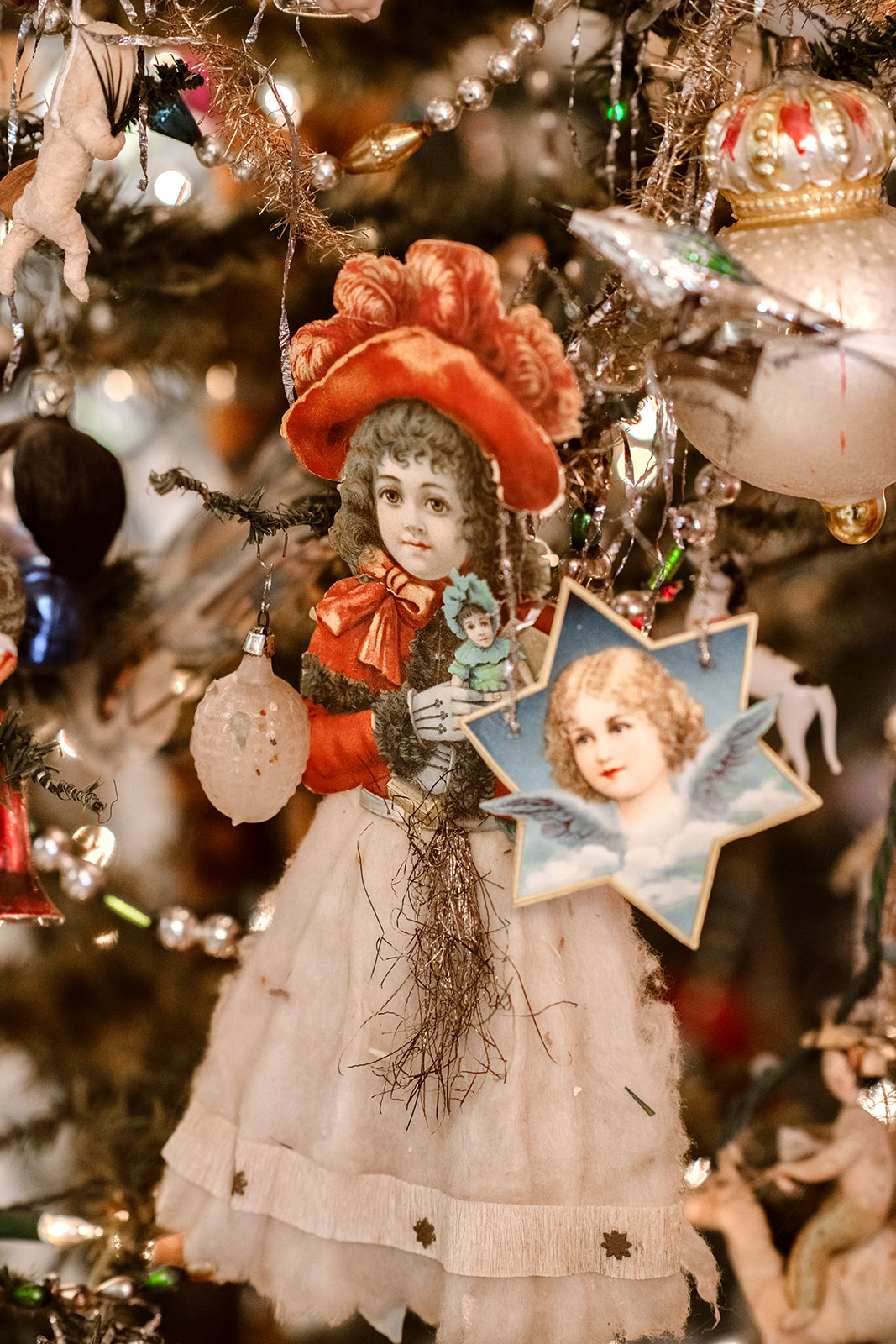
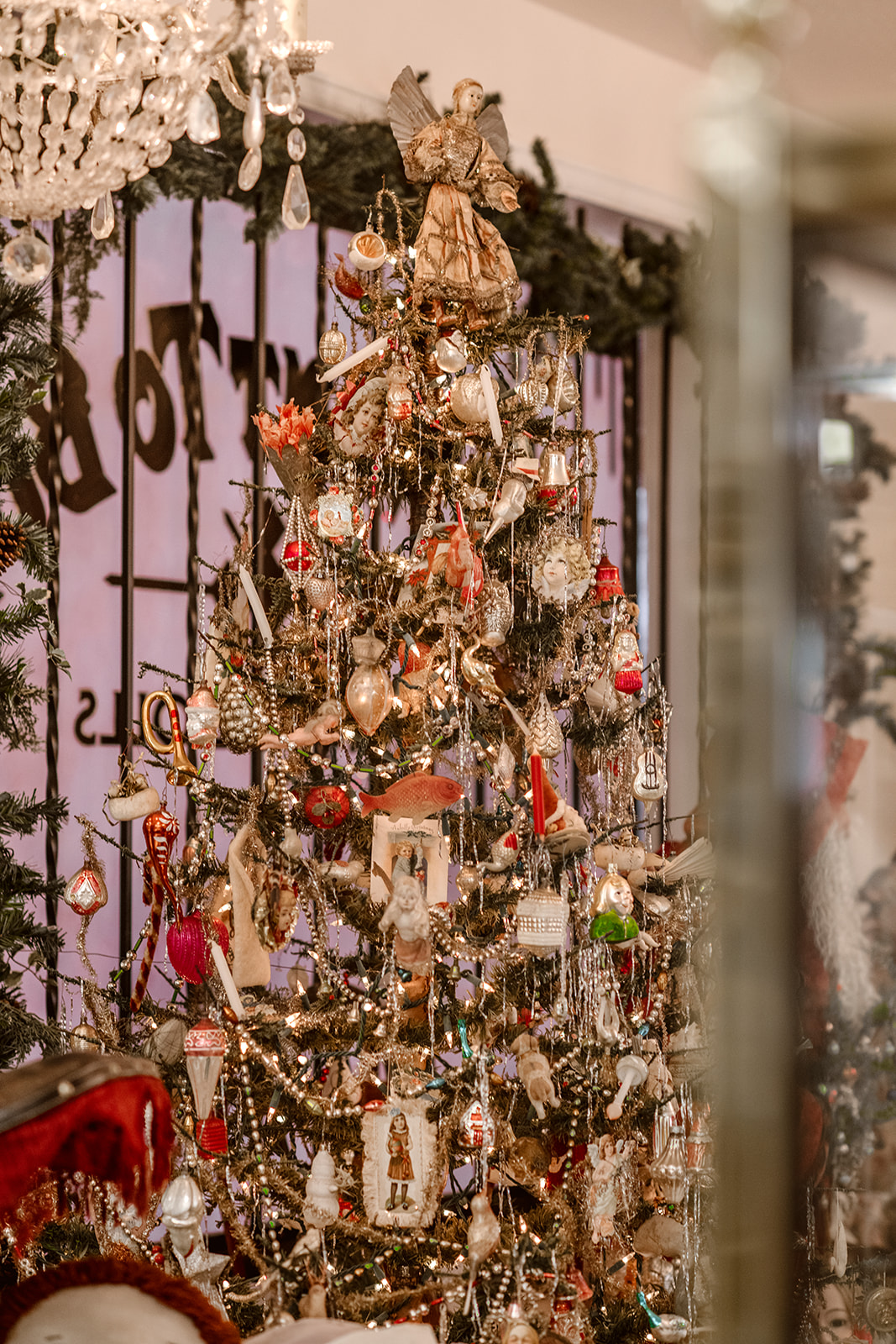
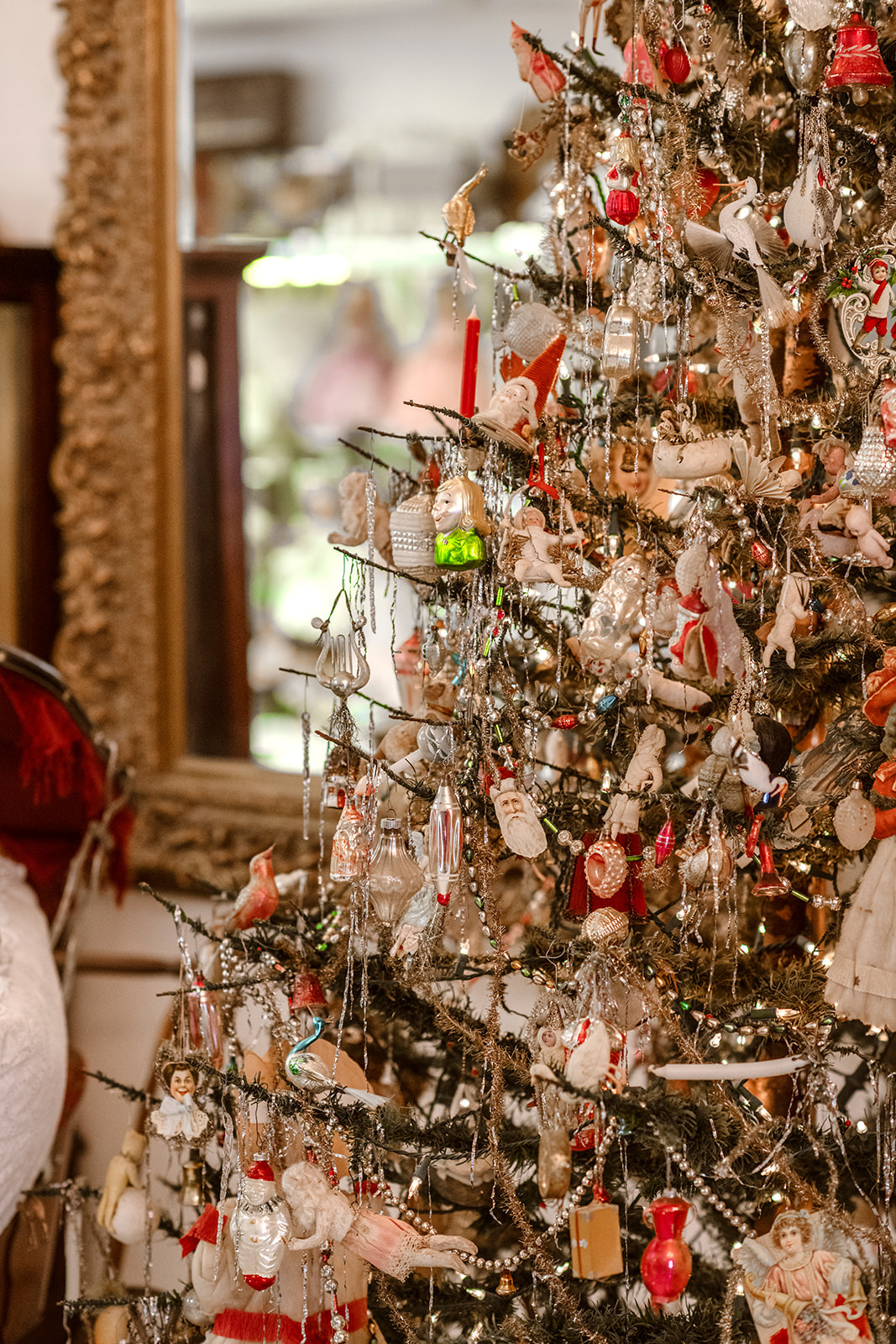
As we wrap up our NADDA page takeover, I want to extend a heartfelt thank you to everyone who joined us on this enchanting journey. It’s been a privilege to share the rich tapestry of doll collecting with you all, courtesy of Turn of The Century Antiques .
NADDA, the National Antique Doll Dealers Association, is an organization of passionate individuals who are not just stewards of history but also keepers of childhood magic. The members of NADDA, with their unparalleled expertise and dedication, create a community where the beauty of dolls is preserved, celebrated, and passed on to future generations.
To each member of NADDA, your commitment to excellence and authenticity keeps the spirit of doll collecting vibrant and alive. You are the curators of joy, the architects of wonder, and the guardians of a tradition that connects us to the simpler times of the past.
Doll collecting is more than a hobby; it’s a narrative of humanity told through the ages. Each doll is a story, a piece of art, a fragment of a dream. In our hands, these timeless treasures speak of love, care, and the human urge to cherish beauty in its most whimsical forms.
Thank you for being part of this community, for your enthusiasm, and for contributing to the preservation of these precious artifacts. May your collections continue to grow and may the stories they hold bring inspiration and delight to all who encounter them.
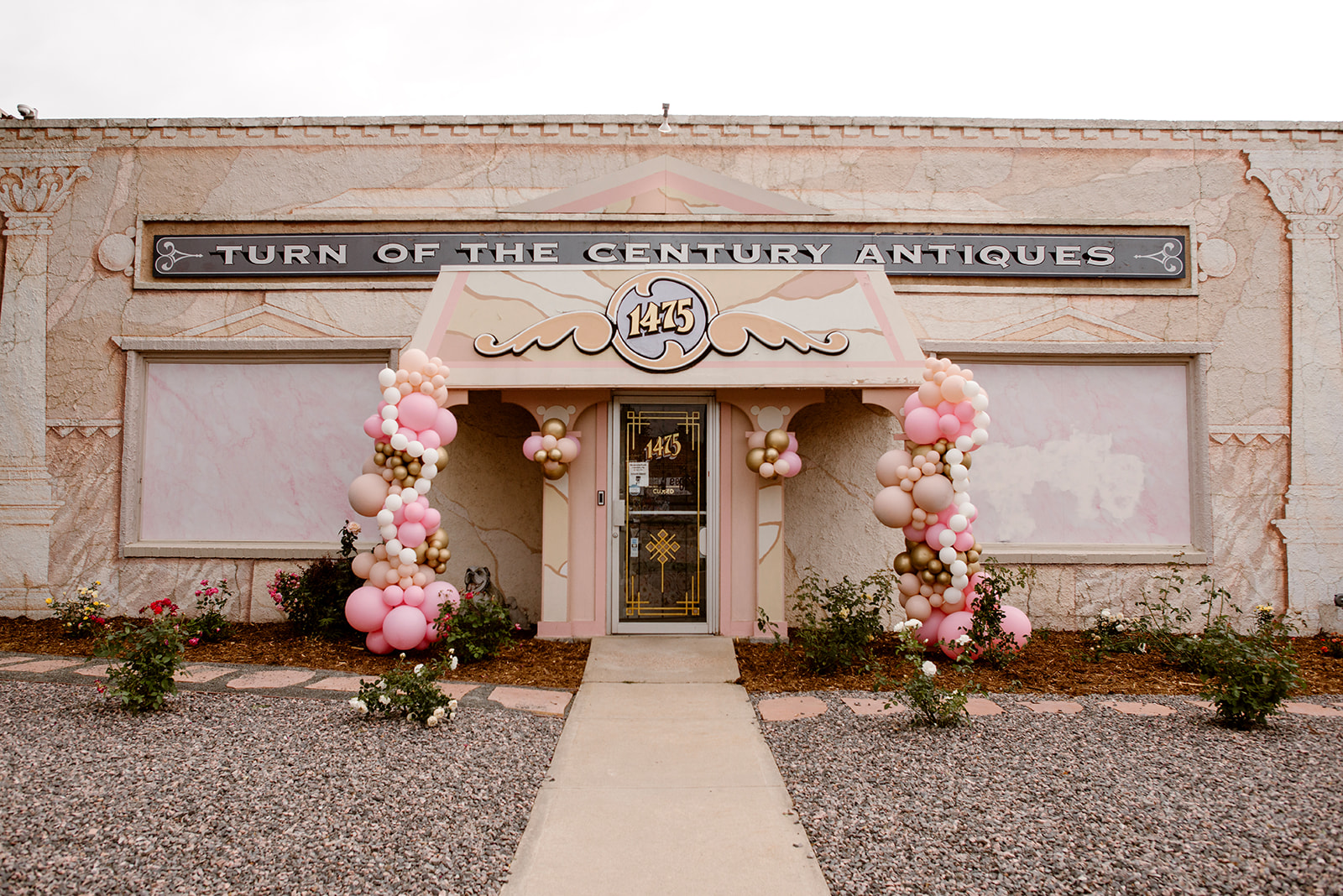
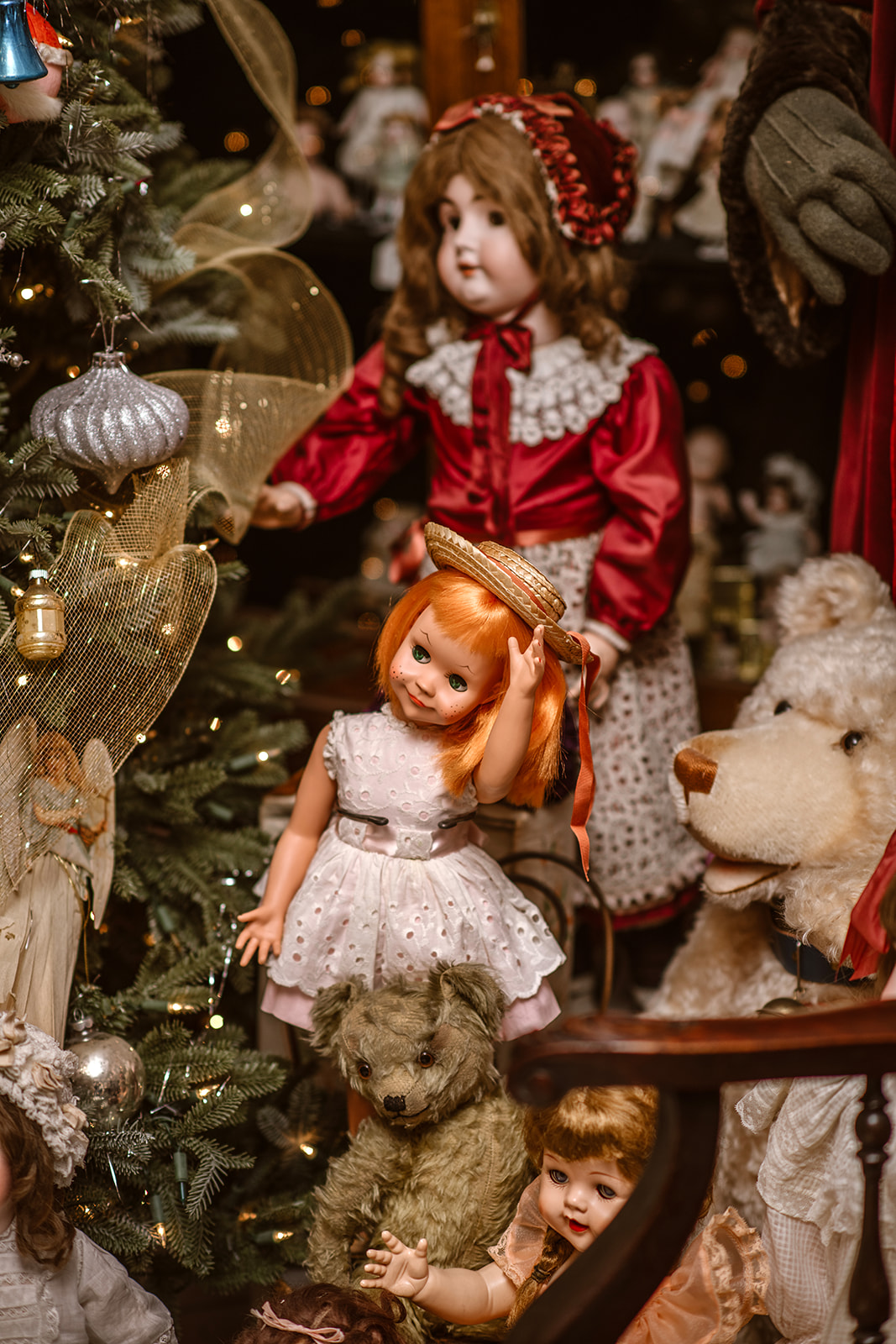
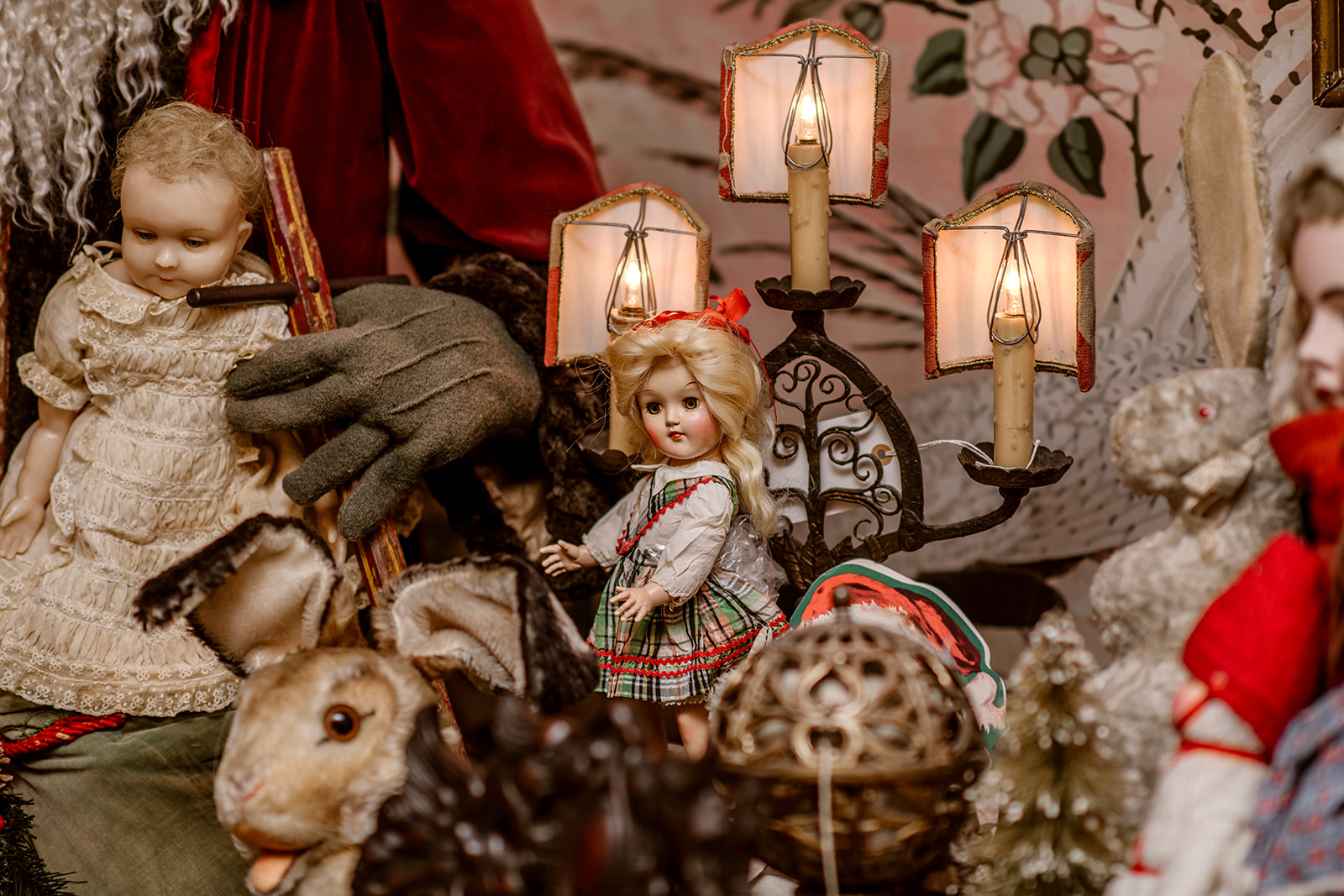
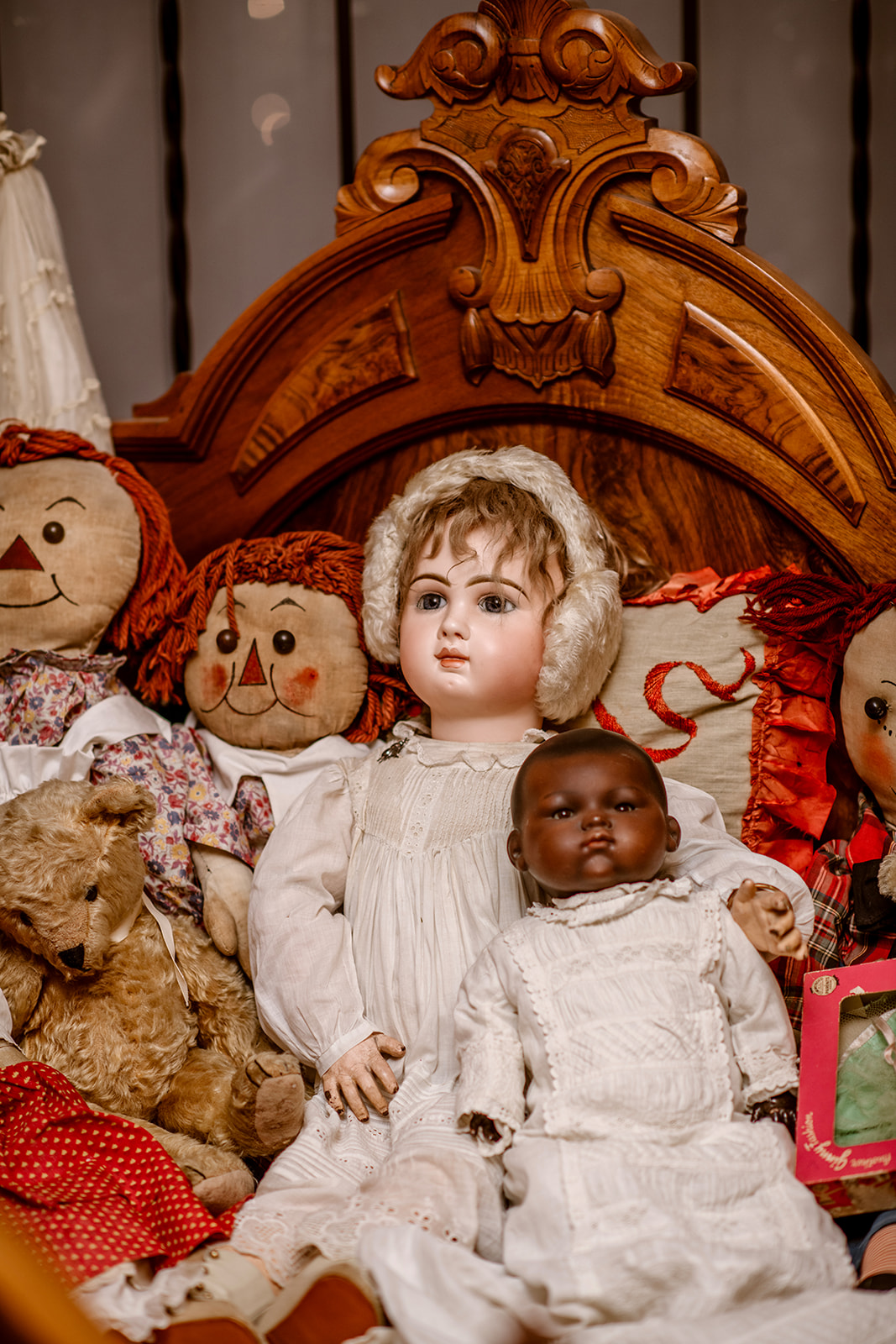
As we wrap up our NADDA page takeover, I want to extend a heartfelt thank you to everyone who joined us on this enchanting journey. It’s been a privilege to share the rich tapestry of doll collecting with you all, courtesy of Turn of The Century Antiques .
NADDA, the National Antique Doll Dealers Association, is an organization of passionate individuals who are not just stewards of history but also keepers of childhood magic. The members of NADDA, with their unparalleled expertise and dedication, create a community where the beauty of dolls is preserved, celebrated, and passed on to future generations.
To each member of NADDA, your commitment to excellence and authenticity keeps the spirit of doll collecting vibrant and alive. You are the curators of joy, the architects of wonder, and the guardians of a tradition that connects us to the simpler times of the past.
Doll collecting is more than a hobby; it’s a narrative of humanity told through the ages. Each doll is a story, a piece of art, a fragment of a dream. In our hands, these timeless treasures speak of love, care, and the human urge to cherish beauty in its most whimsical forms.
Thank you for being part of this community, for your enthusiasm, and for contributing to the preservation of these precious artifacts. May your collections continue to grow and may the stories they hold bring inspiration and delight to all who encounter them.
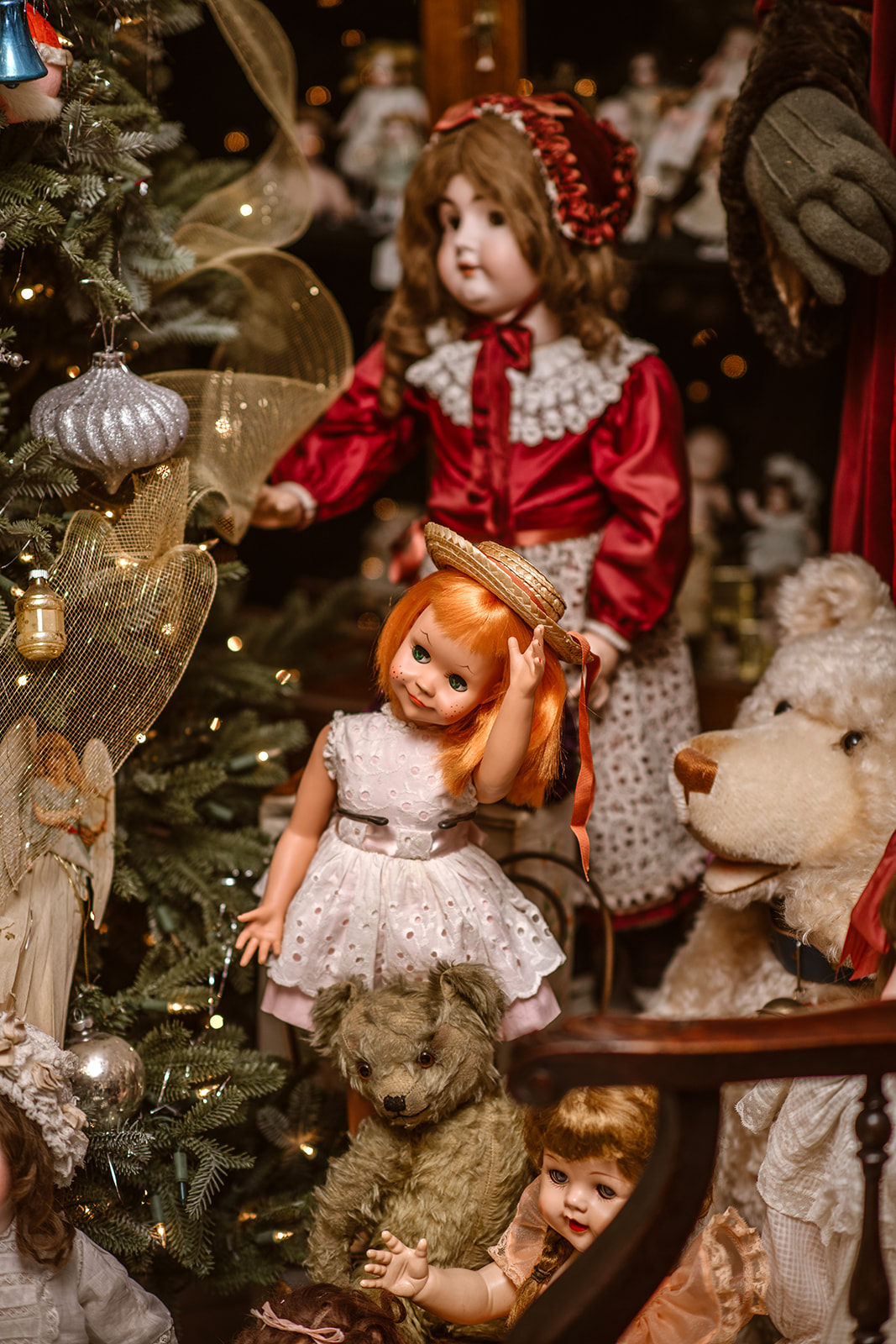
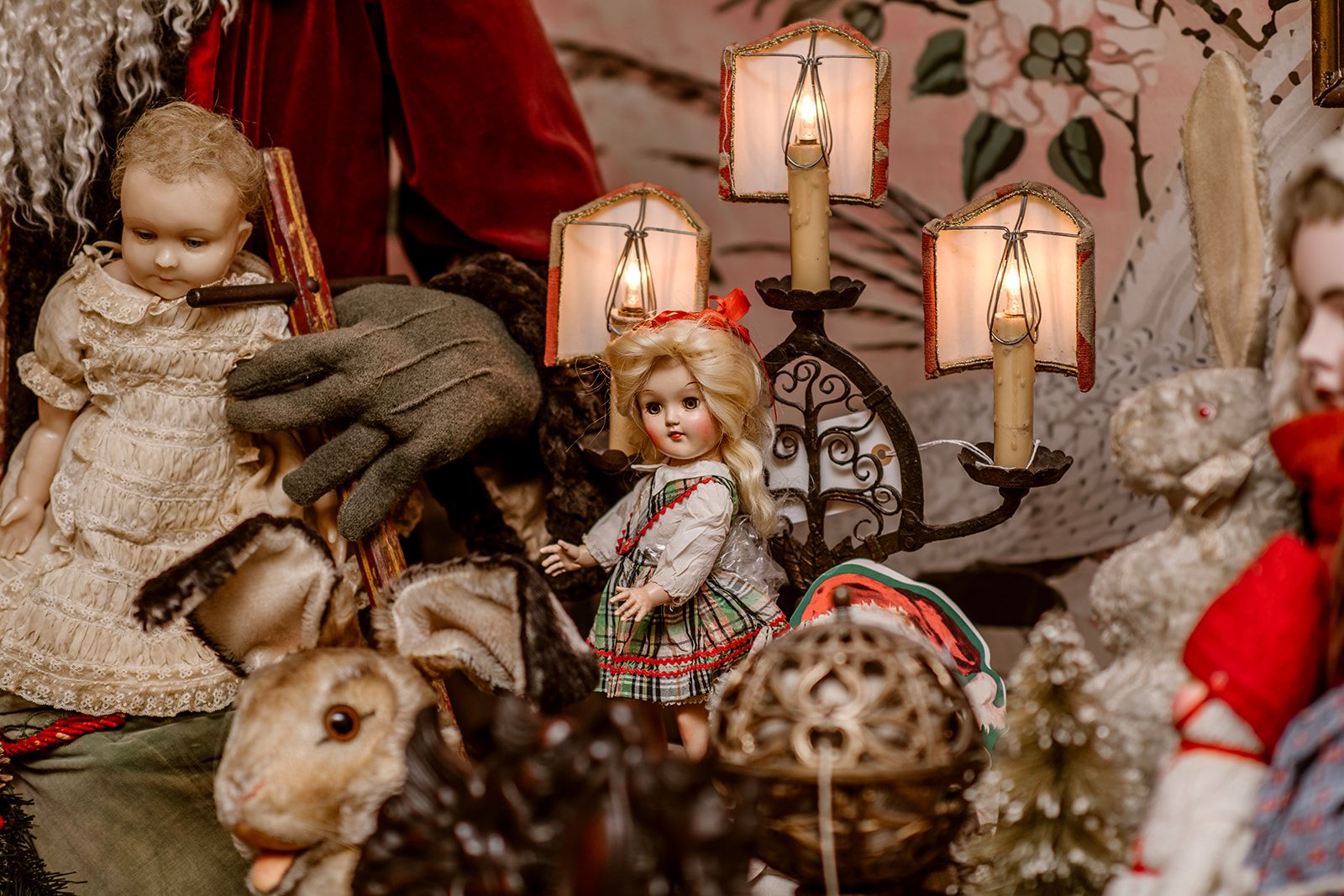
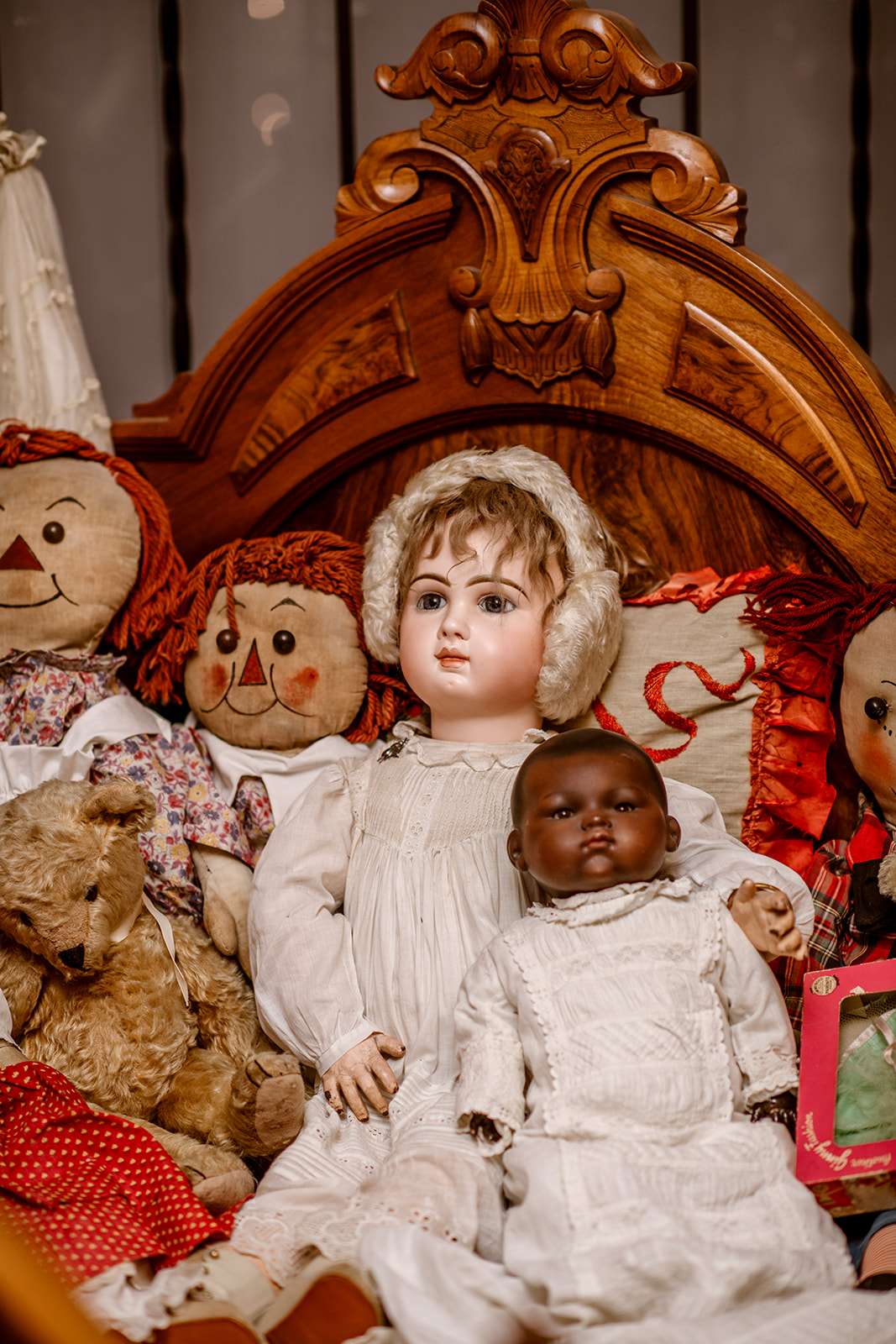
Gail Lemmon and Composition Dolls
March 2024
Composition dolls will take you on a journey through American history and culture as well as their link with German bisque dolls. My passion for composition dolls has grown from the historical and cultural insight they provide. When collecting composition dolls you will find so many of them portray historical figures, actors, actresses, and characters from literature. Giving collectors a unique view of American history and culture. Also, my Parents grew up in the era of composition dolls giving me a personal connection with them.
Before we begin, I want to dispel many collectors’ concerns and the misconceptions that these dolls will eventually develop cracks or crazing, and their condition will deteriorate over time. While it is true they are prone to these issues, the same holds true for many painted surface dolls, a wooden Schoenhut or an oil painted cloth doll, Papier-mâché dolls and even the bodies of antique bisque head dolls are all subject to the same issues. It is simply not true that it cannot be avoided with very little effort. It only requires three things, avoiding direct sunlight and other harsh lighting, maintaining a constant temperature, and controlling humidity levels. These are simple rules that should apply to any doll regardless of what they are made of. Since most homes have heating and air conditioning this is not usually a problem. However, in the winter the humidity levels may drop, this could affect your doll just as your skin will become dry. A simple gauge can be purchased at most hardware stores to monitor temperature and humidity levels. If the humidity is low placing a glass of water in your doll case will solve the problem. Simply using common sense and thinking of it as keeping your doll comfortable will go a long way. If you would not be comfortable sitting in the back seat of your car in 90-degree weather your doll will not be either.
As we move forward, I will take you through the History of American made composition dolls and their historical value. Composition dolls are truly the transitional doll. They dominated from 1909 when they began to take hold in the marketplace until the introduction of hard plastic dolls in 1949. A transitional point in history that saw two world wars, and a progressive time of social and industrial growth in America.
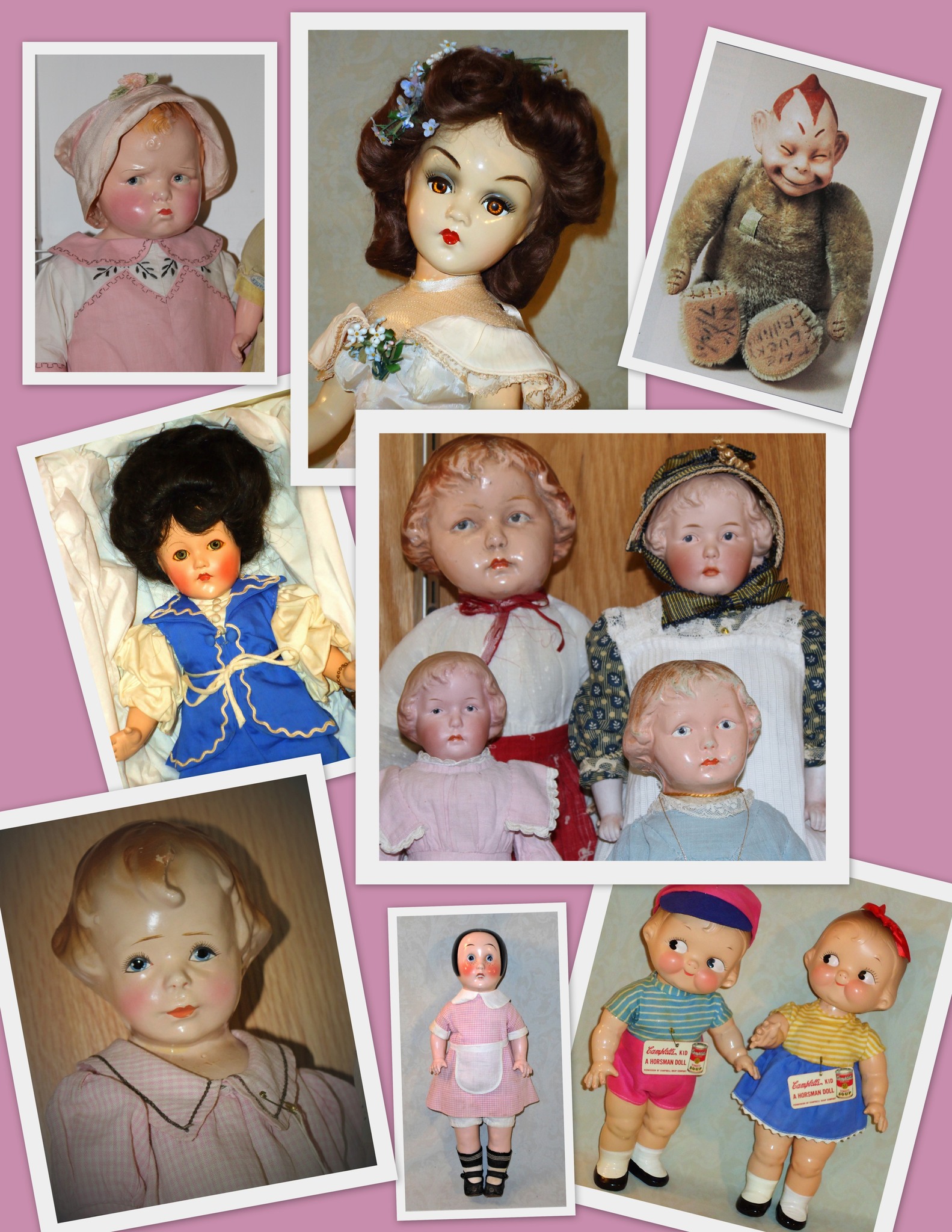
While American made composition dolls can be traced back to 1899 there is very little documentation on them during the first ten years and very few examples have survived. It wasn’t until 1909, when the “Billiken” craze gave the E.I. Horsman Company a boost in sales and encouraged others to try their luck at marketing composition dolls. At the same time the “Art Doll” movement in Germany had began to gain in popularity. The Art Doll movement began in an effort to produce dolls that looked more like real children. When you consider that many of the American doll companies had their roots in Germany, it’s easy to see how the practice of reproducing a German bisque character doll in a composition version became popular. Some of these dolls where made from the original German molds, others by making a mold from the head of an original doll and still others made from new molds made to resemble the German counterpart.
Another import innovation was the mama doll. These dolls were developed as the industry was striving to produce an unbreakable doll that was easier for children to handle. This doll also followed on the heels of German made, cloth bodied dolls such as the Kathe Kruse doll. Mama dolls are defined as having a voice box and a cloth body with swing legs. Georgene Averill of the Averill Manufacturing Co. first introduced this body type in 1918, the voice box was not added until 1921. Thus the first walking, talking mama doll was born. Sales soared and they remained a significant share of the doll market into the 1940’s. You will find examples of mama dolls, not only in American composition dolls but, across the industry. German examples include a bisque shoulder head Century doll by Kestner, the popular “Gladdie” doll and even the American made cloth doll “Kamkins”. This serves to further indicate the importance of this body style across the entire doll market. The pictures I’ve shared represent Billye Kin, German dolls that were reproduced as composition dolls, and Mama dolls. As we move forward I will be sharing several celebrity dolls as well as the major manufactures of composition dolls.
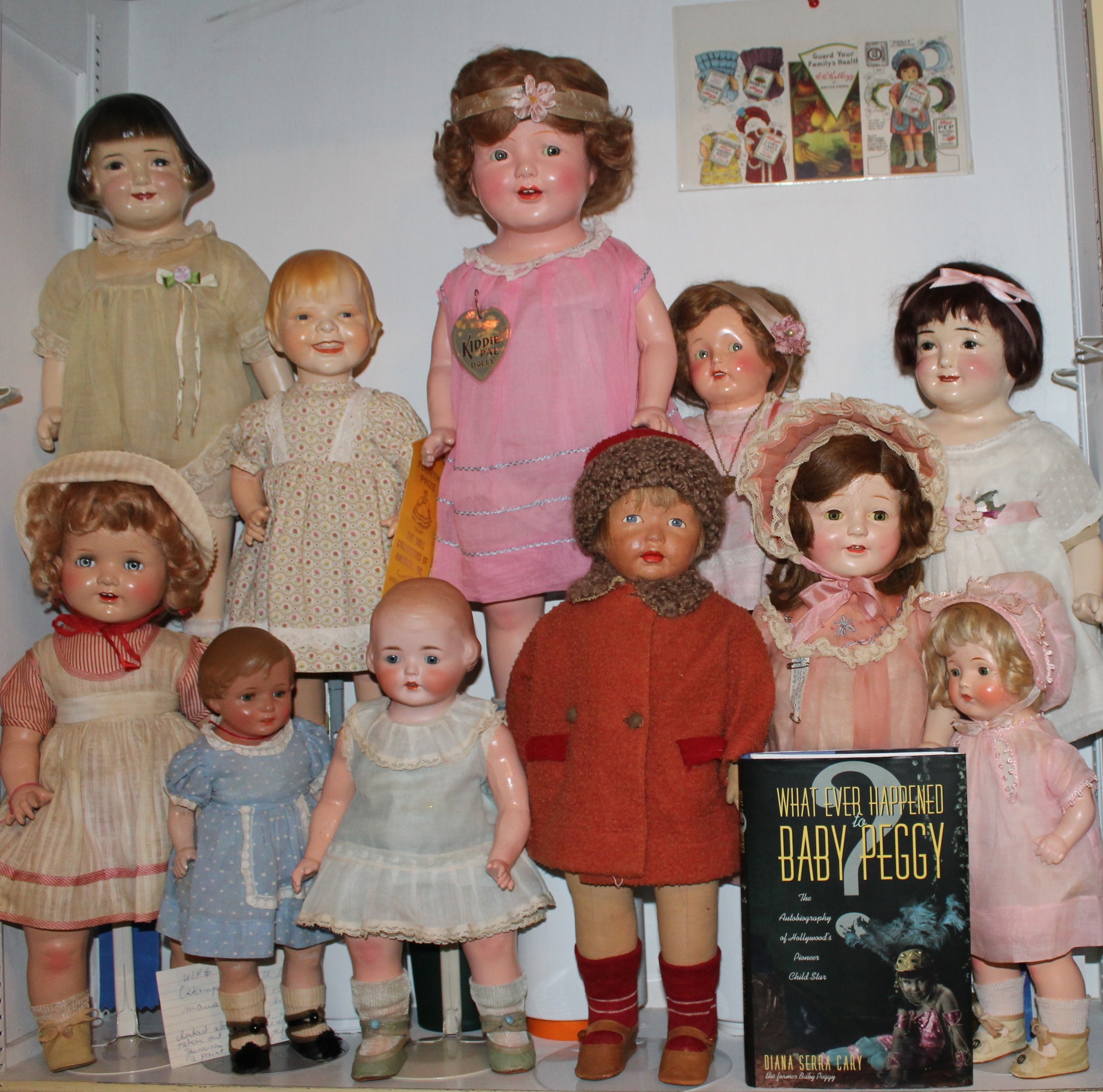
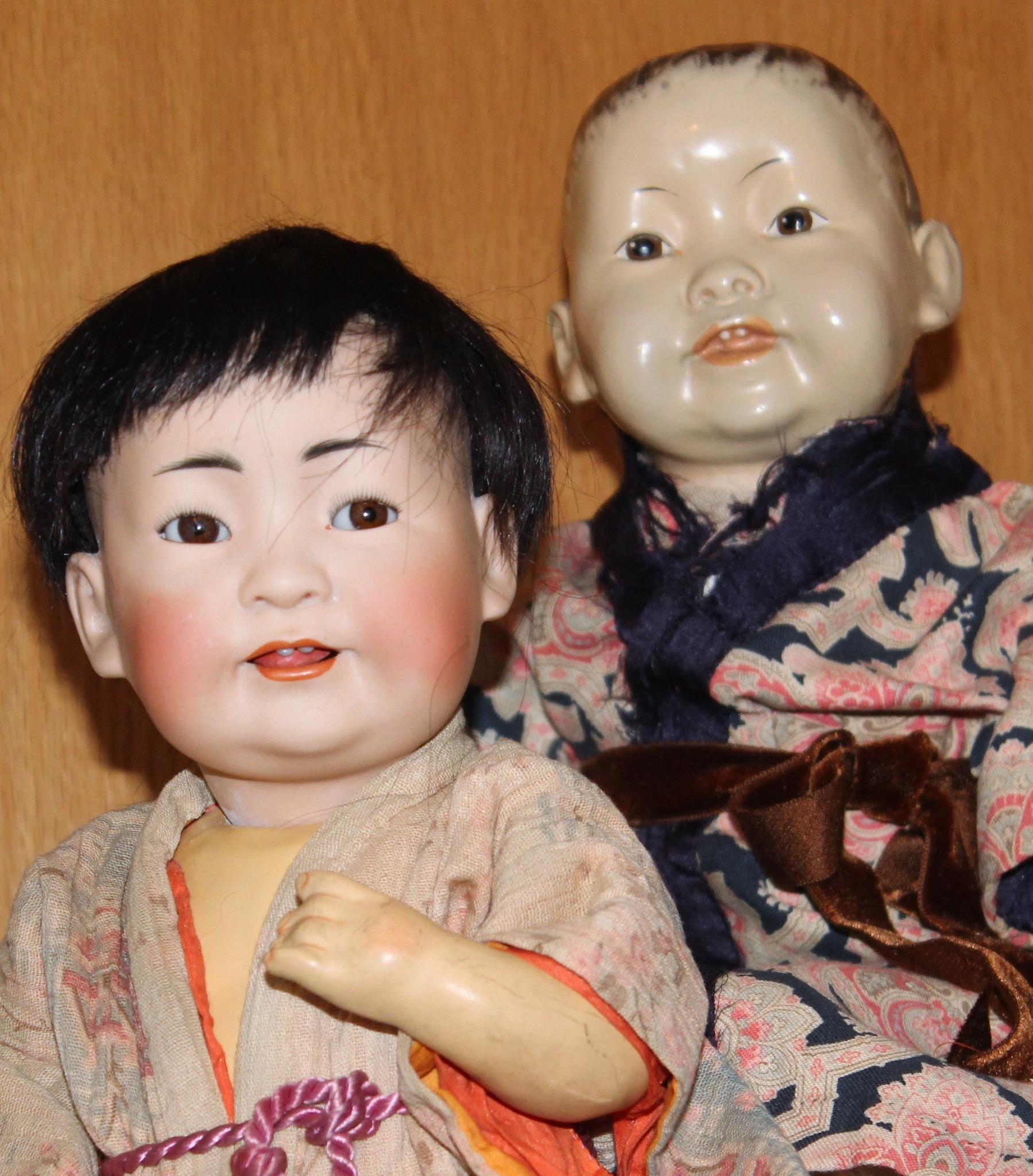
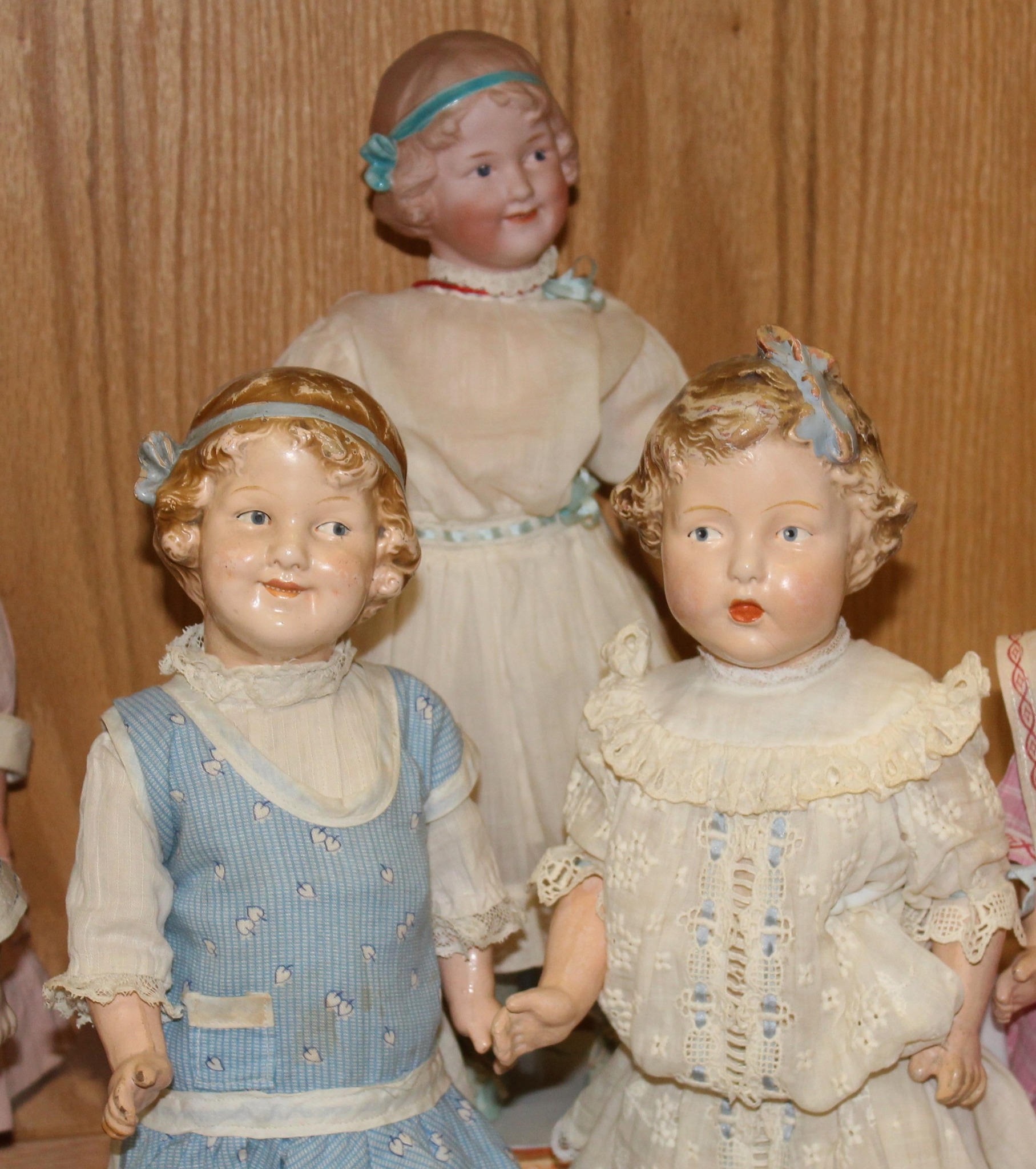
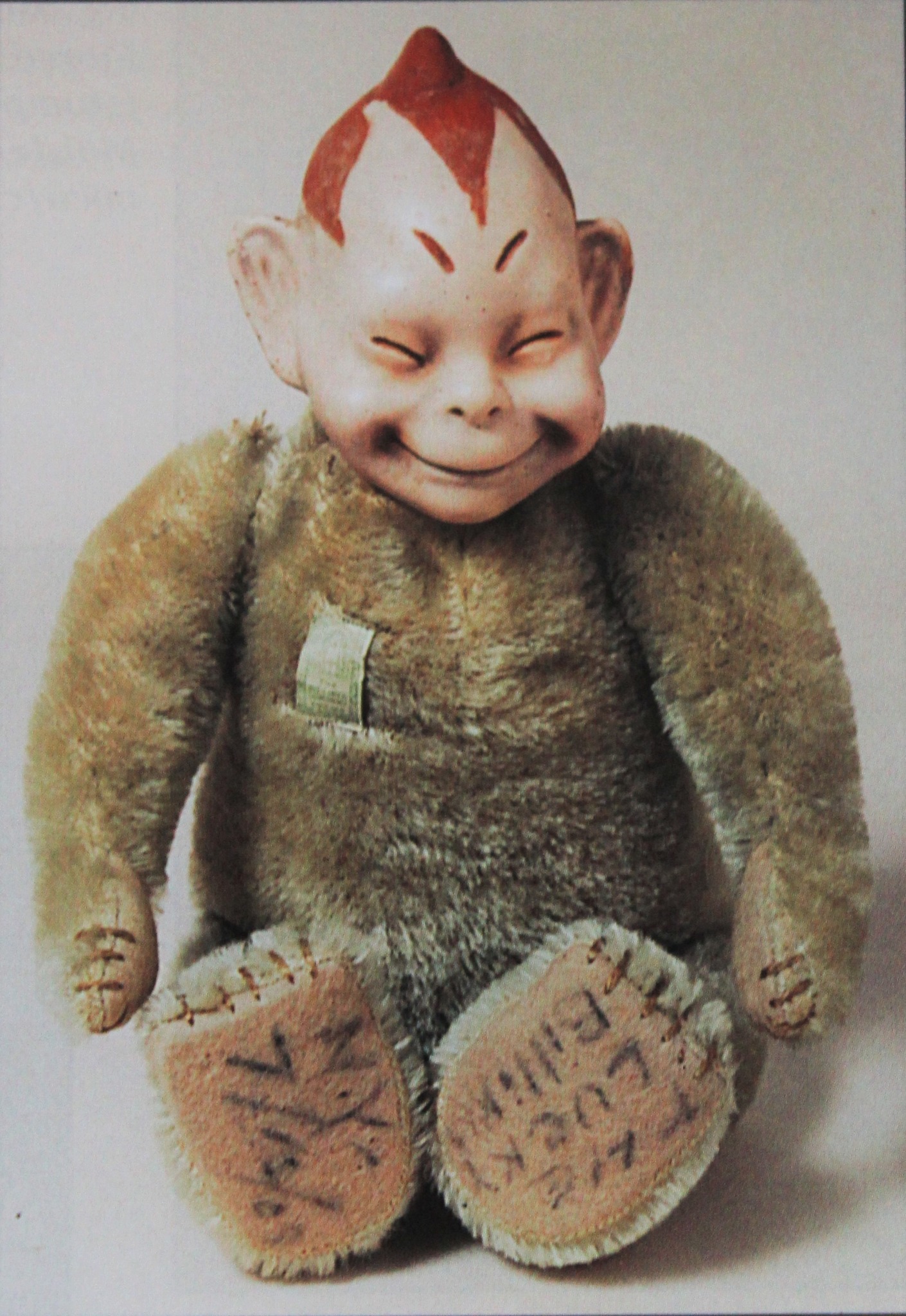
As they say, “collect what you like.” Your collection of composition dolls can be as broad or specific as you like. You may want to have a wide variety of types of dolls and manufactures, a collection that follows the history of the composition doll. You could follow a certain manufacture such as Ideal or be more specific with a collection of just Shirley Temple dolls. Composition dolls are available in a wide range of prices from under fifty dollars to the thousands, they offer something to fit every budget.
As with any doll, condition and originality are key when selecting a composition doll to purchase. Some minor crazing is excepted however you must also consider the rarity of the doll. It’s hard to find some of the rarest and earliest dolls in any condition. If you pass on one of these dolls, consider that you may never see it again. Likewise, if it is a more common doll that is readily available, you’ll want it to be in near mint condition, keeping your budget in mind as a mint doll may cost two or three times that of one in average condition.
Effanbee Historical Dolls are the perfect example. In 1939 Effanbee produced 3 sets of 21inch Historical dolls depicting fashions from an Indian maid of 1492 through the sophisticate of 1939, each set included thirty dolls, with only 3 of each period. They were displayed across America in department stores, and at the same time 14inch replicas were offered for sale at the bargain price of $4.98 each. While the 14” replicas are more readily available, the 21” dolls are very scarce. The 14” replicas are worth hundreds of dollars, however the 21” dolls are worth thousands of dollars, so you may be more forgiving of their condition.
Pictured is the 14” replica with a painted eye Ann Shirley head and a 21” doll with a painted eye American Child head.
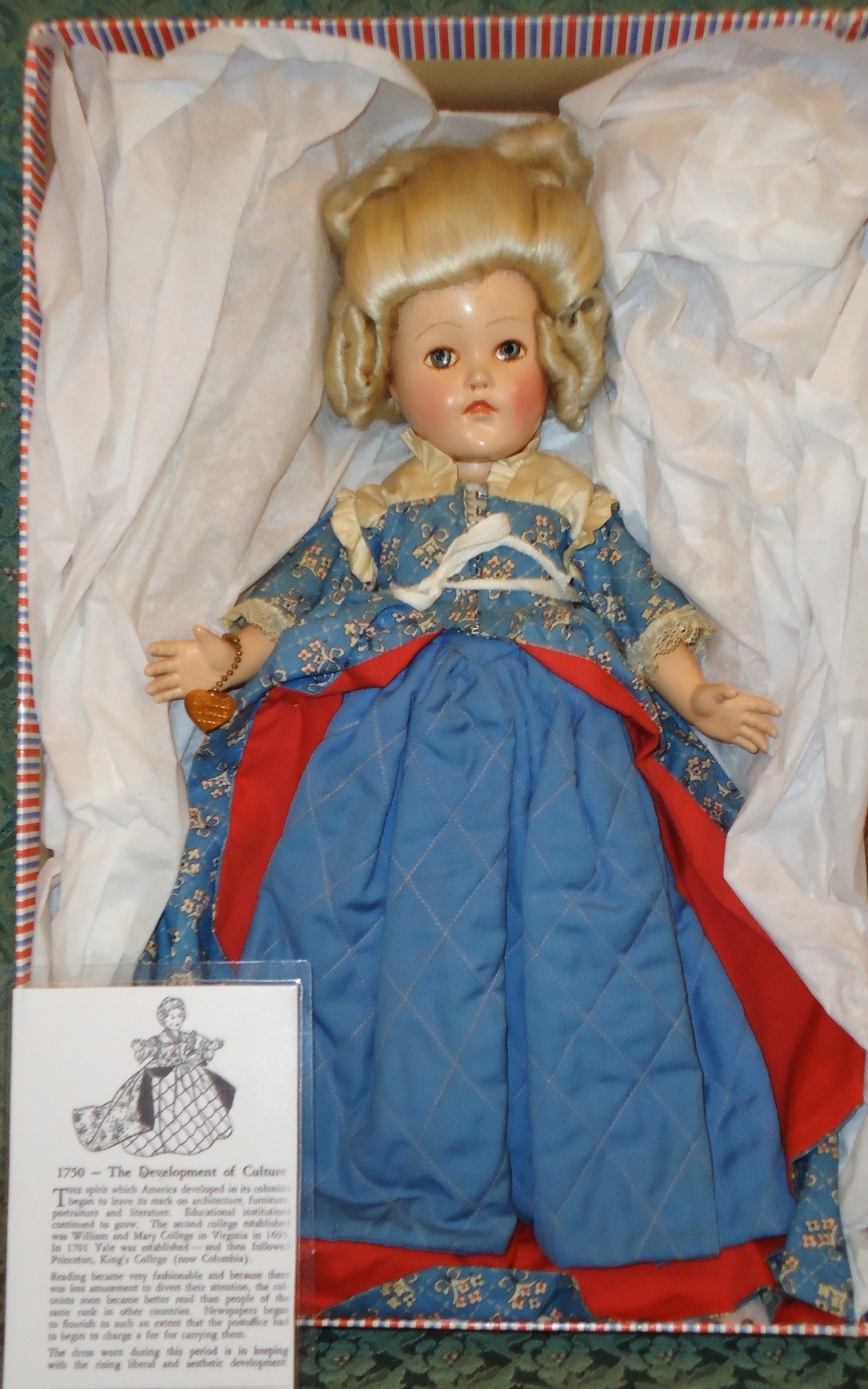
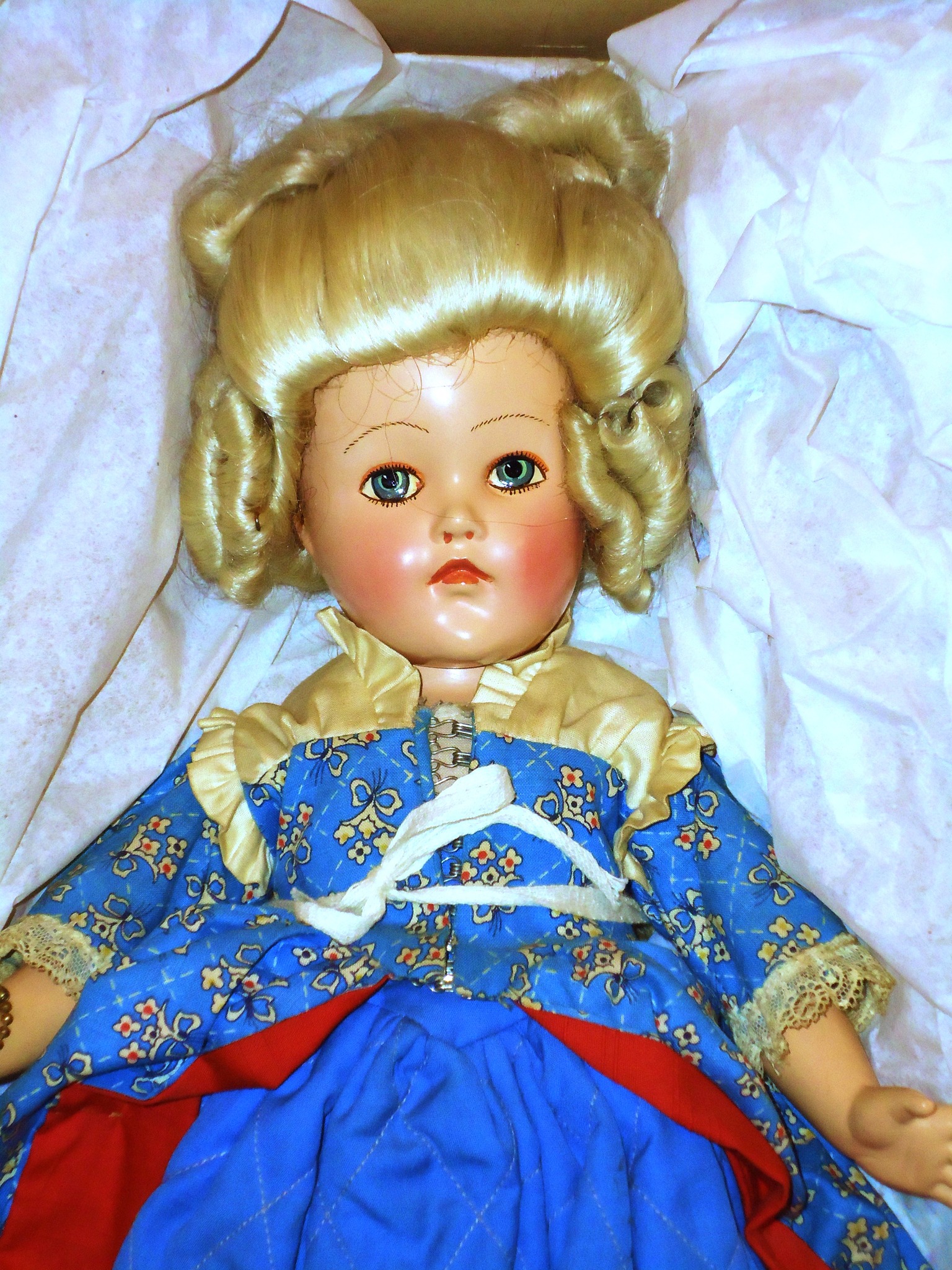

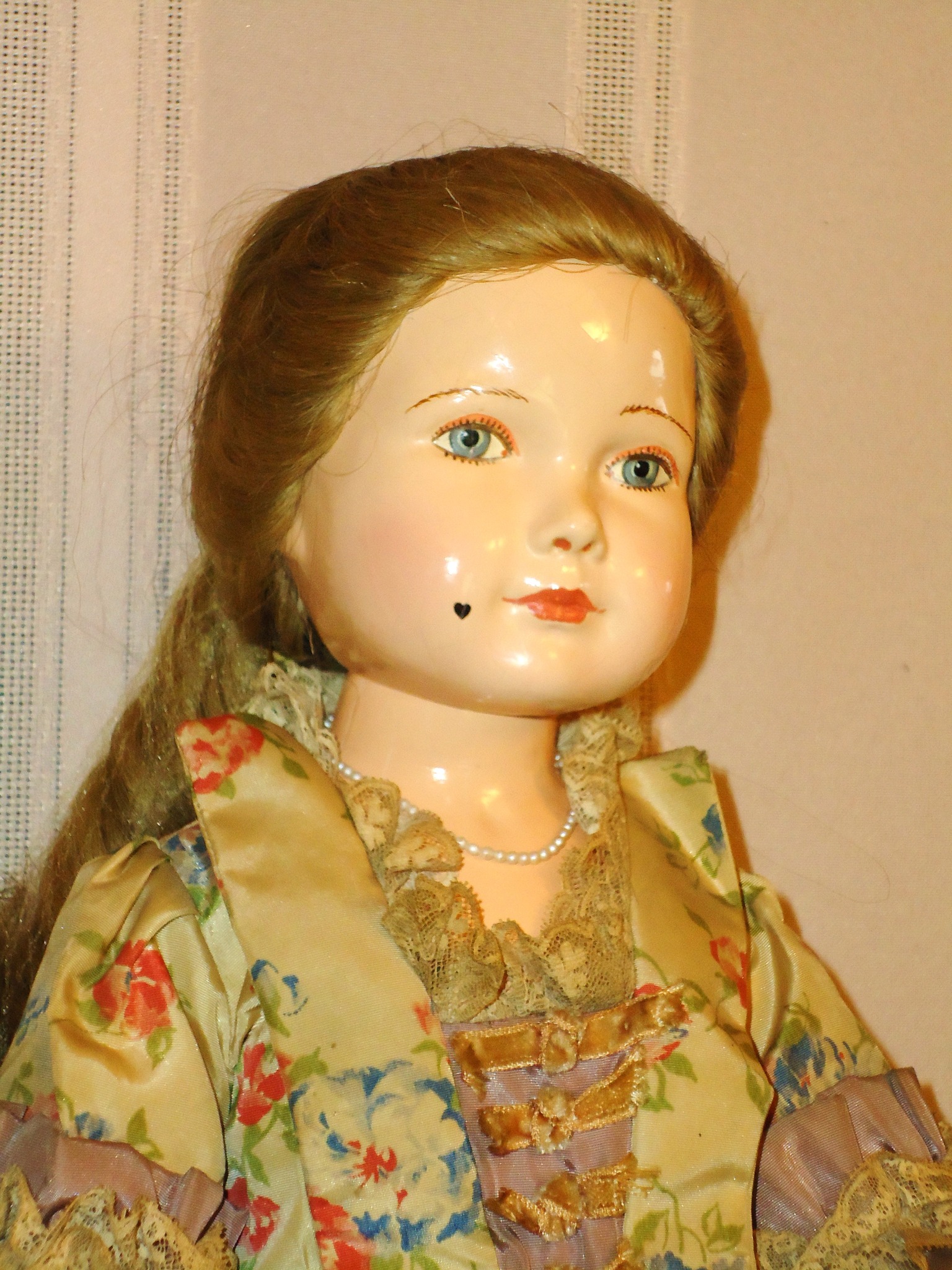
Composition dolls part IV – Film Stars.
You will find many composition dolls created in the image silent film stars such as Charlie Chaplin and Baby Peggy but in the mid to late 1920’s talking films or “talkies” were introduced. The first feature film originally presented as a talkie was “The Jazz Singer”, released in October 1927. It was a major hit and by the early 1930s, the talkies were a global phenomenon. In the United States, they helped secure Hollywood’s position as one of the world’s most powerful cultural and commercial centers of influence. This influence spilled over into the doll industry with the introduction of the Shirley Temple doll and other starlets such as Judy Garland and Deanna Durbin made by Ideal. Every major manufacture was producing celebrity dolls and dolls with special outfits and wardrobes inspired by the fashion trends of the day.
Examples include the early composition Charlie Chaplin doll made in 1915 by Louis Amberg & Sons. He is 14 inches tall, with a composition head and hands on a cloth body. He has painted features and a molded mustache. His original suit is tagged on the sleeve.
Other notable dolls are the darling Jane Withers made by Madame Alexander in1937. Jane Withers (April 12, 1926 – August 7, 2021) was an American actress and children’s radio show host. She became one of the most popular child stars in Hollywood in the 1930s and early 1940s, with her films ranking in the top ten list for box-office gross in 1937 and 1938.
The beautiful14” composition Rita Hayworth doll in her portrayal of “Carmen” made by the Uneeda Doll Company in 1948. She was not marked but is unmistakable with her flaming red mohair wig and may be the only composition doll with a lady figure with molded breast.
The rare “Little Annie Rooney Doll. Designed by Joseph Kallus after the1925 comic strip character of Jack Collins. The doll was distributed by Borgfeldt, and then later, by Cameo Doll Company. A rare and delightful doll, this version depicts Little Annie Rooney as portrayed by Mary Pickford in the 1926 film.
Early composition Ella Cinders doll made by Horsman, circa 1925. Based on a cartoon character of the day portrayed by Colleen Moore.
Lovely Scarlet O’Hara doll made by Madame Alexander from 1939 thru 1946. Portrayed by actress Vivian Leigh in Gone with the Wind.
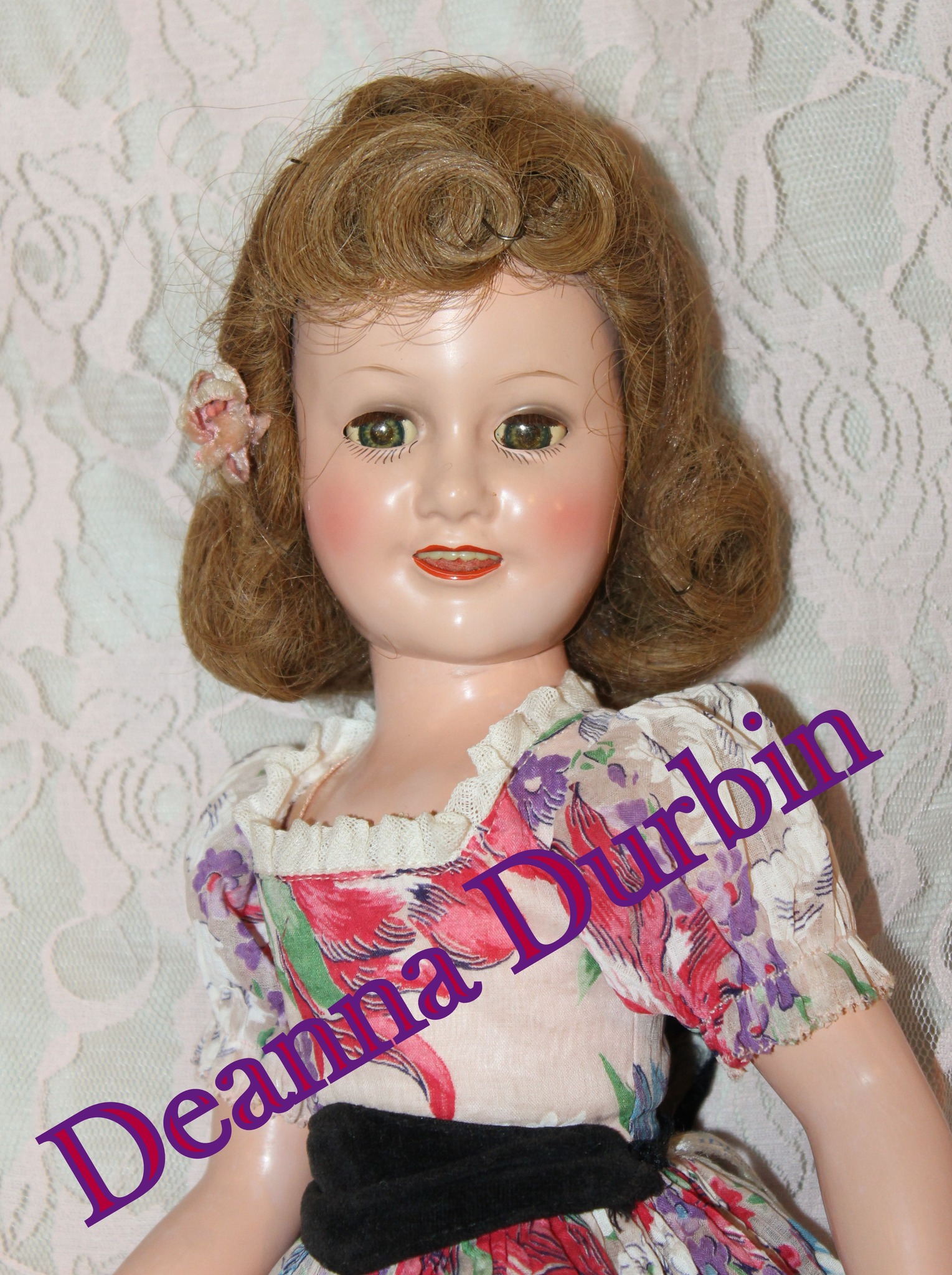
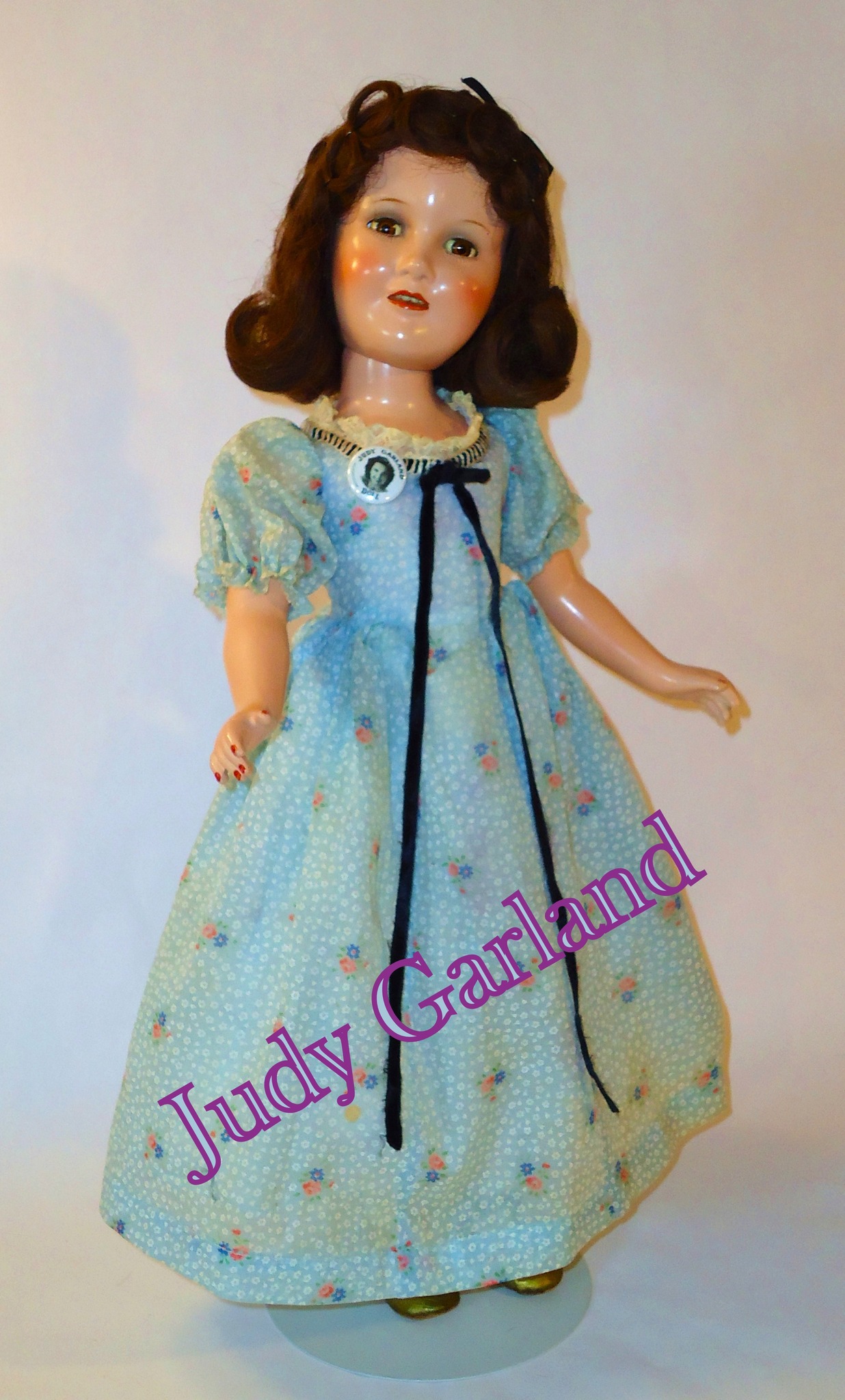
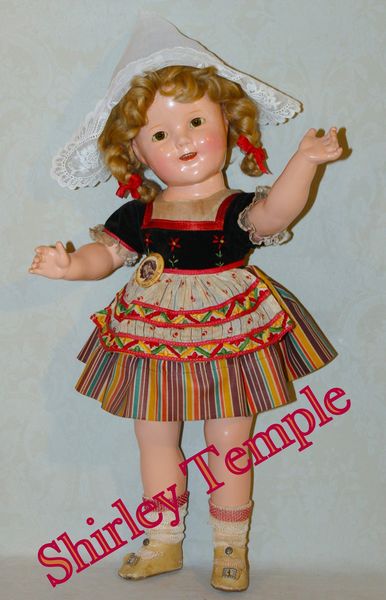
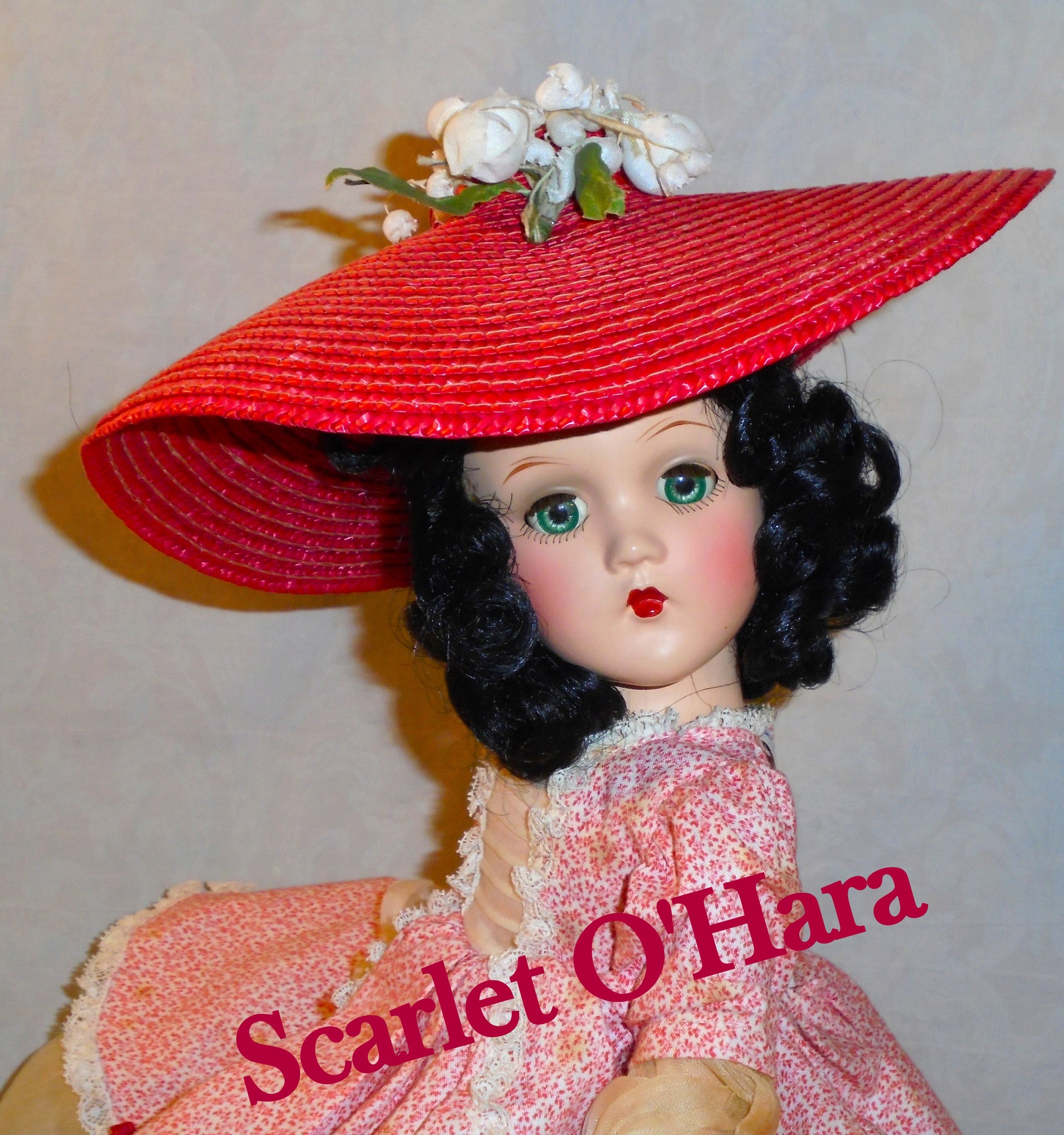
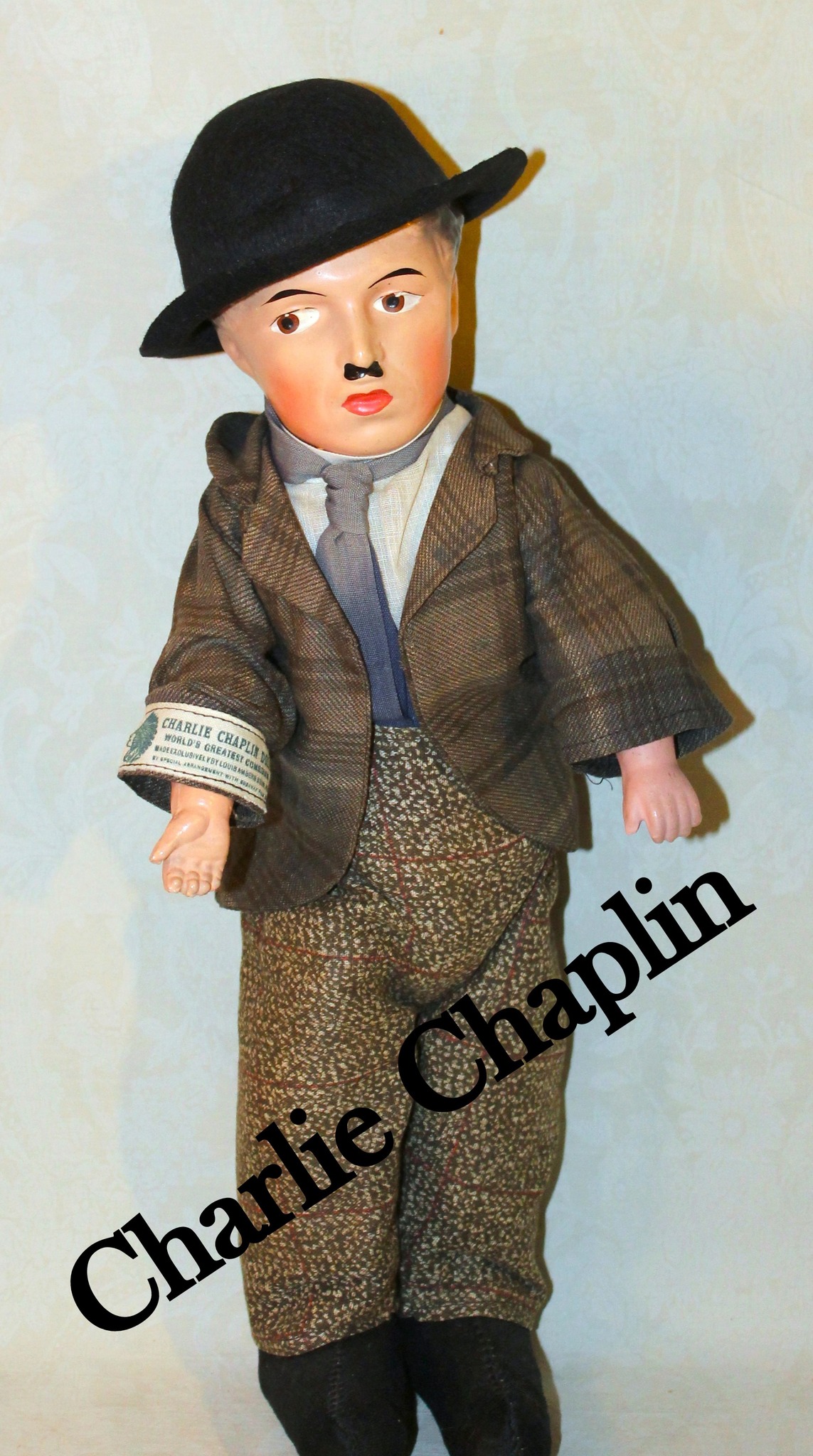
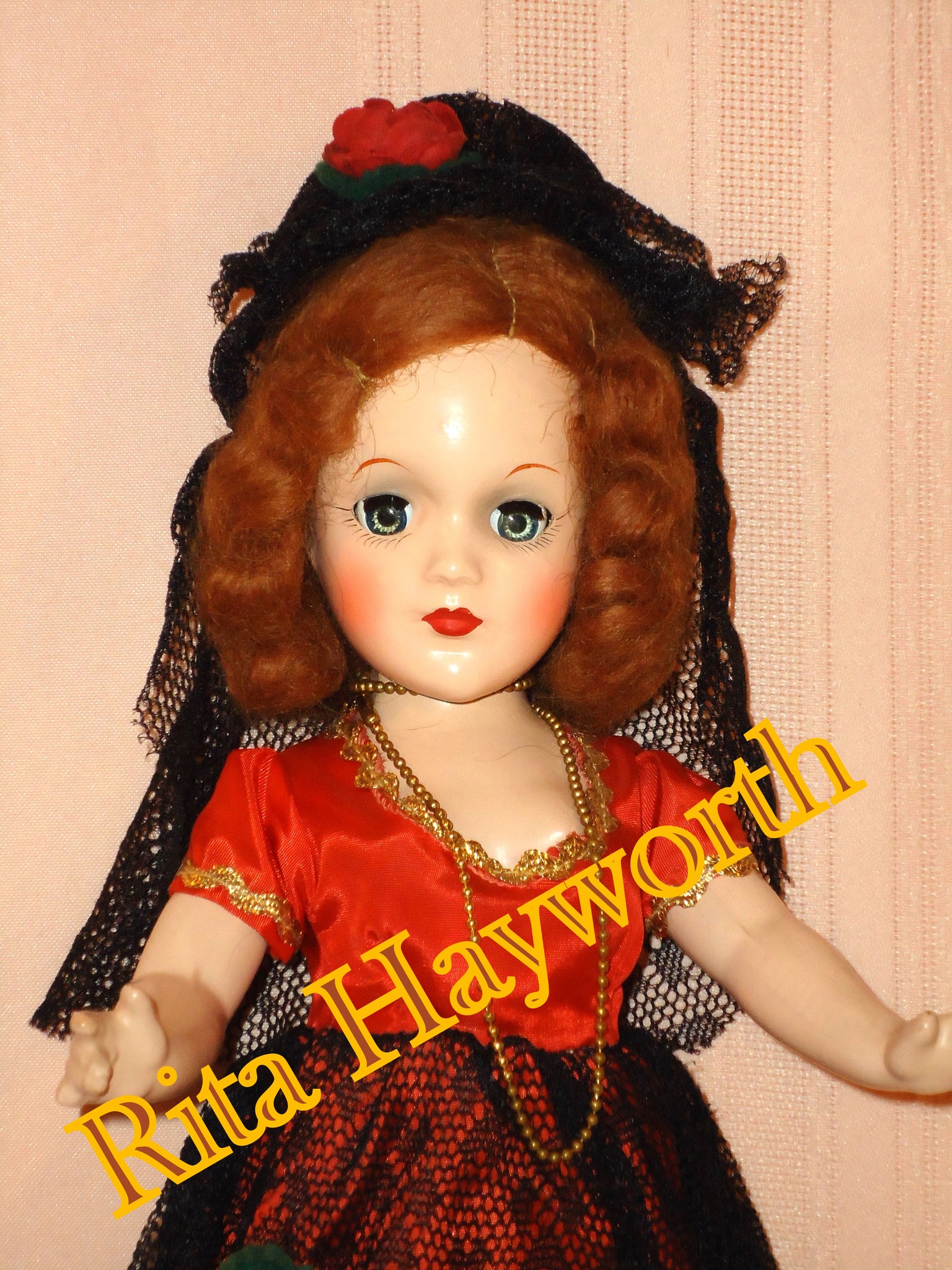
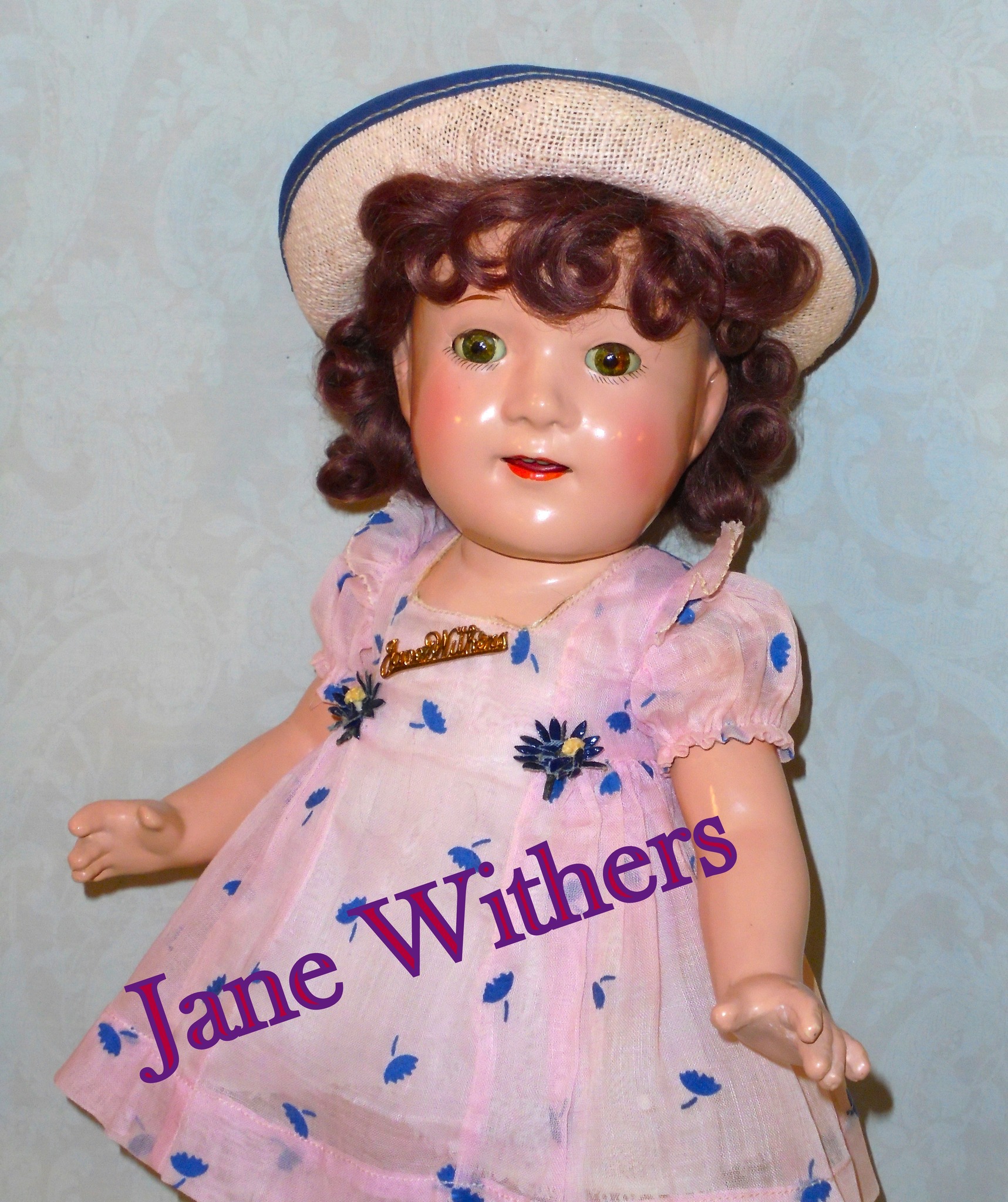
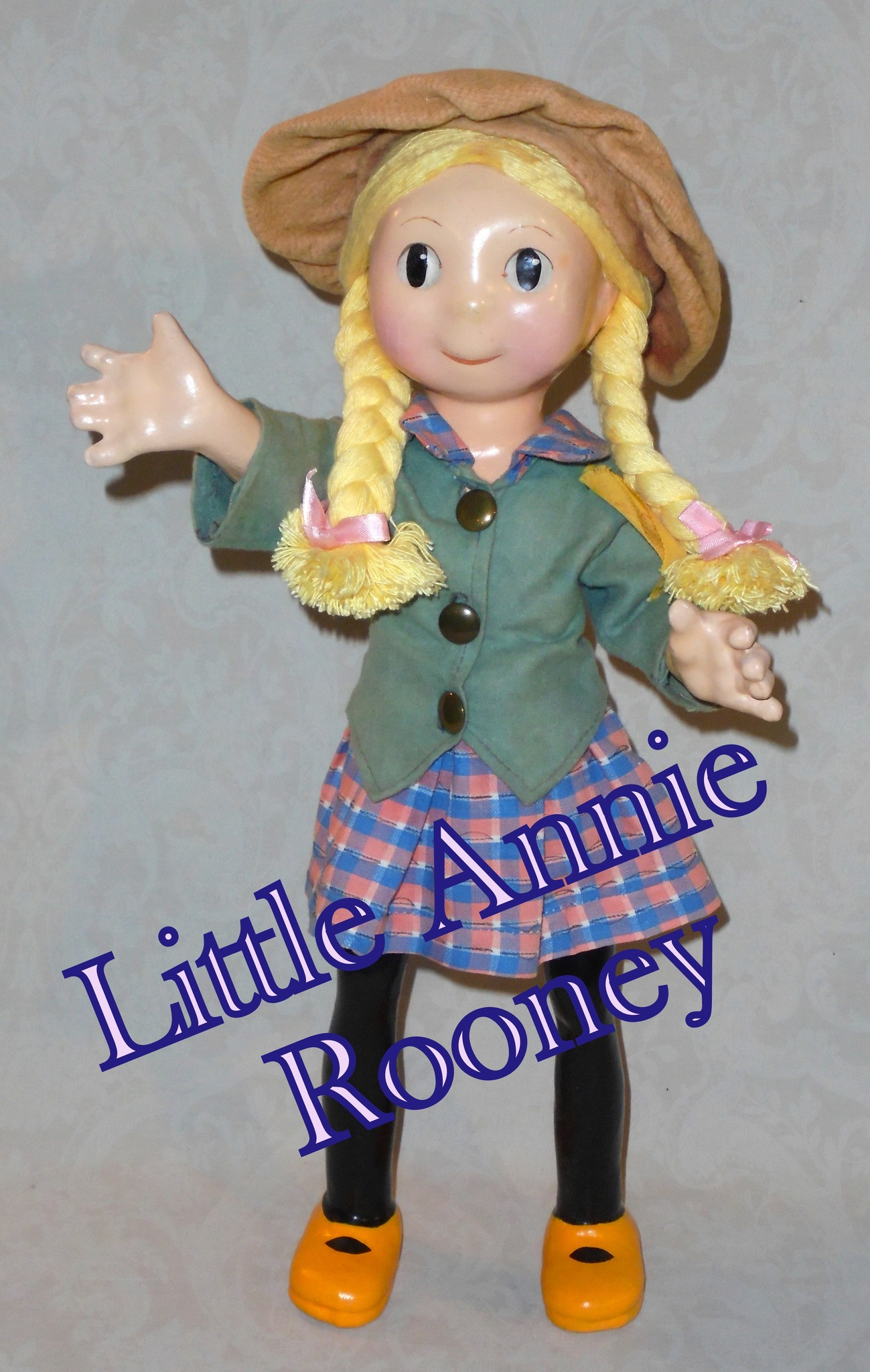
Madame Alexander Composition Dolls
There have been several companies such as Louis Amberg, Ideal, Effanbee, Arranbee, and many others that have contributed to the production of composition dolls. That said, perhaps the most significant and most famous is Madame Alexander.
Madame Alexander produced some of the most significant, historically, and cherished dolls ever produced. Jane Withers and “Baby Jane” were among these celebrity dolls. The Jane Withers doll was made in 1937 depicting the child star we all came to know later as Josephine the plumber. While many collectors will recognize the Jane Withers doll few of us are familiar with “Baby Jane”. This is a hard to find and wonderful character doll modeled after child star Juanita Quigley. She became known as “Baby Jane” after starring in a role of the same name. The doll is sixteen inches tall with face mold exclusive to her, marked on her head “Baby Jane // reg. // Mme Alexander.” This doll came in a few different outfits, some are only tagged Madame Alexander. The most desired will read “Universal Starlet// Baby Jane // Madame Alexander.”
Other seldom seen Alexander examples include “Baby Betty” and “Marcella,” a rare “Nurse” doll with a Princess Elizabeth face, beautiful “Karen Ballerina” and a rare 1930’s ballerina. Other rare examples include a beautiful “Southern Girl” and “Rebecca,” a stunning “Scarlet O’Hara” and a fabulous, 20-inch example of “Madelaine Du Bain”. There were also special groupings of dolls such as the Dionne Quintuplets with their Nurse and Dr. Dafoe, several dolls from the military series and wonderful brides and bridesmaids. These are just some of the exceptional composition dolls offered by Madame Alexander.
The portrait doll series are certainly the most beautiful and most glamorous ever created by Madame Alexander. The first were introduced in 1938, again in 1942, then again in 1946 and finally one additional doll in 1947. Some of the dolls portrayed familiar people and characters such as Judy Garland, Scarlet O’Hara, Melanie and Marie Antoinette, others like Godey Lady, Renoir and the Degas ballerina were simply beautiful creations from the mind of Madame Alexander. The last doll, produce in 1947, was “Royal Wedding” a beautiful bride thought to have been produced as part of the Royal Wedding celebration in honor of the marriage of Queen Elizabeth II and Prince Philip.
The dolls themselves were not marked and their clothing was not tagged with their name as with most Alexander dolls. Some will have tags on their slips or panties, stamped only “Madame Alexander // New York USA,” others may have the Madame Alexander clover shaped wrist tag, and some may have no identifying marks at all. Through the years this has created some confusion as to the name of some of the dolls. The beautiful “Renoir” doll is most often called “Lady Windermere, and the doll most commonly known as “Princess Flavia” is identified as “Victoria” in a photo from the Alexander Co. archives. The doll “Antionette” came in three color variations blue, pink and yellow. There had been some speculation that the different colors represented different characters. No documentation has been found to support this theory and most experts have dismissed the idea.
Although there has been some confusion about their individual names, recognizing them as one of the Portrait Series is not a problem. Once you have seen them there is no mistaking their identity. The dolls are all twenty-one” tall, made using the so-called Wendy Ann face mold. Additionally, hand painted makeup has been added giving them a very stylized dramatic look with heavy arched brows, eyeliner, eye shadow and full lips. Along with the attention to detail and the normal Alexander high quality, the clothing also has distinguishing characteristics. The dresses often had zippers and they all had a pair of what would appear to be, covered buttons in the bodice of the dress to give them a bust line. These dolls may be Madame’s finest creation, an example of the reason she was known as “Doll Stylist Extraordinary.”
There is a lot of speculation and mystery that follows the creation of these dolls and their intended purpose. It has been said they were produced as promotional items only with seven different dolls made in 1938 and that, at the urging of several department stores, full retail production began after World War II. There has also been speculation that they were created as window display items only, used by department stores to promote Madame’s dolls and other items as well.
It was my good fortune to find an early portrait that was not one of the commonly documented dolls. The doll had every attribute you would look for in a Madame Alexander portrait doll with one exception, she wore a hat with a Sears millinery tag inside. The hat coordinated with her costume perfectly and it was obvious that it was original to her. It would be very unusual for Madame to have her hats made elsewhere, more likely that Sears acquired the doll as a display piece for their millinery department. This is purely speculation on my part with no documentation to verify it. These portrait dolls are the rarest, and perhaps the most desired Alexander composition dolls.
I hope you have enjoyed this series on composition dolls. We have only begun to delve into this subject. There us so much more to learn. Please feel free to contact me with any questions you may have.

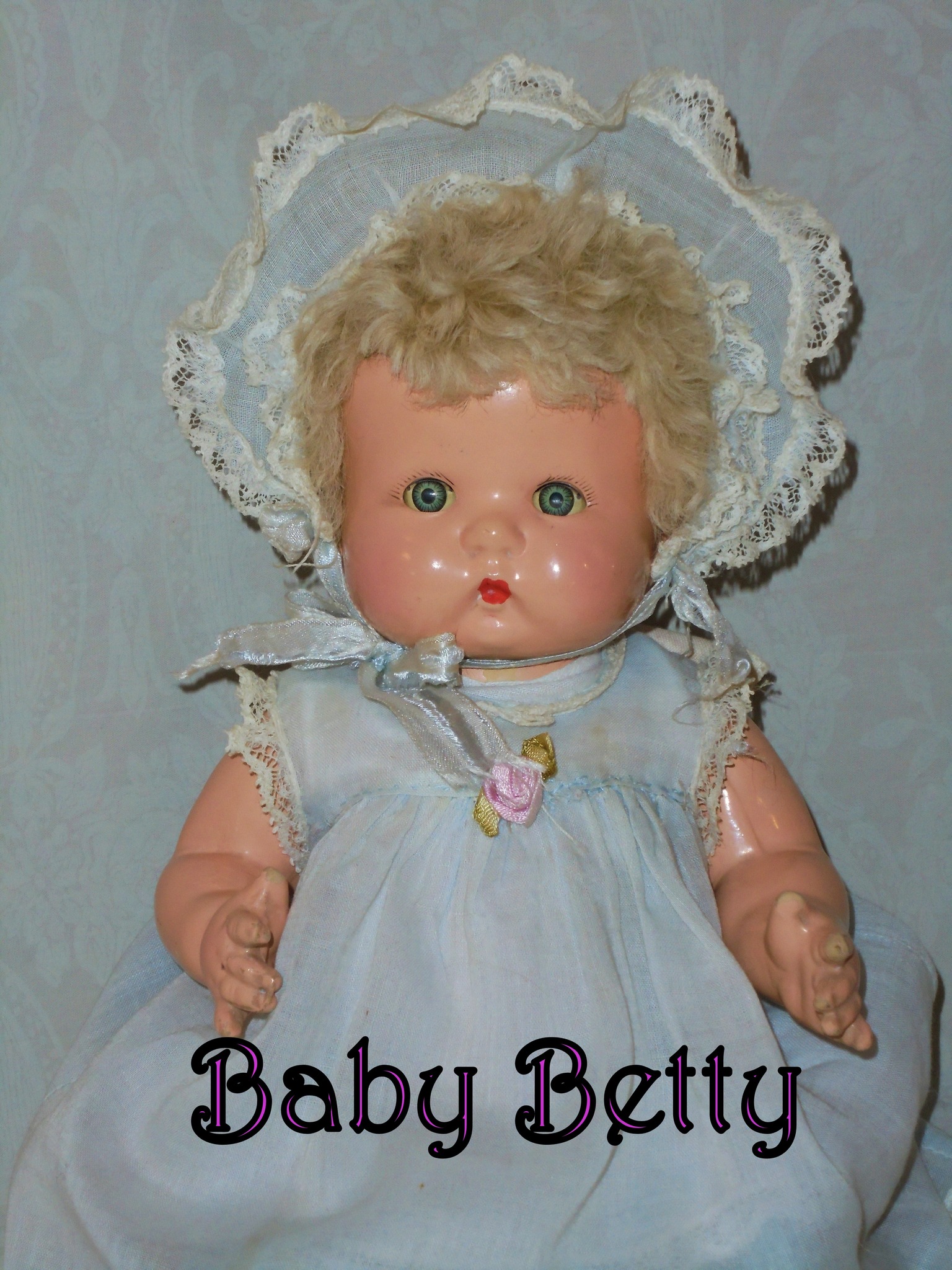
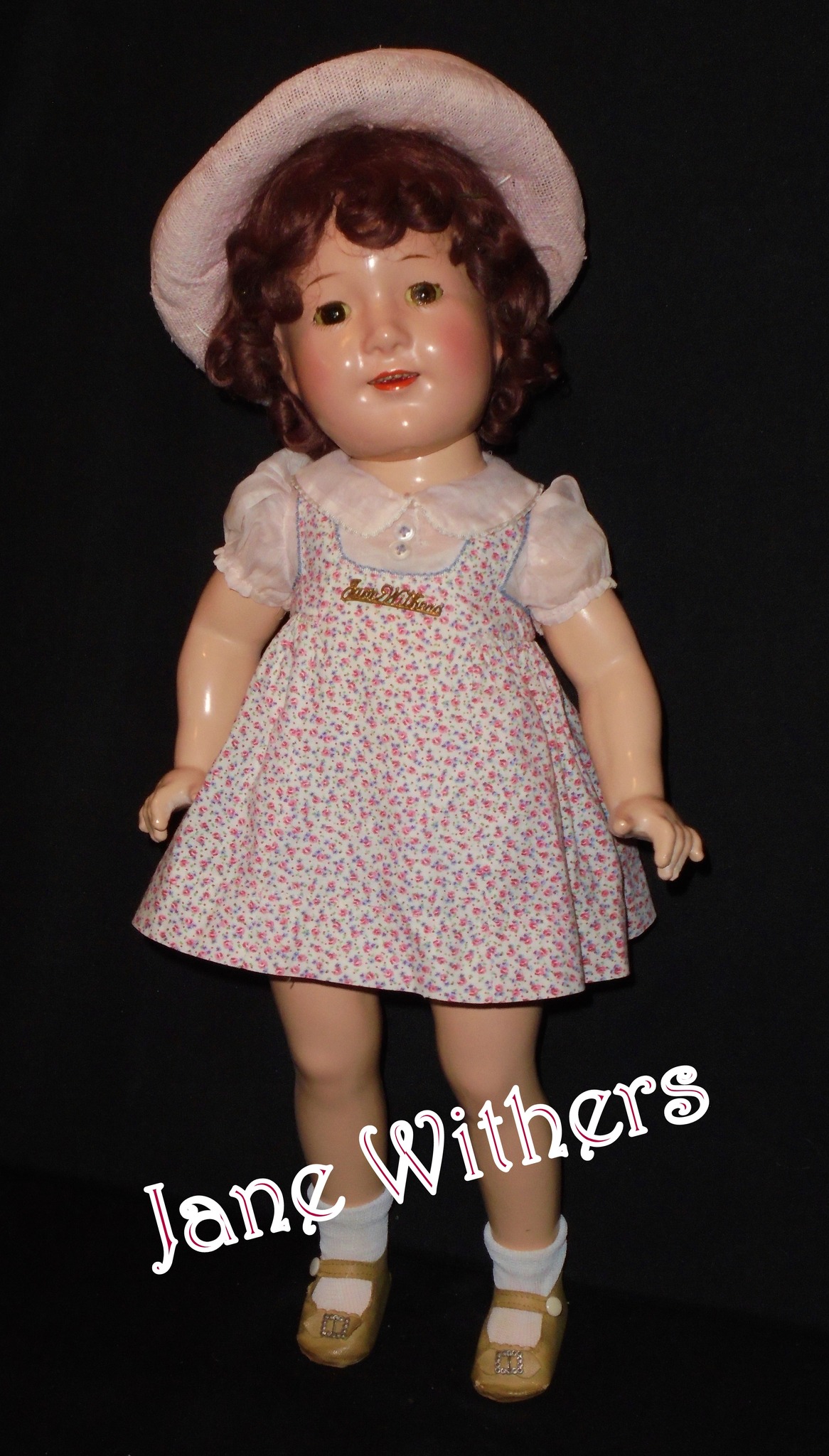
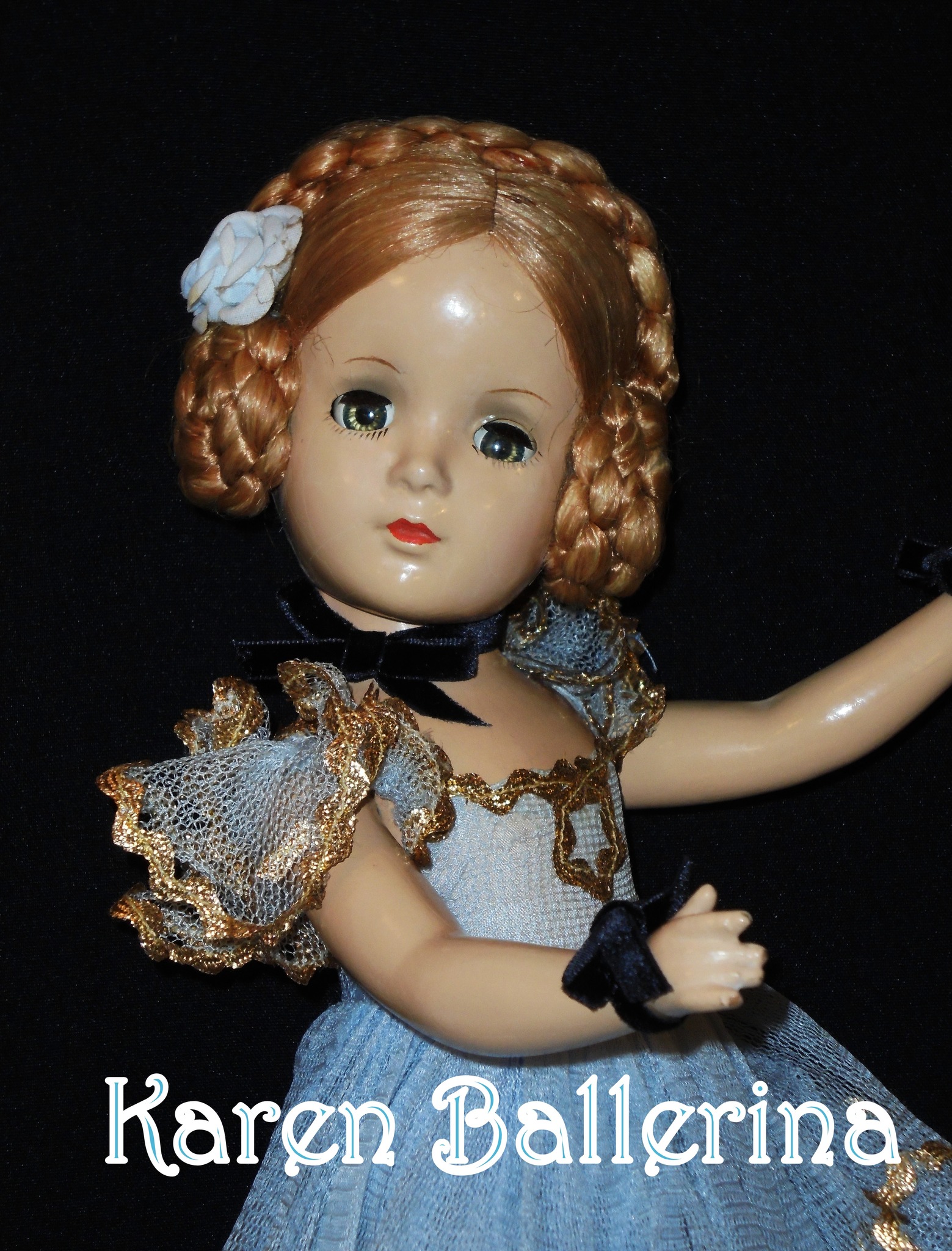

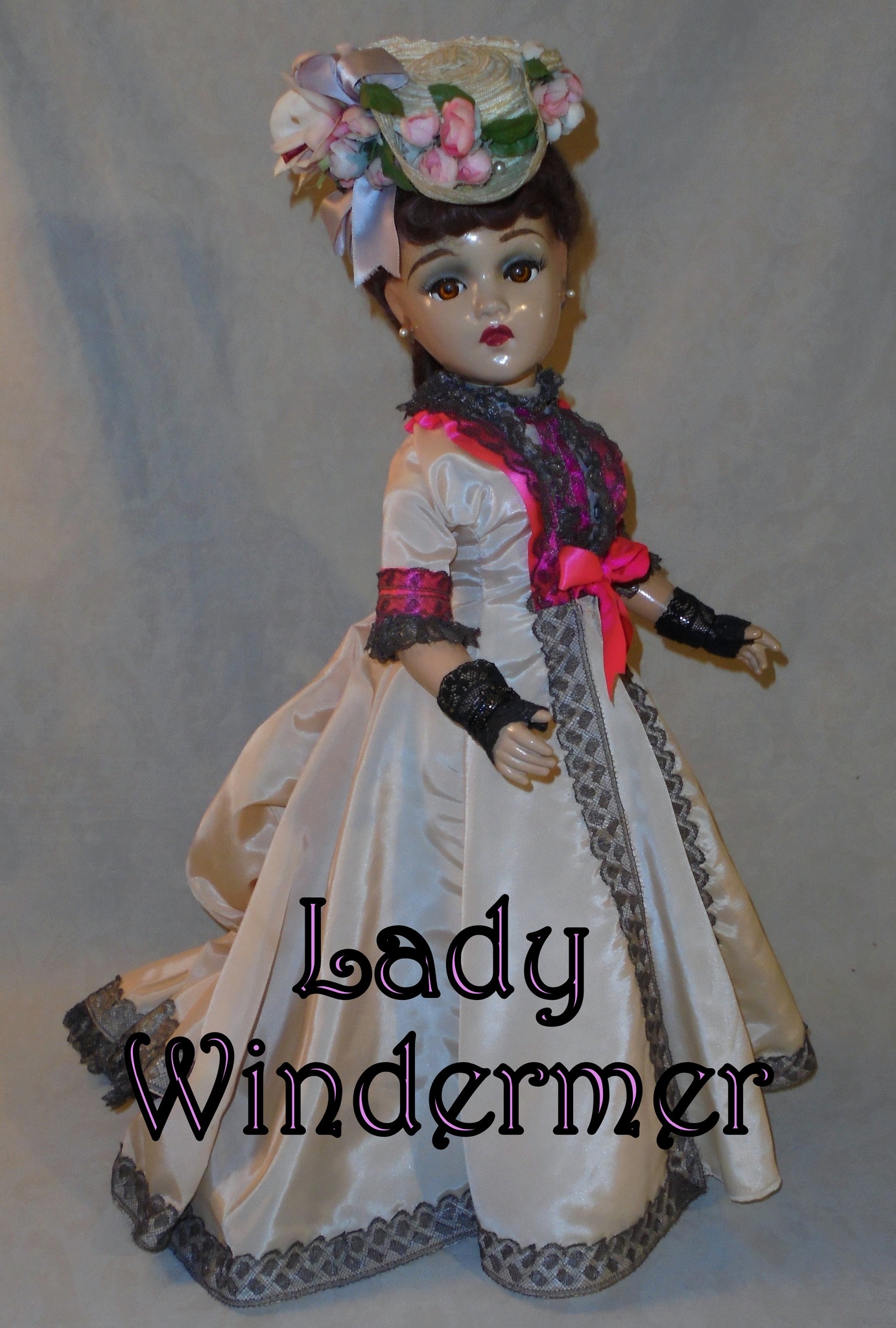
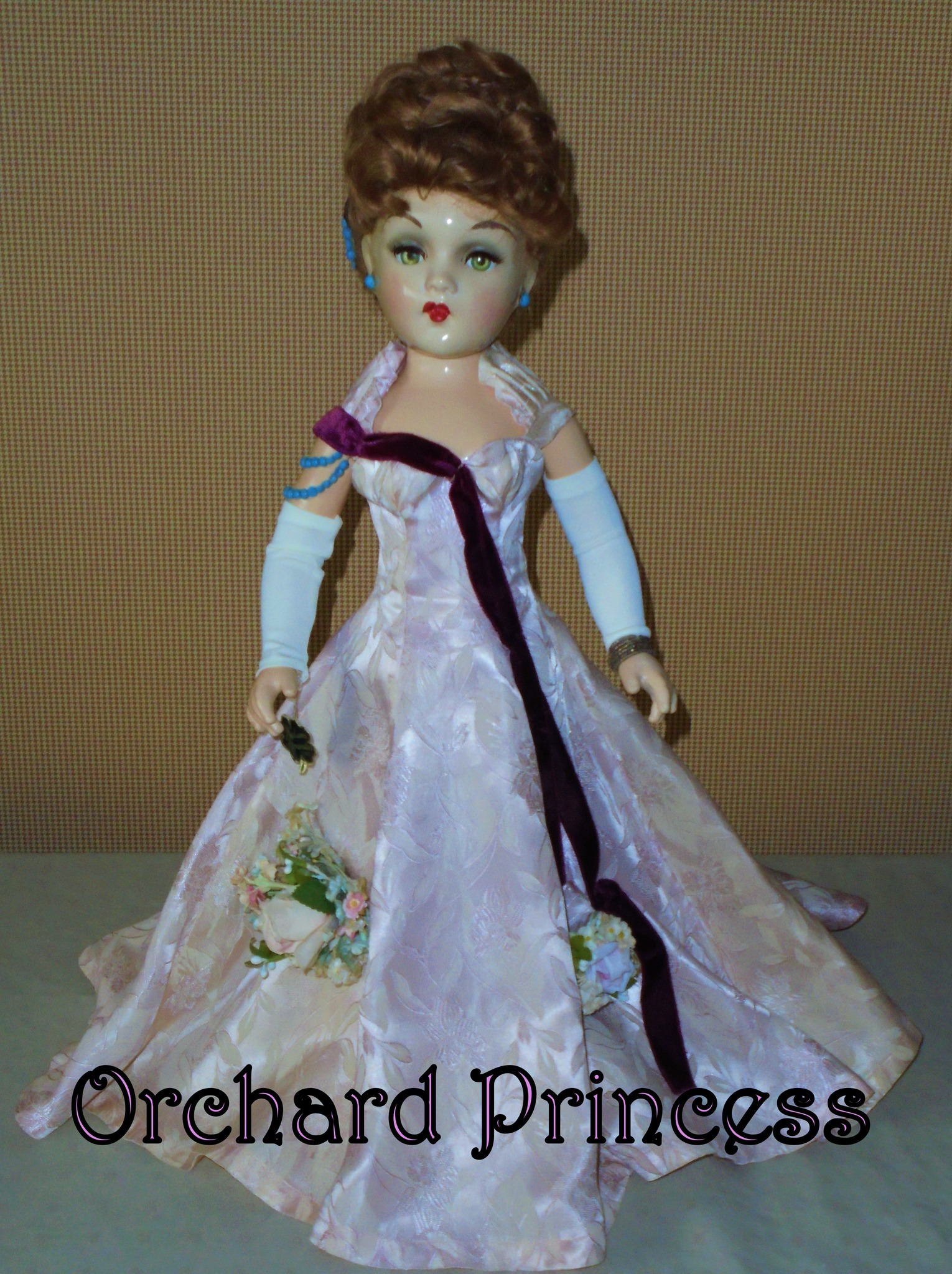
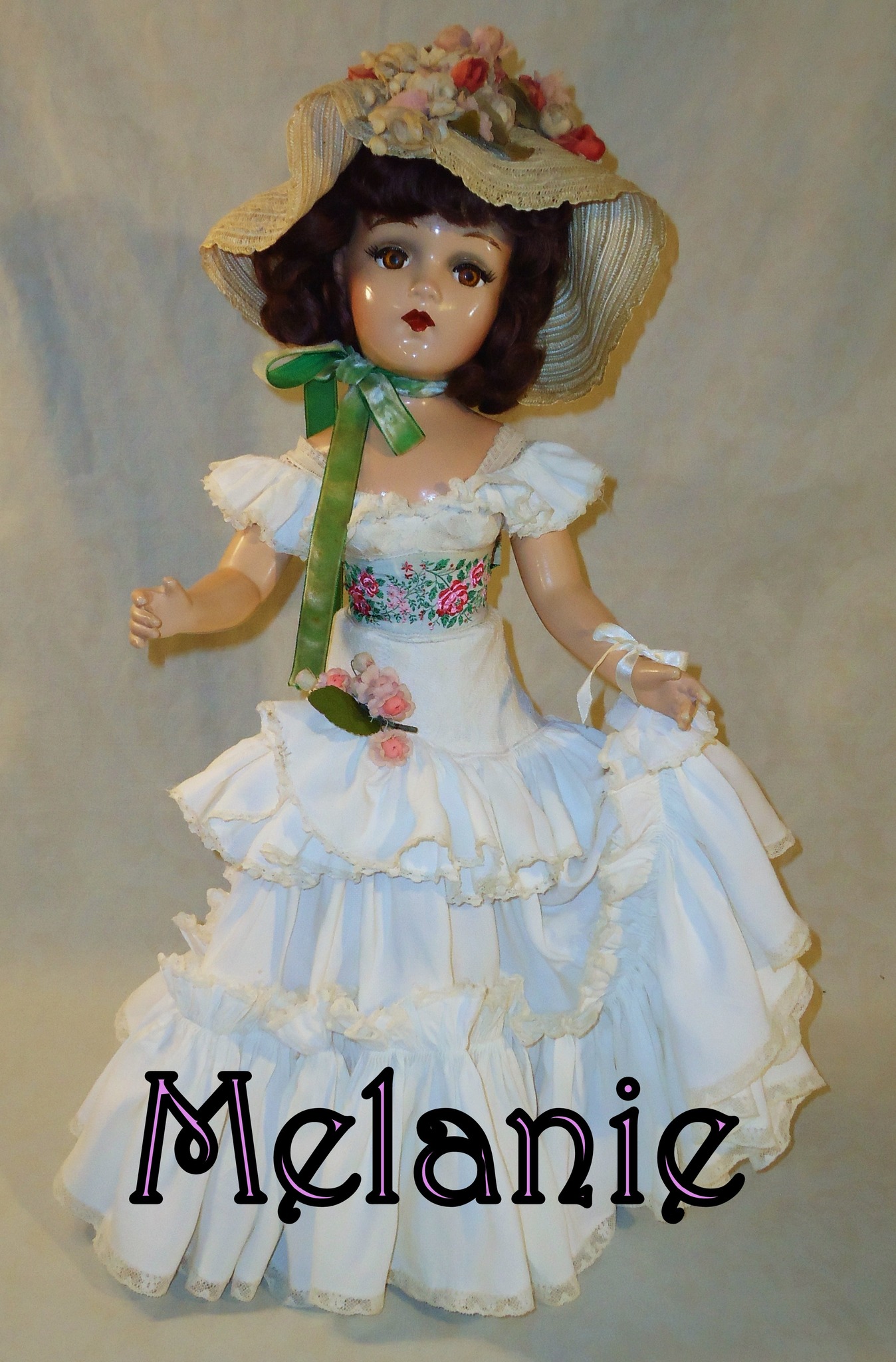
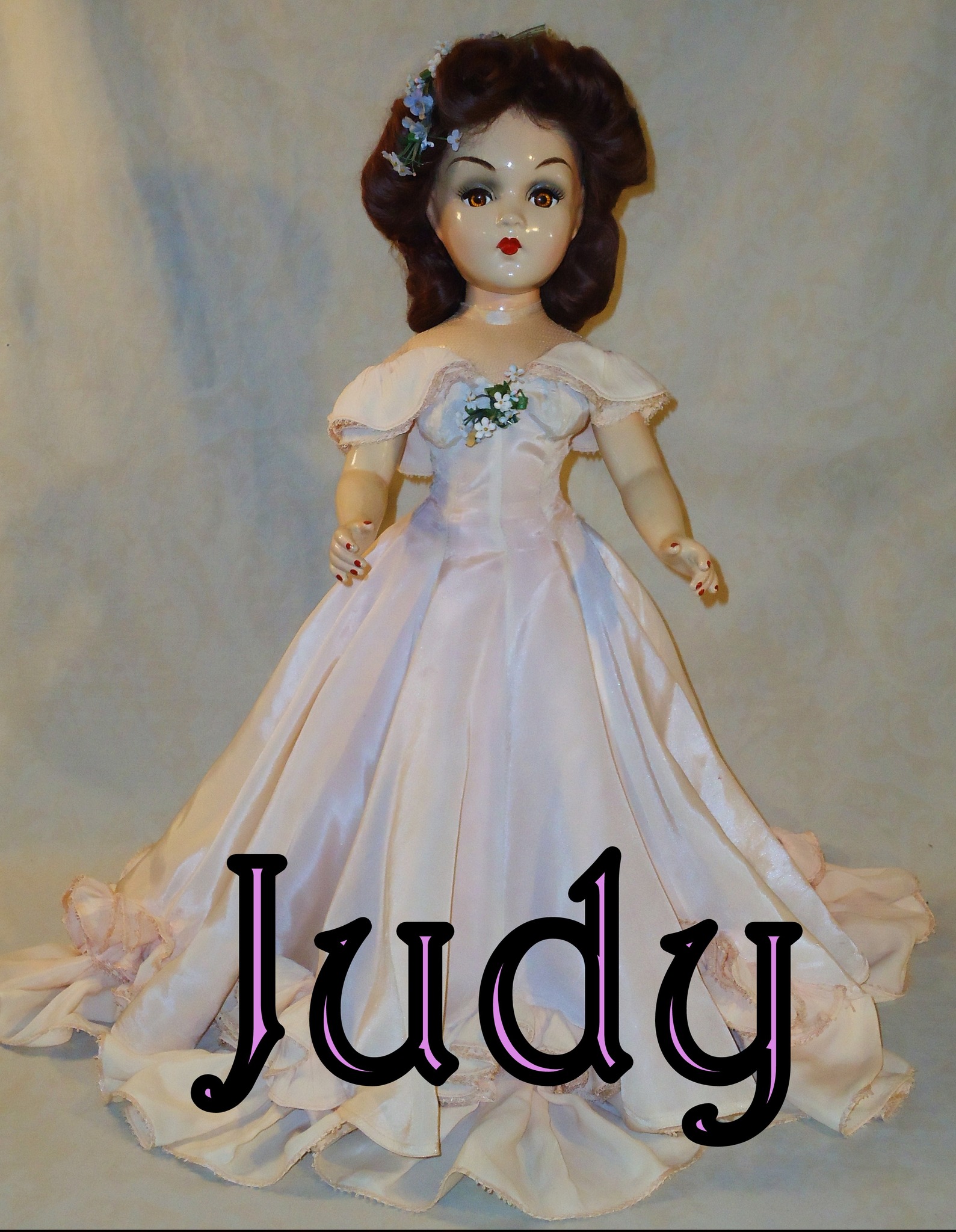

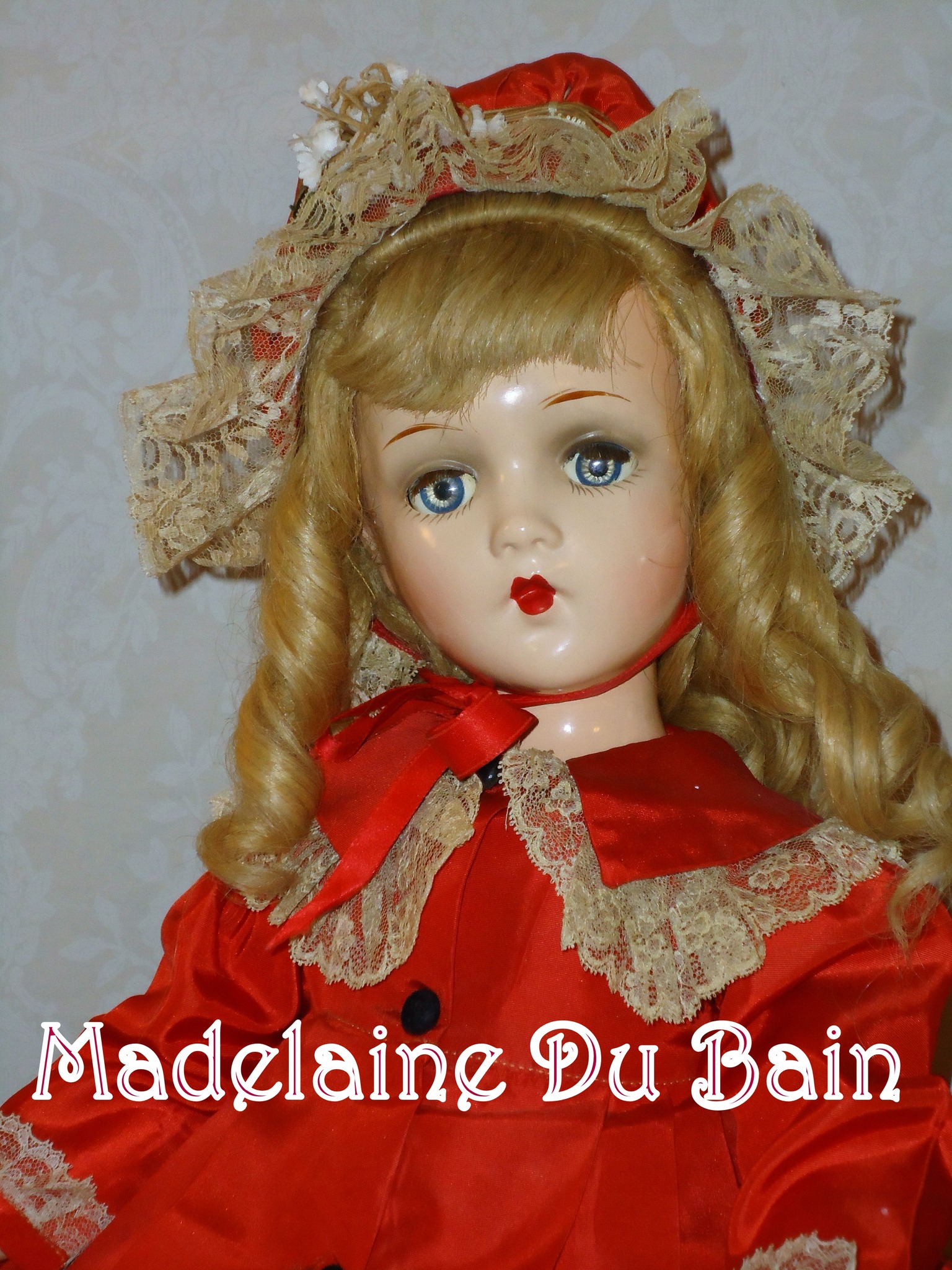

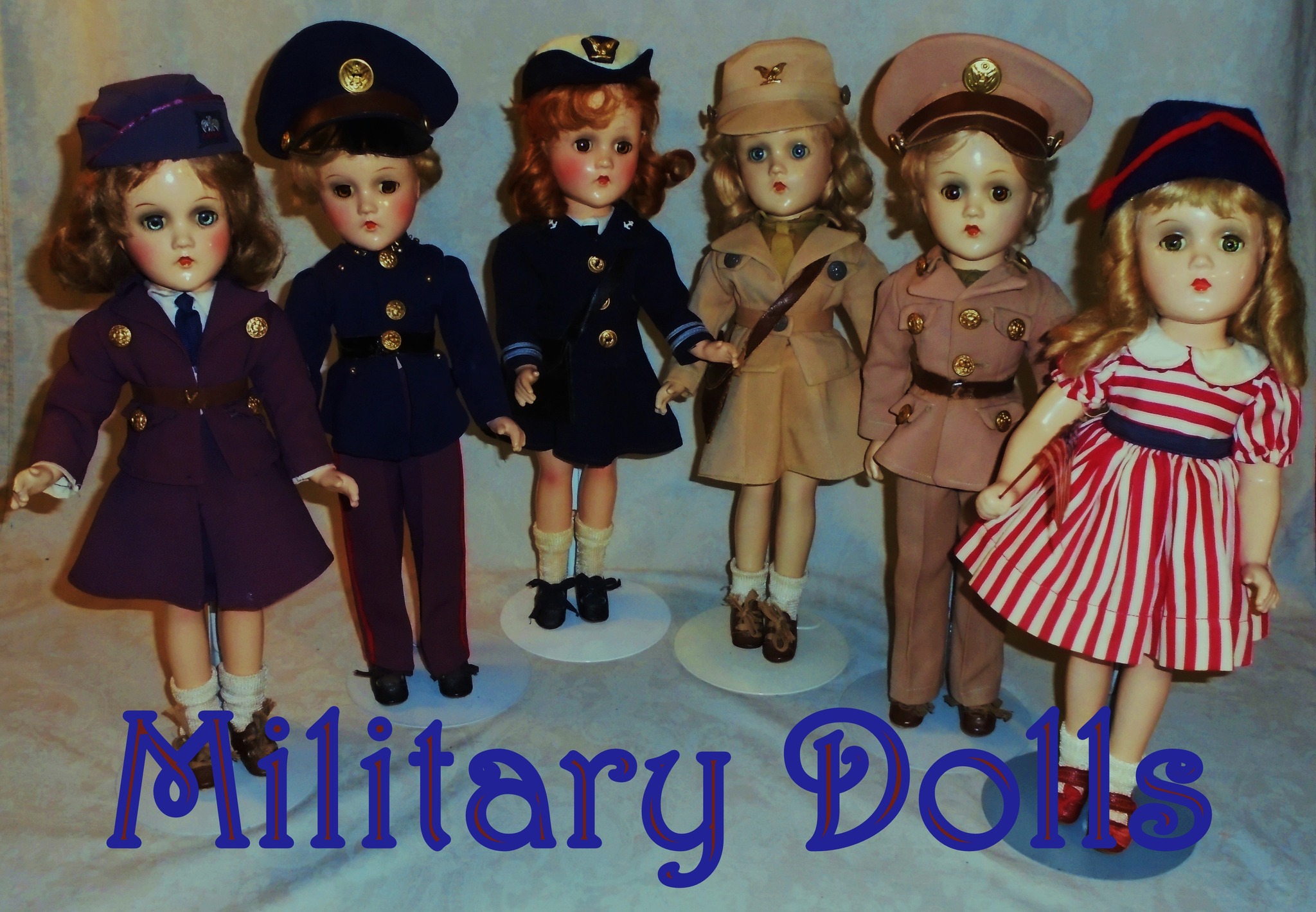

Valerie Fogel and Antique French Dolls
February 2024
The History & Romance of The Bru Bébé
The year was 1966, the place was the seaside village of Villefranche sur-mer, France. My younger brothers and I were scrubbed and combed, wearing our “nice” clothes as we anxiously waited with mother for our father, a naval officer, to disembark from the USS Springfield. He was returning to us from one of his many sailings and we eagerly awaited his bear hugs and the paper wrapped surprises he would bring. A toy for the boys and always a beautiful doll for me. My father planted the seeds that blossomed into my love of dolls; my first and lifelong romance. Had I only understood, in those tender years, the magnificent and rare dolls that Leon Casimir Bru had begun creating exactly one hundred years earlier! I can only imagine the precious beauties and their histories I may have uncovered! Alas, it was not to be, I would move on from the storied land of France; not to return for decades.
Nonetheless, my romance with treasures from the past grew and I became captivated by the stunning, rare dolls of Leon Casimir Bru. I thirsted for knowledge and historical perspective. Let me share a bit of what I have learned.
~~~~~1837-1866~~~~~
Leon Casimir Bru, was born 16 September 1837 in Cordes, France, the third child to Jean Bru, a weaver and Rosalie Bru, a daughter of leather tanners. As he grew to manhood, his status and social situation was challenged, for as the youngest (Jeune) child of three, by tradition he would not inherit his father’s hard-won wealth or business. He could only depend on his own resourcefulness and ambition; learning the trades of his parents and finding ways to apply these skills. He rose to manhood during the Second Empire, a time of peace and prosperity from 1852 to 1870. This period offered extraordinary economic development with many opportunities for those with new ideas, a head for business and desire for a comfortable life. Although Bru had little money, he left the sleepy town of Cordes for Paris.
With his comprehensive knowledge of textiles and irrepressible confidence, he easily found employment at the Grand St. Louis, a fabric and notions store, where he was rapidly promoted to head of the department. Bru got on well with his coworkers; described as a decisive and excellent communicator, with ability to capture the imagination of others with his enthusiasm and measured, yet dramatic flair for speaking. During this period Bru met the lovely and talented Appolyne Comyn, who had been born to a family of tailors in the city of Tours on 15 July 1837. She arrived in Paris several years earlier with her younger brother, Arthur. Appolyne worked for a funeral transport business making shrouds. She managed quite well for herself and through hard work and a bit of family support, she set up a fine apartment at 13 Quai Napoleon. I can only imagine the two young people met when she was on an errand for goods at the Grand St. Louis. In whatever circumstance they became acquainted, it’s certain the flame of love ignited, for Bru made his way, at the age of 29, to Tours to ask her parent’s consent for Appolyne’ s hand in marriage.
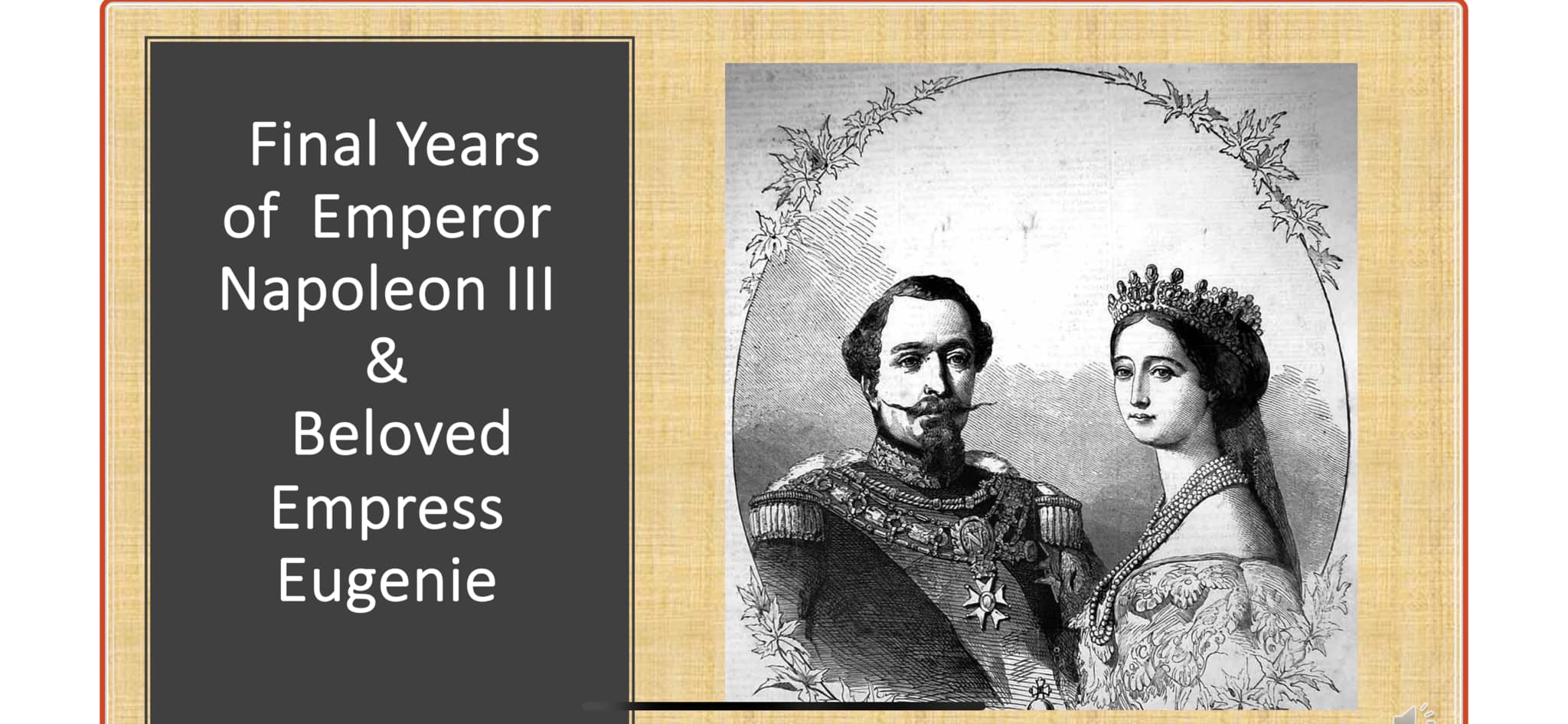

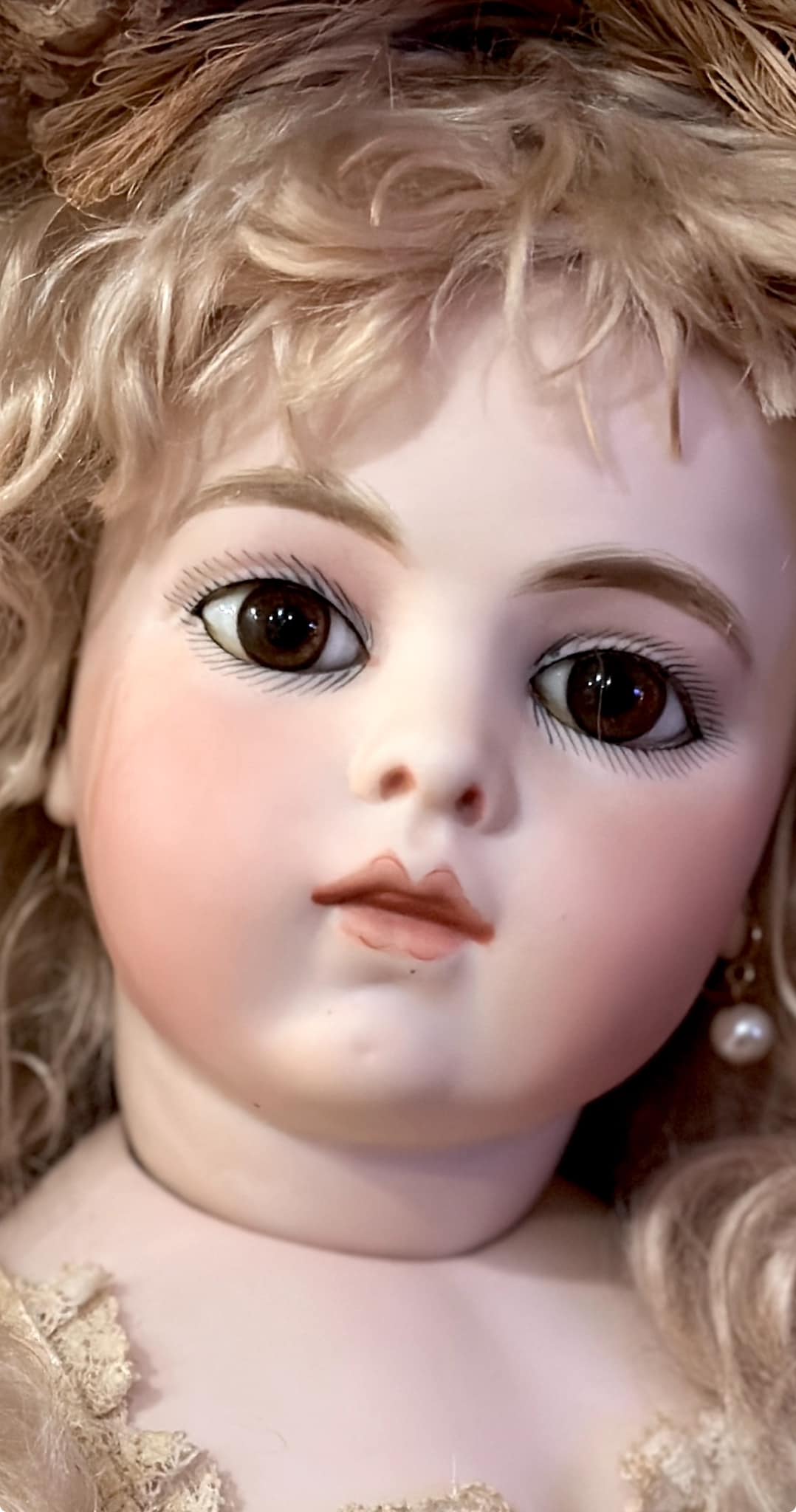
~~~~~1866-1877~~~~~
And so, our young lovers’ request to marry was approved and granted by Appolyne’s father with one caveat.
Due to Appolyne’s comparative financial wealth and security and Leon’s lack thereof, a choice was made to draw up a legal separation of assets in a marriage contract. This contract decreed that Bru came into the marriage with nothing more than his clothing and linens; all furnishings and assets otherwise belonged outright to Appolyne, and by the Napoleonic Code, she had complete control and determination of the use of her property and finances.
The contract was drawn up and signed on 25 September 1866 and they were joined in marriage the following day. At this time Bru was renting an apartment in Paris from Adrien and Marie Chautard; 1850’s dollmakers. This couple had been appointed to appraise the estate of the well-known doll maker Louis Belton in 1853. The Chautards ultimately purchased the Belton firm in 1861. This ownership was brief, lasting only a few months. The gregarious and talented Leon Casimir Bru must have deeply impressed the Chautards. They had no children of their own, so without heirs, they encouraged Bru to consider the doll-making field. The young Bru enamored the Chautards so completely that they financed his enterprise and became his discreet and well-connected benefactors. A wonderful stroke of luck and opportunity for young Bru!
Thus, in 1867, Bru Jne & Cie was born at 374 Rue St. Denis, Paris. The purpose of the company was to manufacture Poupées (Lady Dolls) and sell wholesale. Records indicate that Barrois made heads for Bru and agreed they would be incised B. Jne & Cie or B.J. on the back or side of the shoulder plate. For several years things hummed along, frequently punctuated by patents and creations for new and fantastic poupées. Everything from simple shoulder head dolls with kid bodies to elaborate two-faced poupées and dolls with bodies, inspired by artist mannequins, made entirely of wood with deluxe jointing.
And so it began… Our next installments will reveal the inspirations that fueled the creation of the spectacular Bru Bebes! However, watch for a picture parade of Bru creations in between!
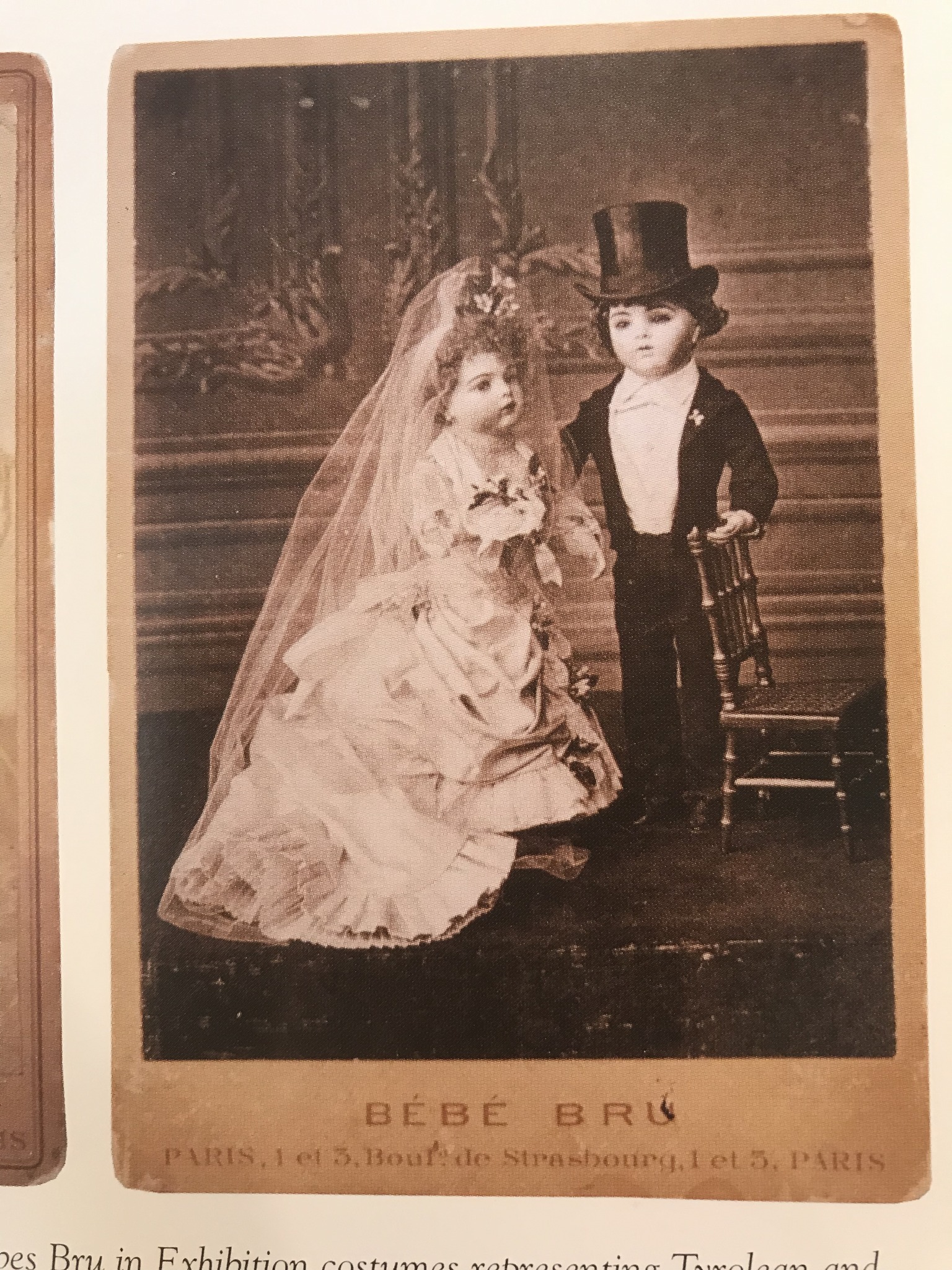

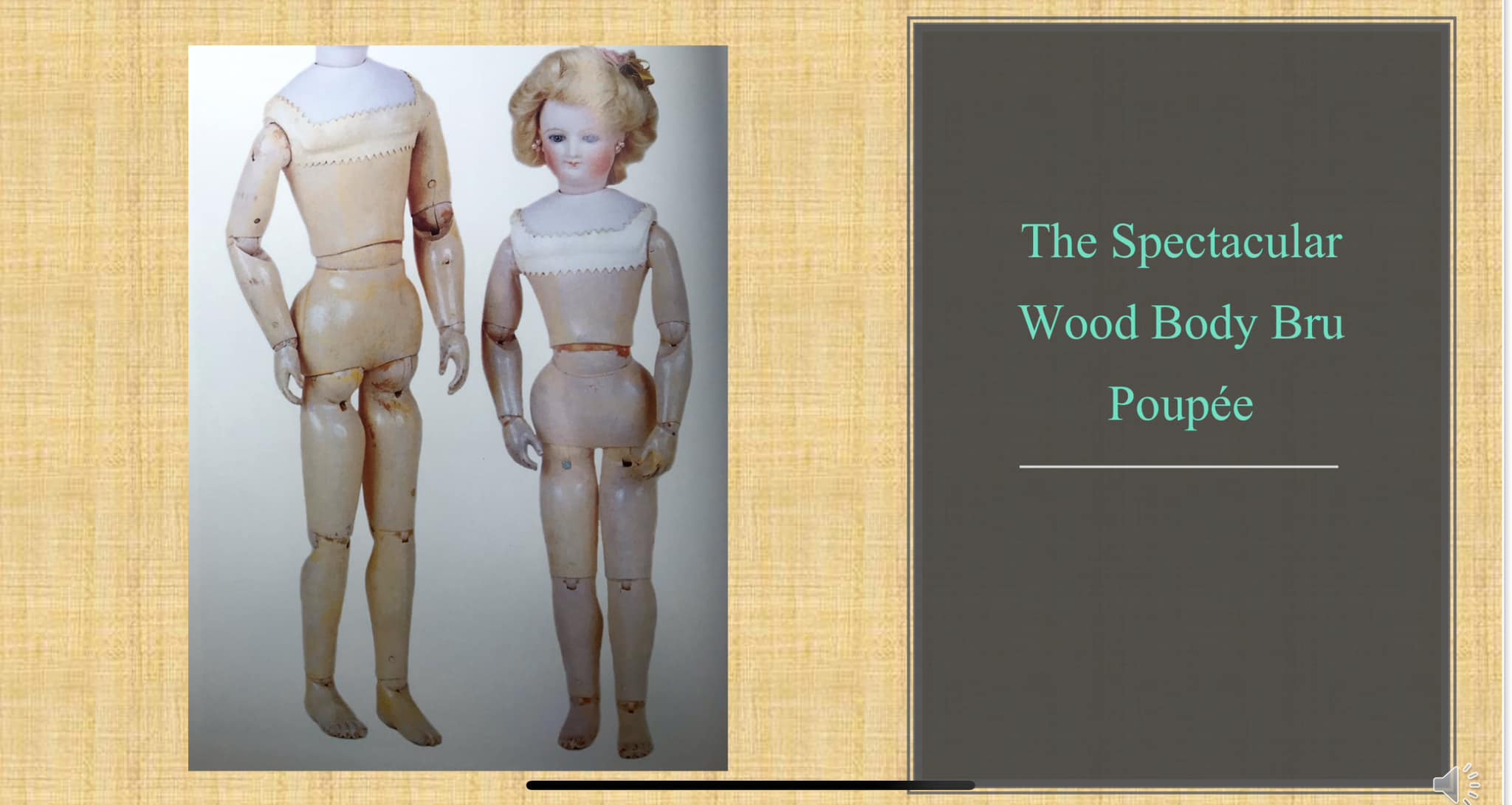
Bru has now been in business for three years …
With the dawn of the new decade, a daughter, Gabrielle Lucie, was born on 16 January 1870. Sadly, what should have been a time of joy and celebration was overshadowed by Emperor Napoleon III’s declaration of war against Prussia, a fateful mistake. The first shells rained down over Paris that January, ending a long period of prosperity and frivolity. We can only imagine the hardships the Bru family and other Parisians must have endured. Between the Prussian War, followed rapidly by an internal revolution between the Paris National Guard and the regular French Army, thousands of lives, historical artifacts, and vital records were lost. Starvation ensued as thousands suffered major scarcities of food and clean water. Thirteen months after her birth, little Lucie passed away; most likely a victim of these terrible conditions. However, we know that Bru, along with his talented and resilient wife, Appolyne, held each other up and carried on.
In the months and years that followed the couple maintained their focus on their business and dreams through prolific patents and ideas, becoming a force to be reckoned within the doll industry. The years flew by and the inventions and beautifully clothed and wigged poupées became legendary for their quality, beauty, and diversity. Bru Jne & Cie offered a wide range of prices and styles. By 1877 the company was dissolved upon completing the repayment of the generous funding provided by his benefactors and the company reassembled as simply Bru Jne. Thus, a new era began; the firm was relocated to more spacious quarters and a second daughter was born 19 December 1877, and, for the first time, Bru applied to participate in the coming 1878 Paris Universal Exposition. This was a new and exciting time!

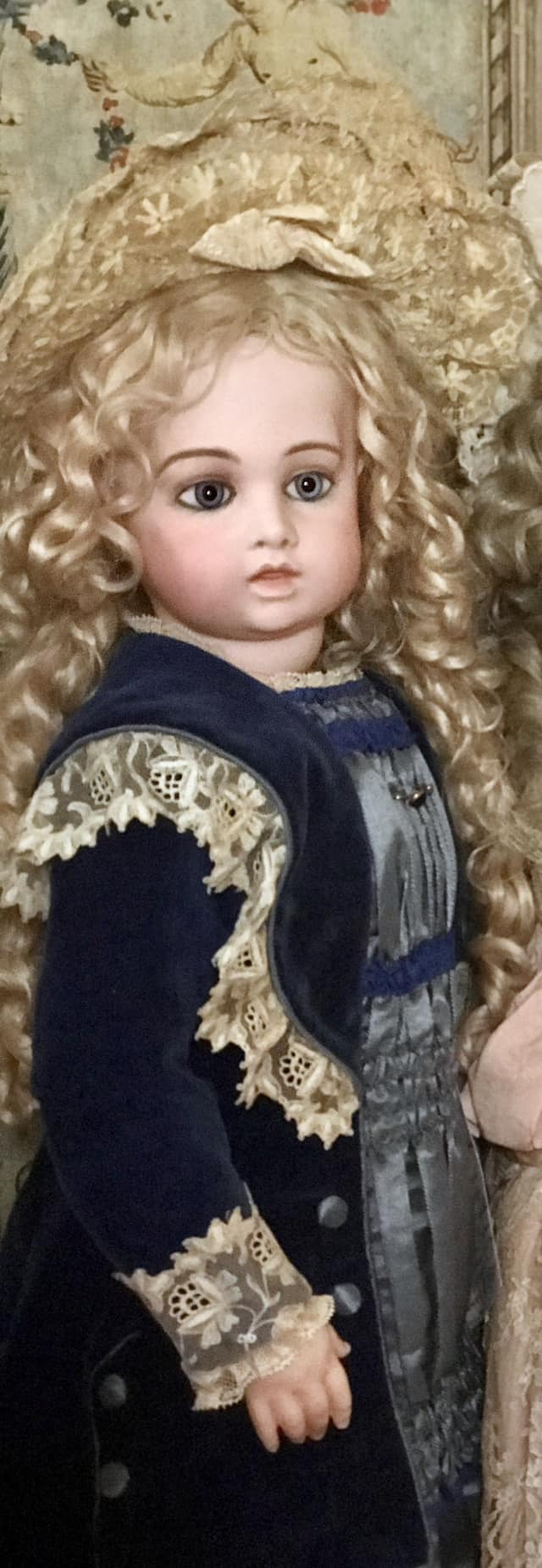
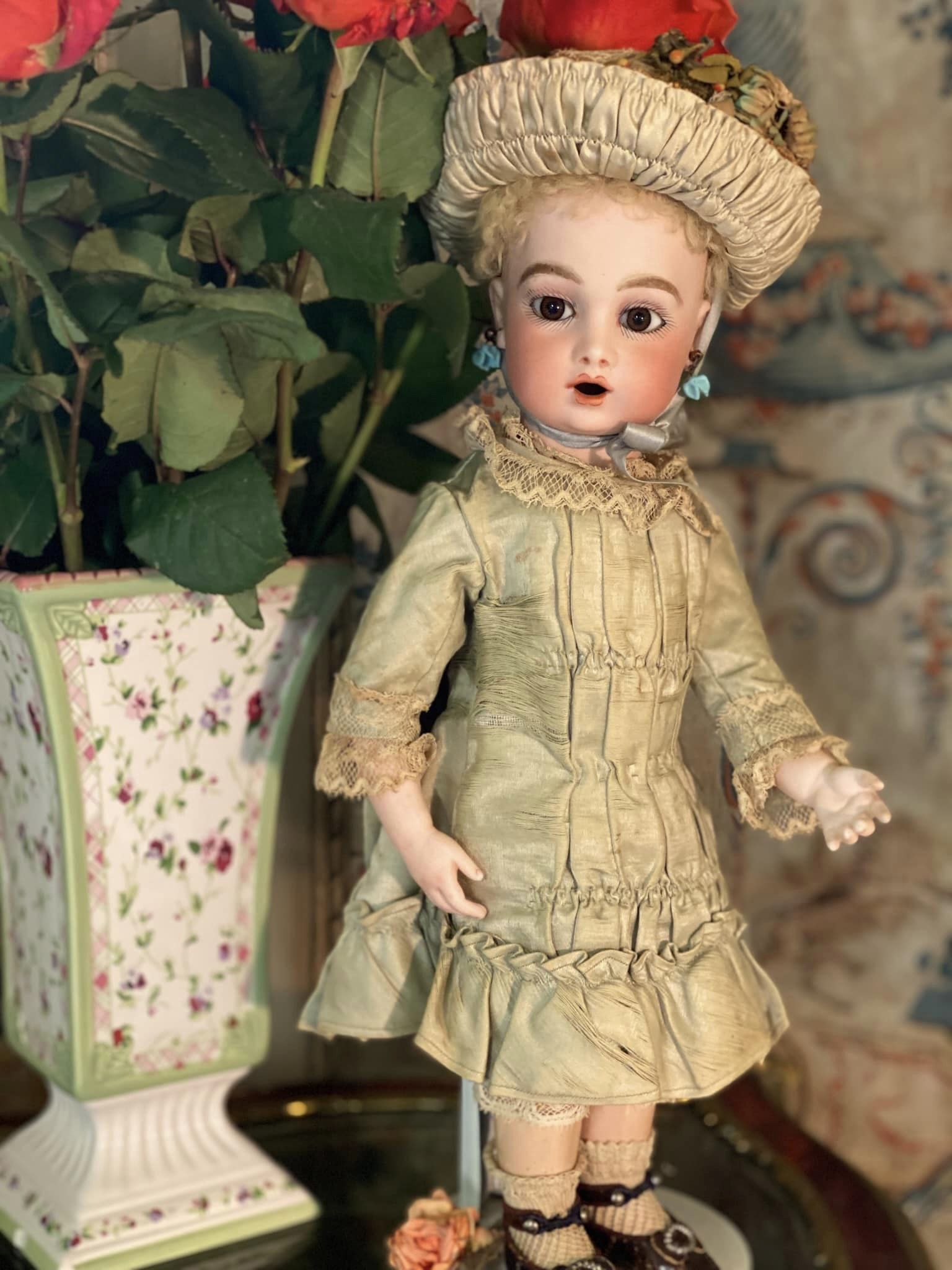
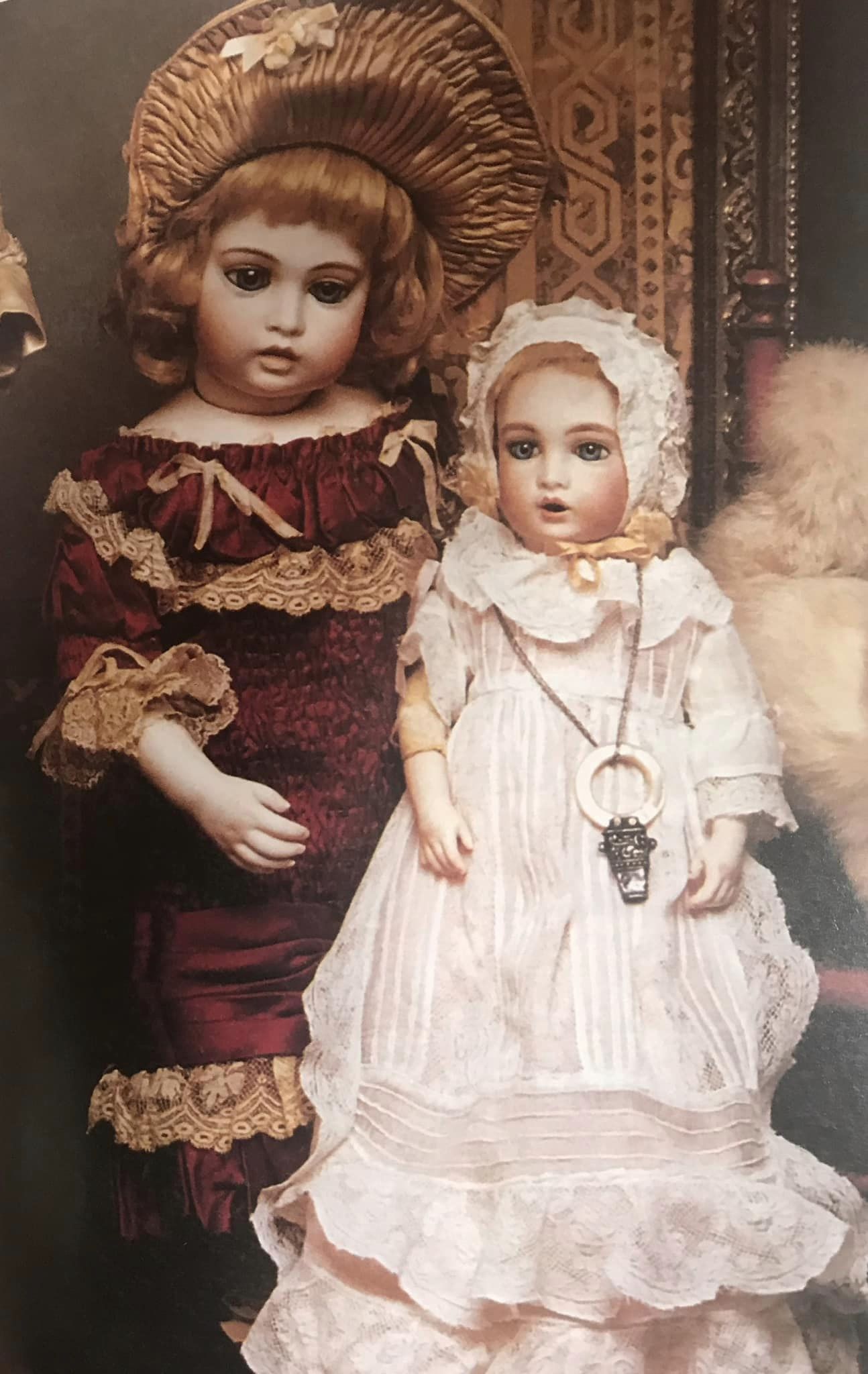
Finally, the big day came and Bru’s Poupées (Lady Dolls) were enthusiastically applauded at the Exposition, and he was awarded a silver medal. However, his attention rapidly diverted to the gold medal awarded to the Jumeau firm for their first Bébé (Child Doll) entry.
The accolades the Jumeau Bébé received ignited Leon’s competitive nature launching him wholeheartedly into the manufacture and creation of the Bru Bébé. Clearly, his prior poupée patents and research paved the way as he developed his initial Bébé dolls. His first patent, filed in 1878, was for a fully articulated bébé made entirely of rubber or “gomme durcie” and was advertised from 1879 through 1899 when the firm closed (few examples of this doll have been found).
In 1879 designs for kid bodies were patented to represent the bodies of a young child with rounder proportions through the belly and shorter, chunkier lengths to the limbs than the kid bodies of the lovely poupées. The faces, however, were a completely new endeavor, and hired a celebrated sculptor (attributed to Ferdinand Barbedienne 1810-1892) to render a childlike face with full cheeks, sweet expression, and the slightest double chin, molded in bisque.
Also, in 1879, Bru created and advertised a “Bébé (Modele) en bois sculpte completement articule”, translated, a carved doll in sculpted wood with a completely articulated body (and bisque head which he does not mention).
Initially, when he advertised this new bébé creation, he also advertised the wood body poupée, confirming the influence this previous wood body Poupée or Fashion Doll design had over this next creation. Subsequently, the Bébé Modele was advertised on its own and no longer referred to as “Modele”after 1881. This wood doll body was produced for four years and appeared with several faces: the earliest or first-generation head of the Bébé Brevete, the second-generation head (the Circle and Dot) and the early iterations of the classic Bru Jne face or third-generation face.
These dolls are especially popular and highly sought after today by collectors for their beauty and limitless possibilities for posing.
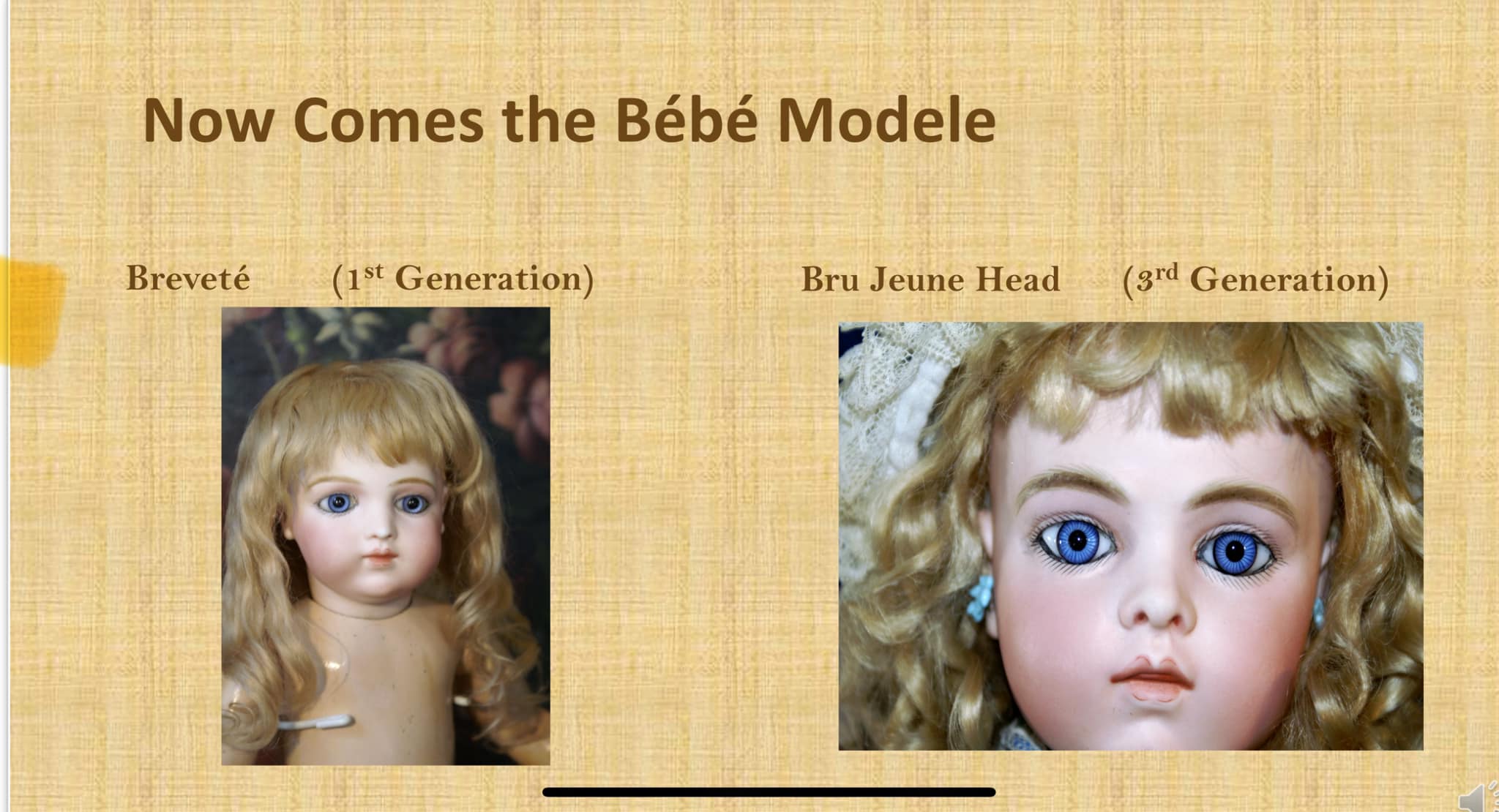
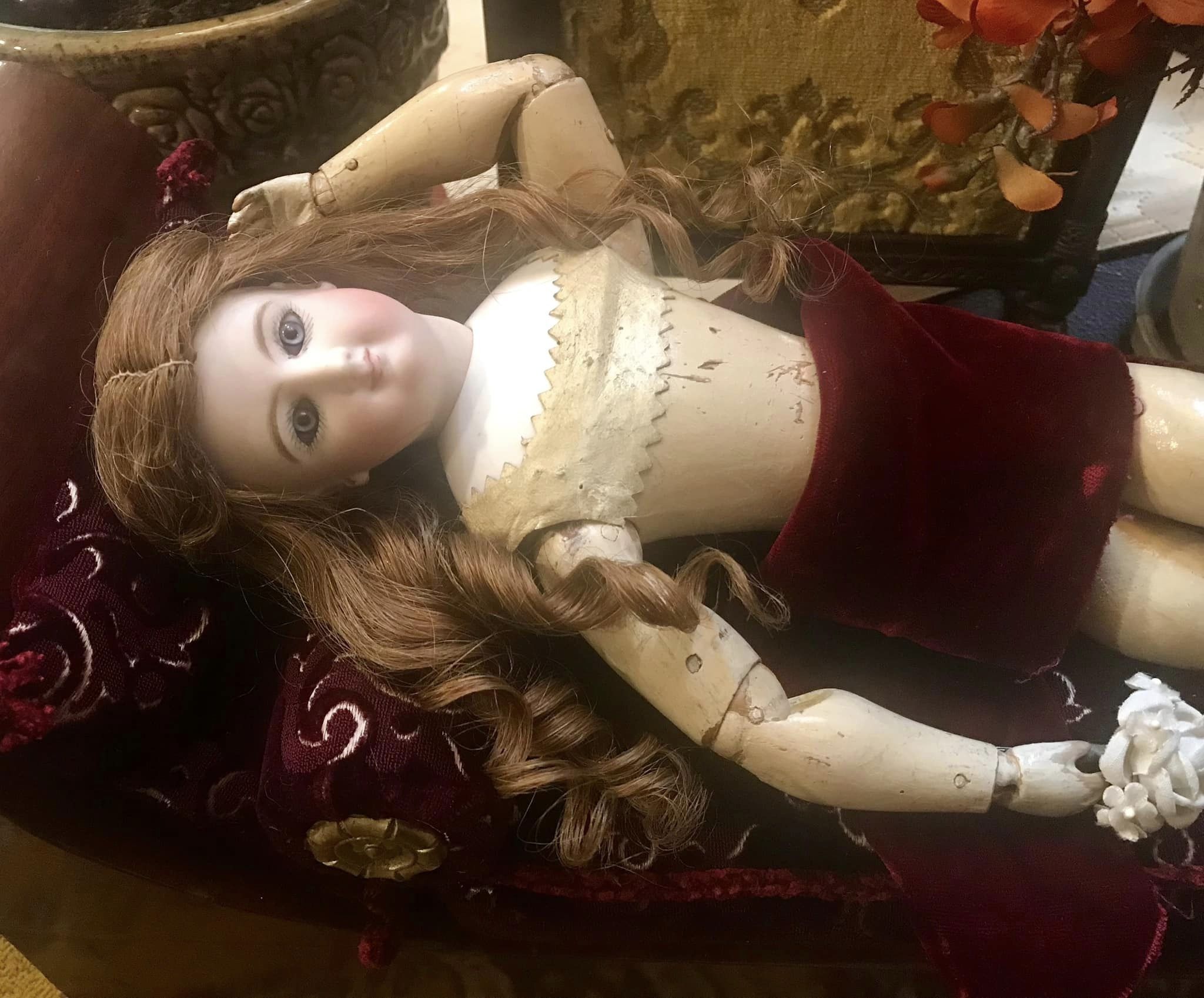
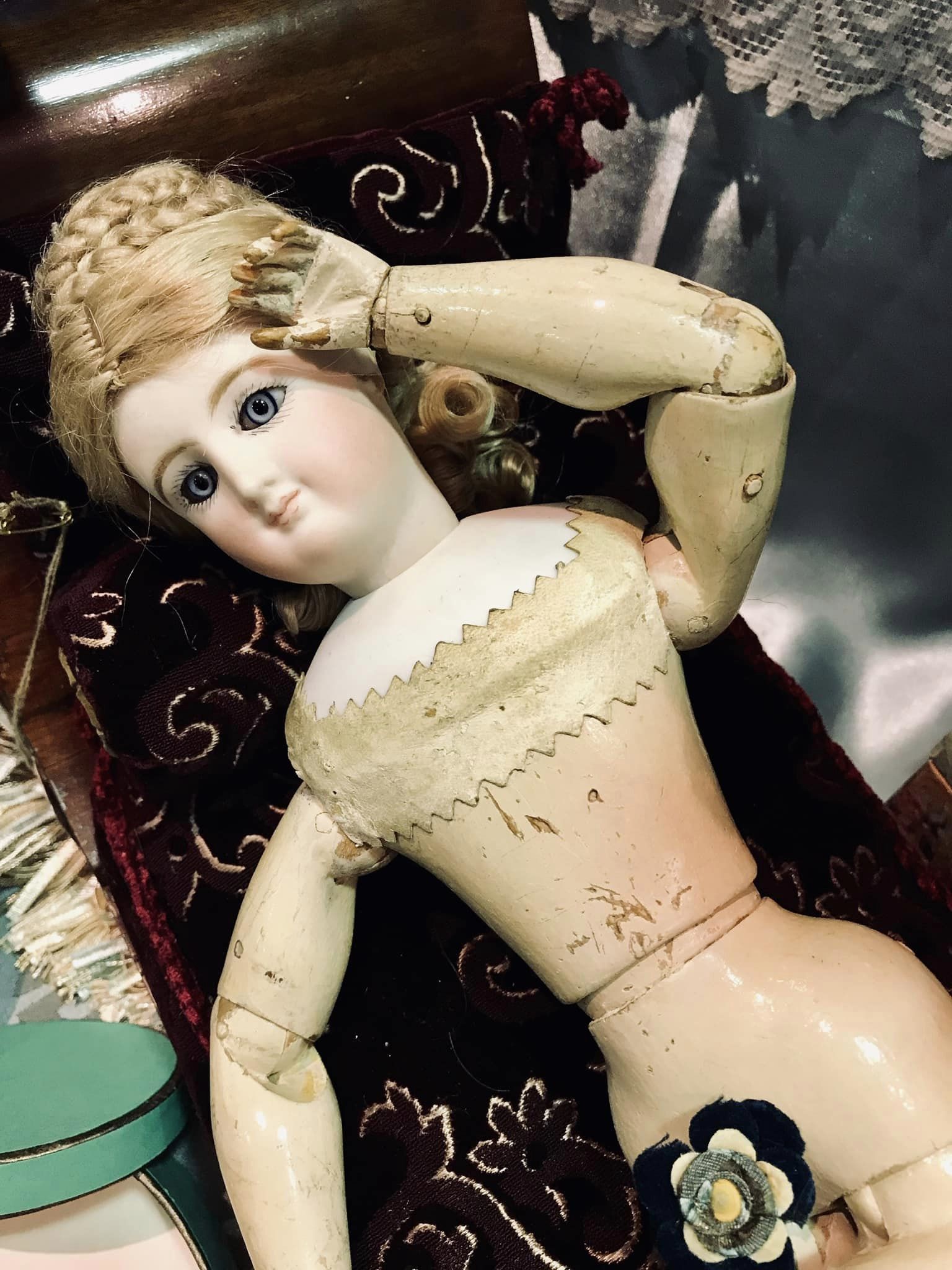
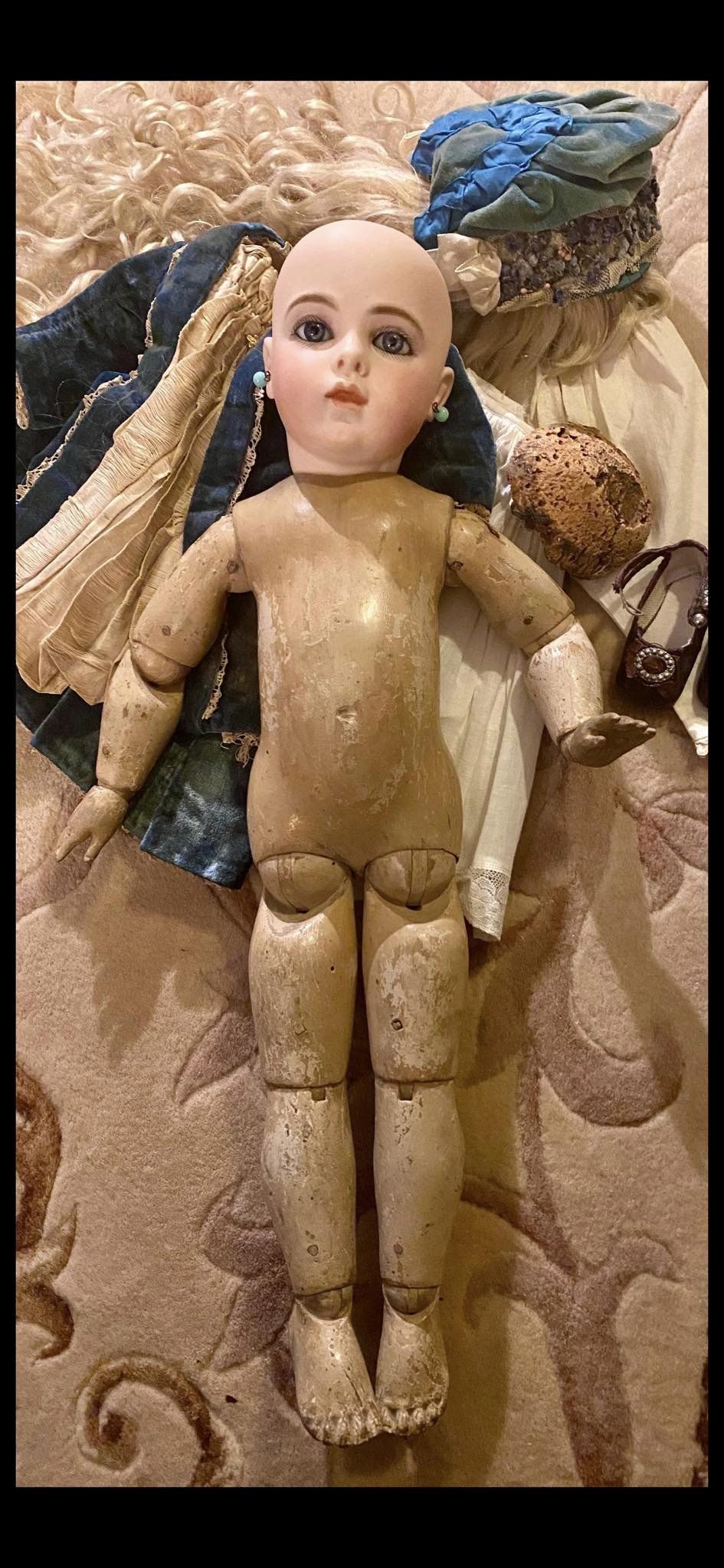
As we delve further into the history of this innovative and enthusiastic company we see that one innovation leads to another! Let’s continue…
The wood-body dolls known as Bébé Modele are considered quite rare as they were not made in great quantities due to the complexity of the chip-hollowed torso which allowed the attachment of the limbs via a dowel-pin construction. The Jumeau firm and Maison Huret also deposed wood bodied dolls which are also considered rare finds today as well.
However, the Bru Bébé Modele was a fully perfected grace, a deluxe articulated body of exquisite refinement, each with a lyrically beautiful face.
During this same period, Bru designed the enchanting second-generation Bébé head, now referred to as the Circle Dot, a modern reference for the mark on the back of the doll’s chubby neck which showed placement for the suckling mechanism for the Teteur Bébé. This face was used for Bébés as well as the new Teteur infant. With the design of the open/closed mouth, as a bébé she could have softly painted teeth or the appearance of a tongue. Large eye cuts and rounder cheeks truly gave this doll a distinctive childlike look. The mouth could be cut open to accommodate the Teteur mechanism which changed the appearance of the second-generation model.
The patent for the Teteur was filed October 1879 and produced through 1898 in evolving styles and mechanics. This doll was produced almost 20 years throughout each of the successors! A rarity for any doll during the nineteenth century!
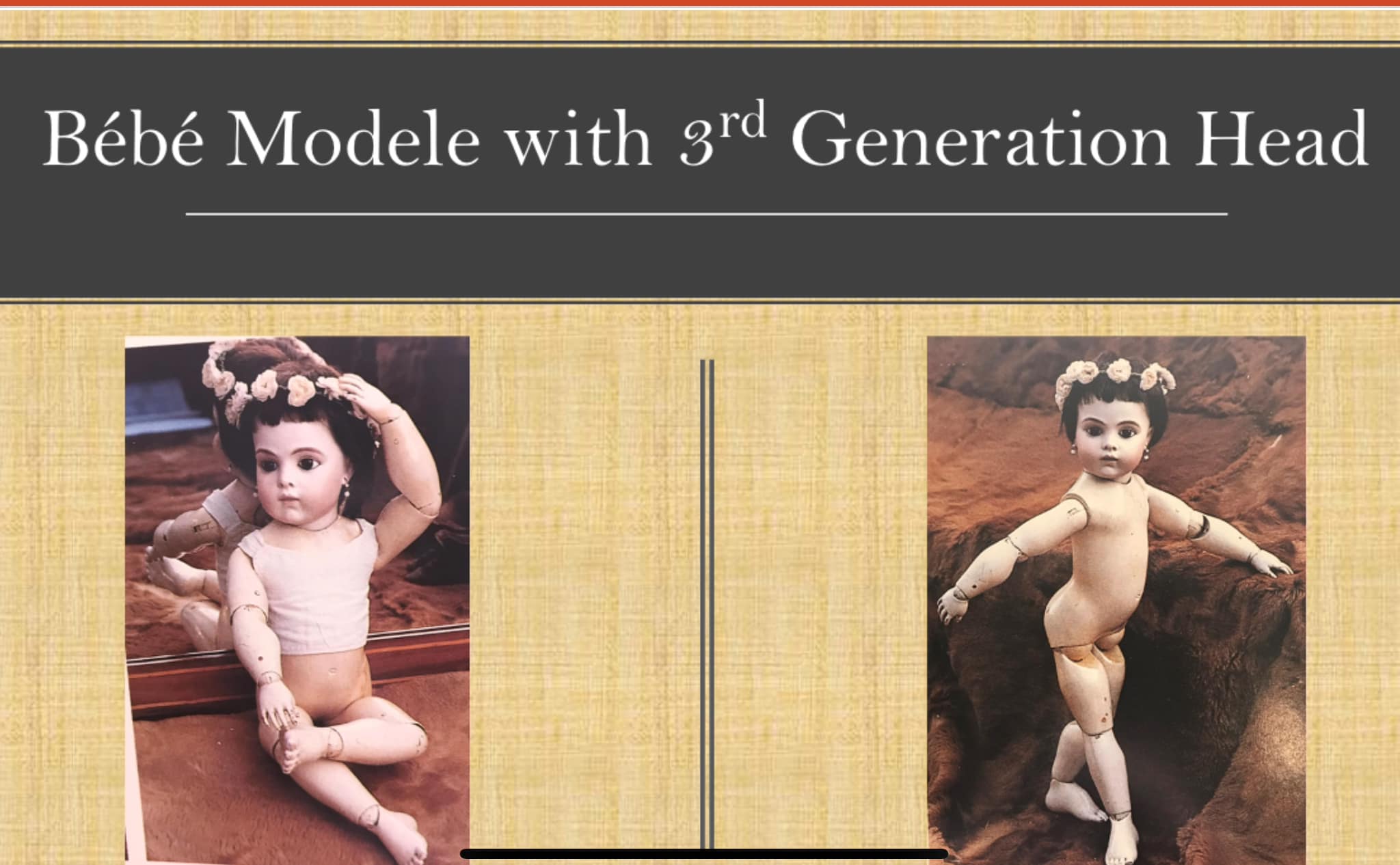
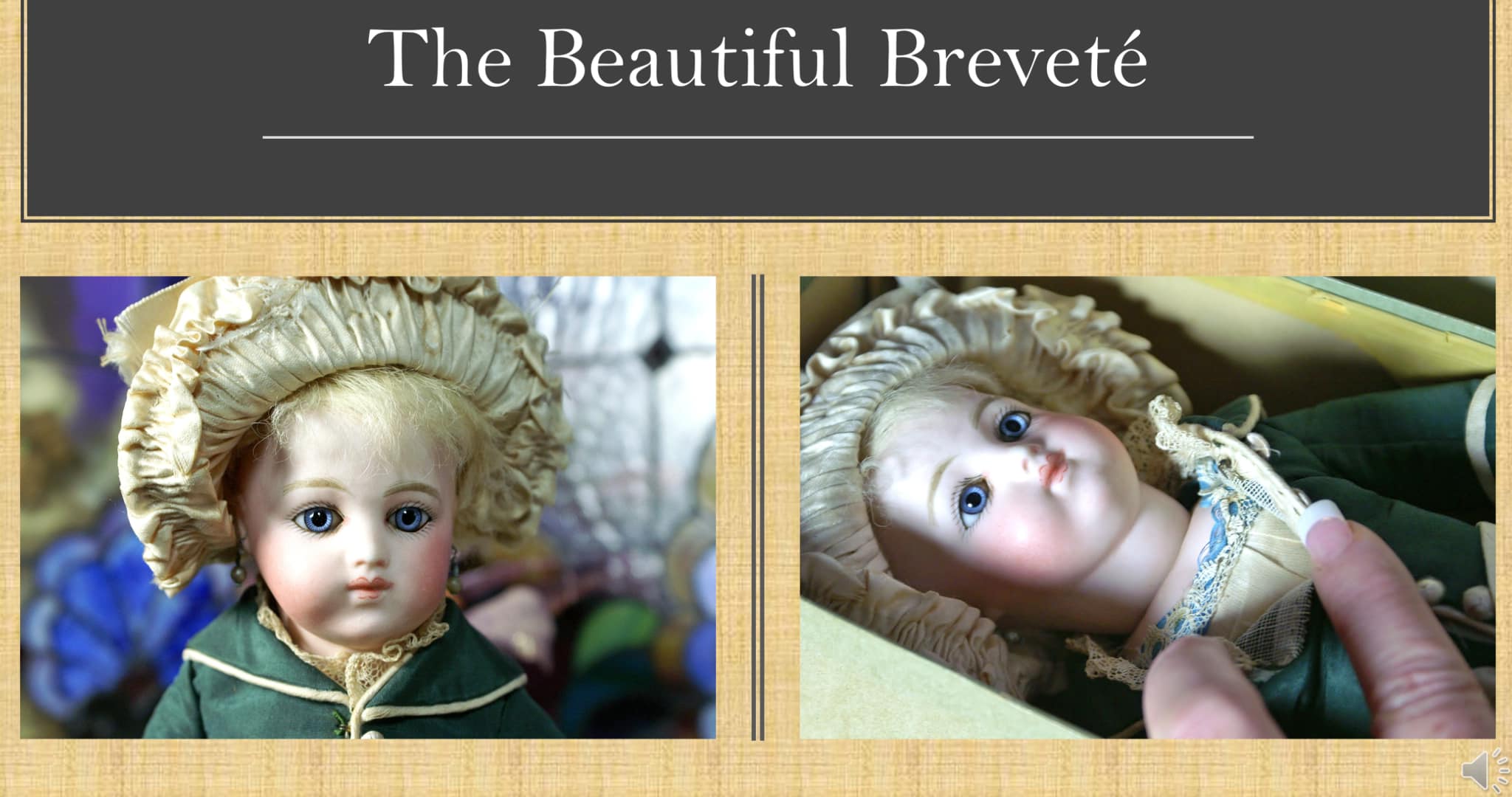
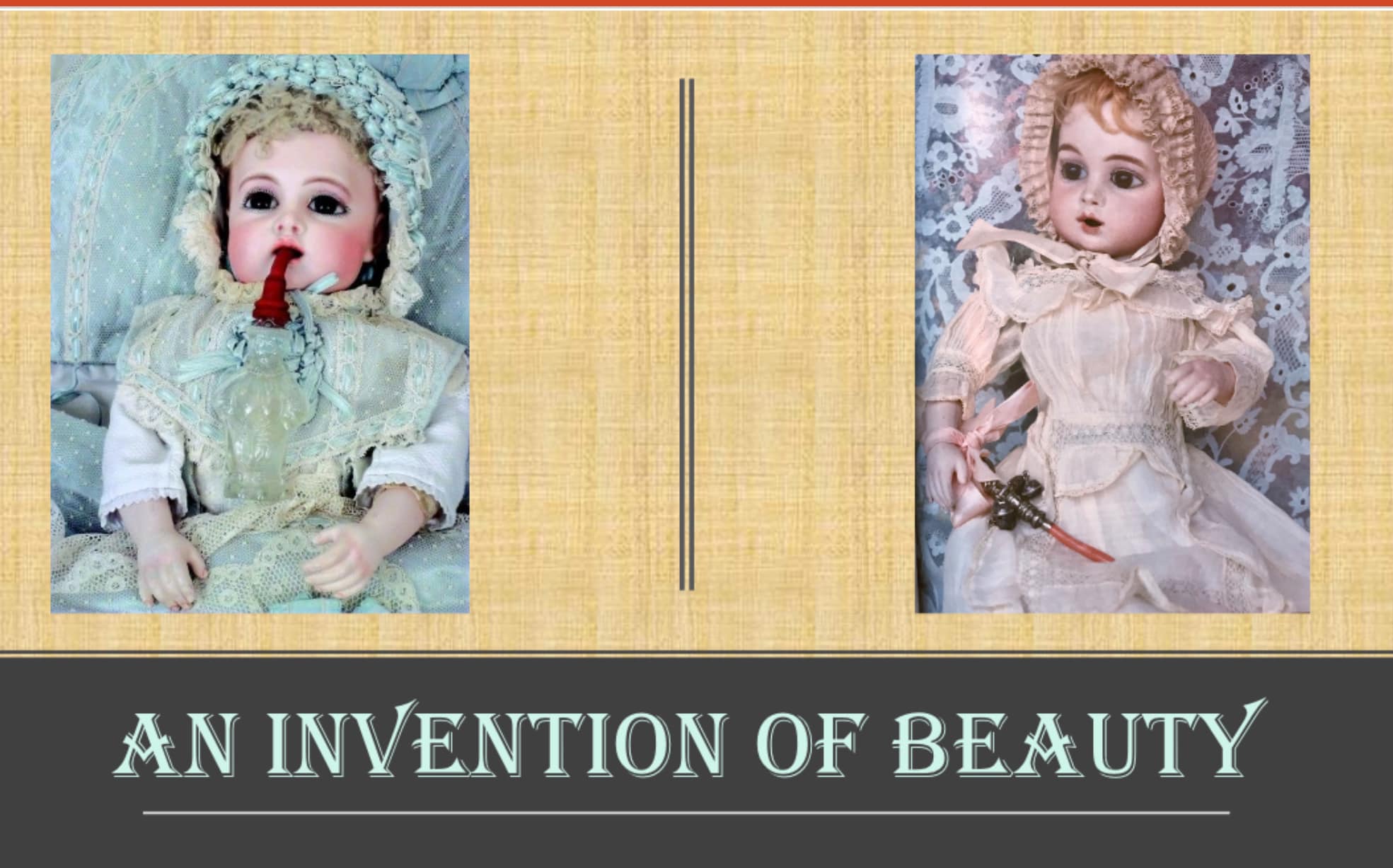
From 1879 through 1883 Bru was extraordinarily prolific and creative. He was inventive and genius in his pursuit of the most unique and beautiful Bébés to be found.
After the invention of the Teteur he conceived of an impressive improvement in the form of Bébé le Gourmand. A doll of amazing beauty and function.
In this part of our story I invite you to CLICK on EACH SLIDE below and read the captions to fully appreciate Bru’s successive achievements from 1879-1883. A picture speaks a thousand words!
Our final chapter in Part 7 will take us to the Henri Chevrot era where we will learn about his collaboration with Bru and the sale of the firm to Chevrot. A stellar success!
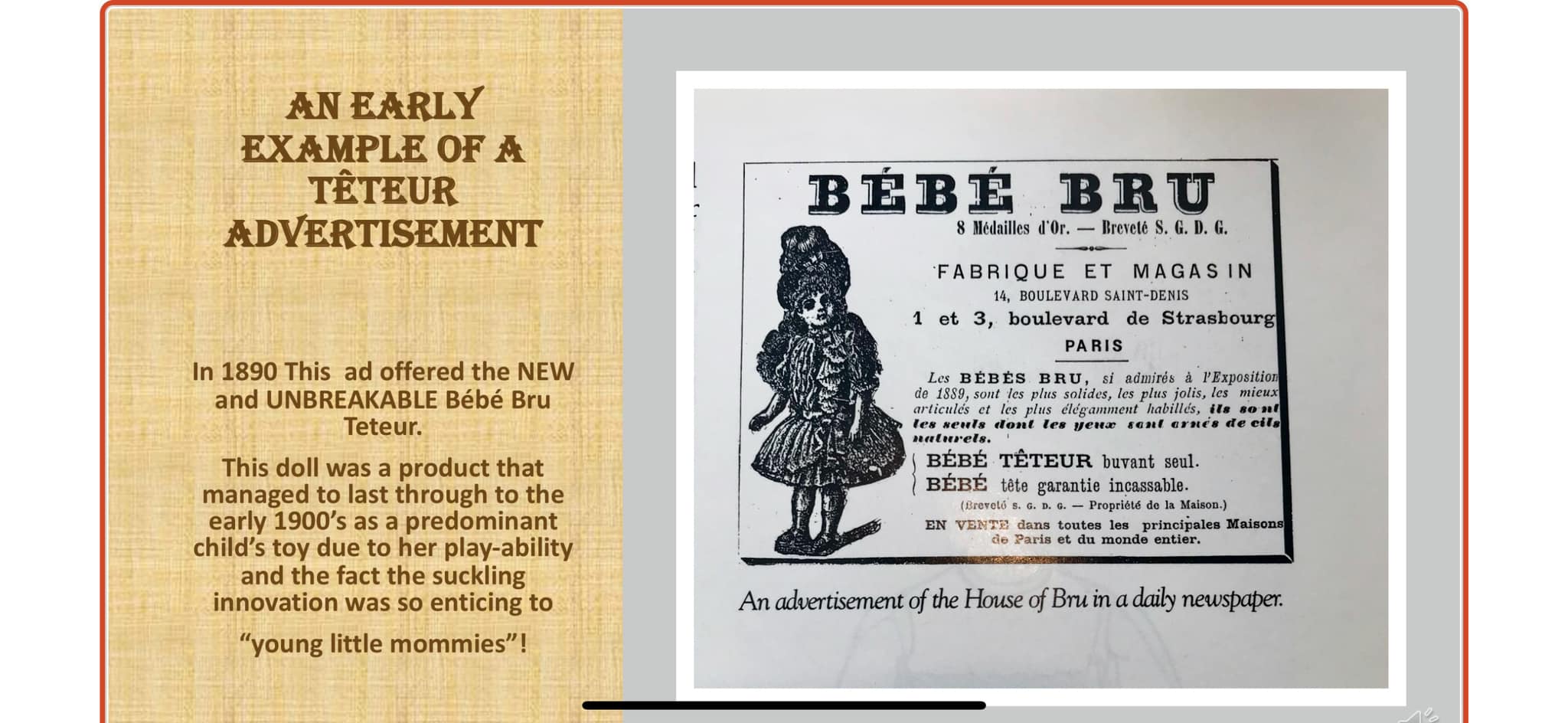
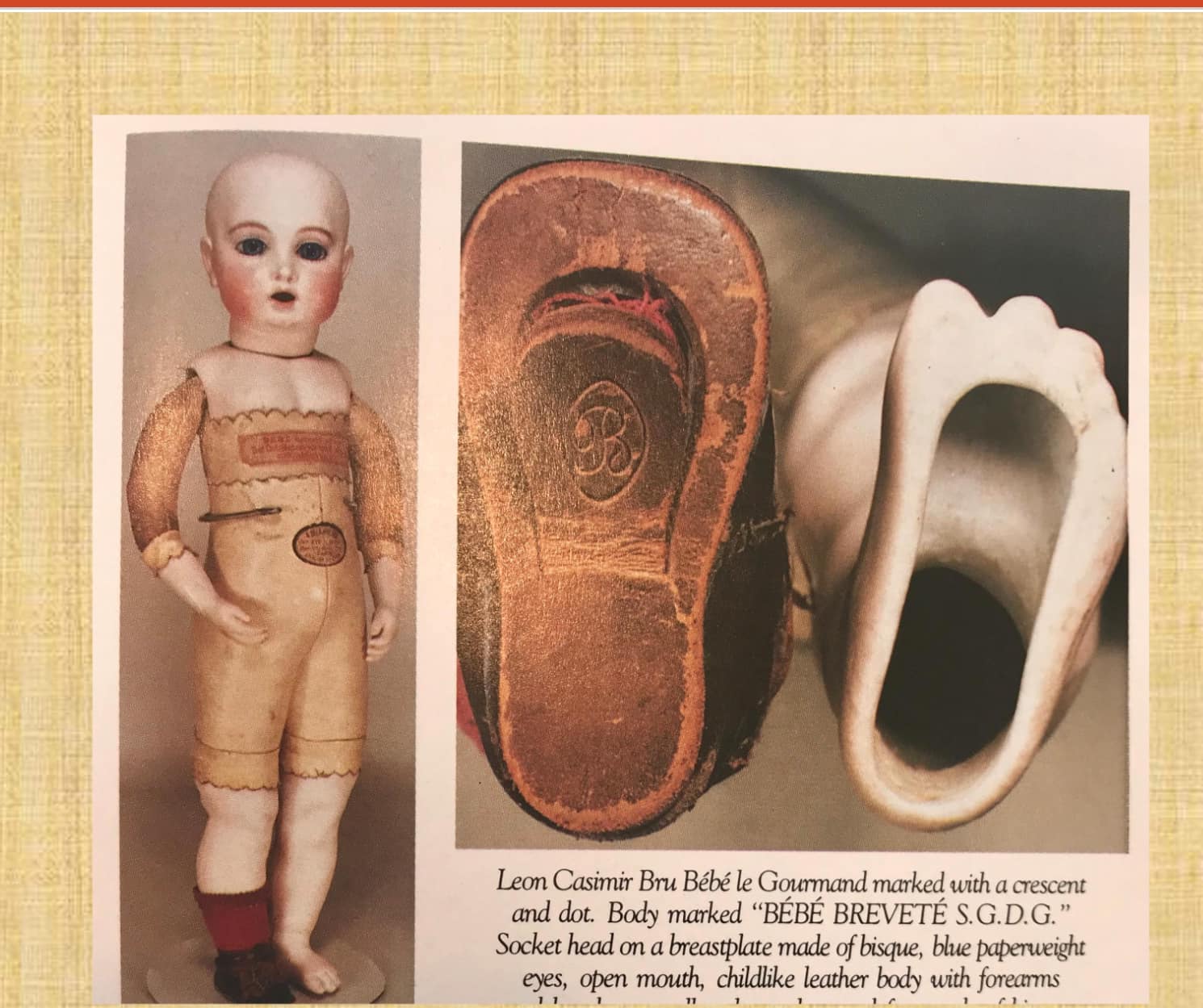
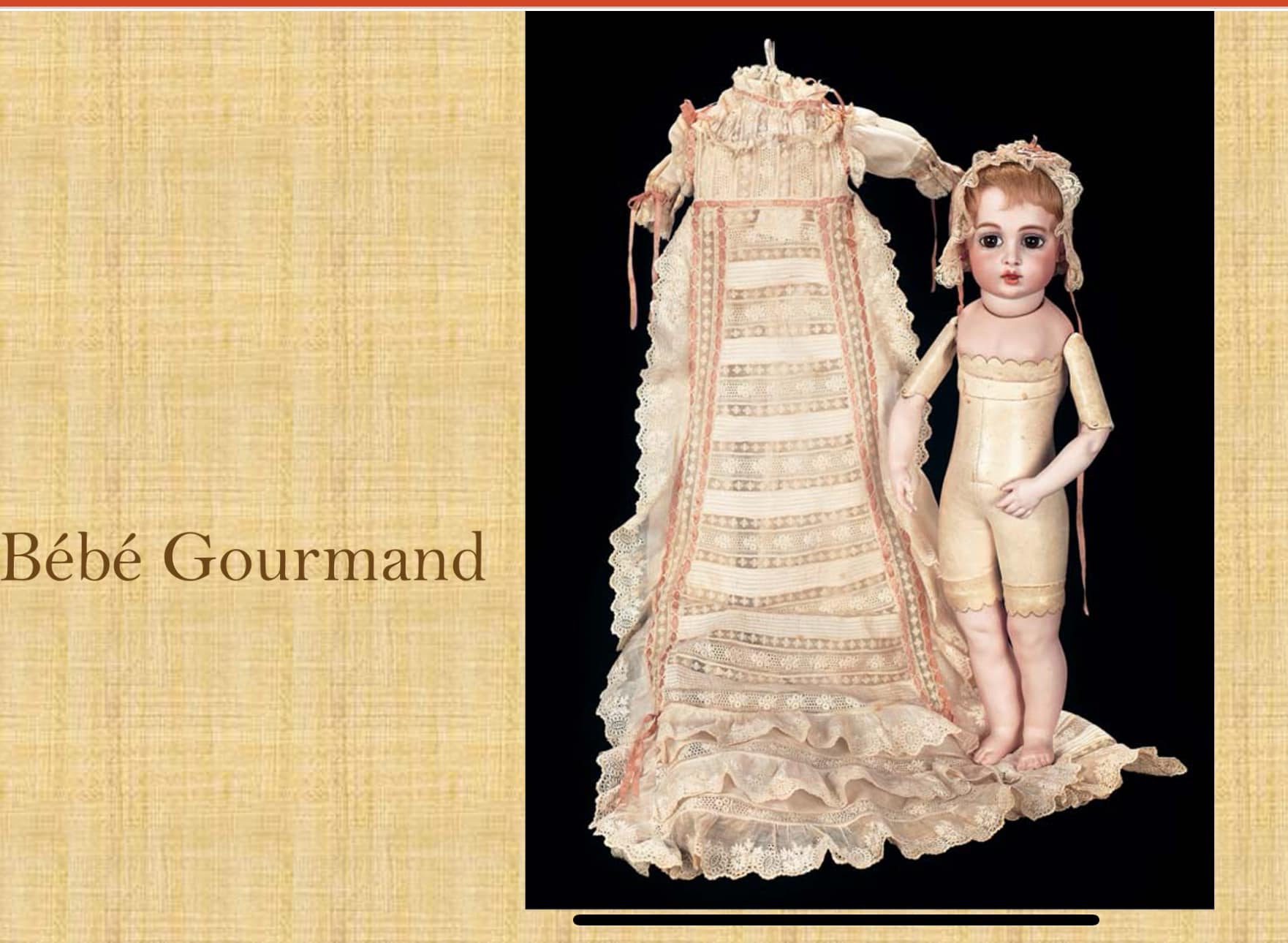
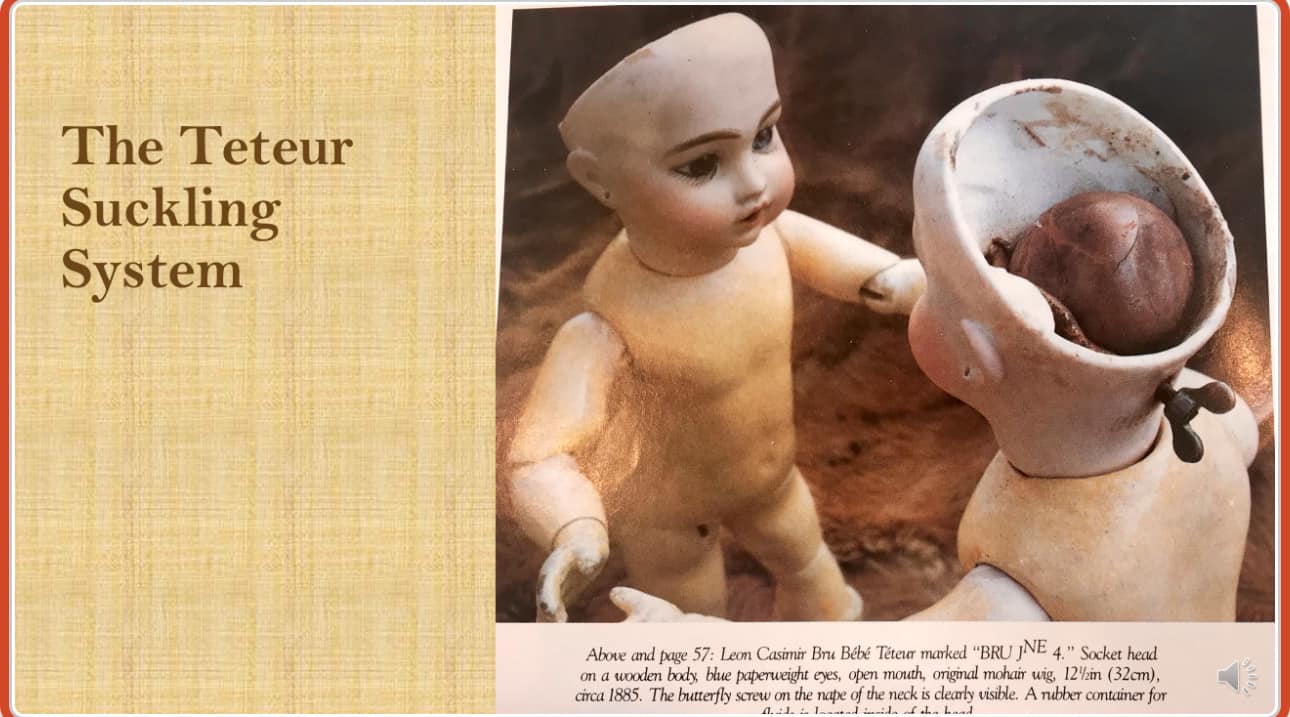
In 1883 Leon Casimir Bru and Henri Chevrot were introduced by a mutual friend in the doll industry. It seems the two innovators hit it off and shared ideas. It’s unclear what prompted Leon to decide to sell his company. He and Henri struck a deal and Leon stayed on to assist through the transition. They jointly worked on the patent to articulate the legs, a superior enhancement to the beautiful Bru doll. The patent was submitted in Henri Chevrot’s name in November 1883 before the sale of the company was finalized later in December. Chevrot wisely retained the name of Bru, knowing the weight and reverence it carried.
Chevrot narrowed the proportions of the Bru’s body, indicating a somewhat older child. This gave the doll more mobility, and a slender body, and enabled the doll to have exquisite costuming. For a brief period, wanting an even narrower waist and shoulders, Chevrot placed a size larger head on a body. For example, a size 7 head on a size 6 body. We see these examples today.
The example below shows Chevrot’s innovation of wood arms. The doll was marketed as “Unbreakable” or “Incassable”. These dolls were only produced for about 1 1/2 years.
During Chevrot’s ownership the firm flourished. He focused on creating the most beautiful faces possible, continually refining and insisting on ever higher levels of perfection. This was the height of the Golden Age of Dolls and Chevrot was riding high on his successes!
Ever newer innovations were introduced. Beautiful ethnic versions emerged and charming dolls with strung wood-jointed bodies. These wooden parts were furnished by craftsmen from the Jura mountains of France.
Over time we observe the ever-changing face of the third generation, Bru Bebe. Below, the child in the blue bonnet has the wonderful early pouty look of a young child.(1883-1885) The young lady in white appears to be a bit older, with an upturn to her mouth, giving her a bit of a Mona Lisa smile. (1888-1889) Both dolls are marked Bru Jne and reside on Chevrot-era kid bodies with wood-carved legs and articulated bisque arms. Chevrot won three gold medals for his beautiful dolls between 1885 and 1886.
In 1889, Henri decided to sell the company shortly following the birth of his child. And so, we come to the end of the golden age of the Bru and Chevrot’s era. He was good friends with a successful businessman in the industry named Paul Girard. Mssr. Girard was an inventor at heart and delighted adults and children with his inventions and novelties. Unfortunately, to this end, the refinement and details for appearance and aesthetic beauty were compromised. By 1900 the house of Bru ceased to exist, although the History and Romance for these spectacular accomplishments will go on and on.
Thank you for going back in time to learn about the accomplishments of the House of Bru. We have only skimmed the surface! I invite you to read numerous books available in the market today, most notably by François and Danielle Theimer and translated by Florence Theriault. And my gratitude for their work and research is immense!

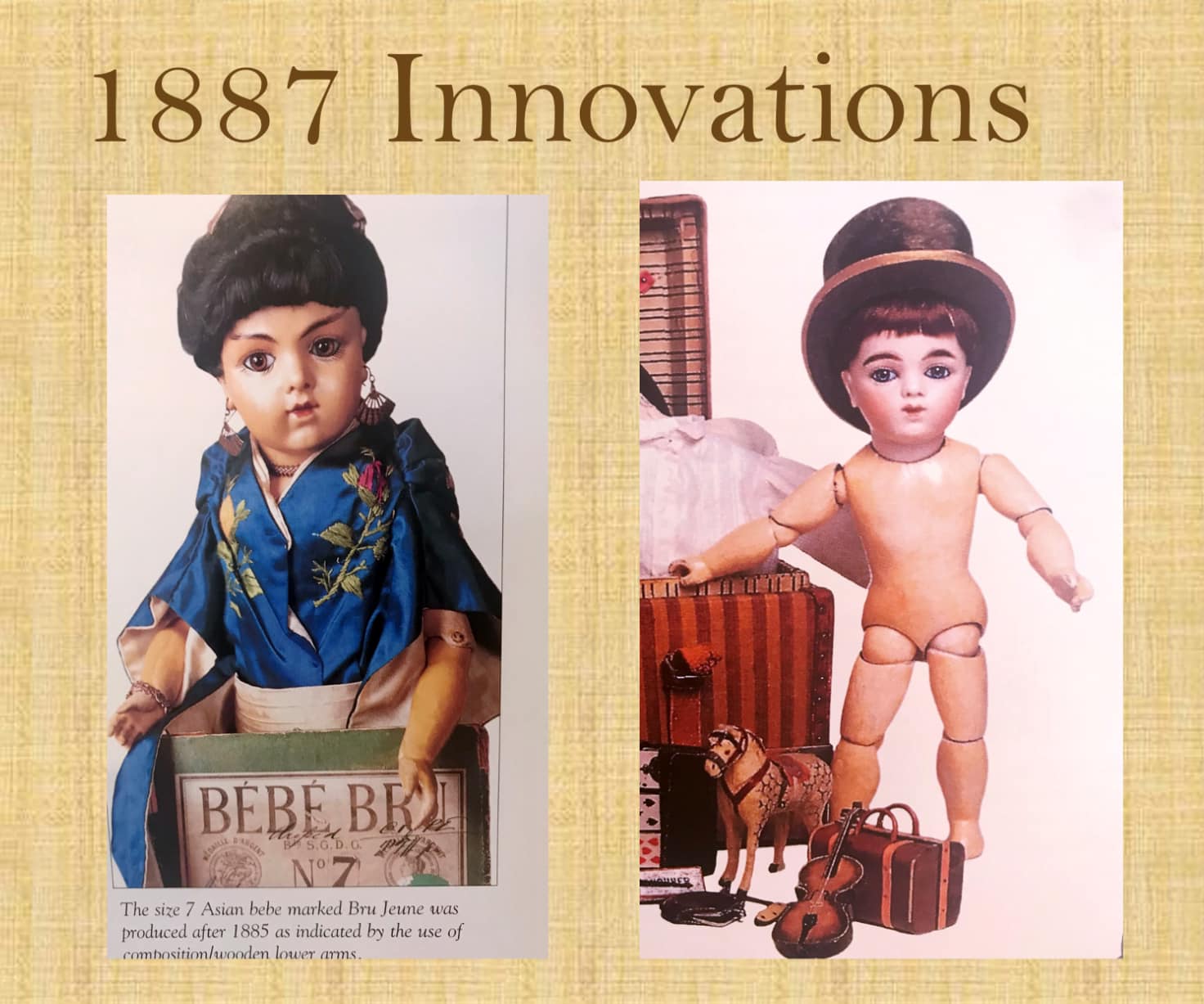

Billye Harris and Maggie Bessie Dolls
January 2024
“We will be learning about dolls who are near and dear to my soul. My North Carolina spirit…”
The North Carolina Moravian Maggie Bessie dolls.
These American cloth dolls were made in Old Salem, NC by a pair of industrious and intelligent sisters, Margaret Gertrude Pfohl and Caroline Elizabeth Pfohl. The pair were lovingly called Miss Maggie and Miss Bessie… Therefore the name of the doll became known as the “Maggie Bessie” doll….
The sisters never married. One had lost some of her hearing due to an illness and it was natural that the other would want to care for her. Their mother had created a cloth doll for them in their childhood and they sought to make a similar doll. Their home was popular with children of the area and it was a Sunday afternoon destination for the younger set. They wanted to create a doll which would reflect the old fashioned charm of their yesteryears. The dolls of their childhood years were generally made of bisque. The sisters desired a soft cuddly doll. They began making the dolls in the early 1890’s to as late as the very early 1940’s.
The dolls were constructed of muslin cloth with several pattern pieces. The head, and the lower limbs were then painted with readily available white oil house paint, lightly sanded and then artistically painted by Maggie.
They dressed the dolls in cotton clothing of solid colors with some exceptions made in calico prints.
The dolls shown are girl and boy examples of the Maggie Bessie doll. They are approximately 13 inches tall. Ca. 1900. Photos are from an exhibit by the author at the UFDC Doll Museum. UFDC.org.
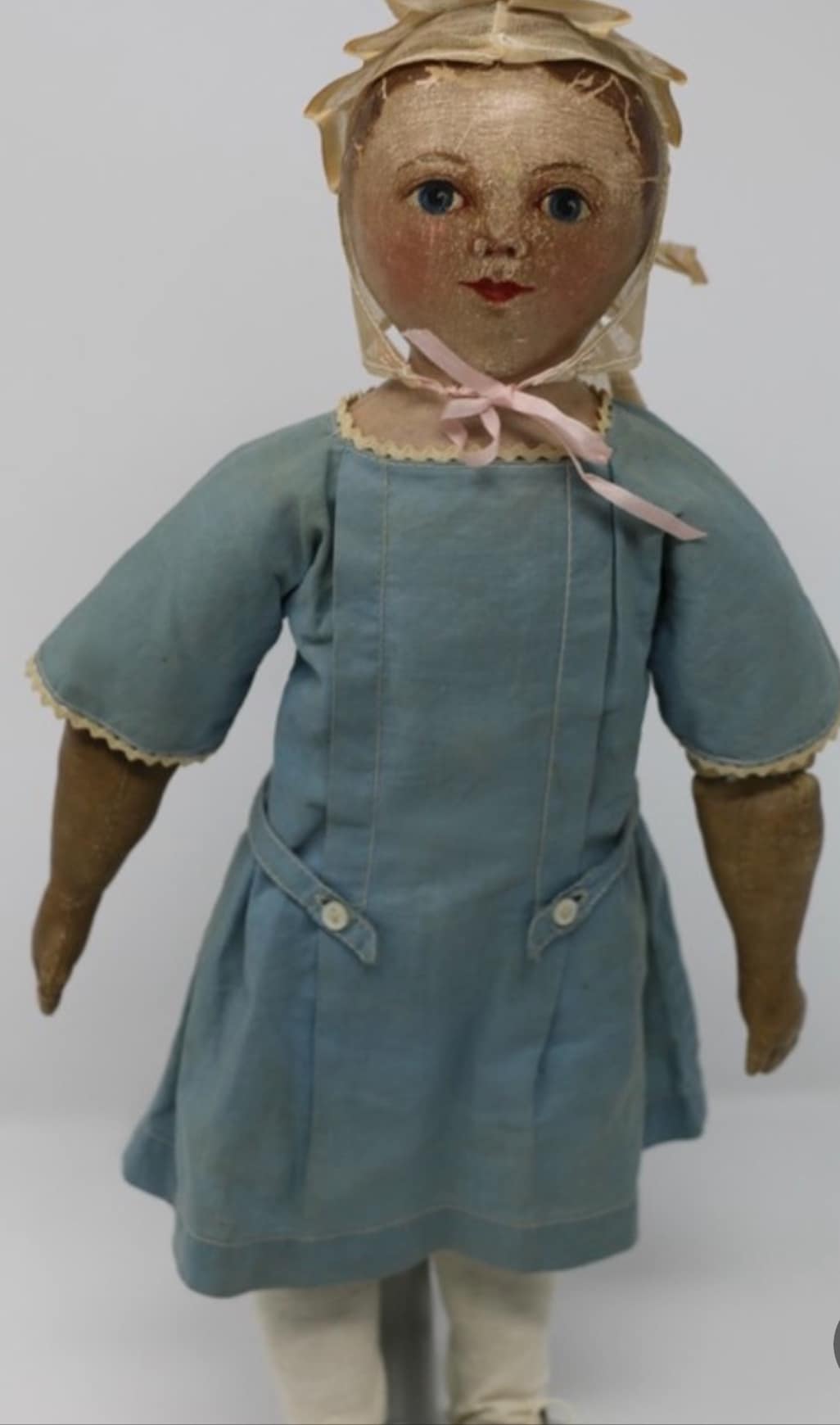
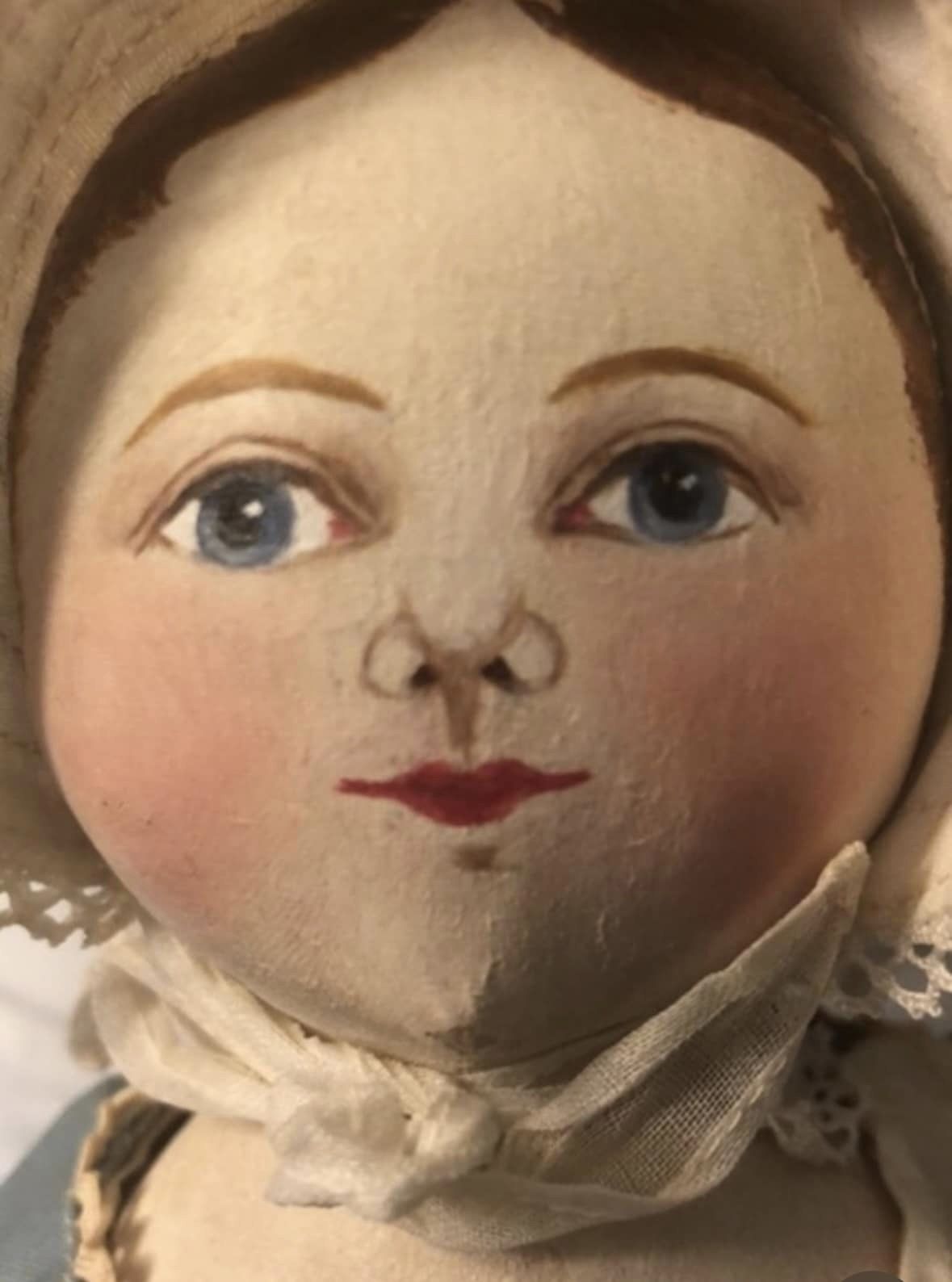
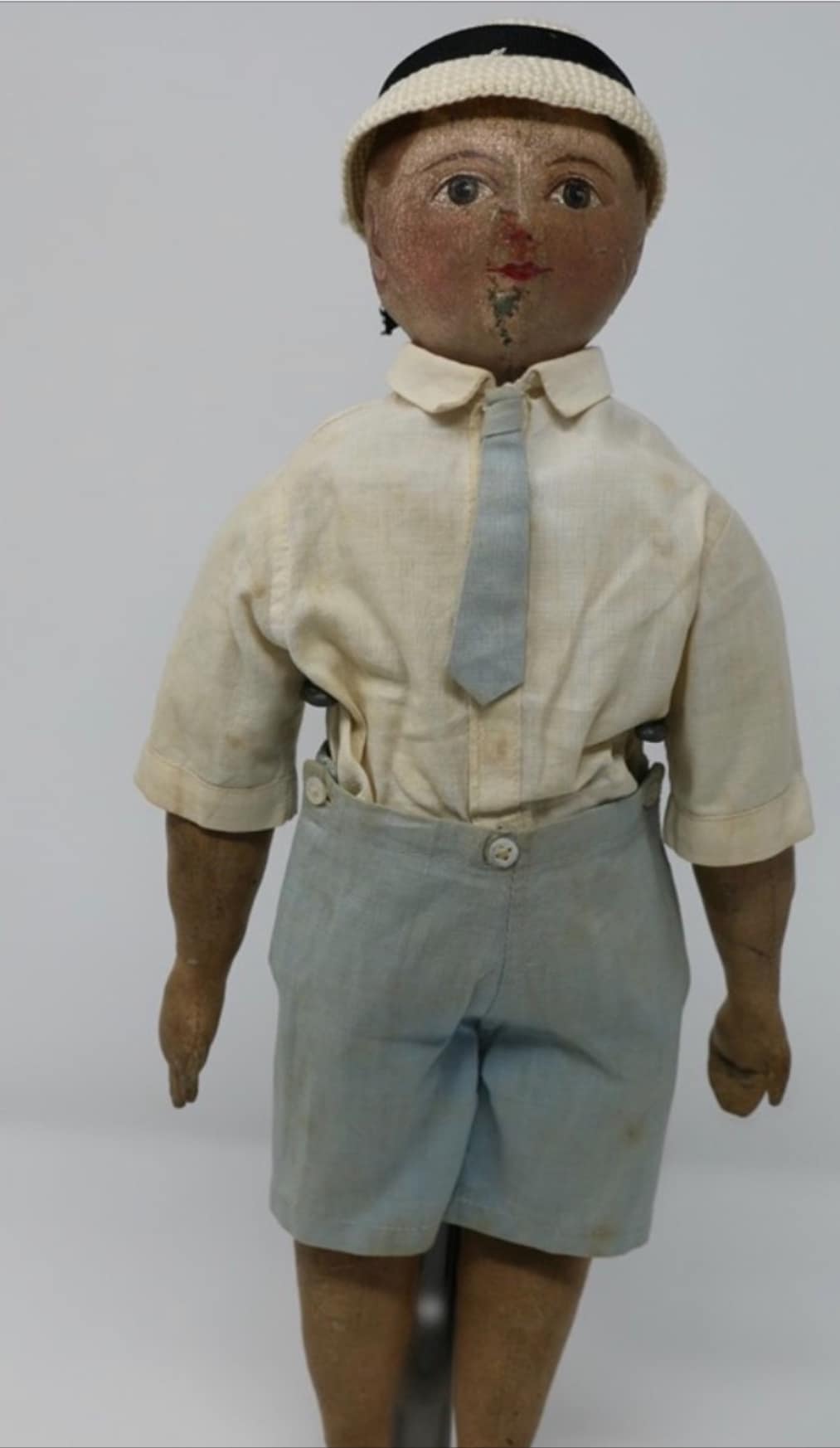
The Maggie Bessie doll is made up of twenty-two individual pieces of cloth or more, depending on the size. Many believe that the Maggie Bessie doll has a flat face but that is not exactly true. Due to the use of darts at the chin and at the upper forehead, there is a slight curve to the face. The dart at the lower portion also creates a chin. The use of darts also eliminates puckering when the head is firmly stuffed.
The limbs of the doll were made in individual segments. The lower limb pattern pieces were seen together, then turned right-side out. The newly formed limb pieces was then firmly stuffed with cotton. Once the piece was stuffed, the top edges were gathered and sewn together. The fingers and toes were then needle-sculpted with stitches separating each digit. The exception was that the thumb was separate due to the pattern design. This process was repeated for the upper limbs, except the upper unfinished curved edges were not gathered but stitched across to close. After all of the pieces were completed, they were sewn together with stitches to bind them. This method allowed the pieces to be firmly stuffed and gave the limbs a bit of flexibility. The completed limbs were then sewn to the torso at the lower edge and the shoulders. This method allowed the arms and legs to fall naturally along the body and not stick straight out like some cloth dolls. It gave the doll a more human form. After observing Maggie Bessie doll pattern pieces in many stages of completion, it was discovered that the hands may also have some needle-sculpting to create a slight “cupping” of the hand.
Maggie and Bessie were rigid on how firmly the doll should be stuffed. Each body part had to be nearly rock solid. When one presses against an antique doll by the sisters, there will be little or no give.
Finally, the pair had another trick for making a successful and lasting doll – a spine was added. The “spine” was a wooden dowel that was inserted into the head and the torso. This spine kept the head from becoming floppy.
Below are a group of photographs showing the different seams of the pattern pieces and the segmented body. Thanks to their use of ordinary white house paint, the paint wear shows these seams perfectly. The head shown is a smaller doll. Three pattern pieces were used to make the head. Five pieces were used for the “great big” doll (20-22 inches).
Included is a photo of the slightly cupped hand.
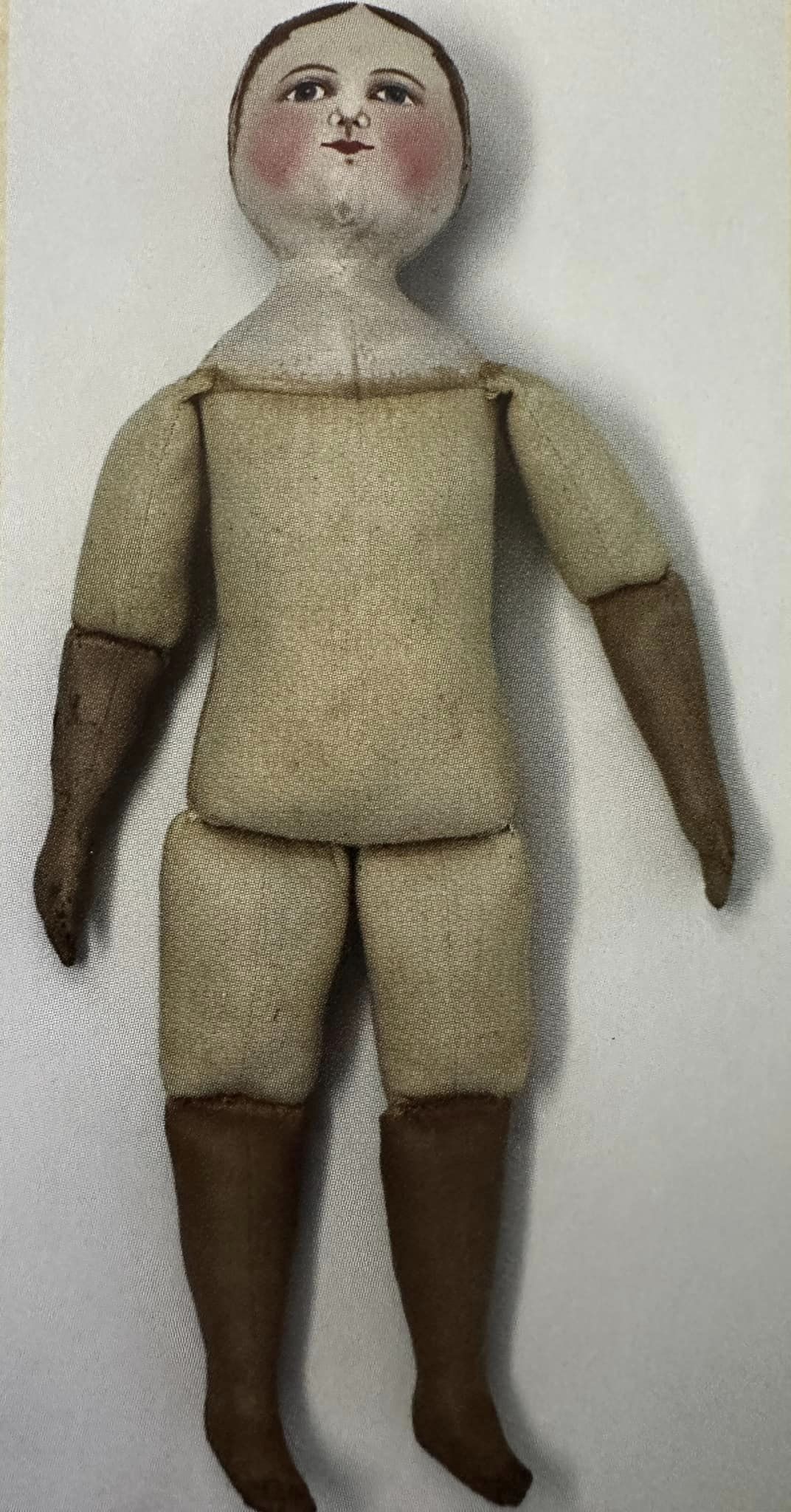
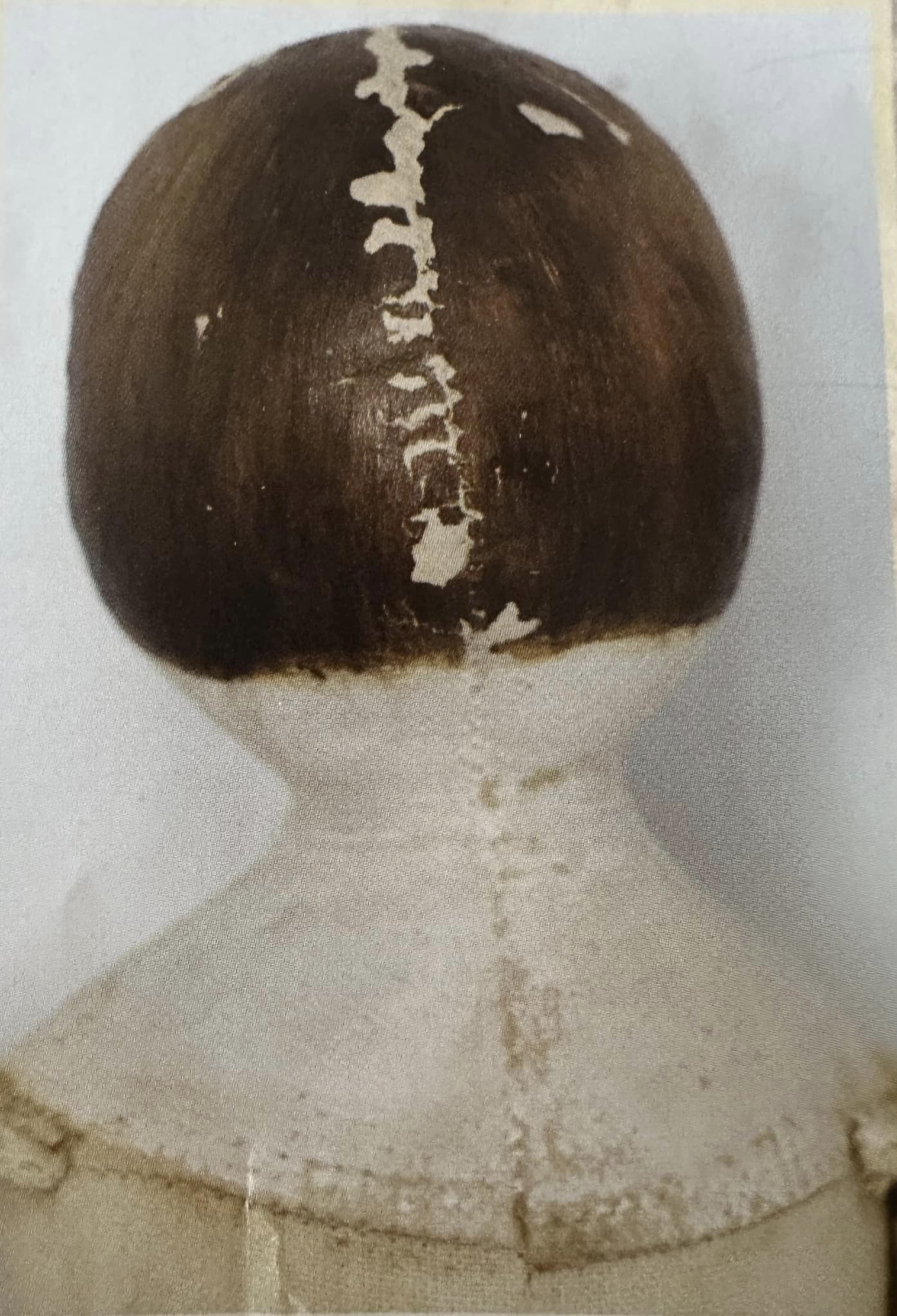
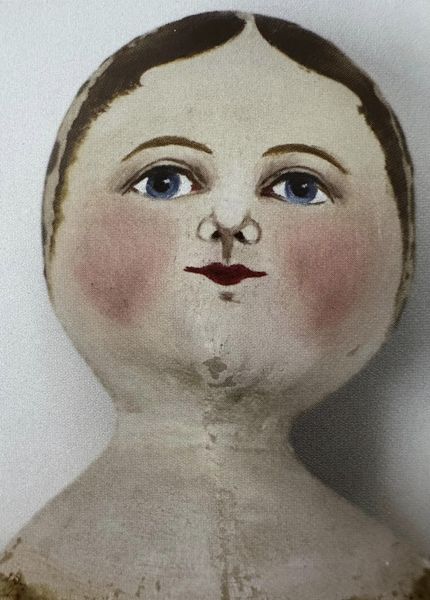
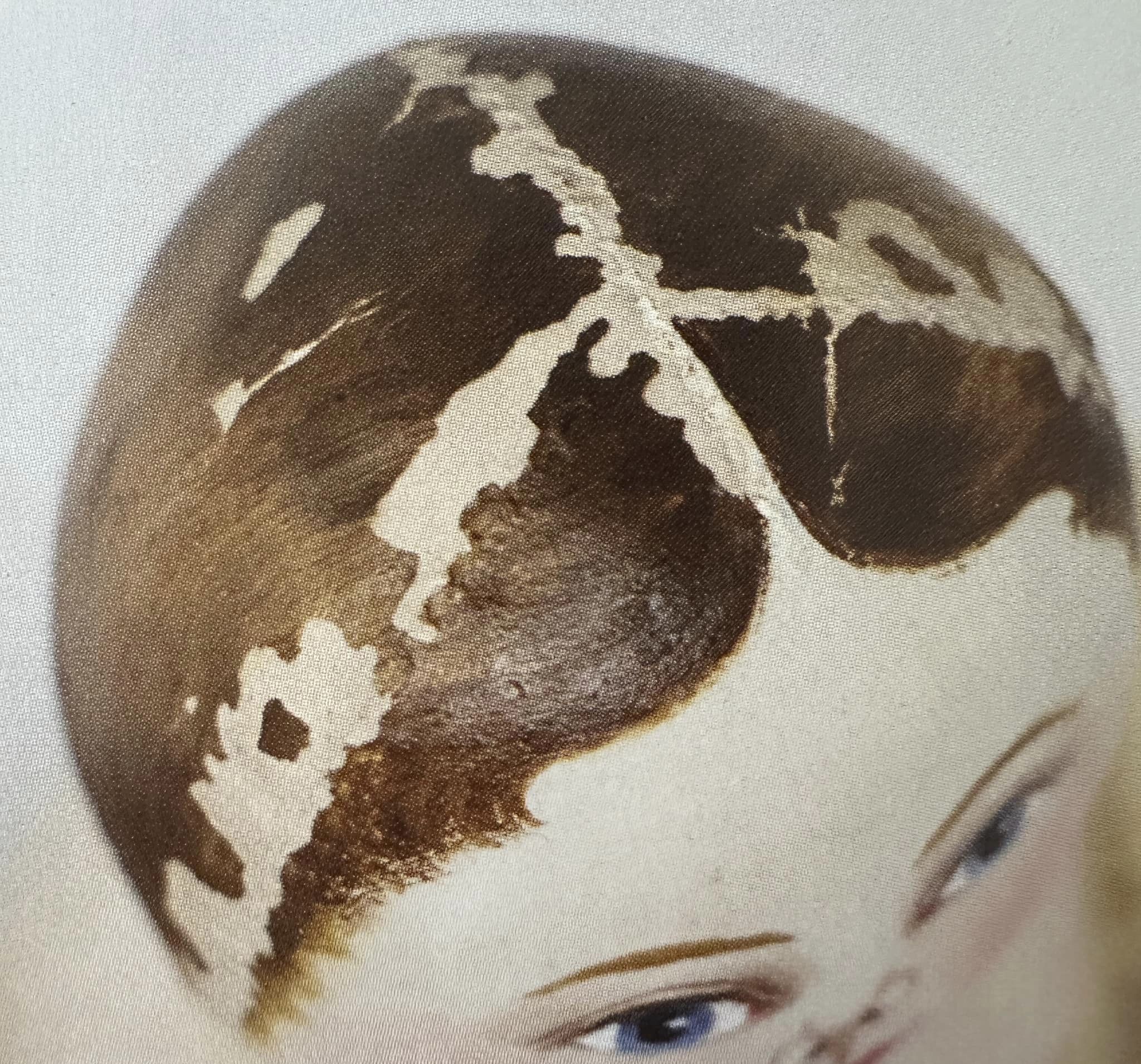
Once the dolls were constructed, the head and limbs were primed with ordinary white oil house paint, a product that again, was easily accessible to the sisters in their community. They would hang them up to dry on laundry racks. Many a visitor would later recall, how the sisters’ home would be filled with the “white ghostly” dolls. After the house paint dried, the surface would be lightly sanded to remove any raised fibers, to create a smooth surface for Maggie to create her magic (She was the artist of the two.) Maggie painted the faces with artistic skill. The female dolls had blue eyes and blonde hair and the male dolls had brown eyes and hair, but there were exceptions. An exception to these rules presented itself at an appraisal. I discovered a boy doll with blonde hair and blue eyes. But more on that later…
Maggie painted the dolls with and without painted ears, which may have been a customer preference, as there are early and later dolls with both styles. Both styles appear on boy and girl dolls.
Earlier dolls were painted with lighter shades than the later dolls. The dolls from the 1920’s on, have much brighter features. In the top photo, one may see an earlier doll on the left versus the later doll on the right. The boy doll is darker but it is believed to be from age and time. Also, note the doll on the right is dressed in a replica costume.
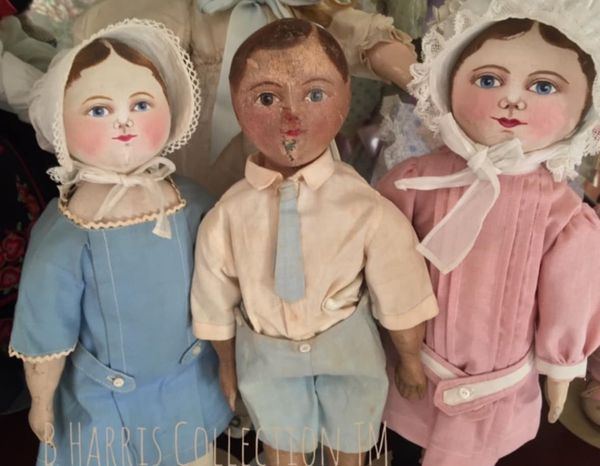
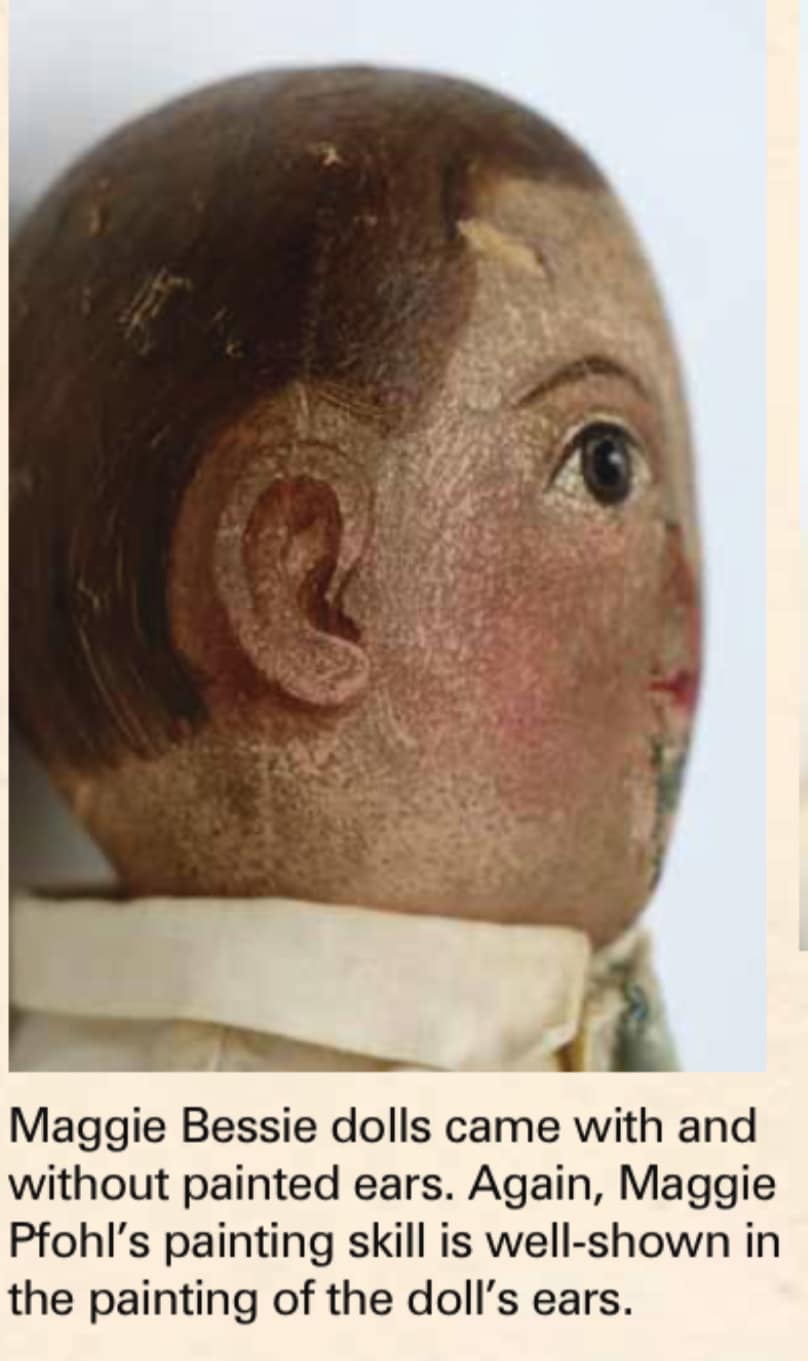

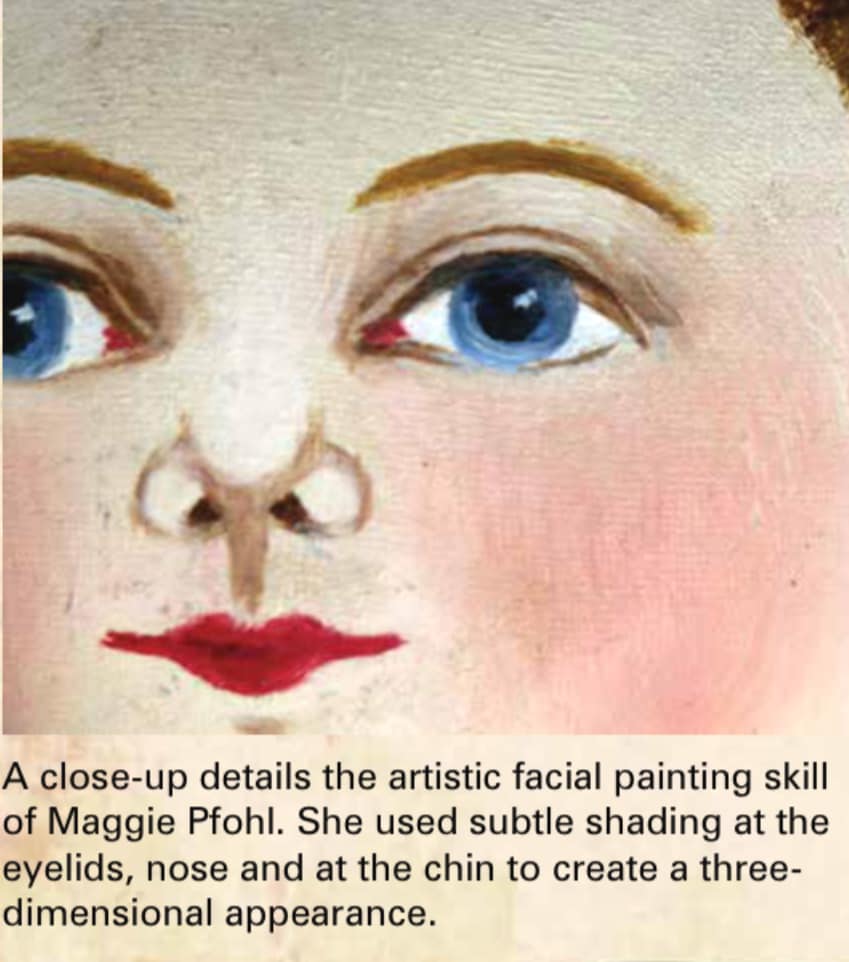
Enjoy this Maggie Bessie tour. Thank you Rachel Hoffman who is also a NADDA member for this video!!!
The girl’s dress was typically constructed by using two different patterns. The simple version of the two is made from a “kimono-style” pattern, which could be cut out in one piece. There were pleats created at the front and at the center back. Then, the sides and under the arms were sewn together. This method was quick and simple, keeping the price of the doll affordable. The other dress pattern had set-in sleeves which required more pattern pieces and more sewing and construction time. Both types of patterns appear throughout their doll’s history.
The dresses were trimmed at the neckline and the sleeve edges. An attached self-belt was at the waist area. The dress had button and buttonhole closures at the back. The belt also buttoned-up at the front waist.
The doll and the clothing were mostly sewn on a sewing machine. The hem was also machine stitched with a row of stitching approximately 1/4 inch above the hem edge and one along the lower edge. They used very tiny stitches and their buttonholes were perfection.
The costume included the dress, slip, pantaloons, cotton knit socks, garters with ribbon rosettes, bonnet and store bought shoes.
The hat came in two styles including the haube (prayer cap) and the sunbonnet.
In the photos attached, the first shows a Maggie Bessie doll in a traditional kimono style cotton dress. These came typically in blue or pink. (The doll shown does have replaced shoes.) Next, one may see the kimono dress, slips, garters, and socks. In the following photo is examples of the haube and sun bonnet style hats. Next, is a deconstructed dress so that one may see the simple form of the pattern.
The dresses also were available in a more constructed form with inset sleeves. Plus, the sisters also made dresses in printed cotton. The first doll is a later version and the following an earlier version. We will speak of ribbon colors later.
Finally, a close-up of the hem stitching. I have yet seen one of the sisters actual doll dresses with different stitching techniques. They were precise and methodical in their work and their sewing skills reflect that.
The boy costumes have been found in blue and brown short versions.
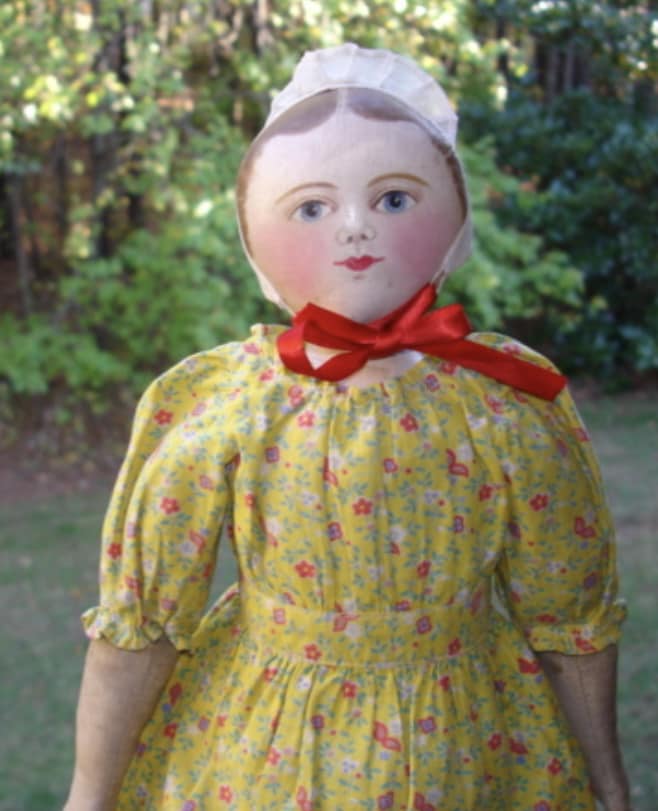
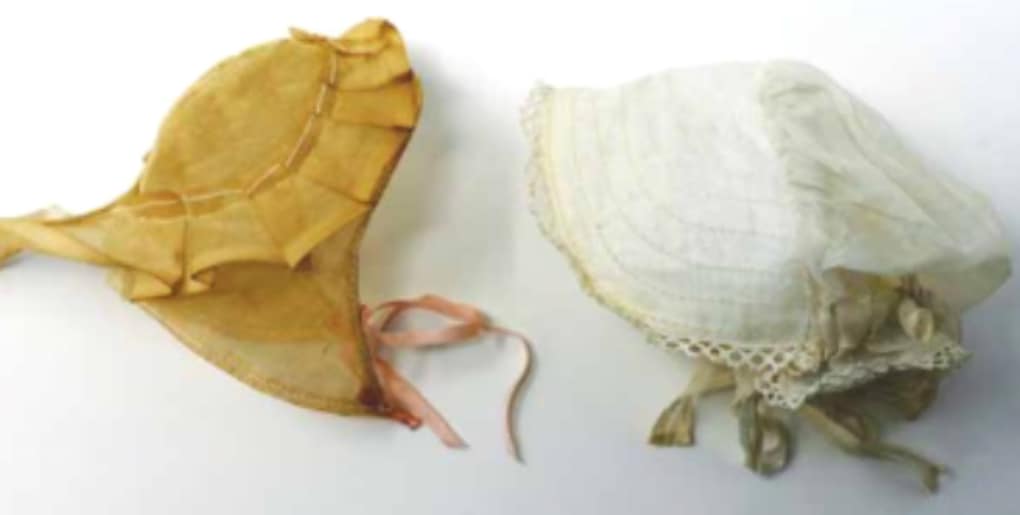
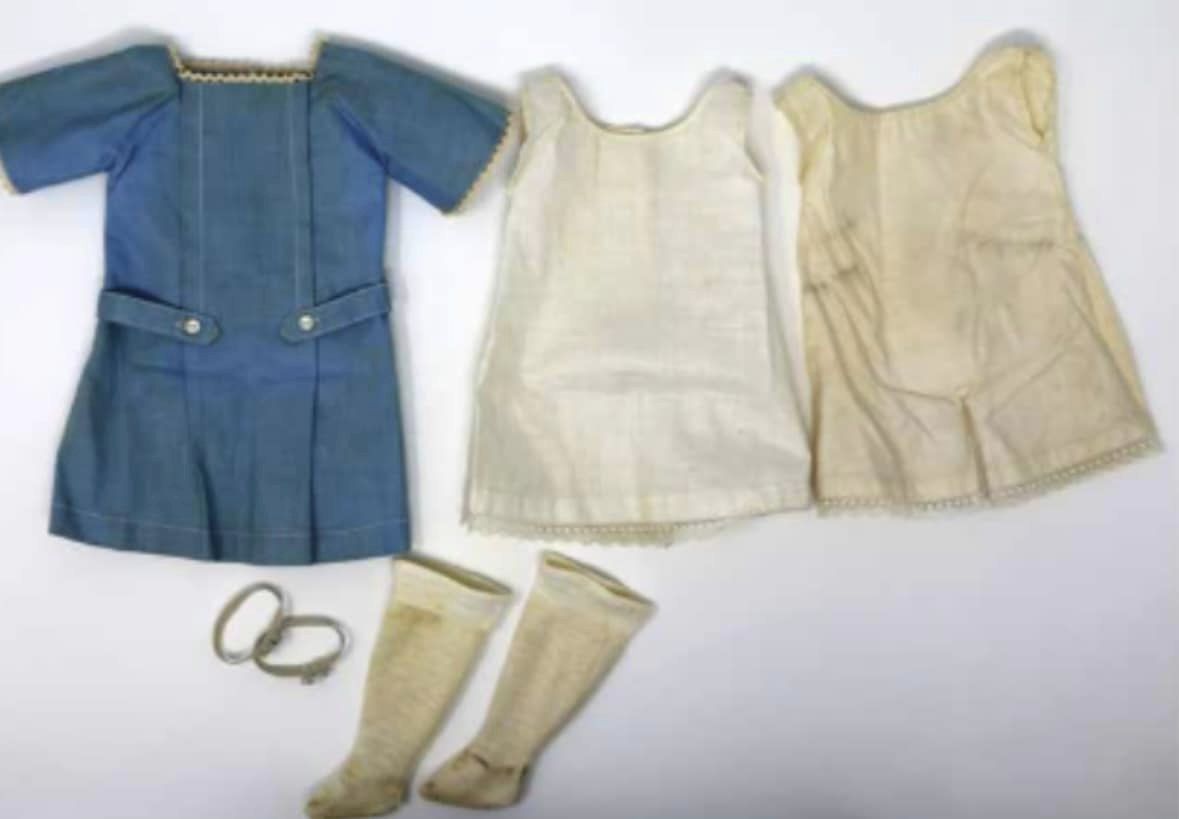
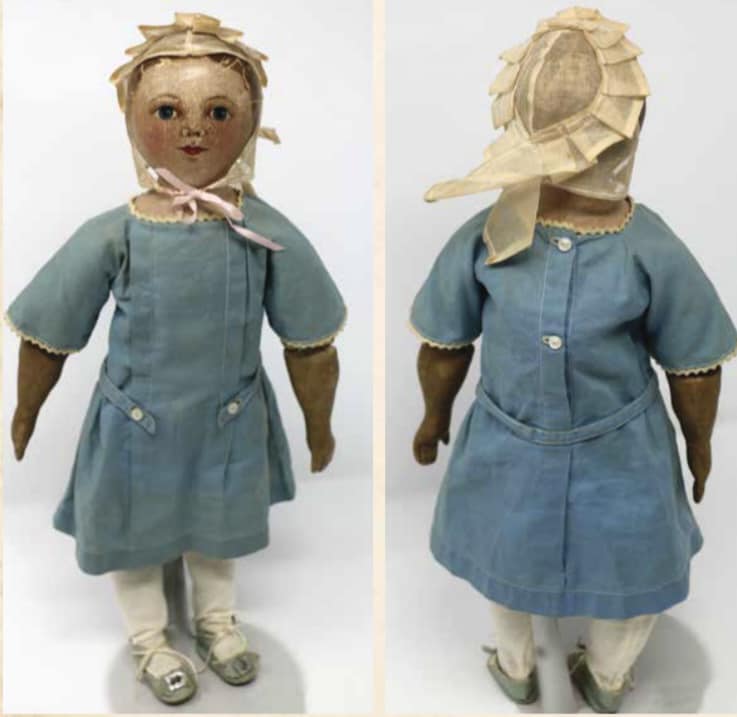
“In the Piedmont region of North Carolina, the red clay soil is rich, the climate is temperate, and the land has soft rolling hills.” One may understand why a group of Moravian settlers decided to move, in 1766, from Pennsylvania and purchase what was known as the Wachovia Tract in North Carolina.
They quickly transformed the area into a successful settlement. Old Salem became the business center of this thriving community which included agriculture, wood working, iron work, baking and many other business ventures. All of this was tied together with a faith that promoted discipline, knowledge and peace among men.
In Old Salem, the Pfohl family was prominent, and the father, Christian Thomas Pfohl was a minister of the Home Moravian Church. He and his wife, Margaret Siewers Pfohl had several children including two daughters Margaret Gertrude “Maggie” and Carolina Elizabeth “Bessie,” who attended nearby Salem College for Females (today’s Salem College.) Both sisters were skilled seamstresses and Maggie, like her mother, was a talented artist. The sisters were strong in their faith. It was Maggie who created the Putz Christmas tradition, which is continued today as the Moravian Candle Tea in “Old Salem.” On Sunday afternoons, the sisters (or the Aunties, as some family members recall) often entertained the children of the village in their living room. Many young folks would come early because they enjoyed the visit tremendously.” This love and enjoyment of children inspired them to create a soft, cuddly cloth doll. They also wanted to design an affordable doll so that many could obtain one. They were also known to give away their dolls to those who could not afford one. The sisters never married or had children so their community was their family.
Old photographs show the sisters as young children and later as older adults. Note the cloth doll in oldest child’s (Bessie) arms that may have been made by their mother or another Moravian family member. There are several examples of Moravian wooden doll furniture on the trunk, as well.
The third photo shows a group of Maggie Bessie dolls which were brought to a Maggie Bessie gathering for Catherine “Catty” White’s memorial. Catty was a NADDA member and a collector of Maggie Bessie dolls.
References: “Maggie Bessie, A North Carolina Moravian Doll,” DOLL NEWS, Spring 2019 by Billye Harris.
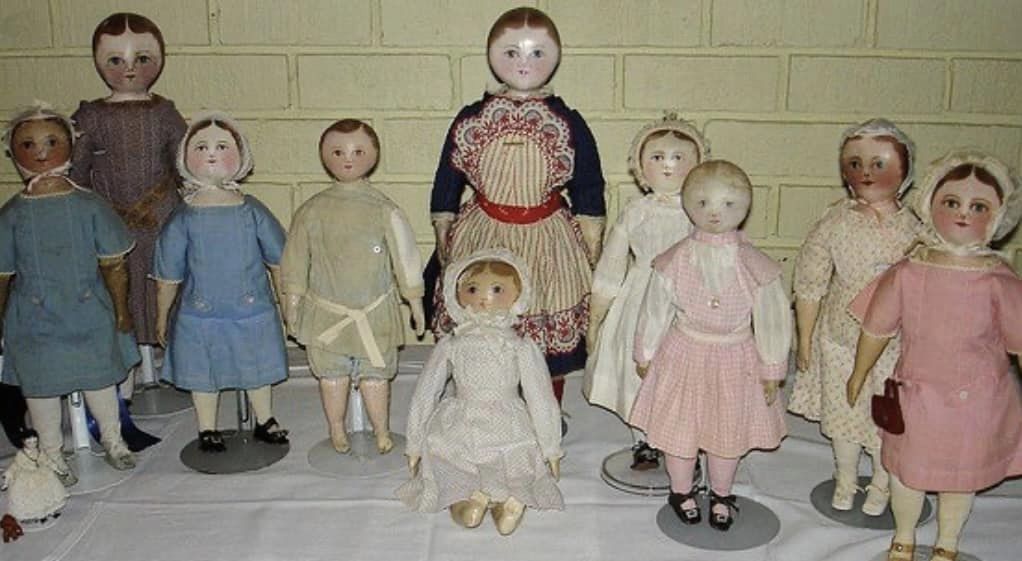
“The following is an excerpt from an article that my friend Bradley Justice Yarbrough wrote several years ago. He was great friends with well-known collector and doll dealer, Catherine “Catty” White.
“In our (Bradley and Catty) conversations, Catty referred several times to a friend Elizabeth (Libby) Holder, a Moravian from Winston Salem now living in a retirement Community in my Town of Chapel Hill. It was only a matter of time before our paths as doll collectors crossed and confessed a mutual affection for the Maggie Bessie dolls.
Libby owned three of them, especially made for her by the Pfohl sisters. Libby was a newspaper reporter for the Winston Salem Journal and the Twin City Sentinel in Winston Salem. She was a bride-to-be when she interviewed the Pfohl sisters shortly before Christmas 1942 about their doll making for an article. She tried to order a doll for herself at the time, but after some obvious hesitation, they refused to accept her request, saying they were so filled with Christmas orders they could not do any more. On Christmas morning, however, Libby found a Maggie Bessie doll had been left for her by Santa Claus.
A few days later Miss Maggie called Elizabeth, saying that they doll had been order by her new husband and they were trying to protect his surprise when they turned down her request. She was told that they would be happy to make her another doll if she wanted one. After much consultation, Libby settled on a boy and girl doll.
The Christmas doll is dressed in a style from the early 1800’s. The two later dolls that Libby bought were dressed in styles from the early 1900’s. Named by the sisters, Kate is wearing a pink dress with bonnet. Will, also named by the makers, is wearing blue button on shorts, white shirt, socks and a crocheted bowler style hat.
Both dolls wear inexpensive store bought oil cloth shoes. They told Libby they used these to keep the prices of the dolls affordable for children…
Libby clarified for me several items in the construction and production of the dolls. Each sister did her share of the sewing. Miss Maggie did most of the painting of faces which were primed with white house paint, then sanded with emery before the features were added in oils….
The dolls originally sold for $1.00 each but by 1942 when Libby bought her two dolls, the price was up to $6.50…..
The sisters had decided early in their career to try to keep prices down so no child would have to go without….
The dolls that Libby received in 1942 went on to be played with, not only by her daughter, but by her grandchildren as well….
As time has marched on, sadly, many have now passed away. Libby Holder passed away in October of 2009 reminding me that a history unwritten is lost forever.”
Note: “Libby married Edward Maxwell Holder in 1942. After his death in 1944, she moved to Greensboro, where she later joined the library staff at Woman’s College (now UNC Greensboro.)” He gave her the precious Christmas Maggie Bessie the holiday season prior to his death. They had one daughter. Libby never remarried.
Reference: https://www.maidatoday.com/2022/11/?m=1 The Story of the Maggie Bessie Doll by Bradley Justice 2011 MAIDA TODAY
Spartan Stories: Elizabeth “Libby” Holder: Bridging Woman’s College and UNC Greensboro in the Library, Erin Lawrimore, 2018
Legacy.com, Elizabeth Jerome Holder Obituary
Photos: Bradley Justice and the Spartan Stories Periodical
First image: Libby and one of her dolls, 2nd: Catherine “Catty” White and her best friend Virginia Griggs (holding an Alabama Baby doll), 3rd: Libby in her Moravian costume, 4th: Elizabeth “Libby” Holder.

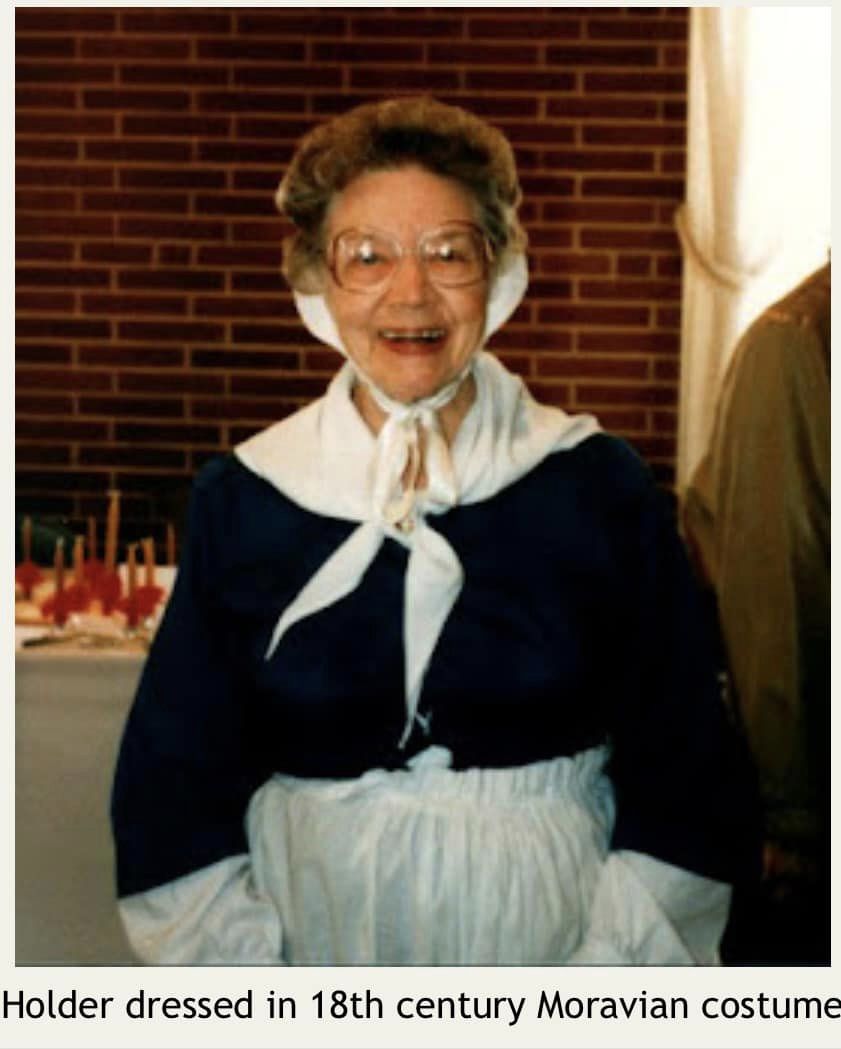
The following is the description used at auction to describe a family Maggie Bessie doll, clothing and Benigna dolls that I purchased for my collection and archives. The collection was from direct descendants of the Pfohl sisters. I’ve since sold the doll and a few other pieces but I thought you would enjoy seeing so much Maggie Bessie goodness in one place. Enjoy!
From Florence Theriault: “The collection was sold directly from descendants of Maggie and Bessie Pfohl in whose possession they have remained until that time. They were the original dolls of Ruth Whittington Pfohl, the youngest niece of Maggie and Bessie, and were played with by her when growing up in the Moravian community of Salem, North Carolina. Later, the dolls moved with Ruth to California where they lived “in a box in Nana’s closet”, according to Ruth’s granddaughter who later inherited the dolls, where “we were allowed to look at them, but were only allowed to play with a couple of small bisque-head dolls, never the Maggies”. The miniature Benigna dolls came originally from the Moravian community of Bethlehem, Pennsylvania, and, according to family history, the pair of dressed dancing dolls were also made by “the aunties” Maggie and Bessie for the entertainment of Ruth and her five siblings at the Moravian parsonage. Highlighting the collection is the 18″ all-cloth classic doll known as “Maggie-Bessie” with oil-painted facial features, hair and lower arms, the facial features artistically rendered, stitch-jointed body, along with her original trunk with a large bounty of costumes hand-sewn by the “aunties” as they were known in the family, and with three additional dolls in various stages of completion. There are eight 5″-6″ cloth miniature dolls that were created in the sister Moravian community of Bethlehem, each carrying a little miniature cloth bag containing a history of herself such as the significance of her costume color (e.g. blue signifying a married woman); the dolls were named after Countess Benigna, the 14 year old daughter who accompanied her father to Bethlehem in 1741. Also included are a pair of 18″ dancing dolls, made by Maggie and Bessie (PS. We discovered these dolls were made earlier in the 1840/50’s) with stitched-on hand-painted faces and applied cloth costumes with elaborate detail, and two photographs from original family archives.”
Author’s note… I nearly fainted at this auction and Stuart had to come hold my hand while I bid… He had just told a story of someone fainting during an auction. I was mortified because I thought I was going to be his next fainting story…Luckily I didn’t and the room cheered when I acquired this family collection.
References: Theriaults Auction House Theriault’s, Annapolis, Maryland, The Private Collection of Billye Harris.
Photos: Theriaults, Billye Harris
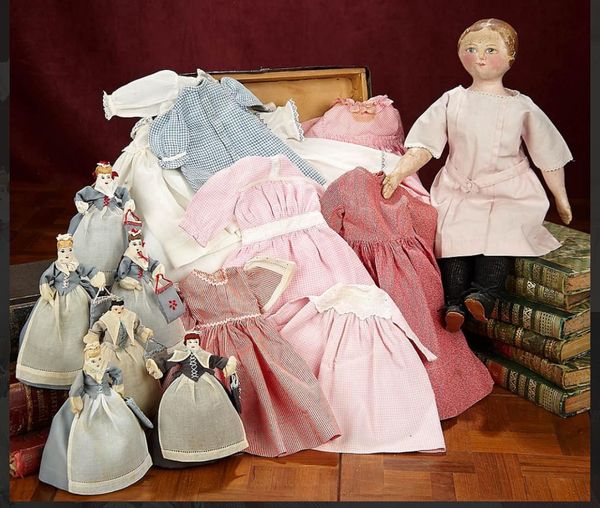
One of Billye’s favorite antique Maggie Bessie cloth dolls in her collection is pictured below. She is 14 inches tall. She is one of her earlier dolls from the late 1890’s to very early 1900’s. Notice that her facial coloring is much lighter than the later models. She is wearing a blue Maggie Bessie dress in the more simple style. She has shown details of her clothing, painting and construction. Her shoes are being stored safely elsewhere because they are extremely frail. She has considerable hair paint loss but this is quite typical for the earlier dolls especially. Look at the detail of her facial painting and see the redness of the corner of her eyes, shadow at the lids and soft lips. Her hair has fine brushstrokes along the side of her face. She does not have the exposed ears that some may have painted. She is from a special friend and therefore, she is very special to me. She was purchased from the original owner, decades ago.
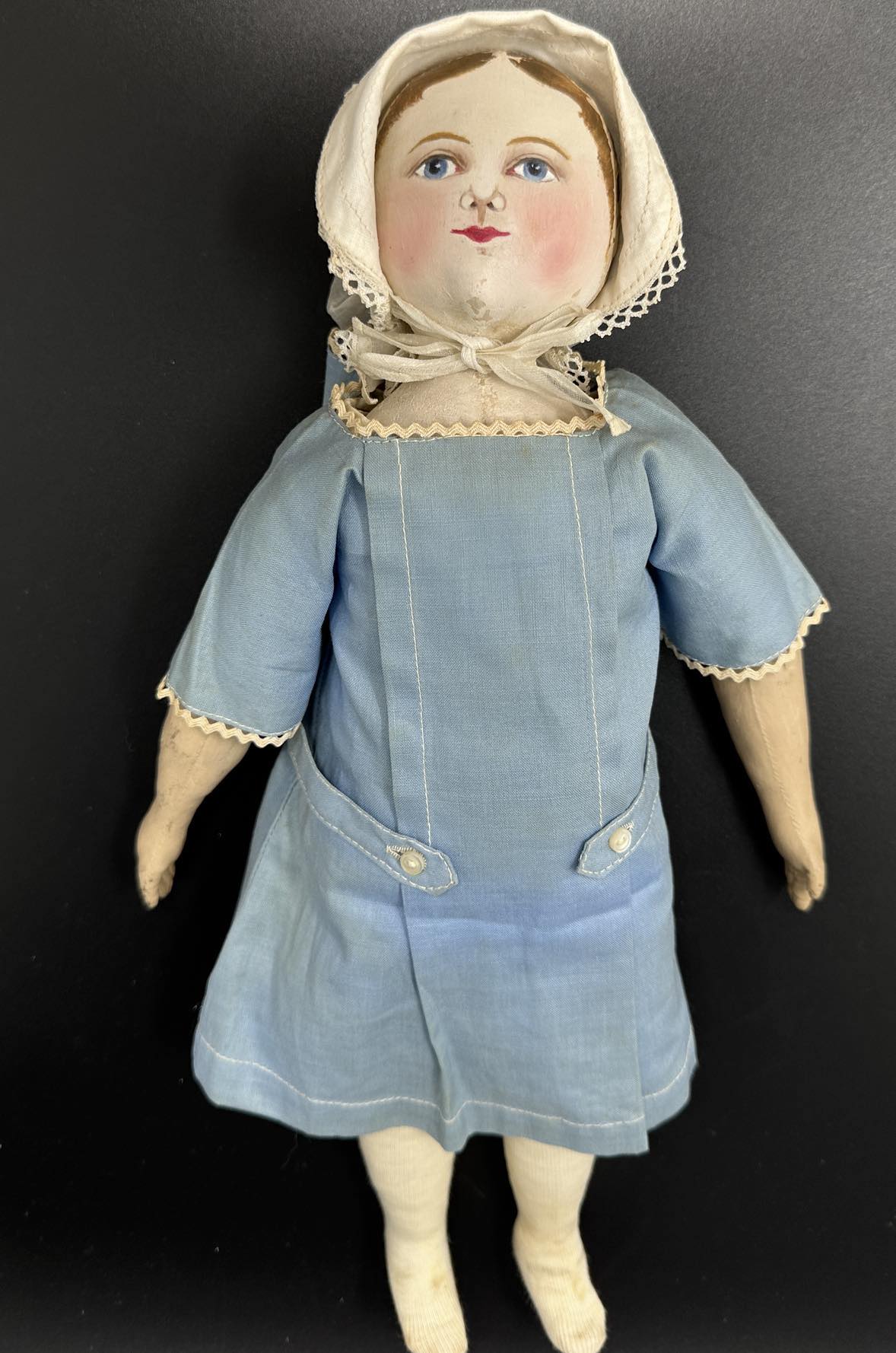

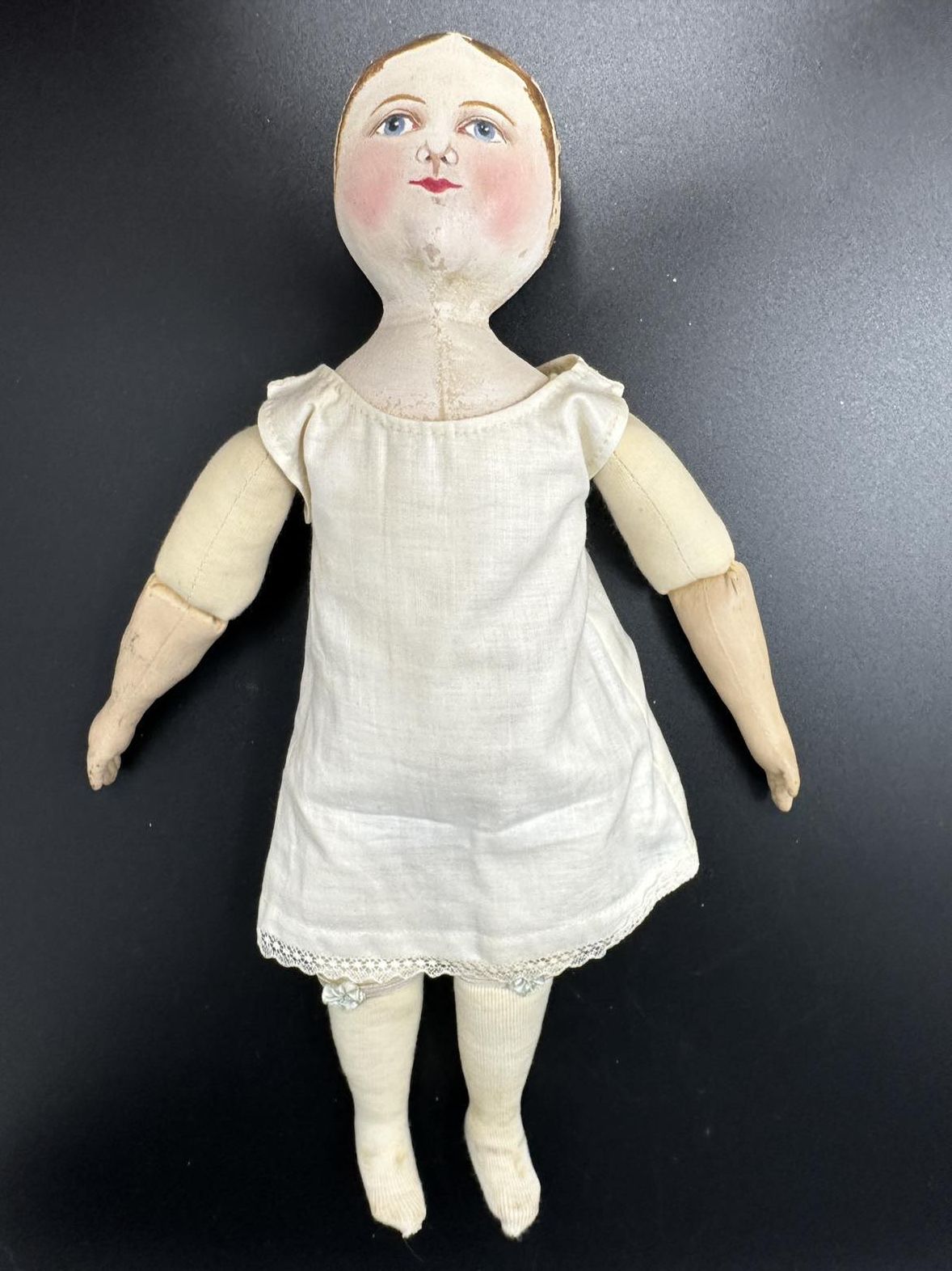

The sisters made somewhere around 500 dolls in their lifetime. We can assume this because Maggie kept a record book of all of the dolls that they made. It included names, locations and any special requests from the buyers. We also know from this book, that the Pfohl sisters not only made dolls but did doll “repairs.” Remember, Maggie and Bessie were cloth doll makers. They did not work with bisque or porcelain. If you broke your German doll, they would not replace the bisque or porcelain head with more bisque but rather cloth. Not any cloth, but a Maggie Bessie doll head. They also replaced broken limbs with their brand of cloth limbs. These dolls did not begin their existence as a Maggie Bessie doll but rather became one as part of their story.
A customer would bring in their broken doll and the sisters carefully removed the broken pieces. They then added the Maggie Bessie cloth head. In one example shown, one may see that it is a boy doll. His body is still completely a German kid leather body with bisque arms. The boy dolls that they made, always had brown hair and brown eyes. In this case, the doll has blonde hair and blue eyes. It is the author’s guess that he began as a porcelain doll with blonde hair and blue eyes and the sisters wanted to make him back to his original colors (a guess, no documentation.) The second doll is a girl doll. In this case, they replaced the head and the lower arms in the Maggie Bessie doll style and then painted the lower German legs a peach color to match the arms. Both of these dolls are extremely rare and I do not know of any other known examples. Neither is perfect and their kid bodies continue to fail them a bit. The boy’s hands must have been broken after he became a Maggie Bessie doll. This feels me with warm emotions because someone must have truly loved their doll (to pieces  .)
.)
The provenance on the boy doll is he was given to his last keeper by an aunt. The doll mama thought he was worthless and her brother had even told her to throw the doll away! Thankfully, she did not. She was a guest of mine on PBS’ Antiques Roadshow. I never purchase dolls that I have appraised directly from the owner. However, this doll was placed in a public auction and I was able to add him to my collection.
The second doll belonged to a longtime friend and I was able to purchase her later. From the photos below, one may see the typical construction methods of the Maggie Bessie doll head and Maggie’s amazing painted details.
One may also notice that the cloth heads are far from perfect. This turns many collectors away. It only endears them even more to me. I want a good doll but I also want to know that it was loved and cared for during the child’s play years. If you find one of these “repair” dolls, you have found a treasure indeed!
Photos: Billye Harris Dolls are from the private collection of Billye Harris.
References: Wachovia Archives, Old Salem, North Carolina.
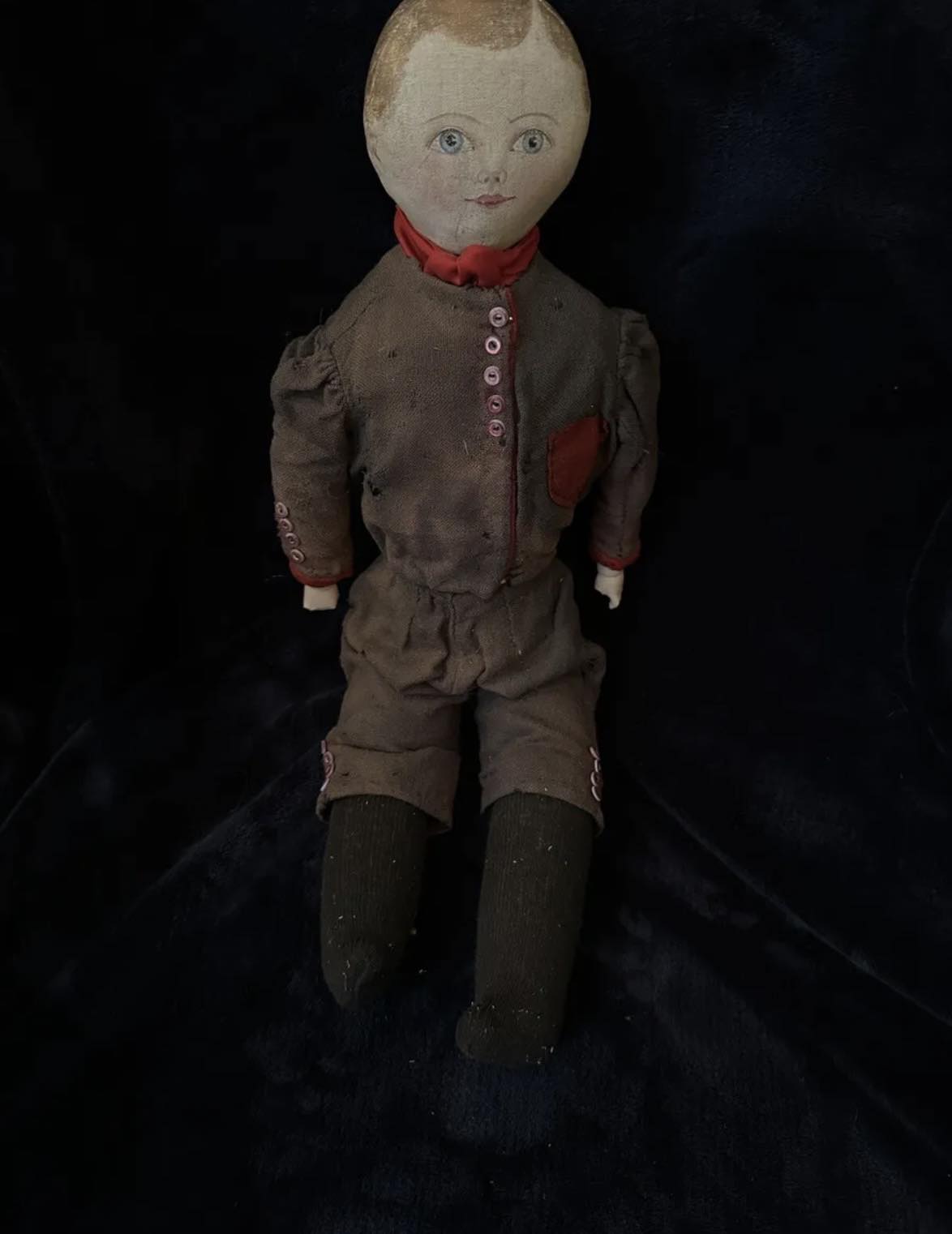
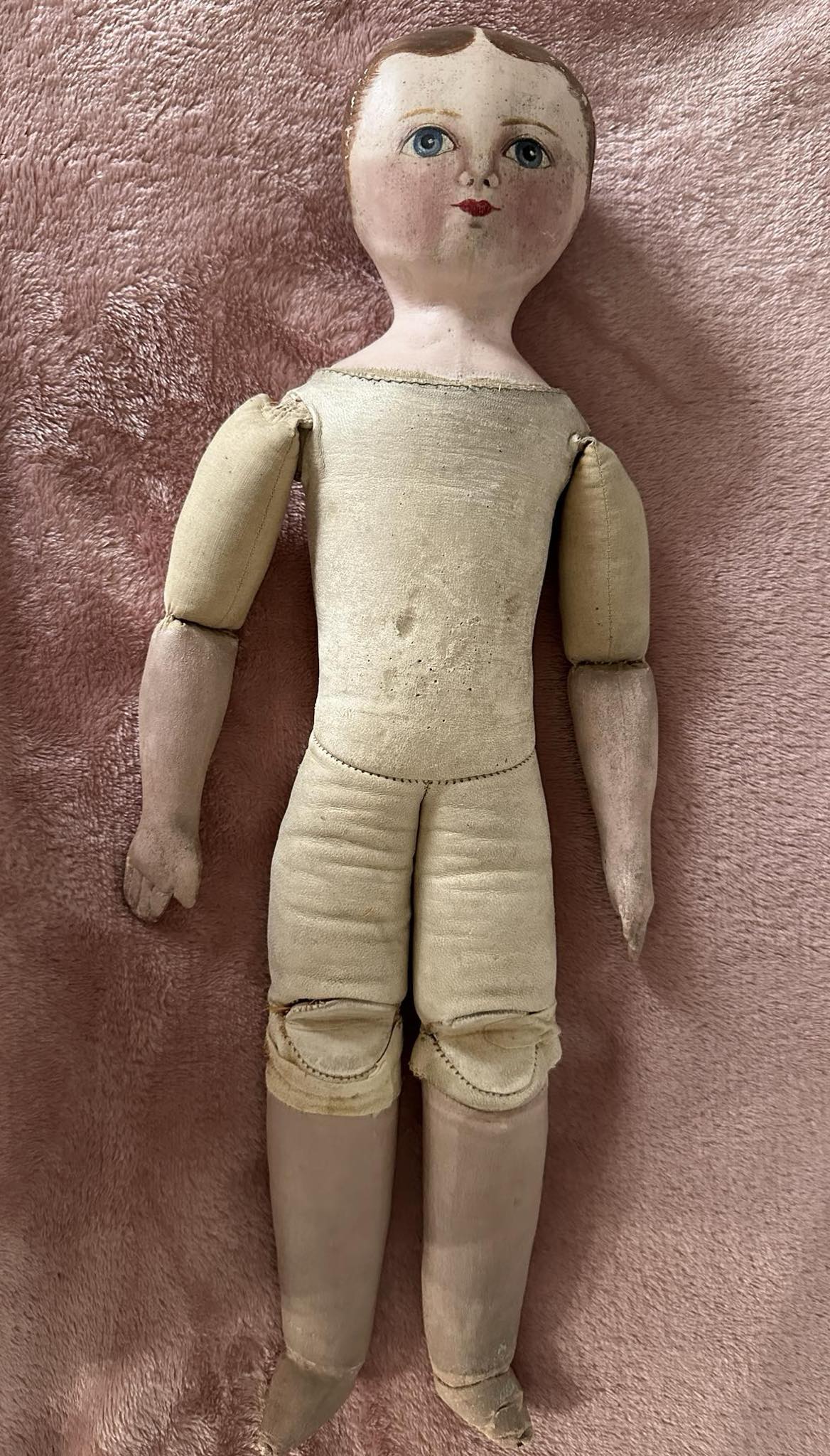
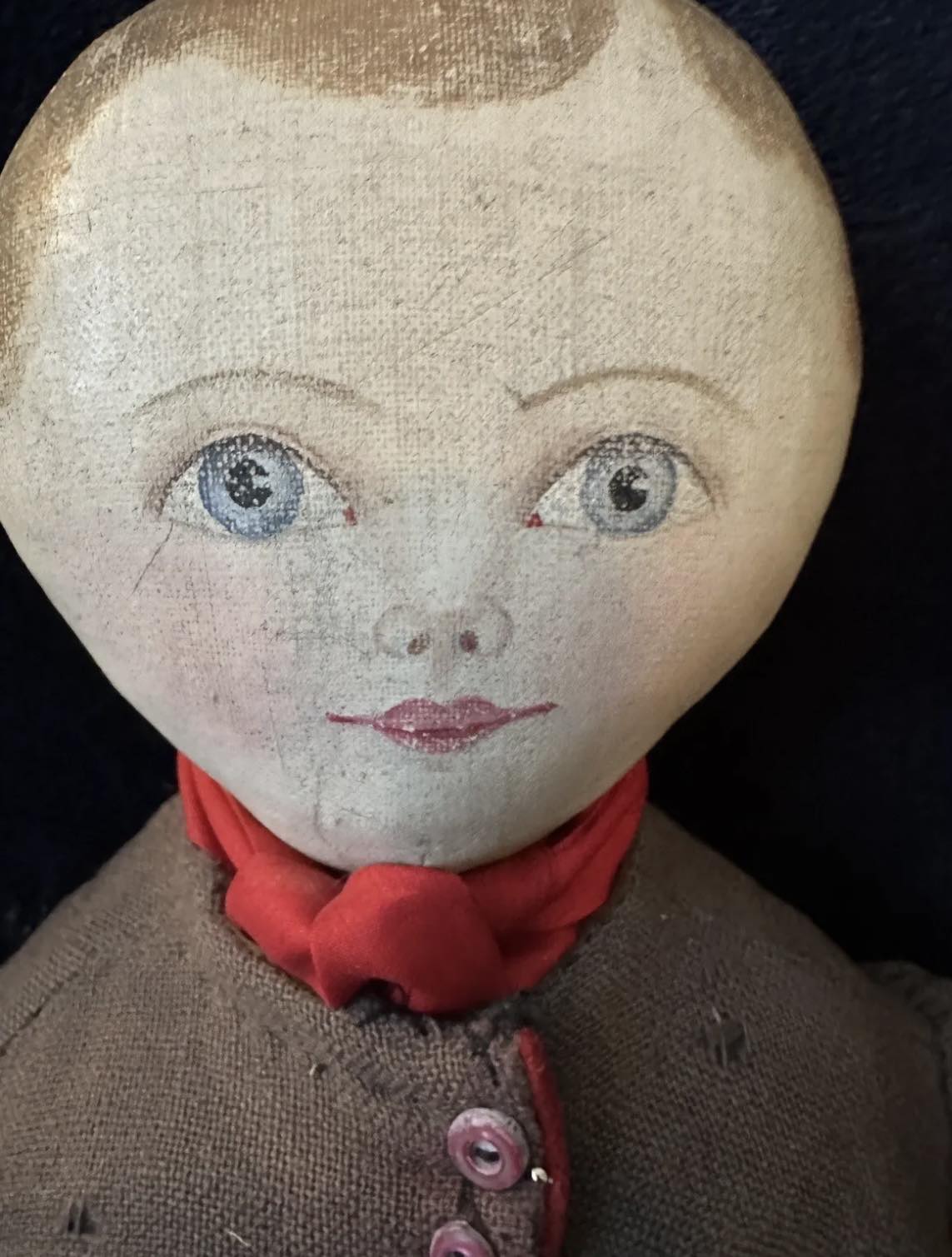
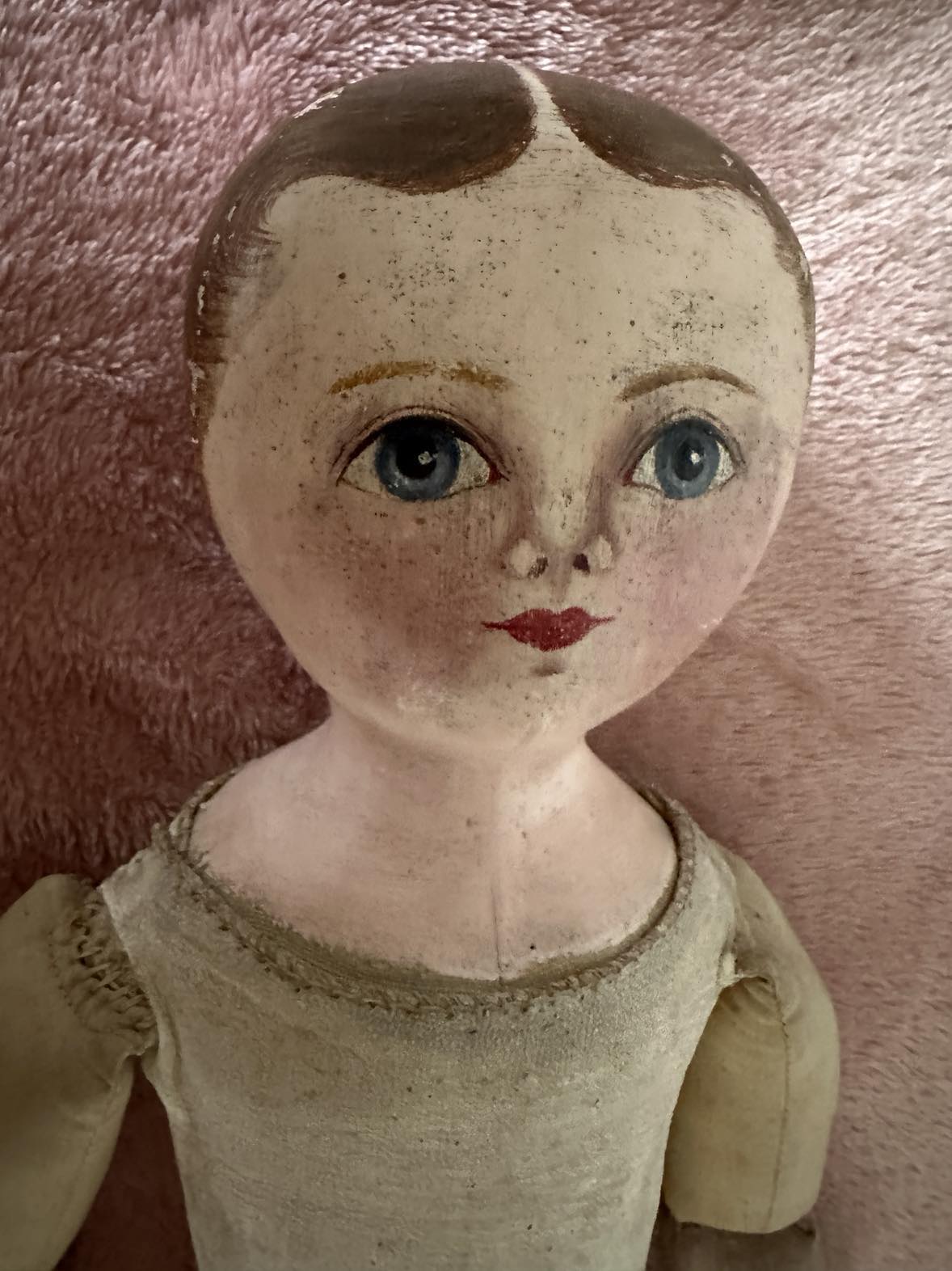
 NADDA.ORG